



Caster Alignment Help Needed

Thread Starter
Intermediate

Joined: Dec 2012
Posts: 47
Likes: 0
From: Greer SC
 Caster Alignment Help Needed
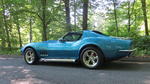
I am having trouble setting caster on a friends 67' and am hoping y'all can help.
The car has been checked on a frame rack twice so I know I am starting with a good base. I am using a SmartCamber gauge that I have successfully used on several others cars and have duplicated measurements from a laser alignment rack within one tenth of a degree on another car.
Here is the problem we are having:
When static camber was set negative (i.e. -0.7 degrees), we measured slight negative camber (i.e. -0.3) at 20 degree steering turn out and then negative camber again (i.e. -0.6) at 20 degrees steering turn in. This results in only 0.45 degrees of positive caster. This was done with one 1/16" shim in the front of the UCA and about 1/2" of shims in the rear of the UCA. Basically, there was no more room to improve caster to the 1.5 to 2.0 degrees we were shooting for, atleast not without running excessive negative static camber (which we did not try).
When static camber was set to approximately zero degrees, we measured slight positive camber (i.e. 0.3) at 20 degree steering turn out and then slight positive camber again (i.e. 0.2) at 20 degrees steering turn in. This results in close to zero caster.
I am used to Chevy's (68' Camaro and 72' Corvette) with negative static camber showing positive camber at 20 degree steering turn out and then negative camber at 20 degrees steering turn in. This results in good positive caster.
Thoughts?
The car has been checked on a frame rack twice so I know I am starting with a good base. I am using a SmartCamber gauge that I have successfully used on several others cars and have duplicated measurements from a laser alignment rack within one tenth of a degree on another car.
Here is the problem we are having:
When static camber was set negative (i.e. -0.7 degrees), we measured slight negative camber (i.e. -0.3) at 20 degree steering turn out and then negative camber again (i.e. -0.6) at 20 degrees steering turn in. This results in only 0.45 degrees of positive caster. This was done with one 1/16" shim in the front of the UCA and about 1/2" of shims in the rear of the UCA. Basically, there was no more room to improve caster to the 1.5 to 2.0 degrees we were shooting for, atleast not without running excessive negative static camber (which we did not try).
When static camber was set to approximately zero degrees, we measured slight positive camber (i.e. 0.3) at 20 degree steering turn out and then slight positive camber again (i.e. 0.2) at 20 degrees steering turn in. This results in close to zero caster.
I am used to Chevy's (68' Camaro and 72' Corvette) with negative static camber showing positive camber at 20 degree steering turn out and then negative camber at 20 degrees steering turn in. This results in good positive caster.
Thoughts?
Last edited by ZZtop2; Oct 8, 2015 at 10:02 AM.

Race Director


Joined: Jan 2003
Posts: 17,751
Likes: 3,735
From: Central Arkansas
Hmm - I never paid a lot of attention to the camber at 20 deg in and 20 deg out - always looking for the sum difference in the two and sttraight ahead caster. But from memory I think you are right - larger (+) camber turned in at the front and lesser (-) camber turned out - resulting in net (+) camber.
His engine cradle (and upper A-arm attachments) is probably flattened out from old age and road wear. I'm sure a good chassis shop can check that but it's kind of incidental to the frame being othersie straight so they may not.
It sounds like he may have to install the Moog upper, off-set control arm shafts to compensate.
My 2 cents
His engine cradle (and upper A-arm attachments) is probably flattened out from old age and road wear. I'm sure a good chassis shop can check that but it's kind of incidental to the frame being othersie straight so they may not.
It sounds like he may have to install the Moog upper, off-set control arm shafts to compensate.
My 2 cents

Race Director


Joined: Feb 2007
Posts: 15,500
Likes: 8,973
From: northern california
C2 of Year Finalist (track prepared) 2019
Altho I understand why you are referencing measurements made at +/- 20 degrees steering angle, I can't relate the actual caster to the camber numbers you are seeing. The problem you are having would easier to visualize if you just note the camber at 0 degrees steering and the computed caster and include down-looking photos of the shim packs on each of the control arms.
Jim
Jim
Thread Starter
Intermediate
Joined: Dec 2012
Posts: 47
Likes: 0
From: Greer SC
Altho I understand why you are referencing measurements made at +/- 20 degrees steering angle, I can't relate the actual caster to the camber numbers you are seeing. The problem you are having would easier to visualize if you just note the camber at 0 degrees steering and the computed caster and include down-looking photos of the shim packs on each of the control arms.
Jim
Jim
http://www.smartracingproducts.com/s...nal_update.pdf
Here is what you asked for:
Scenario 1: Camber -0.7, Caster ~+0.5. Shims are 1/16" front of UCA and 7/16" rear of UCA.
Scenario 2: Camber -0.1, Caster ~+0.2. Shims are 1/16" front of UCA and 5/16" rear of UCA.
What was interesting to me is that the wheel was always cambered in at +/- 20 degrees steering angle in Scenario 1 and always cambered out in Scenario 2. So odd from what I am used to seeing.
Race Director
Joined: Feb 2007
Posts: 15,500
Likes: 8,973
From: northern california
C2 of Year Finalist (track prepared) 2019
Jim, page 8 and 9 of the link below will show you what I am measuring and the calculation I am using to get caster from the camber measurements.
http://www.smartracingproducts.com/s...nal_update.pdf
Here is what you asked for:
Scenario 1: Camber -0.7, Caster ~+0.5. Shims are 1/16" front of UCA and 7/16" rear of UCA.
Scenario 2: Camber -0.1, Caster ~+0.2. Shims are 1/16" front of UCA and 5/16" rear of UCA.
What was interesting to me is that the wheel was always cambered in at +/- 20 degrees steering angle in Scenario 1 and always cambered out in Scenario 2. So odd from what I am used to seeing.
http://www.smartracingproducts.com/s...nal_update.pdf
Here is what you asked for:
Scenario 1: Camber -0.7, Caster ~+0.5. Shims are 1/16" front of UCA and 7/16" rear of UCA.
Scenario 2: Camber -0.1, Caster ~+0.2. Shims are 1/16" front of UCA and 5/16" rear of UCA.
What was interesting to me is that the wheel was always cambered in at +/- 20 degrees steering angle in Scenario 1 and always cambered out in Scenario 2. So odd from what I am used to seeing.

I don't need to know camber with the wheels turned; it compensates for that automagically.
In any event, can you make a picture of the shim packs you have now? The measured thicknesses of the rear pack on each control arm don't sound excessive. Are you running out of threads on the mounting studs?
Jim
Edit: What are you using for turn plates? Or are you turning your steering wheels directly on your garage floor?
Last edited by jim lockwood; Oct 8, 2015 at 01:55 PM.
Thread Starter
Intermediate
Joined: Dec 2012
Posts: 47
Likes: 0
From: Greer SC
In any event, can you make a picture of the shim packs you have now? The measured thicknesses of the rear pack on each control arm don't sound excessive. Are you running out of threads on the mounting studs?
Jim
Edit: What are you using for turn plates? Or are you turning your steering wheels directly on your garage floor?
Jim
Edit: What are you using for turn plates? Or are you turning your steering wheels directly on your garage floor?
Ya know, you raise a good point. I have always used makeshift vinyl tile turntables in the past with grease/soap (want to try powdered graphite next) between them, but we were just turning the wheels directly on his garage floor in this case. Do you think that could be enough to throw off the measurements significantly? I mean, +0.5 caster is not even close to the +2.0 caster we are hoping/shooting for.
Thread Starter
Intermediate
Joined: Dec 2012
Posts: 47
Likes: 0
From: Greer SC
Yes and no. We have to set the camber somewhere to start and because you move shims between the front and rear of the UCA or add shims or remove shims from either end to change caster, it will have some effect on camber. Caster and Camber are sort of set together in a little back and forth dance in a car with shims like the C2 Vette. On something like a Mustang with caster/camber plates, they can be set individually without effecting each other.
Corvette Stories
The Best of Corvette for Corvette Enthusiasts

Corvette & Porsche 911: How Two Icons Conquered the Last 25 Years
Joe Kucinski
2027 Chevrolet Silverado 1500 First Look: Everything You NEED to Know!
Michael S. Palmer
5 Best & 5 Worst Corvette Daily Drivers
Joe Kucinski
The Headlights of Every Corvette Generation Explained
Joe Kucinski
5 Best & 5 Most Overrated Corvette Track Packages of All Time!
Joe Kucinski
Every 2027 Corvette Engine Explained
Joe Kucinski
Designer Imagines A Corvette That Looks More Like a Corvette Than the Corvette
Verdad Gallardo
10 Ugly Corvettes That We Still Kinda Love
Joe Kucinski
Top 10 Most Expensive Corvettes Ever Sold on Bring A Trailer
Brett Foote
Race Director

Joined: Apr 2015
Posts: 17,571
Likes: 3,461
From: Fresno California
Not sure about C2's, but with GM A-Body cars, running out of shims on the upper CA to correct negative camber is usually due to worn parts or a slightly sagging frame. The frame where the A arm attaches moves inward slightly from engine weight and age/use, causing this issue. There are off-set control arm shafts available from Moog and TRW to correct this, or you can take it to a frame shop and have the frame 'rolled', which is rather brutal. You may need to go with the off-set shafts here so that you can use more shims up front.
Melting Slicks

Joined: Feb 2010
Posts: 2,077
Likes: 72
From: Reno Nv
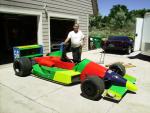
OK, just read the instructions for computing caster from the camber readings. I understand why you are paying attention to the camber at +/- 20 degrees steering. Not how I'm accustomed to coming up with caster. I use an old fashioned caster/camber gauge similar to this (only mine is much older):
Race Director
Joined: Feb 2007
Posts: 15,500
Likes: 8,973
From: northern california
C2 of Year Finalist (track prepared) 2019
Jim, there is room to add more shims in the rear, but then I am dialing in more static negative camber and we really didn't want to go over -0.7 (we were actually hoping to stay around -0.5). So if I can't add to the rear, and I only have a 1/16" shim in the front, I am kind of stuck!
Ya know, you raise a good point. I have always used makeshift vinyl tile turntables in the past with grease/soap (want to try powdered graphite next) between them, but we were just turning the wheels directly on his garage floor in this case. Do you think that could be enough to throw off the measurements significantly? I mean, +0.5 caster is not even close to the +2.0 caster we are hoping/shooting for.
Ya know, you raise a good point. I have always used makeshift vinyl tile turntables in the past with grease/soap (want to try powdered graphite next) between them, but we were just turning the wheels directly on his garage floor in this case. Do you think that could be enough to throw off the measurements significantly? I mean, +0.5 caster is not even close to the +2.0 caster we are hoping/shooting for.
If you take that 1/6" shim at the front and move it to the rear, you will (very slightly) increase caster without affecting camber.
As far as turning the tires directly on pavement, yes, I think that could distort the suspension bushings and throw your readings off.
Your makeshift turn plates sound fine to me. I use a pair of teflon sheets under each front tire, the bottom sheet having +20 and -20 calibrations marked on it.
I don't think your turn plates have significant thickness, but if they do, remember to put the same thickness under the rear tires to keep the car level.
Jim
Melting Slicks
Joined: Feb 2010
Posts: 2,077
Likes: 72
From: Reno Nv
Ya know, you raise a good point. I have always used makeshift vinyl tile turntables in the past with grease/soap (want to try powdered graphite next) between them, but we were just turning the wheels directly on his garage floor in this case. Do you think that could be enough to throw off the measurements significantly? .
If so, your readings will be off. You need to roll the car back about 3 feet then forward to get the tire scrub back to zero (happens when you let the jack down). Or use turn plates.
An easy and cheap turn plate - 2 pieces of garbage bags lubed between.

Team Owner


Joined: Mar 2002
Posts: 44,707
Likes: 1,837
From: Huntsville AL
Here is the problem we are having:
When static camber was set negative (i.e. -0.7 degrees), we measured slight negative camber (i.e. -0.3) at 20 degree steering turn out and then negative camber again (i.e. -0.6) at 20 degrees steering turn in. This results in only 0.45 degrees of positive caster. This was done with one 1/16" shim in the front of the UCA and about 1/2" of shims in the rear of the UCA. Basically, there was no more room to improve caster to the 1.5 to 2.0 degrees we were shooting for, atleast not without running excessive negative static camber (which we did not try).
When static camber was set negative (i.e. -0.7 degrees), we measured slight negative camber (i.e. -0.3) at 20 degree steering turn out and then negative camber again (i.e. -0.6) at 20 degrees steering turn in. This results in only 0.45 degrees of positive caster. This was done with one 1/16" shim in the front of the UCA and about 1/2" of shims in the rear of the UCA. Basically, there was no more room to improve caster to the 1.5 to 2.0 degrees we were shooting for, atleast not without running excessive negative static camber (which we did not try).
http://www.eastwood.com/fasttrax-cam...ter-gauge.html
I have the same problem as you stated above. My frame is not bent, all parts are rebuilt and installed correctly. My end solution was to get it drivable and take it to someone who does this for a living.
I thought this would be easy.

Le Mans Master


Joined: Apr 2001
Posts: 5,443
Likes: 1,256
From: Sarver Pa
2021 C1 of the Year Finalist - Modified
Um ,maybe I'm reading this wrong. but to increase caster to make the car more stable, you lean the spindle, back towards the rear of the car.
You want to move shims from the rear to the front.
You want to move shims from the rear to the front.
Melting Slicks
Joined: Nov 2004
Posts: 2,311
Likes: 223
From: Temecula CA
Pretty sure that adding shims to the rear stack has the effect of tilting the steering axis BACK (increasing caster). But, like O'Reilly often says without conviction, "I could be wrong".
Last edited by Mike Geary; Oct 8, 2015 at 07:02 PM.
Race Director
Joined: Jan 2003
Posts: 17,751
Likes: 3,735
From: Central Arkansas
I think you are mistakenly visualizing from memory that the a-arm shaft is on the outside of the frame mount - but it's actually on the inside so to increase caster shims have to be decreased on the front bolt and increased on the rear bolt. Sometimes I have to think about it for a minute.
Race Director
Joined: Feb 2007
Posts: 15,500
Likes: 8,973
From: northern california
C2 of Year Finalist (track prepared) 2019
I think you are mistakenly visualizing from memory that the a-arm shaft is on the outside of the frame mount - but it's actually on the inside so to increase caster shims have to be decreased on the front bolt and increased on the rear bolt. Sometimes I have to think about it for a minute.
Thread Starter
Intermediate
Joined: Dec 2012
Posts: 47
Likes: 0
From: Greer SC
Did you make your adjustments (shims) , drop the car down and take the readings?
If so, your readings will be off. You need to roll the car back about 3 feet then forward to get the tire scrub back to zero (happens when you let the jack down). Or use turn plates.
An easy and cheap turn plate - 2 pieces of garbage bags lubed between.
If so, your readings will be off. You need to roll the car back about 3 feet then forward to get the tire scrub back to zero (happens when you let the jack down). Or use turn plates.
An easy and cheap turn plate - 2 pieces of garbage bags lubed between.
I really think cutting corners and not bring my turntables (did this at a buddies house) was the problem. I can see the garage floor keeping the wheel from properly gaining positive camber when turning 20 degrees out and that would effect my readings and caster calculation.
What are y'all using for lube between the turntable tiles? I have had success with different greases and even soap, but I really wish I could get the top tile to move a little more freely.
Thread Starter
Intermediate
Joined: Dec 2012
Posts: 47
Likes: 0
From: Greer SC
You can also visualize increasing caster as leaning the top strut/shock mount towards the rear of the car. Think of a MacPherson strut car like a Mustang when visualizing this.
Thread Starter
Intermediate
Joined: Dec 2012
Posts: 47
Likes: 0
From: Greer SC
I'm also no expert on alignment but figured how hard can it be so I purchased a FastTrax alignment tool.
http://www.eastwood.com/fasttrax-cam...ter-gauge.html
I have the same problem as you stated above. My frame is not bent, all parts are rebuilt and installed correctly. My end solution was to get it drivable and take it to someone who does this for a living.
I thought this would be easy.
http://www.eastwood.com/fasttrax-cam...ter-gauge.html
I have the same problem as you stated above. My frame is not bent, all parts are rebuilt and installed correctly. My end solution was to get it drivable and take it to someone who does this for a living.
I thought this would be easy.
Doing an alignment is not hard, you just need to have a good fundamental understanding and the right tools......and remember to use those tools properly every time, like turntables, doh!
Thanks for all the help guys. Sometimes the solution is so simple you cant see it!