


Front End Alignment

Thread Starter
Racer


Joined: Mar 2013
Posts: 254
Likes: 12
From: Bergen County, NJ
 Front End Alignment
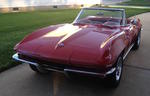
1964 convertible, 327 - 300HP
My car was sent off to have the wheels aligned this week and I have a slight problem. The mechanic tells me that he cannot get the left front caster and the right front wheel camber within the correct specs. He said that the caster issue is not that important as it only moves the wheel forward and back (?) but the camber issue needs attention. He said there may be a camber kit available for the car . They also said that they may be able to install a longer upper a-arm shaft so they can add more shims to correct the issue. I'm wondering if anyone has had a similar issue or knows about a camber kit availability and where to get it and would a longer a-arm be available for the car. Thank you for any input you have.
My car was sent off to have the wheels aligned this week and I have a slight problem. The mechanic tells me that he cannot get the left front caster and the right front wheel camber within the correct specs. He said that the caster issue is not that important as it only moves the wheel forward and back (?) but the camber issue needs attention. He said there may be a camber kit available for the car . They also said that they may be able to install a longer upper a-arm shaft so they can add more shims to correct the issue. I'm wondering if anyone has had a similar issue or knows about a camber kit availability and where to get it and would a longer a-arm be available for the car. Thank you for any input you have.
Team Owner


Joined: Apr 2008
Posts: 31,915
Likes: 2,418
From: Middle TN by way of KY, OH, VA, IL, CA, FL, NY, SC, HI
Oof.
First, are you confident in the quality and knowledge of the shop, including their ability on older cars? The comment to ignore the inability to set the caster would turn me off ("not that important? - really?")
Second, how close was it to being on alignment before they started - close or way out? They should have written down the "before" readings.
Third, do you need to get a second opinion? Perhaps from a specialty shop? It's a lot cheaper, and possibly better, than what is being proposed.
Fourth, does the car drive okay, and do the tires seem to wear evenly?
Lastly, and perhaps most importantly, how is your frame? Is there any possible history of frame damage (and why didn't the shop mention this?). There should be few to no cars that cannot be properly aligned with factory specification frames.
Good luck.
First, are you confident in the quality and knowledge of the shop, including their ability on older cars? The comment to ignore the inability to set the caster would turn me off ("not that important? - really?")
Second, how close was it to being on alignment before they started - close or way out? They should have written down the "before" readings.
Third, do you need to get a second opinion? Perhaps from a specialty shop? It's a lot cheaper, and possibly better, than what is being proposed.
Fourth, does the car drive okay, and do the tires seem to wear evenly?
Lastly, and perhaps most importantly, how is your frame? Is there any possible history of frame damage (and why didn't the shop mention this?). There should be few to no cars that cannot be properly aligned with factory specification frames.
Good luck.

Le Mans Master


Joined: Apr 2000
Posts: 5,112
Likes: 1,371
From: New York New York
2024 C1 of the Year Finalist - Unmodified
2024 C2 of the Year Finalist - Unmodified
2023 C2 of the Year Finalist - Unmodified
2023 C1 of the Year Finalist - Unmodified
As 66jack has stated there is no 'offset' upper shaft for your car.
Did the shop give you and numbers? Ask for specific readings and post them.
I have an article I wrote about understanding front end alignment, if you want a copy send me your email address.
Joe
Did the shop give you and numbers? Ask for specific readings and post them.
I have an article I wrote about understanding front end alignment, if you want a copy send me your email address.
Joe

Race Director


Joined: Nov 2000
Posts: 10,350
Likes: 678
From: Beverly Hills (Pine Ridge) Florida
You may need this Offset Camber Shaft:
http://www.globalwest.net/1963-64-65...t-global-.html
They have been "around" for a long time, and found I had to use one on my 70 Vette (back around 1980).
Plasticman
http://www.globalwest.net/1963-64-65...t-global-.html
They have been "around" for a long time, and found I had to use one on my 70 Vette (back around 1980).
Plasticman
Last edited by Plasticman; Dec 10, 2016 at 10:49 AM.
Team Owner
Joined: Apr 2008
Posts: 31,915
Likes: 2,418
From: Middle TN by way of KY, OH, VA, IL, CA, FL, NY, SC, HI
You may need this Offset Camber Shaft:
http://www.globalwest.net/1963-64-65...t-global-.html
Plasticman
http://www.globalwest.net/1963-64-65...t-global-.html
Plasticman
So, Globalwest is saying that this is a known problem?
Thread Starter
Racer
Joined: Mar 2013
Posts: 254
Likes: 12
From: Bergen County, NJ
To begin, yes, the suspension is stock. I do have confidence in the shop as I've done business there for many years.
I don't recall how far out the camber was but he did have a printout of the before and after.
I haven't driven the car yet so I can't comment about that.
And finally, yes, there was some frame damage fro a previous accident. The car was put on a frame machine and straightened. I did consider this as a possible cause.
I may have misunderstood the a-arm vs the bolts. So if I was to get longer bolts for the upper shaft I may be able to correct the problem provided it's a small problem, correct? When I got the car there were quite a few shims in the upper a-arm prior to the disassembly and frame straightening.
Thanks.
I don't recall how far out the camber was but he did have a printout of the before and after.
I haven't driven the car yet so I can't comment about that.
And finally, yes, there was some frame damage fro a previous accident. The car was put on a frame machine and straightened. I did consider this as a possible cause.
I may have misunderstood the a-arm vs the bolts. So if I was to get longer bolts for the upper shaft I may be able to correct the problem provided it's a small problem, correct? When I got the car there were quite a few shims in the upper a-arm prior to the disassembly and frame straightening.
Thanks.
Thread Starter
Racer
Joined: Mar 2013
Posts: 254
Likes: 12
From: Bergen County, NJ
Very interesting comment from that link: "Normally, when using a stock cross shaft, you can not get enough caster without generating too much negative camber. The offset shaft fixes the problem. You can flip the shaft and pull the tire in for more negative camber so you don't have to use so many shims. This decision will be based of the frame condition or type of driving you intend to do."
So, Globalwest is saying that this is a known problem?
So, Globalwest is saying that this is a known problem?
Corvette Stories
The Best of Corvette for Corvette Enthusiasts

Corvette & Porsche 911: How Two Icons Conquered the Last 25 Years
Joe Kucinski
2027 Chevrolet Silverado 1500 First Look: Everything You NEED to Know!
Michael S. Palmer
5 Best & 5 Worst Corvette Daily Drivers
Joe Kucinski
The Headlights of Every Corvette Generation Explained
Joe Kucinski
5 Best & 5 Most Overrated Corvette Track Packages of All Time!
Joe Kucinski
Every 2027 Corvette Engine Explained
Joe Kucinski
Designer Imagines A Corvette That Looks More Like a Corvette Than the Corvette
Verdad Gallardo
10 Ugly Corvettes That We Still Kinda Love
Joe Kucinski
Top 10 Most Expensive Corvettes Ever Sold on Bring A Trailer
Brett Foote
Race Director


Joined: Jan 2003
Posts: 17,750
Likes: 3,735
From: Central Arkansas
In addition to the offset upper a-arm shaft there may be eccentric a-arm bushings available that could help. I know MOOG had them for my 67 Plymouth GTX and I used them last winter when re-building the front suspension for it. I haven't found them for the Corvette - possibly the bushings are too small in diameter to be able to make an eccentric one work.
The shafts are definitely available
http://www.ecklerscorvette.com/corve...1963-1982.html
The shafts are definitely available
http://www.ecklerscorvette.com/corve...1963-1982.html
Thread Starter
Racer
Joined: Mar 2013
Posts: 254
Likes: 12
From: Bergen County, NJ
I believe this shaft will correct my issue.
http://www.ecklerscorvette.com/corve...1963-1982.html
For some reason the site changes the url but Eckler's does sell an offset shaft for $59.95
http://www.ecklerscorvette.com/corve...1963-1982.html
For some reason the site changes the url but Eckler's does sell an offset shaft for $59.95
Last edited by Mikey Hawks; Dec 10, 2016 at 12:06 PM.
Team Owner
Joined: Apr 2008
Posts: 31,915
Likes: 2,418
From: Middle TN by way of KY, OH, VA, IL, CA, FL, NY, SC, HI
To begin, yes, the suspension is stock. I do have confidence in the shop as I've done business there for many years.
I don't recall how far out the camber was but he did have a printout of the before and after.
I haven't driven the car yet so I can't comment about that.
And finally, yes, there was some frame damage fro a previous accident. The car was put on a frame machine and straightened. I did consider this as a possible cause.
I may have misunderstood the a-arm vs the bolts. So if I was to get longer bolts for the upper shaft I may be able to correct the problem provided it's a small problem, correct? When I got the car there were quite a few shims in the upper a-arm prior to the disassembly and frame straightening.
Thanks.
I don't recall how far out the camber was but he did have a printout of the before and after.
I haven't driven the car yet so I can't comment about that.
And finally, yes, there was some frame damage fro a previous accident. The car was put on a frame machine and straightened. I did consider this as a possible cause.
I may have misunderstood the a-arm vs the bolts. So if I was to get longer bolts for the upper shaft I may be able to correct the problem provided it's a small problem, correct? When I got the car there were quite a few shims in the upper a-arm prior to the disassembly and frame straightening.
Thanks.

So did you have to have the frame straightened?
Maybe the Globalwest piece is just what you need.




Melting Slicks

Joined: Sep 2005
Posts: 2,670
Likes: 134
From: merritt island fl
C1 of Year Finalist (stock) 2019
2016 C1 of the Year Finalist
2015 C2 of the Year Finalist
Wait!
What settings is your mechanic calling "correct specs"?
If you have radials, you'll want somewhat different settings from the original specs, which were for bias ply tires.
Knowing all the numbers is necessary for a reasonable answer.
What settings is your mechanic calling "correct specs"?
If you have radials, you'll want somewhat different settings from the original specs, which were for bias ply tires.
Knowing all the numbers is necessary for a reasonable answer.

Team Owner
Joined: Aug 2007
Posts: 58,061
Likes: 7,147
Army
I did the 'longer bolt' thing on a 66 Mustang I auto-crossed and the bolt broke mid-course. Don't do it.
Make sure your guy is versed in these cars, has the right equipment and is doing a full four wheel alignment only THEN decide if you have issues. This machine local to me is the one the GM factory used on the line to calibrate others (according to JohnZ).
Make sure your guy is versed in these cars, has the right equipment and is doing a full four wheel alignment only THEN decide if you have issues. This machine local to me is the one the GM factory used on the line to calibrate others (according to JohnZ).
Last edited by Frankie the Fink; Dec 11, 2016 at 10:55 AM.

Team Owner
Joined: May 2006
Posts: 37,671
Likes: 1,116
From: CA
To begin, yes, the suspension is stock. I do have confidence in the shop as I've done business there for many years.
I don't recall how far out the camber was but he did have a printout of the before and after.
I haven't driven the car yet so I can't comment about that.
And finally, yes, there was some frame damage fro a previous accident. The car was put on a frame machine and straightened. I did consider this as a possible cause.
I may have misunderstood the a-arm vs the bolts. So if I was to get longer bolts for the upper shaft I may be able to correct the problem provided it's a small problem, correct? When I got the car there were quite a few shims in the upper a-arm prior to the disassembly and frame straightening.
Thanks.
I don't recall how far out the camber was but he did have a printout of the before and after.
I haven't driven the car yet so I can't comment about that.
And finally, yes, there was some frame damage fro a previous accident. The car was put on a frame machine and straightened. I did consider this as a possible cause.
I may have misunderstood the a-arm vs the bolts. So if I was to get longer bolts for the upper shaft I may be able to correct the problem provided it's a small problem, correct? When I got the car there were quite a few shims in the upper a-arm prior to the disassembly and frame straightening.
Thanks.
#1 and #5 in this link...

https://www.corvetteforum.com/forums...xperience.html

Race Director
Joined: May 2000
Posts: 12,712
Likes: 2,271
Trying to understand the problem much less a solution without the actual data is just pissing into the wind.
Anyone who takes a car to an alignment shop should leave with the printout as described above. If you don't, you have wasted your time and money.
Duke


Race Director

Joined: Apr 2015
Posts: 17,571
Likes: 3,461
From: Fresno California
I do alignments. The offset control arm shafts have been around forever to correct 'frame roll' common in big block A-body cars. A lot of times, it can be something as simple as an overlooked bad upper ball joint, causing negative camber (top of tire tipped in). A clue to a sagging frame is still having negative camber even with the shims removed. My suggestion would be to verify that the alignment tech is familiar with older cars, and have him do a 4 wheel alignment check, with printout. You will get your rear wheel readings, thrust angle, SAI readings (to verify bent or straight steering arms), cross-caster and cross-camber and toe readings. My gut tells me you have one or more worn parts and don't need off-set A arm shafts. Not with a small block. They are usually needed in heavily thrashed big block vehicles and in farm vehicles that get beaten off road for years.
Race Director
Joined: Nov 2000
Posts: 10,350
Likes: 678
From: Beverly Hills (Pine Ridge) Florida
I do alignments. The offset control arm shafts have been around forever to correct 'frame roll' common in big block A-body cars. A lot of times, it can be something as simple as an overlooked bad upper ball joint, causing negative camber (top of tire tipped in). A clue to a sagging frame is still having negative camber even with the shims removed. My suggestion would be to verify that the alignment tech is familiar with older cars, and have him do a 4 wheel alignment check, with printout. You will get your rear wheel readings, thrust angle, SAI readings (to verify bent or straight steering arms), cross-caster and cross-camber and toe readings. My gut tells me you have one or more worn parts and don't need off-set A arm shafts. Not with a small block. They are usually needed in heavily thrashed big block vehicles and in farm vehicles that get beaten off road for years.
Plasticman