When you click on links to various merchants on this site and make a purchase, this can result in this site earning a commission. Affiliate programs and affiliations include, but are not limited to, the eBay Partner Network.
After checking the brake fluid levels in MC I noticed the front reservoir fluid was kinda brown and murky but the rear was clear and kinda of purplish tint.It seems the rear had DOT5 fluid but the front was not for what ever reason.(This car is a recent purchase)I pulled both front calipers off and and pistons as they were starting to look a little dungy ,will either replace pistons or purchase new calipers.I pulled all of the fluid out of front reservoir and front brake lines.The car was restored about 20 years ago and had all new components to brake system.So before I add all new fluid to front reservoir do I use DOT5 or DOT3,and do I flush system with denatured alcohol? Thanks
Last edited by raymac1939; Dec 27, 2020 at 07:23 AM.
After checking the brake fluid levels in MC I noticed the front reservoir fluid was kinda brown and murky but the rear was clear and kinda of purplish tint.It seems the rear had DOT5 fluid but the front was not for what ever reason.... do I use DOT5 or DOT3,and do I flush system with denatured alcohol? Thanks
This is another question often asked that results in a lot of debate and shouldn't. After considerable research I have learned the following:
1. Dot 3 and Dot 5 should not be used together because they don't mix. But accidently using them together will not result in instant failure or turn everything inside the system to goo. Fact is the law requires that they can be accidently mixed without failure. You should NOT mix it, but if it happens it is simply flushed. It is dirt and petroleum that you don't want in your master cylinder, that's why you are warned to clean the top before opening it.
2. Dot 5 will, in some systems but not all present a different pedal feel, not as hard and sometimes with more travel. This can become a problem when using disparate components, a later master or caliper on an earlier pedal arrangement or unusually large wheel cylinders. On an unmodified system the use of Dot 5 should result in negligible difference in feel. My L78 uses stock components running Dot 5 and the difference is undetectable.
3. Dot 5 is best for cars that sit more than they are used. A braking system filled with Dot 5 will stay fresh indefinitely while 3 will require flushing every so often depending upon climate. And a Dot 3 system that is ignored will eventually rust out and fail. Dot 5 systems can last the life, your life anyway, with the car.
4. Dot 5 will not contaminate fiberglass fenders in the area of the master cylinder. Dot 5 will contaminate a painting field or shop, so think about that when pouring it.
5. Dot 5 can be more difficult to bleed and requires a few extra precautions in that regard. You must pour it very slowly to prevent bubbles and foaming. And you must bleed it slowly and deliberately without "pumping" the pedal. I find gravity bleeding works best.
6. One is not better than the other for all things, so it makes no sense to argue about it in that way. If your car is used often and you flush the system every 3 years or so, great. If you have a collection of different parts from different manufacturers making up your system Dot 3 may be a safer bet. If on the other hand your system is stock, the car will sit far more than used and resides in a humid climate, Dot 5 makes a lot of sense.
Out of 9 cars, the Corvette, Chrysler 300 F and Plymouth Savoy use Dot 5 and the rest are on Dot 3.
After checking the brake fluid levels in MC I noticed the front reservoir fluid was kinda brown and murky but the rear was clear and kinda of purplish tint.It seems the rear had DOT5 fluid but the front was not for what ever reason.... do I use DOT5 or DOT3,and do I flush system with denatured alcohol? Thanks
This is another question often asked that results in a lot of debate and shouldn't. After considerable research I have learned the following:
1. Dot 3 and Dot 5 should not be used together because they don't mix. But accidently using them together will not result in instant failure or turn everything inside the system to goo. Fact is the law requires that they can be accidently mixed without failure. You should NOT mix it, but if it happens it is simply flushed. It is dirt and petroleum that you don't want in your master cylinder, that's why you are warned to clean the top before opening it.
2. Dot 5 will, in some systems but not all present a different pedal feel, not as hard and sometimes with more travel. This can become a problem when using disparate components, a later master or caliper on an earlier pedal arrangement or unusually large wheel cylinders. On an unmodified system the use of Dot 5 should result in negligible difference in feel. My L78 uses stock components running Dot 5 and the difference is undetectable.
3. Dot 5 is best for cars that sit more than they are used. A braking system filled with Dot 5 will stay fresh indefinitely while 3 will require flushing every so often depending upon climate. And a Dot 3 system that is ignored will eventually rust out and fail. Dot 5 systems can last the life, your life anyway, with the car.
4. Dot 5 will not contaminate fiberglass fenders in the area of the master cylinder. Dot 5 will contaminate a painting field or shop, so think about that when pouring it.
5. Dot 5 can be more difficult to bleed and requires a few extra precautions in that regard. You must pour it very slowly to prevent bubbles and foaming. And you must bleed it slowly and deliberately without "pumping" the pedal. I find gravity bleeding works best.
6. One is not better than the other for all things, so it makes no sense to argue about it in that way. If your car is used often and you flush the system every 3 years or so, great. If you have a collection of different parts from different manufacturers making up your system Dot 3 may be a safer bet. If on the other hand your system is stock, the car will sit far more than used and resides in a humid climate, Dot 5 makes a lot of sense.
Out of 9 cars, the Corvette, Chrysler 300 F and Plymouth Savoy use Dot 5 and the rest are on Dot 3.
I think DOT 5 has changed it's formula. Lone Star Caliper now has warning tags on their calipers not to use DOT 5 as it will degrade the seals and cause leaks.
I just had to replace two calipers last winter and noticed the tags. 15 years ago that was not the case.
Last edited by woodsdesign; Dec 28, 2020 at 09:39 AM.
Thanks all,All the vendors that carry the calipers or rebuild kits do note that the warranty will void if DOT5 is used.So with that in mind I will use the DOT3 after flushing the system.
I think DOT 5 has changed it's formula. Lone Star Caliper now has warning tags on their calipers not to use DOT 5 as it will degrade the seals and cause leaks.
I just had to replace two calipers last winter and noticed the tags. 15 years ago that was not the case.
This rumor surfaces from time to time but no one has found any evidence to support it.
The warning tags I've seen allude to some change in EPA regulations which have nothing to do with DOT5 fluid.
This rumor surfaces from time to time but no one has found any evidence to support it.
The warning tags I've seen allude to some change in EPA regulations which have nothing to do with DOT5 fluid.
PARKER O-ring manufacturer states in their definitive o-ring manual that EPDM will work for both DOT 3/4 and DOT 5. They specify a particular grade that they sell solely to the auto/truck industry for brake applications........and back it up with test results. But if rebuilders choose to use something else for whatever reason ($$) they have to put restrictions on the product.
I posted a long reply to this about a year or so ago, and provided details and part numbers, etc, etc. Besides EPDM (EPR rubber family), SBR (styrene butyl rubber) rubber is also used for automotive/truck brake applications within the industry, but it is best suited for DOT 3/4. It shows compatibility with DOT 5 as well, but not as strong as the Parker EPDM material.
For what it's worth.
Larry
Last edited by Powershift; Dec 28, 2020 at 01:26 PM.
All that being said; why take the chance with DOT 5 ? I switched to DOT 4 so compatibility is not a worry.
This is where the arguments begin. If you look at my post I think you will agree that I did not advocate for one over the other but gave reasons to use both. If you look at Powershifts post and go back to his earlier detailed post concerning the chemistry you might feel different. Dot 5 is not some new-fangled fluid to come along like some magic air conditioning refrigerant to replace R12, it does not await acceptance in the industry - it has been in use for decades across the vehicular landscape - it has its strengths and its weaknesses. The best thing to do is become educated rather than scared. The stuff is not for everyone.
Dan
Last edited by dplotkin; Dec 28, 2020 at 02:39 PM.
One of my 63's was DOT 3 and the other DOT 5. The pedal travel on the DOT 5 car was scary sometimes, thought I would not stop. I changed the DOT 5 car to DOT 3 and the DOT 3 car to DOT 4. The pedal's on both are high and tight and the cars stop great. The fluid change was done after I changed all four wheel cylinder and the rubber brake likes, front and back. I've learned my lesson about being lazy, I now bleed the brakes every spring.
My new invention to speed up the process, a clear soda container, two line (fluid in - air out) and a magnet to stick to the frame.
I recently changed my '61 over to DOT 5, I replaced the front calipers with NAPA rebuilts (typical ~1973 Camaro/Chevelle calipers), and new rear cylinders, new hoses, flushed the lines, etc. I have dual MC, filled and bled with no problems, though when sucking the fluid out with a MityVac, it would build bunch of vacuum, then let go and suck all the fluid at once, repeat, same thing, build vac and suddenly let go., for whatever reason. Had a helper for the final bleeding.
The brake pedal is hard as a rock, and high and tight, everything works great.
One of my 63's was DOT 3 and the other DOT 5. The pedal travel on the DOT 5 car was scary sometimes, thought I would not stop. I changed the DOT 5 car to DOT 3 and the DOT 3 car to DOT 4. The pedal's on both are high and tight and the cars stop great. The fluid change was done after I changed all four wheel cylinder and the rubber brake likes, front and back. I've learned my lesson about being lazy, I now bleed the brakes every spring.
My new invention to speed up the process, a clear soda container, two line (fluid in - air out) and a magnet to stick to the frame.
That's consistent with improper bleeding which left air in the system.
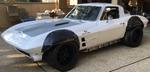
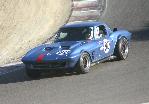
My Grand Sport vintage racer has DOT5 in the brake system. The pedal is high and firm. The brakes have NEVER let me down and I typically can out brake competitors going into a turn.
So now my question is,Can I install new calipers after flushing front lines, and replace the fluid in the front reservoir of MC to DOT3 ,bleed and retain a nice pedal, then do the same procedure to the rears which still have DOT5 at this point? (the front and rear reservoirs are separate and won't mix with each other?)
You can do that, but several here (myself included) think it's a bad idea.
Although the fluids are not physically mixing, you have two different systems responding to the same pedal pressure.
DOT5 is tricky. Some use it and have no issues. Others can never get it to work. I've read that even POURING DOT5 fluid quickly can create micro-bubbles, leading to soft pedal.
So my advise is go with one or the other for BOTH systems.
If you choose DOT5, flush before installing it, and handle it very gently, and follow the bleeding instructions carefully.
If you choose DOT3/4, remember that it absorbs as much as 10% of it's volume in water every year... So flush it often (every 2-3 years).











 Replacing brake fluid

















 PARKER O-ring manufacturer states in their definitive o-ring manual that EPDM will work for both DOT 3/4 and DOT 5. They specify a particular grade that they sell solely to the auto/truck industry for brake applications........and back it up with test results. But if rebuilders choose to use something else for whatever reason ($$) they have to put restrictions on the product.