When you click on links to various merchants on this site and make a purchase, this can result in this site earning a commission. Affiliate programs and affiliations include, but are not limited to, the eBay Partner Network.
I purchased a 1966 Corvette 327/350 HP in Nov./25 and have done extensive repairs / updates to it since.
It left the shop last week and I've had problems with the engine "overheating" - of course we live in Florida with constant hot weather.
It overheats in heavy stop / go traffic - a couple times it has exceeded 250 degrees in water temperature and I had to pull over until it cooled down.
We're looking at upgrading the radiator to one that cools easier, plus installing a built-in fan to keep the engine compartment cooler.
I had a 1965 Corvette coupe 327 / 300 HP in the early '80s and never had this problem.
Any suggestions out there to fix this overheating issue would be greatly appreciated.
I purchased a 1966 Corvette 327/350 HP in Nov./25 and have done extensive repairs / updates to it since.
It left the shop last week and I've had problems with the engine "overheating" - of course we live in Florida with constant hot weather.
It overheats in heavy stop / go traffic - a couple times it has exceeded 250 degrees in water temperature and I had to pull over until it cooled down.
We're looking at upgrading the radiator to one that cools easier, plus installing a built-in fan to keep the engine compartment cooler.
I had a 1965 Corvette coupe 327 / 300 HP in the early '80s and never had this problem.
Any suggestions out there to fix this overheating issue would be greatly appreciated.
when my original aluminum radiator sprung a leak a few years ago I replaced it with a brass one. Thought I would save a few $ since it was cheaper. It worked great except ran hot in traffic and idling. The original never ran hot. I finally spent the $ and bought a Dewitts direct replacement and it NEVER runs hot.
I purchased a 1966 Corvette 327/350 HP in Nov./25 and have done extensive repairs / updates to it since.
It left the shop last week and I've had problems with the engine "overheating" - of course we live in Florida with constant hot weather.
It overheats in heavy stop / go traffic - a couple times it has exceeded 250 degrees in water temperature and I had to pull over until it cooled down.
We're looking at upgrading the radiator to one that cools easier, plus installing a built-in fan to keep the engine compartment cooler.
I had a 1965 Corvette coupe 327 / 300 HP in the early '80s and never had this problem.
Any suggestions out there to fix this overheating issue would be greatly appreciated.
Many things. Is the system properly serviced and burped? You say it's over heating...as in the coolant has puked from the tank? ....or you are just going by the indication? Have you confirmed the indicated temperature with an IR thermometer? Have you checked for circulation when the thermostat opens? Is the fan clutch engaging with temperature?
Last edited by lucky131969; Mar 19, 2026 at 07:45 AM.
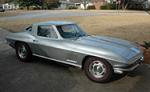
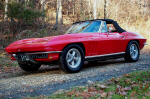
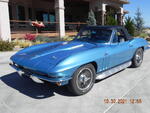
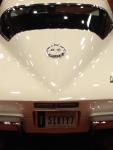
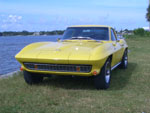
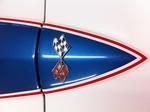
Woody - First off, Welcome to the Corvette Forum. You do know that all new members are 'required' to post up pics of their Corvettes...right?
Lucky took the words out of my mouth, just because the dash gauge indicates ungodly engine temps, that might just be due to the sending unit you have.
If it truly is overheating with all the attached issues like loosing coolant, then we can go over the basic things to check, timing, fuel delivery, clutch fan operation,
age and condition of the radiator and maybe water pump, etc. Walking into a parts house these days to get a replacement coolant temp sending unit can leave you with
indications that are way off. So help us out a bit and fill in some of the blanks like Lucky mentioned.
And...don't forget the pics ;-).
Mike T - Prescott AZ
Before you head down the rabbit hole, here is a good article of things to check by a renown master https://www.camaros.org/pdf/corv_cooling2.pdf
Don't get excited about the camaros in the title, they are all Chevys.
You could check the clutch fan, timing, vacuum advance, radiator hose, etc. I'll let you work thru JohnZ's article to find out if you really need a radiator or just a reset of the timing.
Ron
Welcome to the forum. Once you go through the "late" John Zs article, and you determine you need a new radiator, go with a DeWitts aluminum unit. I also have a 66 with an L-79 engine and run 180 degrees in the middle of summer in Florida even with the AC on full blast. Where in FL are you located? Jerry
Pressure test to be sure it's not a leaky head gasket first. Because it could be and has the same symptoms. Then dewitts and only dewitts. Bleed carefully
Before you head down the rabbit hole, here is a good article of things to check by a renown master https://www.camaros.org/pdf/corv_cooling2.pdf
Don't get excited about the camaros in the title, they are all Chevys.
You could check the clutch fan, timing, vacuum advance, radiator hose, etc. I'll let you work thru JohnZ's article to find out if you really need a radiator or just a reset of the timing.
Ron
Thank-you R66 for the “Camaro” link on over heating. I copied it and will put in my tool box for future reference. I had similar issues with my L72 and was surprised to find references to timing and fuel delivery causing issues with over heating. I have since had my carburetor and electronic distributor rebuilt along with a timing adjustment. Problem solved.
OP,
If you carefully read and follow John Hinckley's article you WILL find and solve your overheating issues...if in fact your car is truly overheating. I, too, owned a '67 L79 with factory A/C here in Texas and she always ran around 185*. Of course, it took a bit of undoing and fixing many items after reading John's article...but, it ultimately was a very reliable and wonderful car to own and drive.
BTW, don't ignore the small things like a properly functioning 15# radiator/surge tank cap.
Unfortunately, the FAQs on this forum seem to have dumped JohnZs articles as I couldn't access it from here. He has many more articles on the Camaro.org site that are invaluable to any Chevy owner. I know, some guys just don't want to admit their Corvette is just a Chevy, but John owned Camaros and even Vegas. He was definitely one of my heroes along with "Smoky" and others.
I'll chime in... post a couple photos of the engine compartment (radiator to firewall). We are assuming/envisioning original GM design and components, but your engine may have had modifications over the last 60 years. Many things folks do actually hinder cooling rather than help it.
I had an overheating problem also for a long time. I had to :burp the air out 4 or 5 times and replace a brand new defective stat. Get the rad. tested also for flow. Good luck.
You have been given the best information from the very experienced members, please follow. A quick tip/effort. See if the vacuum advance diaphram on the distributor is working. Start the engine, warm it up, then remove the vacuum line and see if the idle decreases. If it does not, that may say your advance mechinism is not working and that directly effects timing and idle temp. Dennis
It could be something else. I would first diagnose the problem with a pressure tester and check to see if any exhaust fumes are in the radiator fluid (exhaust dye kit). Easy to do before replacing any parts. Also get an IR gun to verify.
I threw the kitchen sink at my 66 427/390 as it also had over heating issues but did very well with this setup. (In no particular order...)
1) Timing/vacuum adv.
2) Water wetter in coolant
3) Flow Kooler impeller put into original/correct water pump. Not this water pump, but I called and they sent me the impeller; had to double-thick the back pump gaskets. https://flowkoolerwaterpumps.com/pro...3-4-water-pump
4) 180 degree thermostat--original 195 keeps it hotter unnecessarily.
5) DeWitts correct black repro Aluminum radiator
6) Correct fan clutch
7) Correct fan
I would do the easy stuff first like timing/vac adv, then thermostat, then water wetter, then get into the stuff that takes more wrenches.
In addition to the excellent info already posted, I found that installing the A/C fan and fan pulley on my non-A/C car reduced the temps considerably. The fan pulley is smaller which speeds up the fan relative to the crank RPM. In addition, the two extra blades helps out also.













 Engine overheating





















 Dennis