



CE Block ???
Race Director


Joined: Feb 2003
Posts: 13,238
Likes: 1,092
From: YANKEES UNIVERSE 70 454-LS5 500 ft-lbs Torque

LT-1 70,the link to Pro Team on restoration motors and original and counterfeit vettes is pretty funny,as when it comes to this subject he should know....

Heel & Toe

Joined: Sep 2006
Posts: 24
Likes: 0
From: MA
I don’t believe I said it had any advantage. So many opinions on this one, my question is can a documented car with a correct CE block get top honors. How much of a deduction would it incur? Your input is greatly appreciated.

Le Mans Master


Joined: Jan 2007
Posts: 5,485
Likes: 7
From: Peekskill NY

Race Director

Joined: Jul 2001
Posts: 15,892
Likes: 42
You're basically asking 'how long is a piece of string'. There's no one factor that will prevent a car from achieving a Top Flight award with the exception of a bogus trim tag. I'll take a guess here that you have no first hand knowledge of the judging system.
Let me answer it this way- let's assume 2 identical cars with 'zero issues' other than replacement engine blocks are presented for judging.
-Both had blocks with acceptable casting numbers,
-Both had acceptable casting dates
-The only difference is one has a 'virgin' unstamped pad and the other had just the CE number.
The deductions would be the same, a 50 point loss out of a perfect 4500. 25 for the incorrect engine machine code and 25 for no VIN derivative.
You can lose up to 270 points and still get a Top Flight.
Let me answer it this way- let's assume 2 identical cars with 'zero issues' other than replacement engine blocks are presented for judging.
-Both had blocks with acceptable casting numbers,
-Both had acceptable casting dates
-The only difference is one has a 'virgin' unstamped pad and the other had just the CE number.
The deductions would be the same, a 50 point loss out of a perfect 4500. 25 for the incorrect engine machine code and 25 for no VIN derivative.
You can lose up to 270 points and still get a Top Flight.
Heel & Toe
Joined: Sep 2006
Posts: 24
Likes: 0
From: MA
You're basically asking 'how long is a piece of string'. There's no one factor that will prevent a car from achieving a Top Flight award with the exception of a bogus trim tag. I'll take a guess here that you have no first hand knowledge of the judging system.
Let me answer it this way- let's assume 2 identical cars with 'zero issues' other than replacement engine blocks are presented for judging.
-Both had blocks with acceptable casting numbers,
-Both had acceptable casting dates
-The only difference is one has a 'virgin' unstamped pad and the other had just the CE number.
The deductions would be the same, a 50 point loss out of a perfect 4500. 25 for the incorrect engine machine code and 25 for no VIN derivative.
You can lose up to 270 points and still get a Top Flight.
Let me answer it this way- let's assume 2 identical cars with 'zero issues' other than replacement engine blocks are presented for judging.
-Both had blocks with acceptable casting numbers,
-Both had acceptable casting dates
-The only difference is one has a 'virgin' unstamped pad and the other had just the CE number.
The deductions would be the same, a 50 point loss out of a perfect 4500. 25 for the incorrect engine machine code and 25 for no VIN derivative.
You can lose up to 270 points and still get a Top Flight.

Last edited by LT-1 70; Apr 13, 2007 at 06:27 PM.

Melting Slicks


Joined: Mar 2002
Posts: 2,140
Likes: 7
From: Ohio
Their is no real problem with a CE block or any other block. They all get the Corvette from here to there. Out of 100 buyers looking for a LT-1 maybe ten think they need the original factory installed block and that is their choice. Those ten people are also the ones you see paying the big bucks for an original LT-1. Most of the time the original block car will sell for more money but a fool is born everyday and I hope I find one to pay me big bucks.
Drifting

Joined: Mar 2004
Posts: 1,873
Likes: 1
From: Savannah Ga
My only problem would be if it was the correct CE block.GM made CE blocks for every HP.It might or might not have the forged crank ect.Is there anyway of telling this?I'm sorry but I've never seen a CE block so I don't know
Corvette Stories
The Best of Corvette for Corvette Enthusiasts

Every 2027 Corvette Engine Explained
Joe Kucinski
Designer Imagines A Corvette That Looks More Like a Corvette Than the Corvette
Verdad Gallardo
10 Ugly Corvettes That We Still Kinda Love
Joe Kucinski
Top 10 Most Expensive Corvettes Ever Sold on Bring A Trailer
Brett Foote
10 Things Every Corvette Owner Needs (2026 Edition)
Michael S. Palmer
8 Most "Only Corvette Owners Understand" Quirks and Problems
Pouria Savadkouei
10 Reasons the C6 Z06 is Still A Performance Benchmark After 20 Years
Joe Kucinski
How Much Horsepower Every Corvette Engine "LOST" in 1972
Joe Kucinski
Top 10 DOs and DON'Ts for Protecting Your Convertible Top!
Michael S. Palmer
Thread Starter
Melting Slicks


Joined: Feb 2004
Posts: 2,040
Likes: 105
From: State of Confusion!!!
2018 C2 of Year Winner
Didn't GM just replace the block and use the internals and accessories from the original, or was the CE there version of a crate motor???
Drifting
Joined: Mar 2006
Posts: 1,526
Likes: 2
From: Oak Ridge NC
As a buyer when I looked for my original BB70 I wanted an original and was willing to pay the price. I checked all numbers of importance including the rear end, trans, engine stamping, altrnator, carb, etc.,
A future buyer who knows what he/she is doing will most likely discount for the engine and other main componants if they do not check out.
If you really want this car and it does not matter to you that it is NOT( and it is not if it is a warranty replacement) the original engine then make an offer for a NOM car. If the carb and alternator do not match up, it will cost you big time to find correct originals.

Drifting
Joined: Sep 2006
Posts: 1,259
Likes: 2
From: MS
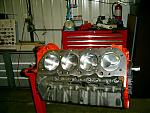
The problem with a CE block now 30 years after the fact is that you do not know that the CE engine in the car now is the same CE engine that might have been installed under warranty way back when. With probably hundreds of thousands of CE stamped blocks, yours could have come out of a 2 barrel Malibu. No big deal if you have a base engine car, but for somebody with an LT1, there is no way to know that the CE engine in the car today is the same forged engine that GM would have installed under warranty unless you pull it apart and look. The engine replaced by GM for your LT1 would have been exactly like the one that came out, but again how do you know that this is what you have in the car now. A CE block obviously assumes an engine change was made, but you can't assume your car has only had one engine change; some of these car's engines have been swapped multiple times. There is just nothing on the CE stamp that gives any indication what it is.

Drifting
Joined: Jun 2003
Posts: 1,455
Likes: 5
From: Upstate South Carolina
All 1970 350s were 3970010 blocks with 4 bolt mains. What made the engines 300hp, 350hp, or 370hp (LT-1s) was what went inside and what was attached to the engine. As noted above when a block was replaced any original usable parts were reused. Therefore an "LT-1" with a CE BLOCK may have the original factory intake manifold, carb, heads, alternator, AIR system, and internals. In addition, the car may retain many other unique LT-1 items such as the half shafts, BB hood, 2.5 inch exhaust, TI system, single fuel line, radiator, 6500 redline tach etc. IMO a car with all of the above is worth a great deal more than just another NOM small block car, particuarly if it retains a tank sticker that may further validate that the car is an original LT-1. How much more? I don't know, but I'd buy that car and I'd pay more than any numbers matching 300hp car.
Thread Starter
Melting Slicks
Joined: Feb 2004
Posts: 2,040
Likes: 105
From: State of Confusion!!!
2018 C2 of Year Winner
IMO a car with all of the above is worth a great deal more than just another NOM small block car, particuarly if it retains a tank sticker that may further validate that the car is an original LT-1. How much more? I don't know, but I'd buy that car and I'd pay more than any numbers matching 300hp car.
 !!
!!Can a compression check validate the 11:1 pistons, or do you need to pull the heads?? Do you have to pull the intake to verify solid lifters, or is the another way of telling?? Can you measure cam lift and duration by rocker arm movement?? All of these questions are going thru my head. I don't want to spend extra $$$ on a nice NOM small block. I want to find a desireable piece to have for future resale value, as well as enjoy with my son NOW!!!!!
Race Director
Joined: Jul 2001
Posts: 15,892
Likes: 42
Thread Starter
Melting Slicks
Joined: Feb 2004
Posts: 2,040
Likes: 105
From: State of Confusion!!!
2018 C2 of Year Winner
The CE block doesn't bother me, just how can I tell the internals are what they should be without doing a NASCAR post race teardown??? I don't think the current owner would let me rip the engine apart in his driveway!!!!!

Le Mans Master
Joined: Mar 2004
Posts: 7,503
Likes: 1,511
From: Little Rock AR
All 1970 350s were 3970010 blocks with 4 bolt mains. What made the engines 300hp, 350hp, or 370hp (LT-1s) was what went inside and what was attached to the engine. As noted above when a block was replaced any original usable parts were reused. Therefore an "LT-1" with a CE BLOCK may have the original factory intake manifold, carb, heads, alternator, AIR system, and internals. In addition, the car may retain many other unique LT-1 items such as the half shafts, BB hood, 2.5 inch exhaust, TI system, single fuel line, radiator, 6500 redline tach etc. IMO a car with all of the above is worth a great deal more than just another NOM small block car, particuarly if it retains a tank sticker that may further validate that the car is an original LT-1. How much more? I don't know, but I'd buy that car and I'd pay more than any numbers matching 300hp car.

The "CE" stamped engines were used for warranty AND engines sold over the counter to anyone that wanted to buy them. They could be installed in pickups, station wagons, or even Vettes.
I would be looking for date codes on EVERYTHING. There has GOT to be some unique LT-1 stuff on the car that has believable dates on them. If the engine does not have any LT-1 date coded parts that match close to the vehicle, they need to at least match the "CE" block cast date. The distributor date needs to be checked, the carb date, etc.
Look for the other LT-1 specific items on the rest of the car. No docs and no original engine means it is just another built-up car as far as value goes.
-Mark.
Race Director
Joined: Jul 2001
Posts: 15,892
Likes: 42
As others have said, look for all the other clues that this is a real LT1.
Le Mans Master


Joined: Nov 2001
Posts: 8,831
Likes: 1,959
From: LONG ISLAND
2025 C3 ('68-'73) of the Year Finalist - Unmodified
2024 C3 of the Year Finalist - Unmodified
2023 C3 of the Year Finalist - Unmodified
my .02
You Pay Bigtime For A "match" Because It Is What It Is !
You Have To Steal A "ce" Car - Because It Has A "story"
You Pay Bigtime For A "match" Because It Is What It Is !
You Have To Steal A "ce" Car - Because It Has A "story"