




Third ZL-1 ?
Melting Slicks


Joined: Sep 2006
Posts: 3,381
Likes: 2,604
From: Burning Jet-A

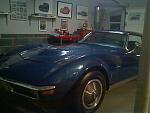
By the way, anyone that says a worn out 68/69 coupe that was a base motor car and is not worth the time should look at this one. This car was rotting away before he got it. Bodywork looks stunning, and sits perfectly. Awesome!
Here is the story...from Vette also...
What's the rarest Corvette to ever roll off the assembly line? Or the baddest of the bad factory-available performers? An L88? Nah, there were 216 documented examples built and sold during 1967-69. A '63 Z06? Nope, not with 199 of them in that one glorious year. How about a big-tank Z06? Sorry, those are still relatively commonplace, with 63 being factory-documented. The factory-built Corvette Challenge race cars for 1988 and 1989 are almost dime-a-dozen, with 116 of them assembled at Bowling Green.
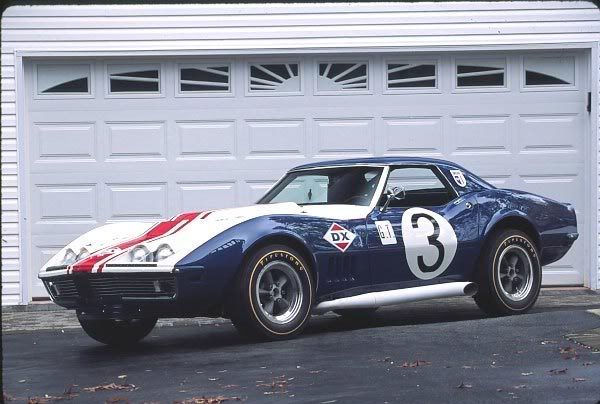
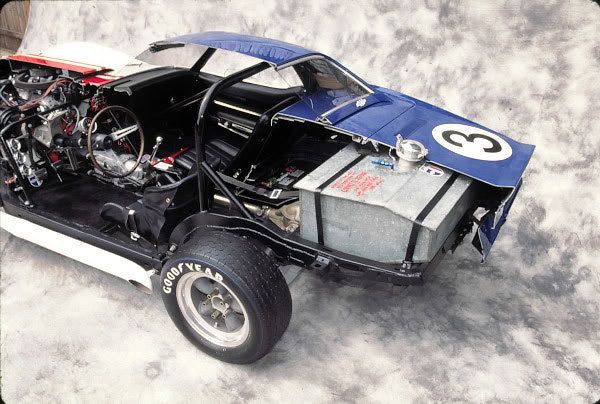
If you want really rare, look back to 1969 for the ultimate in rare and radical, factory-built Corvettes--the incredible ZL1. Two--that's right. Two Corvettes were ordered, built, and sold through Chevrolet dealerships with this ultimate rat motor--an all-aluminum (block and cylinder heads!) version of the already fearsome L88 big-block. There was also a handful (three dozen or so) '69 Camaros ordered and sold with the ZL1, primarily for NHRA drag racing. That was it, except for a couple hundred ZL1 engines that were sold to racing teams. ZL1-derived engines powered the incredibly dominant McLarens in the old Can Am series in the late '60s and early '70s, and they propelled nearly every Greenwood wide-body Corvette that competed in the IMSA series from '74 into the early '80s.
Then, a few years ago, Winters, the Ohio foundry that cast every one of the relative handful of ZL1 blocks, stumbled onto the original tooling amongst a batch of obsolete tools that were being cleared out. To make a long story short (after all, we did an article, "Born Again Big-Block," about this happy happenstance in the Sept. '01 issue), GM Performance Parts now sells brand-new ZL1 blocks, using the original tooling and incorporating some strategic upgrades to make them even stronger than the originals.
Around this same time, Kurt Sikora, an Elgin, Illinois, Corvette enthusiast, came across the sorry remains of what had once been a '69 coupe. Its owner had stripped it apart for restoration years before, then left it outdoors to the mercy of the elements. There was a bare frame, an unsupported body shell, and many five-gallon buckets filled with '69 Corvette parts that had been stored inside a leaky shed. To make matters worse, said buckets had been left open and every one of them was filled with water--rendering the precious parts into rusty junk. The condition of the derelict was such that, by rational standards, it couldn't even be considered a parts car. But...
Kurt really, really likes metal-bumper sharks. He'd already performed a full restoration on a '70 LT1 Stingray, so he had a good idea of what would be necessary to raise this hulk back from the nearly dead. Of the five model years of chrome-bumper sharks, his personal favorites were the '69s. The fact that the car was missing its engine and transmission simply meant that he could get innovative, rather than feeling limited to a numbers-matching restoration. And, with a total investment of $1,300, if the poor old Vette proved to be too far gone to save, he wouldn't be throwing away that much money.
With the pink slip in hand, Kurt towed the beastly beauty home and began a three-and-a-half-year restoration that would take him to swap meets far and wide, from Bloomington to Carlisle. "There wasn't anything particularly difficult to find, it was more a matter of finding the nicest quality parts available," Sikora said. Kurt did have some problems with the T-top gaskets, however. "I had some aftermarket gaskets, but they never fit right, so I had to pay a little extra to get the GM originals." But what's a little extra cash to assure your Vette doesn't turn into a fishbowl when it's caught out in the rain? With the last of GM's original stock produced installed, Kurt's tops were tight--a good thing since a bilge pump was not an available option on this version of a Corvette. With the insides protected, the interior was now something that could be worried about. But even that didn't take long to find as he discovered most of the carpet waiting for him in the bins of a swap meat, right next to some door panels, a dash, and some rather unique seats finished with velour inserts.
Moving onto the paint and body, some work was needed before the squirt job would be ready for the smear down. Farming out the work to someone more "able-bodied" gave Sikora a chance to contemplate the paint he wanted to slap on his baby. With Torch Red at the forefront, it was dumped for a custom mix of Jeep Grand Cherokee Sierra Pearl coat. When it came time to choose the engine, Kurt showed everyone that what he may not know about paint and body, he surely knows about engines. And what did our friend Kurt choose for his '69? Well the only thing he could choose if he wanted to make the same statement about high performance that Corvette did the same year his car was born was a ZL1. But Kurt wasn't happy with any old run-of-the-mill ZL1, so he had the block bored and stroked from a 427 to an incredible 496. Once the block was ready to race, the rest of the engine was made to follow. Callies crankshaft and rods were installed and connected to Wiseco 10.5:1 pistons before Comp pushrods were placed inside along with one of their cams rated at .652 lift and 262 degrees of duration. Topped off with JE rings and Federal-Mogul bearings residing under rectangular-port aluminum heads with 2.25-inch stainless steel valves on the intake and 1.88-inch on the exhaust, everything resides under GMPP valve covers and a Moroso breather.
After going as far as to match-port the heads, Sikora went a little further by modifying a Weiand tunnel ram intake manifold. With the unit cut down 1 1/2 inches to fit under the hood, 55-pound Siemens injectors and a 1,300-cfm throttle body from Arizona Speed and Marine were installed. Kurt's handiwork doesn't stop there! After custom-fabricating billet aluminum engine pulleys, Kurt now had the offset he needed to mount the alternator lower. And speaking of electrical, Kurt wouldn't be running this Shark anywhere without an MSD distributor, coil, and wire set. With the engine now taken care of, he had to find a place to send the spent gases to. With the help of Hooker, a set of their headers were matched up to a set of their side pipes.
Now that the checklist was almost complete, Sikora set his sights on a transmission. While rowing a standard set gears in this boat may seem the logical way to go, Kurt selected a Richmond six-speed without even giving the slushbox another look. As the proud owner told us, "I choose the six-speed because I was running 26-inch tires, and I didn't want the car revving out of its mind. In theory, the car is geared to go 212 mph at 6,600 rpm in Sixth gear, but I haven't verified that yet." While some may think that Kurt has his head in the clouds with talk of theory, we assure you his feet are firmly planted on the ground when he cruises comfortably at 60 mph while running at a low 2,000 rpm. But at a moments notice, he's ready to prove a point thanks to a Centerforce clutch and pressure plate that transfers all his Vette can give back to a stout 3.73-geared rearend. The suspension was kept stock; staying with the F41 suspension components seemed like the right thing to do, but Kurt did mount the rear suspension using offset trailing arms. With the increased backspacing this combination had to offer, Sikora was able to keep the 315/35R17s Kumhos wrapped around 17-inch Billet Specilities Streamline wheels tucked neatly in the fenderwells. But all this would be for naught if the frame tied itself into a knot thanks to all that torque. To keep this from happening, Kurt boxed in and encapsulated the side rails from the door to the rear wheel. With the get-up-and-go sorted out, it was time to figure out how to sit-down-and-stop. Using the stock system along with a set of GT rotors gave him all the stopping power he need to keep things from getting hairy.
And, even though Kurt isn't into collecting trophies, this three-and-a-half-year project won him a First in Class award at the 2001 Chicago World of Wheels. And, soon he'll be hitting the Chicago tracks hoping to get somewhere in the 10s. We figure with Kurt's ability to pick an engine, he should also be able to pick a number. So, if you're in the Chicago-land area and happen to hear a loud roar followed by a blur, Kurt Sikora probably just waved to you

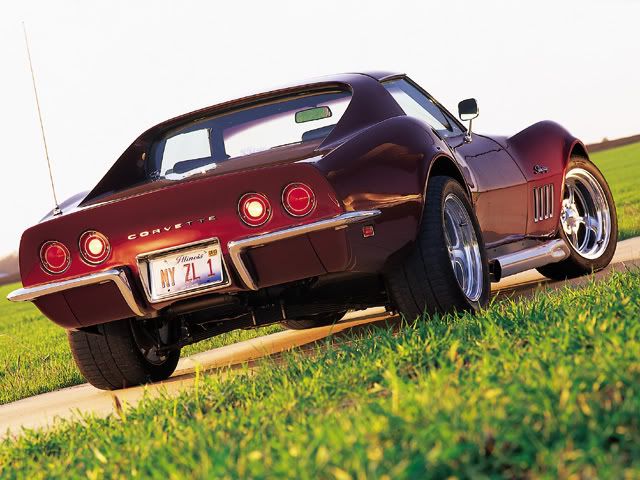


Here is the story...from Vette also...
What's the rarest Corvette to ever roll off the assembly line? Or the baddest of the bad factory-available performers? An L88? Nah, there were 216 documented examples built and sold during 1967-69. A '63 Z06? Nope, not with 199 of them in that one glorious year. How about a big-tank Z06? Sorry, those are still relatively commonplace, with 63 being factory-documented. The factory-built Corvette Challenge race cars for 1988 and 1989 are almost dime-a-dozen, with 116 of them assembled at Bowling Green.
If you want really rare, look back to 1969 for the ultimate in rare and radical, factory-built Corvettes--the incredible ZL1. Two--that's right. Two Corvettes were ordered, built, and sold through Chevrolet dealerships with this ultimate rat motor--an all-aluminum (block and cylinder heads!) version of the already fearsome L88 big-block. There was also a handful (three dozen or so) '69 Camaros ordered and sold with the ZL1, primarily for NHRA drag racing. That was it, except for a couple hundred ZL1 engines that were sold to racing teams. ZL1-derived engines powered the incredibly dominant McLarens in the old Can Am series in the late '60s and early '70s, and they propelled nearly every Greenwood wide-body Corvette that competed in the IMSA series from '74 into the early '80s.
Then, a few years ago, Winters, the Ohio foundry that cast every one of the relative handful of ZL1 blocks, stumbled onto the original tooling amongst a batch of obsolete tools that were being cleared out. To make a long story short (after all, we did an article, "Born Again Big-Block," about this happy happenstance in the Sept. '01 issue), GM Performance Parts now sells brand-new ZL1 blocks, using the original tooling and incorporating some strategic upgrades to make them even stronger than the originals.
Around this same time, Kurt Sikora, an Elgin, Illinois, Corvette enthusiast, came across the sorry remains of what had once been a '69 coupe. Its owner had stripped it apart for restoration years before, then left it outdoors to the mercy of the elements. There was a bare frame, an unsupported body shell, and many five-gallon buckets filled with '69 Corvette parts that had been stored inside a leaky shed. To make matters worse, said buckets had been left open and every one of them was filled with water--rendering the precious parts into rusty junk. The condition of the derelict was such that, by rational standards, it couldn't even be considered a parts car. But...
Kurt really, really likes metal-bumper sharks. He'd already performed a full restoration on a '70 LT1 Stingray, so he had a good idea of what would be necessary to raise this hulk back from the nearly dead. Of the five model years of chrome-bumper sharks, his personal favorites were the '69s. The fact that the car was missing its engine and transmission simply meant that he could get innovative, rather than feeling limited to a numbers-matching restoration. And, with a total investment of $1,300, if the poor old Vette proved to be too far gone to save, he wouldn't be throwing away that much money.
With the pink slip in hand, Kurt towed the beastly beauty home and began a three-and-a-half-year restoration that would take him to swap meets far and wide, from Bloomington to Carlisle. "There wasn't anything particularly difficult to find, it was more a matter of finding the nicest quality parts available," Sikora said. Kurt did have some problems with the T-top gaskets, however. "I had some aftermarket gaskets, but they never fit right, so I had to pay a little extra to get the GM originals." But what's a little extra cash to assure your Vette doesn't turn into a fishbowl when it's caught out in the rain? With the last of GM's original stock produced installed, Kurt's tops were tight--a good thing since a bilge pump was not an available option on this version of a Corvette. With the insides protected, the interior was now something that could be worried about. But even that didn't take long to find as he discovered most of the carpet waiting for him in the bins of a swap meat, right next to some door panels, a dash, and some rather unique seats finished with velour inserts.
Moving onto the paint and body, some work was needed before the squirt job would be ready for the smear down. Farming out the work to someone more "able-bodied" gave Sikora a chance to contemplate the paint he wanted to slap on his baby. With Torch Red at the forefront, it was dumped for a custom mix of Jeep Grand Cherokee Sierra Pearl coat. When it came time to choose the engine, Kurt showed everyone that what he may not know about paint and body, he surely knows about engines. And what did our friend Kurt choose for his '69? Well the only thing he could choose if he wanted to make the same statement about high performance that Corvette did the same year his car was born was a ZL1. But Kurt wasn't happy with any old run-of-the-mill ZL1, so he had the block bored and stroked from a 427 to an incredible 496. Once the block was ready to race, the rest of the engine was made to follow. Callies crankshaft and rods were installed and connected to Wiseco 10.5:1 pistons before Comp pushrods were placed inside along with one of their cams rated at .652 lift and 262 degrees of duration. Topped off with JE rings and Federal-Mogul bearings residing under rectangular-port aluminum heads with 2.25-inch stainless steel valves on the intake and 1.88-inch on the exhaust, everything resides under GMPP valve covers and a Moroso breather.
After going as far as to match-port the heads, Sikora went a little further by modifying a Weiand tunnel ram intake manifold. With the unit cut down 1 1/2 inches to fit under the hood, 55-pound Siemens injectors and a 1,300-cfm throttle body from Arizona Speed and Marine were installed. Kurt's handiwork doesn't stop there! After custom-fabricating billet aluminum engine pulleys, Kurt now had the offset he needed to mount the alternator lower. And speaking of electrical, Kurt wouldn't be running this Shark anywhere without an MSD distributor, coil, and wire set. With the engine now taken care of, he had to find a place to send the spent gases to. With the help of Hooker, a set of their headers were matched up to a set of their side pipes.
Now that the checklist was almost complete, Sikora set his sights on a transmission. While rowing a standard set gears in this boat may seem the logical way to go, Kurt selected a Richmond six-speed without even giving the slushbox another look. As the proud owner told us, "I choose the six-speed because I was running 26-inch tires, and I didn't want the car revving out of its mind. In theory, the car is geared to go 212 mph at 6,600 rpm in Sixth gear, but I haven't verified that yet." While some may think that Kurt has his head in the clouds with talk of theory, we assure you his feet are firmly planted on the ground when he cruises comfortably at 60 mph while running at a low 2,000 rpm. But at a moments notice, he's ready to prove a point thanks to a Centerforce clutch and pressure plate that transfers all his Vette can give back to a stout 3.73-geared rearend. The suspension was kept stock; staying with the F41 suspension components seemed like the right thing to do, but Kurt did mount the rear suspension using offset trailing arms. With the increased backspacing this combination had to offer, Sikora was able to keep the 315/35R17s Kumhos wrapped around 17-inch Billet Specilities Streamline wheels tucked neatly in the fenderwells. But all this would be for naught if the frame tied itself into a knot thanks to all that torque. To keep this from happening, Kurt boxed in and encapsulated the side rails from the door to the rear wheel. With the get-up-and-go sorted out, it was time to figure out how to sit-down-and-stop. Using the stock system along with a set of GT rotors gave him all the stopping power he need to keep things from getting hairy.
And, even though Kurt isn't into collecting trophies, this three-and-a-half-year project won him a First in Class award at the 2001 Chicago World of Wheels. And, soon he'll be hitting the Chicago tracks hoping to get somewhere in the 10s. We figure with Kurt's ability to pick an engine, he should also be able to pick a number. So, if you're in the Chicago-land area and happen to hear a loud roar followed by a blur, Kurt Sikora probably just waved to you
Last edited by international blue; Nov 21, 2007 at 11:10 PM.

Le Mans Master


Joined: Apr 2007
Posts: 7,353
Likes: 72
From: Graceland in a Not Correctly Restored Stingray

No, sold that back to Ray Godman (Tennessee Boll Weevil AA/FC) a few years ago. It sat on the end table opposite the Crower for a while, and balanced the den out nicely, but chicks have never understood my affliction.

Don't have my '70 ZR1 or '76 Lola T332 SchKee Can Am racer anymore either, but I do still have what could well be the first 500+ cid Buick BB ever built, seeing as I'm the one who originally enlisted Moldex to produce the first Chevy journaled Buick billet stroker crank nearly 30 years ago. Sorry, can't find a pic of that jewel (but still have the paperwork if anyone from Popular Hotrodding wants to argue about it).
Back to topic. Saw that yellow one was in a mag a couple of years back. And, that red one (belongs to a DC'er?) is just beautiful!

Last edited by TheSkunkWorks; Nov 22, 2007 at 12:43 AM.

Drifting

Joined: Sep 2006
Posts: 1,259
Likes: 2
From: MS

Race Director


Joined: Jan 2003
Posts: 18,341
Likes: 101
Just curious. Why does anybody care? These things are just glorified paperweights, available only to the wealthy collector. You'll never see them on the road or track. Show me one that is actually out there wearing out tires and brake pads, and then you'll get my attention. Until then, WGAS?
 ........
At the risk of getting INSULTING here.
Who cares?
Anyone here could buy a similar model car, toss in a Big Chevy motor of most any size and pass it off as a ZL1 and only the HOPELESSLY devoted and older Corvette enthusiasts would know this was TOTAL BS!

These cars are both (or maybe all 3) museum pieces at this point.
Their place in Corvette history is assured and it would probably be best in the long haul if at least one were to end up in the museum.
On a side note were these cars the be all and end all anyway?
There are a fair number MORE ZL1 Camaros out there. These engines were supposed to be the Hemi- challenger at the drag races...........with the weight savings and new designed heads the engine was really the HOT TICKET for the more commonly drag raced Camaro rather than the Corvette. Probably explains why there are so many more ZL1 Camaros than the very few ZL1 Corvettes.
Seems to me I've heard stories about these engines not living up to the billing anyway.
Who knows the real story here?
Corvette Stories
The Best of Corvette for Corvette Enthusiasts

150 hp to 1,250 hp: Every Corvette Generation Compared by the Specs That Matter
Joe Kucinski
8 Coolest Corvette Pace Cars (and Replicas) of All Time
Verdad Gallardo
Top 10 Corvette Engines RANKED by Peak Torque (70+ Years of Muscle!)
Joe Kucinski
Corvette ZR1X Will Be Pacing the Indy 500, And Could Probably Race, Too!
Verdad Gallardo
Top 10 Corvettes Coming to Mecum Indy 2026!
Brett Foote
Top 10 C9 Corvette MUST-HAVES to Fix These C8 Generation Flaws!
Michael S. Palmer
10 Revolutionary 'Corvette Firsts' Most People Don't Know
Joe Kucinski
5 Reasons to Upgrade to an LS6-Powered Corvette; 5 Reasons to Stay LT2
Michael S. Palmer
2027 Corvette vs The World: Every C8 vs Its Closest Competitor
Joe Kucinski
Melting Slicks
Joined: Nov 2004
Posts: 2,672
Likes: 6
From: Nevada City California
It is a big deal. The fact that Chevrolet would spend the time and effort to build the ZL-1 option and make it a possibility that the public could actually purchase one in a Corvette is huge. The fact that the ZL-1 and L-88 options do not show up on the Preliminary Corvette Order form or the Corvette Order Form for the 1969 model year should give you a hint as to the clandestine nature of these powerplants and what their intended usage was by Chevrolet. George Heberlong was the St. Louis plant superintendent in 1969 and he ordered a ZL-1 Corvette as his company car, it wasn't purchased to race by a racer, but just by someone who wanted the baddest Corvette option available at the time.
The price tag of the option was incredibly high, it doubled the cost of the car! The ZL-1 option is indeed a very special big deal.
The price tag of the option was incredibly high, it doubled the cost of the car! The ZL-1 option is indeed a very special big deal.
Last edited by early shark; Nov 22, 2007 at 12:13 PM.


Race Director
Joined: Jan 2003
Posts: 18,341
Likes: 101
It is a big deal. The fact that Chevrolet would spend the time and effort to build the ZL-1 option and make it a possibility that the public could actually purchase one in a Corvette is huge. The fact that the ZL-1 and L-88 options do not show up on the Preliminary Corvette Order form or the Corvette Order Form for the 1969 model year should give you a hint as to the clandestine nature of these powerplants and what their intended usage was by Chevrolet. George Heberlong was the St. Louis plant superintendent in 1969 and he ordered a ZL-1 Corvette as his company car, it wasn't purchased to race by a racer, but just by someone who wanted the baddest Corvette option available at the time.
The price tag of the option was incredibly high, it doubled the cost of the car! The ZL-1 option is indeed a very special big deal.
The price tag of the option was incredibly high, it doubled the cost of the car! The ZL-1 option is indeed a very special big deal.
I even know the stories about how the advertised power numbers were held back to make the more "Pedestrian" version of the 427 motor look more powerful. I've heard all that part about a million times over the years. Must have left people wondering why the FAR more expensive engine option had less horse power.
Still, these engines, as I understand the history, were supposed to be "help" direct from the factory for the suffering Chevy racers getting their butts kicked by the Hemi Cars. The numbers above concerning Camaros with the ZL1 is a little off. I've heard their were actually more than a "few dozen ZL1 Camaros. There HAD to be so the engine would qualify as a Production motor eligible for racing, I think 50 cars built and sold was the number required and I've always heard 69 cars in 69 were actually built.
Correct me here if I'm wrong though because this is the part I really know nothing about and I'm only going on stories I've heard over the years (my family ,dad, brothers and my husband all are Chevy guys) but for what-ever reason in racing situations the aluminum head version of this 427,....... the part that really distinguishes them as ZL1 right?
 ......... anyway I always understood that a lot of the racers back then went back to the iron heads because the aluminum didn't work as well in racing as it had in factory testing?
Where have I got this wrong?
Melting Slicks
Joined: Nov 2004
Posts: 2,672
Likes: 6
From: Nevada City California
The durability factor involved the aluminum cylinder case, not the heads. It was determined that the cast iron cylinder case caused less distortion under high stresses (caused by excessively high rpms in the rotating assembly).
The advantage of the aluminum cylinder case was less weight. The ZL-1 option itself had many differences between it and the L-88. Camshaft specification differences, rod bolt material differences, piston dome configuration differences, etc. The ZL-1 engine was designed with differences in the aluminum heads as well, exhaust port configuration, intake port floor reconfiguration, larger exhaust valve face diameter and so on. The '69 model L-88 engine option adopted these revised aluminum heads that were designed for the ZL-1 option mid model year run. All 1968 and most 1969 L-88 engines run the earlier designed aluminum heads, which did not use the improvements made with the ZL-1 head.
The advantage of the aluminum cylinder case was less weight. The ZL-1 option itself had many differences between it and the L-88. Camshaft specification differences, rod bolt material differences, piston dome configuration differences, etc. The ZL-1 engine was designed with differences in the aluminum heads as well, exhaust port configuration, intake port floor reconfiguration, larger exhaust valve face diameter and so on. The '69 model L-88 engine option adopted these revised aluminum heads that were designed for the ZL-1 option mid model year run. All 1968 and most 1969 L-88 engines run the earlier designed aluminum heads, which did not use the improvements made with the ZL-1 head.
Melting Slicks
Joined: Sep 2006
Posts: 3,381
Likes: 2,604
From: Burning Jet-A
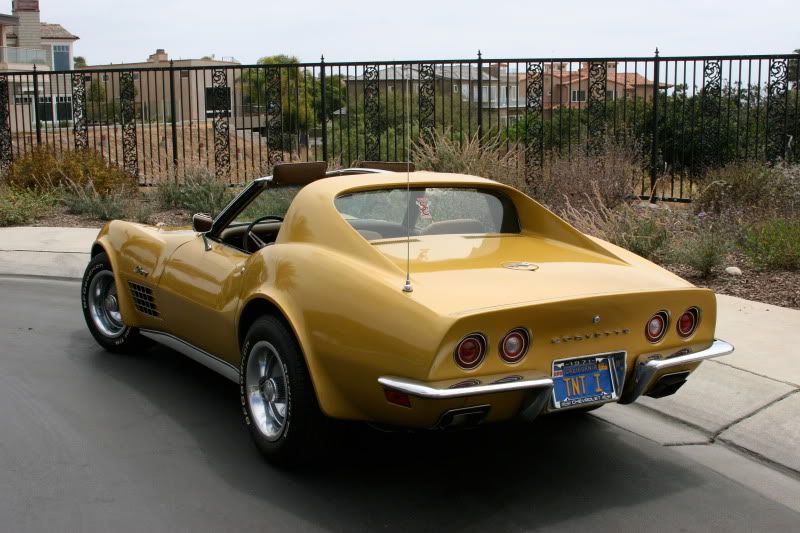
I agree that it still is a big deal. The reason is as stated above, but with a wrinkle or two.
Today many "base" motor and low option cars, coupes especially from 68-69 are still at risk of being lost forever through being parted out or condemmed to molder away.
"New" ZL-1's and L-88's allow the classic shape of the chrome bumper C-3's to live on...and preserve the legacy where it belongs...on the street. Regardless of what the collectors that own the premium cars do, its up to the drivers of the tribute cars to keep them alive.
Of course if I find a good 71 I may build a ZR-2....
Today many "base" motor and low option cars, coupes especially from 68-69 are still at risk of being lost forever through being parted out or condemmed to molder away.
"New" ZL-1's and L-88's allow the classic shape of the chrome bumper C-3's to live on...and preserve the legacy where it belongs...on the street. Regardless of what the collectors that own the premium cars do, its up to the drivers of the tribute cars to keep them alive.
Of course if I find a good 71 I may build a ZR-2....
Le Mans Master
Joined: Apr 2007
Posts: 7,353
Likes: 72
From: Graceland in a Not Correctly Restored Stingray
I was going to mention the ZR2. That, to me, would have been the ultimate C3 combo.
The previous owner of the ZR1 I had chunked the LT1 in favor of a BB, along with other "mods". In retrospect it all looks kind of stupid now, but remember that back in the day these things were not considered collector cars. Still, why did I ever sell it??
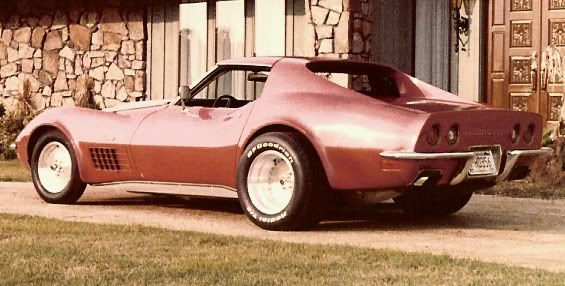
The previous owner of the ZR1 I had chunked the LT1 in favor of a BB, along with other "mods". In retrospect it all looks kind of stupid now, but remember that back in the day these things were not considered collector cars. Still, why did I ever sell it??

Race Director

Joined: Apr 2003
Posts: 19,347
Likes: 654
From: Tampa, Florida
Correct me here if I'm wrong though because this is the part I really know nothing about and I'm only going on stories I've heard over the years (my family ,dad, brothers and my husband all are Chevy guys) but for what-ever reason in racing situations the aluminum head version of this 427,....... the part that really distinguishes them as ZL1 right? ......... anyway I always understood that a lot of the racers back then went back to the iron heads because the aluminum didn't work as well in racing as it had in factory testing?
Where have I got this wrong?
......... anyway I always understood that a lot of the racers back then went back to the iron heads because the aluminum didn't work as well in racing as it had in factory testing?Where have I got this wrong?
Back to the cars...I'm still a little confused......
Rogers with the fake engine
White one
Orange one
Which 2 of the 3 are considered to be the 2 sold with invoices? Rogers and the orange one?
Melting Slicks
Joined: Sep 2006
Posts: 3,381
Likes: 2,604
From: Burning Jet-A
Yep....but I just read the magizines also. The only persont that really knows for sure is....GOD.
No really,
Here is an interesting ZL-1 Camaro Link....
http://www.69zl1.com/
No really,
Here is an interesting ZL-1 Camaro Link....
http://www.69zl1.com/
Race Director
Joined: Apr 2003
Posts: 19,347
Likes: 654
From: Tampa, Florida
The Daytona yellow coupe, Rogers, has a CE engine? I dont mean to be a cynic but that whole 'we found the original engine' part of the story bothers me. Its not a numbers matching engine so in reality it could be a ZL-1 from wherever? Original by provenance?
Do they have paper work from GM documenting a specific # CE engine as being installed in the yellow car?