





overheating problems with 454's ?

Thread Starter
Drifting


Joined: Jun 2005
Posts: 1,775
Likes: 30
From: Haslett MI
 overheating problems with 454's ?
did you ever have trouble with your 454 overheating ?
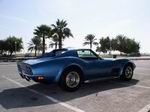
my wife wants a 73 Vette in a bad way (new front end, chrome bumper rear) and I finally found one with stuff on it she wanted, but she passed because someone told her they had overheating problems with 454 cars
just curious
my wife wants a 73 Vette in a bad way (new front end, chrome bumper rear) and I finally found one with stuff on it she wanted, but she passed because someone told her they had overheating problems with 454 cars
just curious

Burning Brakes


Joined: Feb 2004
Posts: 958
Likes: 1
From: In the Beautiful Shenandoah Valley of VA
Overheating on a big block (with the possible exception of a '68) is not a problem if everything is correct. This means the right coolant mix, a properly operating fan and fan clutch, the proper size radiator, and a fan shroud installed. All of the seals must be installed between the radiator support, radiator and fan shroud. These seals ensure sufficient airflow through the radiator. I have a '74 LS-4 big block, and while it hasn't had a lot of road time, it has run for as long as 30 minutes and never shown an indication to overheat.
Steve
Steve

Team Owner


Joined: Jan 2006
Posts: 37,637
Likes: 3,118
From: Crossville TN
 But the primary reason for "hot-running" engines is that the old radiator is gummed up on the inside of the cooling fins. Remove that 'puppy' and have it cleaned [not just flushed]; that, and the items listed above, will cure any overheating issues. I wouldn't reject a great car like that for an overheating concern.
Le Mans Master


Joined: Nov 2001
Posts: 8,878
Likes: 1,980
From: LONG ISLAND
2025 C3 ('68-'73) of the Year Finalist - Unmodified
2024 C3 of the Year Finalist - Unmodified
2023 C3 of the Year Finalist - Unmodified
Overheating on a big block (with the possible exception of a '68) is not a problem if everything is correct. This means the right coolant mix, a properly operating fan and fan clutch, the proper size radiator, and a fan shroud installed. All of the seals must be installed between the radiator support, radiator and fan shroud. These seals ensure sufficient airflow through the radiator. I have a '74 LS-4 big block, and while it hasn't had a lot of road time, it has run for as long as 30 minutes and never shown an indication to overheat.
Steve
Steve
AND DONT FORGET TO INCLUDE THE THERMOSTAT & WATER PUMP..........
PS.
AND MY 68' BB NEVER OVERHEATS !!!
Instructor


Joined: Jan 2008
Posts: 149
Likes: 8
From: Scarborough Qld
10 Hour Drive
I have a 71 BB 454.
I couldnt keep the temp below 110 (celsius) with the original radiator in it. Slow runs with frequent stops were thee only way I could drive it.
I put in a good quality aluminium radiator, new hoses, & repalced the thermostat. This has been the best money I have ever spent.
I have taken the car on a 1000 km (600 mile) trip on a very hot day & the temp didnt shift over the thermstat rating. ( about 92)
I couldnt keep the temp below 110 (celsius) with the original radiator in it. Slow runs with frequent stops were thee only way I could drive it.
I put in a good quality aluminium radiator, new hoses, & repalced the thermostat. This has been the best money I have ever spent.
I have taken the car on a 1000 km (600 mile) trip on a very hot day & the temp didnt shift over the thermstat rating. ( about 92)
Race Director


Joined: Feb 2003
Posts: 13,238
Likes: 1,092
From: YANKEES UNIVERSE 70 454-LS5 500 ft-lbs Torque
My 70 ran a little hot,changed the radiator and water pump,promblem solved.Do Not let what someone says discourage you in buying the 454 you are looking at.
Corvette Stories
The Best of Corvette for Corvette Enthusiasts

5 Best & 5 Worst Corvette Daily Drivers
Joe Kucinski
The Headlights of Every Corvette Generation Explained
Joe Kucinski
5 Best & 5 Most Overrated Corvette Track Packages of All Time!
Joe Kucinski
Every 2027 Corvette Engine Explained
Joe Kucinski
Designer Imagines A Corvette That Looks More Like a Corvette Than the Corvette
Verdad Gallardo
10 Ugly Corvettes That We Still Kinda Love
Joe Kucinski
Top 10 Most Expensive Corvettes Ever Sold on Bring A Trailer
Brett Foote
10 Things Every Corvette Owner Needs (2026 Edition)
Michael S. Palmer
8 Most "Only Corvette Owners Understand" Quirks and Problems
Pouria Savadkouei
Race Director


Joined: Apr 2003
Posts: 19,353
Likes: 654
From: Tampa, Florida
Like everyone has said, if all components are working properly you'll be OK with a BB.
Burning Brakes
Joined: Aug 2005
Posts: 1,209
Likes: 87
From: Putnam county NY
2025 c3 ('68-'73) of the Year Finalist - Unmodified
2024 C3 of the Year Finalist - Unmodified
I installed new seals between the radiator and support and shroud and radiator. The radiator/support sealing was OK but there were massive gaps between the shroud and radiator. I wouldn't doubt that more air was coming through the gaps than through the radiator. I picked up some pipe insulation foam from Home Depot and filled the gaps.
Like everyone has said, if all components are working properly you'll be OK with a BB.
Like everyone has said, if all components are working properly you'll be OK with a BB.
Instructor

Joined: Jan 2006
Posts: 225
Likes: 0
From: Auburndale Florida

Race Director
Joined: Nov 2002
Posts: 12,142
Likes: 54
From: Taylor Michigan
Parts Wear Out!
A bubba free BBC or any other Chevy engine never overheats beyond OEM replacement parts. It`s only where one believes incorrectly that they are better at developing a cooling system than the Generals staff that merely engineers and makes the Vettes. .
Le Mans Master
Joined: Nov 2001
Posts: 8,878
Likes: 1,980
From: LONG ISLAND
2025 C3 ('68-'73) of the Year Finalist - Unmodified
2024 C3 of the Year Finalist - Unmodified
2023 C3 of the Year Finalist - Unmodified
Burning Brakes
Joined: Oct 2002
Posts: 914
Likes: 14
From: Aberdeen, Scotland
Drive in Houston!
My LS-5 has had alot of time and effort put into the cooling system. I have a DeWitts Rad, etc ... etc. It runs "ok", in HOT Houston weather. Just ok..... until I get stuck in traffic. I basicly avoid areas and times when I even think traffic will be bad. And, before everyone tells me that these cars are just fine with stock parts, I have replaced everything. The DeWitts Radiator helped, as did a new fan shroud and all new seals. The Stewart water pump and running an 80/20 helped too. Just be prepared as they don't run cool.!
Still I wouldn't trade my 454 for any Small Block!
carbster09
Still I wouldn't trade my 454 for any Small Block!
carbster09
Race Director
Joined: Nov 2002
Posts: 12,142
Likes: 54
From: Taylor Michigan
This One Dont!
Well heres one I know dont overheat. People that never owned a Vette from new for some reason go overboard and spread rumors about Vettes for whatever reason it relates too. This year does this and that year does something else and so on. This one didn`t get hot when new and there isnt any reason for it to suddenly get a reputation of overheating as it approaches a certain age. Thats a bunch of  Oh, and this one hasn`t had any problems because we have had it since new. No smart *** ever got his hands on it to screw it up...
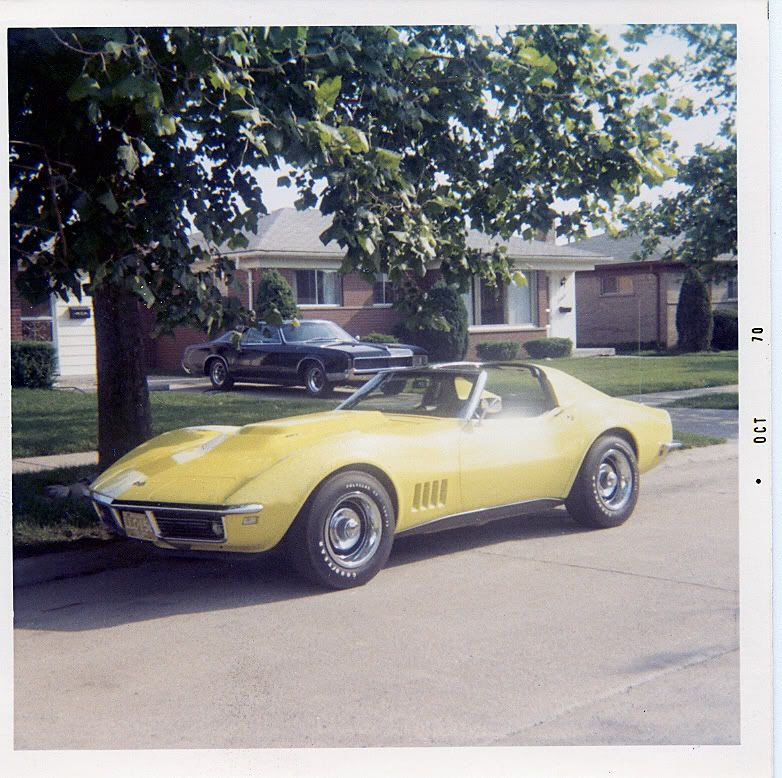
Oh, and this one hasn`t had any problems because we have had it since new. No smart *** ever got his hands on it to screw it up...

3rd Gear
Joined: Dec 2007
Posts: 3
Likes: 0
I used to own a '73 LS-4 with A/C. I lived in south-east California, 120 degree temps in the day during the summer.
The car would run fine on the highway, but would get to about 210-220 in city driving, with the A/C on. .
Heat soak seemed to be a bigger issue. After shutting it down, the temp would be almost in the red when you came back to start it up (such as stopping at 7/11 for a Slurpy).
It is very important that the fan shroud, fan clutch, and every seal and gasket that forces air through the radiator be in place.
The LS-4 never overheated, but it also never ran as cool as the other two small block Corvettes I've owned.
The car would run fine on the highway, but would get to about 210-220 in city driving, with the A/C on. .
Heat soak seemed to be a bigger issue. After shutting it down, the temp would be almost in the red when you came back to start it up (such as stopping at 7/11 for a Slurpy).
It is very important that the fan shroud, fan clutch, and every seal and gasket that forces air through the radiator be in place.
The LS-4 never overheated, but it also never ran as cool as the other two small block Corvettes I've owned.
Melting Slicks


Joined: Jan 2003
Posts: 2,877
Likes: 13
From: Doha
St. Jude Donor '08
I just cant believe the big block corvettes would survive in a hot place (like my place, where we get 100F+ during summer) with all stock cooling system, its just not sufficient (I am talking here about big block with A/C on, it must be on since its a hot place!). In my humble experience, I cant even find it sufficient with A/C off!. I now have a Dewitt aluminum radiator and dual spals, and I don't have any cooling issues.
Bottom line : If you live in a hot place, upgrade your cooling system, otherwise, just enjoy the raw power and muscular sound of a big block!
Bottom line : If you live in a hot place, upgrade your cooling system, otherwise, just enjoy the raw power and muscular sound of a big block!
Team Owner
Joined: Jan 2006
Posts: 37,637
Likes: 3,118
From: Crossville TN
Unless you are "putting the pedal down" [more than you need to], a BB won't generate much more heat than a SB. Some additional friction due to the difference in part sizes.... At idle, it will generate about 10-15% more than SB, just due to cylinder volume. If the [stock] radiator is in good shape and there are no problems with water pump, etc., there should be no problem....with the possible exception of sitting idle for a significant amount of time, A/C turned on (MAX), sitting in the sun on a summer day in Phoenix (110F+). But, I think that would be a problem for the SB engine, too. Have the radiator professionally cleaned--and repaired, if necessary--and there should be no problem. If you live in a hot environment, I would also recommend going to a 160F thermostat. {Your car will likely stabilize at about 180F, but might run a bit cooler than that at cruising speed.}
Team Owner
Joined: Jan 2006
Posts: 37,637
Likes: 3,118
From: Crossville TN
Jim....
You are obviously a young fellow. Low 200's is a 'normal' operating temperature....for US autos built after 1973. That is when the thermostats were changed from 180F to 195F for emissions control reasons. Prior to that, GM V8 engines (1955 thru 1972, at least) had 180F thermostats specified...because that is what GM determined to be the best average operating temperature during their development activities. Operating any Chevy V8 at higher than that temp is less than optimum...but it is likely required for computer controlled cars which won't leave their "start-up" mode unless the engine temp is above 190F.
You are obviously a young fellow. Low 200's is a 'normal' operating temperature....for US autos built after 1973. That is when the thermostats were changed from 180F to 195F for emissions control reasons. Prior to that, GM V8 engines (1955 thru 1972, at least) had 180F thermostats specified...because that is what GM determined to be the best average operating temperature during their development activities. Operating any Chevy V8 at higher than that temp is less than optimum...but it is likely required for computer controlled cars which won't leave their "start-up" mode unless the engine temp is above 190F.