










Paint problems >:(

Melting Slicks

Joined: Jun 2009
Posts: 2,709
Likes: 3
From: Savannah GA

Did you strip it completely? I have seen blistering like this when (for instance) lacquers were applied over synthetic enamels. I know almost no one uses these anymore, but there's massive incompatibility of some sort here. Was the car allowed to air dry at least 36 hours after last water rinse/before first coat primer? Did you final wash bare glass with lacquer thinner then apply first sealer immediately?

Race Director


Joined: Mar 2006
Posts: 14,112
Likes: 28
From: Florida

Whatever it is, looks pretty thick to me, maybe a filler coming with the paint.
Pro


Joined: Jun 2009
Posts: 613
Likes: 3
From: Fleetwood PA
WOW....sorry to see that. I have done a few vetts, and I know how much time goes in to getting a car ready If you used a 2 part epoxy primer and painted right over it before it cured completely( a couple days ) it "could" produce bubbling or a dull looking finish, but that is really nasty. With bubbles that big, it looks like something was still evaporating at a pretty good rate. How long after painting did this take to show up?
If you used a 2 part epoxy primer and painted right over it before it cured completely( a couple days ) it "could" produce bubbling or a dull looking finish, but that is really nasty. With bubbles that big, it looks like something was still evaporating at a pretty good rate. How long after painting did this take to show up?
Corvette Stories
The Best of Corvette for Corvette Enthusiasts

Top 10 Most Expensive Corvettes Ever Sold on Bring A Trailer
Brett Foote
10 Things Every Corvette Owner Needs (2026 Edition)
Michael S. Palmer
8 Most "Only Corvette Owners Understand" Quirks and Problems
Pouria Savadkouei
10 Reasons the C6 Z06 is Still A Performance Benchmark After 20 Years
Joe Kucinski
How Much Horsepower Every Corvette Engine "LOST" in 1972
Joe Kucinski
Top 10 DOs and DON'Ts for Protecting Your Convertible Top!
Michael S. Palmer
Top 10 Most Explosive Corvettes Ever Made: Power-to-Weight Ratio Ranked!
Joe Kucinski
150 hp to 1,250 hp: Every Corvette Generation Compared by the Specs That Matter
Joe Kucinski
8 Coolest Corvette Pace Cars (and Replicas) of All Time
Verdad Gallardo
Former Vendor
Joined: Oct 2007
Posts: 2,092
Likes: 2
From: walpole ma
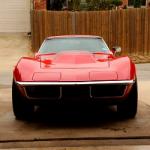
In that first picture, it would appear that the peeling has originated right at the fiberglass. That would tell me that the glass had some contamination on it that didnt allow the primer to stick to it.
