




Radiator hose really hard

Thread Starter
Racer

Joined: Nov 2007
Posts: 302
Likes: 0
 Radiator hose really hard
Hi? I have just changed my radiator hose upper and lower hose with new coolant and new thermostart. While the car is running (and around 180 to 200 degree), i tried to squeeze the upper radiator hose and it hard. It hard to squeeze. What could it be. This happen during during the 10 to 15 minute of the car running/idling.
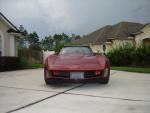
I have a 82 corvette with a chevy 400 small block.
Thanks
I have a 82 corvette with a chevy 400 small block.
Thanks

Pro

Joined: May 2011
Posts: 581
Likes: 5
From: BC
Hi? I have just changed my radiator hose upper and lower hose with new coolant and new thermostart. While the car is running (and around 180 to 200 degree), i tried to squeeze the upper radiator hose and it hard. It hard to squeeze. What could it be. This happen during during the 10 to 15 minute of the car running/idling.
I have a 82 corvette with a chevy 400 small block.
Thanks
I have a 82 corvette with a chevy 400 small block.
Thanks
Steve g
Pro
Joined: May 2011
Posts: 581
Likes: 5
From: BC
There is no pressure hose. The pump is a centrifugal flow pump, it doesn't produce enough pressure to lift the needle on a gauge. The pressure in the cooling system is a result of the coolant expanding in a closed system. The pressure is equal throughout the system and is regulated by the pressure cap.
Steve g
Steve g

Safety Car


Joined: Jul 2005
Posts: 3,694
Likes: 833
From: WI
...and to add the final explanation: the system is designed to operate at a certain pressure, usually 13-15 lbs sq in. which prevents the water/coolant from boiling over. That allows your car to operate at higher temps than would otherwise be the case w/o the pressure, especially when you turn the car off and the water temps typically rise for a few minutes ...close to the boiling point. Keep your eye on the temp gauge and see what it reads during normal driving. Also, does it 'boil' over? If so, that could be an indication of a weak radiator cap, or another problem of you system: partially plugged radiator, sticking thermostat, bad fan clutch, etc...
Thread Starter
Racer
Joined: Nov 2007
Posts: 302
Likes: 0
before i worked on the upper and lower hose, the car overheat above 200 degree and the as you continue to drive it keeps going up to the red zone. i don't have a clutch fan, i have a flex fan attach to the engine and an electric fan front of the radiator.
Corvette Stories
The Best of Corvette for Corvette Enthusiasts

Top 10 Most Expensive Corvettes Ever Sold on Bring A Trailer
Brett Foote
10 Things Every Corvette Owner Needs (2026 Edition)
Michael S. Palmer
8 Most "Only Corvette Owners Understand" Quirks and Problems
Pouria Savadkouei
10 Reasons the C6 Z06 is Still A Performance Benchmark After 20 Years
Joe Kucinski
How Much Horsepower Every Corvette Engine "LOST" in 1972
Joe Kucinski
Top 10 DOs and DON'Ts for Protecting Your Convertible Top!
Michael S. Palmer
Top 10 Most Explosive Corvettes Ever Made: Power-to-Weight Ratio Ranked!
Joe Kucinski
150 hp to 1,250 hp: Every Corvette Generation Compared by the Specs That Matter
Joe Kucinski
8 Coolest Corvette Pace Cars (and Replicas) of All Time
Verdad Gallardo
Safety Car
Joined: Jul 2005
Posts: 3,694
Likes: 833
From: WI
Most people here will probably tell you to ditch the flex fan and go back to stock with a fan clutch (better performance and safer). Is the radiator fan shroud and all that still in place? We'll assume the thermostat is working (new) and is in the right direction .... you may want to remove the radiator cap while it's running (cool) and see if you see bubbles or get your nose down there and sniff for combustion fumes, which could indicate a headgasket leak. Otherwise, on these older cars, the radiators themselves often need to be taken to a shop and 'boiled' out. Anyway, those are some ideas.
Mark G
Mark G
Pro
Joined: May 2011
Posts: 581
Likes: 5
From: BC
...and to add the final explanation: the system is designed to operate at a certain pressure, usually 13-15 lbs sq in. which prevents the water/coolant from boiling over. That allows your car to operate at higher temps than would otherwise be the case w/o the pressure, especially when you turn the car off and the water temps typically rise for a few minutes ...close to the boiling point. Keep your eye on the temp gauge and see what it reads during normal driving. Also, does it 'boil' over? If so, that could be an indication of a weak radiator cap, or another problem of you system: partially plugged radiator, sticking thermostat, bad fan clutch, etc...
Yes, ditch the flex fan, re-install the clutch fan and pull the rad and have it professionally cleaned. Antifreeze that has been left in the system too long (over 2 yrs) will have it's silicates leach out and plug the tubes in the core. If the temp is climbing slowly over the 200 mark and you don't have coolant being pumped out the overflow continuiously it's not likely to be a compression leak into the cooling system.
Steve g
Thread Starter
Racer
Joined: Nov 2007
Posts: 302
Likes: 0
Most people here will probably tell you to ditch the flex fan and go back to stock with a fan clutch (better performance and safer). Is the radiator fan shroud and all that still in place? We'll assume the thermostat is working (new) and is in the right direction .... you may want to remove the radiator cap while it's running (cool) and see if you see bubbles or get your nose down there and sniff for combustion fumes, which could indicate a headgasket leak. Otherwise, on these older cars, the radiators themselves often need to be taken to a shop and 'boiled' out. Anyway, those are some ideas.
it a brand new three rows radiator. yes the the fan shroud is in place.
Mark G
it a brand new three rows radiator. yes the the fan shroud is in place.
Mark G
Thread Starter
Racer
Joined: Nov 2007
Posts: 302
Likes: 0
Help pls. more problem. i started the car today, it idle just fine, i drove it for no more than ten minutes. i parked the car. as i was walking away from the car i have a pop sound. when i turned around i saw coolant on the floor. i opened the hood and the upper hose that i mentioned was hard burst open. what is going on?

Race Director


Joined: Mar 2006
Posts: 14,112
Likes: 28
From: Florida
Since you have new hoses and radiator, then your radiator cap failed. Get a new one.
You shouldn't get that much pressure in 10 minutes, sounds like you have a crack in the heads or block or a bad head gasket. If it really is a sb 400, then they also have other headgasket issues, google for them.
If it is older, you may want to flush and descale it too.
Themostat quality is an issue these days so always test one first.
Try starting with the cap off rad completely full and see if you get a lot of air pushing the fluid out when cold or rent a cooling pressure tester to test for leaks.
Run without the tstat until you get things sorted out.
You shouldn't get that much pressure in 10 minutes, sounds like you have a crack in the heads or block or a bad head gasket. If it really is a sb 400, then they also have other headgasket issues, google for them.
If it is older, you may want to flush and descale it too.
Themostat quality is an issue these days so always test one first.
Try starting with the cap off rad completely full and see if you get a lot of air pushing the fluid out when cold or rent a cooling pressure tester to test for leaks.
Run without the tstat until you get things sorted out.
Thread Starter
Racer
Joined: Nov 2007
Posts: 302
Likes: 0
A recap and update. My 82 corvette will start up just fine and runs just fine. But the longer it idle the temperature gauge goes up and it can go up all the way close to red line. This also happen when i drive it. When i start driving, it drives fine and the longer i drive the temp goes up close to red line.
One day i started the car after five minutes i tried to squeeze the upper radiator hose and it was hard and tense.
Couple of days later , i started the car and drove it for no more than ten minutes and i parked the car. As i was walking away from the car i had a burst. When i turned around i saw coolant on the ground. Opening the hood the upper radiator hose burst open.
Today i replaced the upper hose. A friend told me to start the car without the radiator cap and see what happen in four minutes. I started the car and it ran for four minutes nothing happen or water spraying out of the radiator.
After four minutes i put back the radiator cap, in the ten minutes of the car just idling, the upper radiator hose poped out of the thermonstart inlet pipe.
This is what am facing. Pls help. Ideas and suggestoins are welcome.
Is this a fan issue, radiator issue or cooling system issue or it is engine timing issue or internal engine issue?
Thanks
One day i started the car after five minutes i tried to squeeze the upper radiator hose and it was hard and tense.
Couple of days later , i started the car and drove it for no more than ten minutes and i parked the car. As i was walking away from the car i had a burst. When i turned around i saw coolant on the ground. Opening the hood the upper radiator hose burst open.
Today i replaced the upper hose. A friend told me to start the car without the radiator cap and see what happen in four minutes. I started the car and it ran for four minutes nothing happen or water spraying out of the radiator.
After four minutes i put back the radiator cap, in the ten minutes of the car just idling, the upper radiator hose poped out of the thermonstart inlet pipe.
This is what am facing. Pls help. Ideas and suggestoins are welcome.
Is this a fan issue, radiator issue or cooling system issue or it is engine timing issue or internal engine issue?
Thanks

Pro
Joined: Aug 2010
Posts: 698
Likes: 8
From: Stockholm Sweden
Does your thermostat really opens at all?
Have you tryed to run the engine without the thermostat or whit a different one?
Do you have an "airlock" in the upper hose or the cooler that needs to be bled out?
A compression test will show if you have a leaking cylinder that pumps up the cooling system with air.
Also look for small drops of water/rust stains on the plugs.
I use to jack up the passenger side of the car quite high when filling the cooling system.
I fill it in the expansion tank with the radiator-lid off.
When all the air is out and there is only cooling fluid coming out of the radiator i put the lid back on.
If there is a lot of air in top of the radiator/hose it will expand a lot.
I really hope you find and solve the problem.
//Ricky.
Have you tryed to run the engine without the thermostat or whit a different one?
Do you have an "airlock" in the upper hose or the cooler that needs to be bled out?
A compression test will show if you have a leaking cylinder that pumps up the cooling system with air.
Also look for small drops of water/rust stains on the plugs.
I use to jack up the passenger side of the car quite high when filling the cooling system.
I fill it in the expansion tank with the radiator-lid off.
When all the air is out and there is only cooling fluid coming out of the radiator i put the lid back on.
If there is a lot of air in top of the radiator/hose it will expand a lot.
I really hope you find and solve the problem.
//Ricky.
Burning Brakes

Joined: May 2008
Posts: 1,116
Likes: 5
From: Middleburg Florida
Start with the basics. You need to determine if the system is flowing water or not, if it's plugged, how much pressure it's holding etc.. Is the bottom hose collapsed when your upper hose has pressure? Have you pressure tested the coolant system, including the cap? (If your cap is working correctly, you shouldn't be able to build more pressure than the cap will allow) Have you run the car with the cap off to see if you have flow across the radiator? Does the coolant smell like exhaust? Is the shroud and bottom air deflector in place on the car (these parts help keep things from getting too hot when your driving the car)?
If you can't do these things, you might be better off finding someone who can help, or even taking it to a shop.
If you can't do these things, you might be better off finding someone who can help, or even taking it to a shop.

Team Owner


Joined: Jan 2006
Posts: 37,637
Likes: 3,118
From: Crossville TN
Have you changed out the thermostat yet? You have this thread on a couple of the Forums and I have yet to see that you changed it. The T-stat is most likely your problem...even if you just bought it. (well, especially if you just bought it...  )
)
)
Thread Starter
Racer
Joined: Nov 2007
Posts: 302
Likes: 0
Since you have new hoses and radiator, then your radiator cap failed. Get a new one.
You shouldn't get that much pressure in 10 minutes, sounds like you have a crack in the heads or block or a bad head gasket. If it really is a sb 400, then they also have other headgasket issues, google for them.
If it is older, you may want to flush and descale it too.
Themostat quality is an issue these days so always test one first.
Try starting with the cap off rad completely full and see if you get a lot of air pushing the fluid out when cold or rent a cooling pressure tester to test for leaks.
Run without the tstat until you get things sorted out.
You shouldn't get that much pressure in 10 minutes, sounds like you have a crack in the heads or block or a bad head gasket. If it really is a sb 400, then they also have other headgasket issues, google for them.
If it is older, you may want to flush and descale it too.
Themostat quality is an issue these days so always test one first.
Try starting with the cap off rad completely full and see if you get a lot of air pushing the fluid out when cold or rent a cooling pressure tester to test for leaks.
Run without the tstat until you get things sorted out.
Thread Starter
Racer
Joined: Nov 2007
Posts: 302
Likes: 0
Start with the basics. You need to determine if the system is flowing water or not, if it's plugged, how much pressure it's holding etc.. Is the bottom hose collapsed when your upper hose has pressure? Have you pressure tested the coolant system, including the cap? (If your cap is working correctly, you shouldn't be able to build more pressure than the cap will allow) Have you run the car with the cap off to see if you have flow across the radiator? Does the coolant smell like exhaust? Is the shroud and bottom air deflector in place on the car (these parts help keep things from getting too hot when your driving the car)?
If you can't do these things, you might be better off finding someone who can help, or even taking it to a shop.
If you can't do these things, you might be better off finding someone who can help, or even taking it to a shop.