



HorsePower question small Block:
Thread Starter
Melting Slicks

Joined: Aug 2010
Posts: 2,487
Likes: 10
From: Palm Beach Florida
St. Jude Donor '12
 HorsePower question small Block:
What year produced the most HP, and what year produced the least HP. Taking into consideration of the way the HP ratings were changed. (on small blocks) Also what were the differences between the two other then emission parts bolted to the block? Example: different intakes/heads/cam? Thanks......

Team Owner


Joined: Feb 2003
Posts: 54,073
Likes: 9,398
From: Sitting in his Nowhere land Hanover Pa
2024 C2 of the Year Finalist - Unmodified
2015 C2 of Year Finalist
in 71 they went from Gross to net power ratings on all engines. net was measured with all the accessory on the engine apposed to net. they also started to lower compression the same year. so you are not comparing apples to apples
Thread Starter
Melting Slicks
Joined: Aug 2010
Posts: 2,487
Likes: 10
From: Palm Beach Florida
St. Jude Donor '12
There's got to be a way to figure out the relative HP from gross to net. As for the compression that would relate to different heads. That was part of the question I asked. What was different.
Team Owner


Joined: Sep 2006
Posts: 31,237
Likes: 4,328
From: Westminster Maryland
Hi d,
The 68+ highest hp rating is easy... the 70 LT-! engine... rated at 370 horsepower.
I believe the small block with the highest hp was the 65 fuel-injection motor, rated at 375 hp.
Maybe both were even a little under-rated?
I'd think that regardless of the rating system these motors were making the most horsepower.
Regards,
Alan
The 68+ highest hp rating is easy... the 70 LT-! engine... rated at 370 horsepower.
I believe the small block with the highest hp was the 65 fuel-injection motor, rated at 375 hp.
Maybe both were even a little under-rated?
I'd think that regardless of the rating system these motors were making the most horsepower.
Regards,
Alan
Last edited by Alan 71; Jul 10, 2011 at 12:08 PM.
Thread Starter
Melting Slicks
Joined: Aug 2010
Posts: 2,487
Likes: 10
From: Palm Beach Florida
St. Jude Donor '12
Hi d,
The 68+ highest hp rating is easy... the 70 LT-! engine... rated at 370 horsepower.
I believe the small block with the highest hp was the 65 fuel-injection motor, rated at 375 hp.
Maybe both were even a little under-rated?
I'd think that regardless of the rating system these motors were making the most horsepower.
Regards,
Alan
The 68+ highest hp rating is easy... the 70 LT-! engine... rated at 370 horsepower.
I believe the small block with the highest hp was the 65 fuel-injection motor, rated at 375 hp.
Maybe both were even a little under-rated?
I'd think that regardless of the rating system these motors were making the most horsepower.
Regards,
Alan
Pro

Joined: Aug 2010
Posts: 698
Likes: 8
From: Stockholm Sweden
I think it would have been very interesting to se the real figures (from a dyno) of all these engines that are commonly known as "underrated". 
I am a bit sceptic but im more then willing to change my mind when facing facts.
//Ricky.
I am a bit sceptic but im more then willing to change my mind when facing facts.
//Ricky.
Team Owner
Joined: Sep 2006
Posts: 31,237
Likes: 4,328
From: Westminster Maryland
Hi d,
I'd say it depended on compression ratio, cam specifications, head specifications, and intake/induction system.
To some degree Chevrolet was buldiing hot rod versions of their base engine.
Regards,
Alan
I'd say it depended on compression ratio, cam specifications, head specifications, and intake/induction system.
To some degree Chevrolet was buldiing hot rod versions of their base engine.
Regards,
Alan
Team Owner
Joined: Sep 2006
Posts: 31,237
Likes: 4,328
From: Westminster Maryland
Hi Ricky,
I'm thinking of different stock engines and how they acted in various cars on the street when I mention under rated..
For instance the 66 327/350 Nova certainly acted as though it had more horsepower; as did the 396/375 Chevelles.
Regards,
Alan
I'm thinking of different stock engines and how they acted in various cars on the street when I mention under rated..
For instance the 66 327/350 Nova certainly acted as though it had more horsepower; as did the 396/375 Chevelles.
Regards,
Alan
Corvette Stories
The Best of Corvette for Corvette Enthusiasts

10 Reasons the C6 Z06 is Still A Performance Benchmark After 20 Years
Joe Kucinski
How Much Horsepower Every Corvette Engine "LOST" in 1972
Joe Kucinski
Top 10 DOs and DON'Ts for Protecting Your Convertible Top!
Michael S. Palmer
Top 10 Most Explosive Corvettes Ever Made: Power-to-Weight Ratio Ranked!
Joe Kucinski
150 hp to 1,250 hp: Every Corvette Generation Compared by the Specs That Matter
Joe Kucinski
8 Coolest Corvette Pace Cars (and Replicas) of All Time
Verdad Gallardo
Top 10 Corvette Engines RANKED by Peak Torque (70+ Years of Muscle!)
Joe Kucinski
Corvette ZR1X Will Be Pacing the Indy 500, And Could Probably Race, Too!
Verdad Gallardo
Top 10 Corvettes Coming to Mecum Indy 2026!
Brett Foote
Race Director


Joined: Jul 2001
Posts: 15,892
Likes: 42
The lower HP ratings of later C3s are a combination of reduced CR, mild cams, lean carburation and lazy ignition curves. Lower rise intakes played a minor part also.
Pro
Joined: Aug 2010
Posts: 698
Likes: 8
From: Stockholm Sweden
Thread Starter
Melting Slicks
Joined: Aug 2010
Posts: 2,487
Likes: 10
From: Palm Beach Florida
St. Jude Donor '12
The much feared and maligned smog equipment like the AIR system, EGR, PCV, vapour recovery canister etc, costs a whopping 1-2 HP total so there's nothing to gain by removing it.
The lower HP ratings of later C3s are a combination of reduced CR, mild cams, lean carburation and lazy ignition curves. Lower rise intakes played a minor part also.
The lower HP ratings of later C3s are a combination of reduced CR, mild cams, lean carburation and lazy ignition curves. Lower rise intakes played a minor part also.
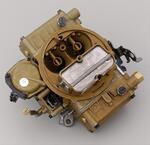
 ( I and the PO have already taken off all emissions, I replaced the exhaust with true dual no cat's, adjusted the timing, recurved the distr.,adjusted the valves, Roch.carb calibrated, with 1" spacer, new underdrive pullys, dual snorkel air cleaner and hood opened up to allow more air, and a trans pak.) I'm just looking to see if I can free up any more HP with out going into a cam/heads/intake thing. I guess everything I could do to it "without the heavy stuff" is done.

Race Director


Joined: Apr 1999
Posts: 15,136
Likes: 477
From: NM
Dave
You just have to think of the engine as a huge air pump. It pumps fuel and air in and exhaust out. Any thing you can do to move more air and fuel in quicker and easier helps. Same with the exhaust, move it out faster. So, big carb, efficient intake manifold, HP cam, big valve heads with large ports, efficient headers and exhaust system. Very basic, and all major components.
Tom...
You just have to think of the engine as a huge air pump. It pumps fuel and air in and exhaust out. Any thing you can do to move more air and fuel in quicker and easier helps. Same with the exhaust, move it out faster. So, big carb, efficient intake manifold, HP cam, big valve heads with large ports, efficient headers and exhaust system. Very basic, and all major components.
Tom...
Le Mans Master

Joined: Mar 2008
Posts: 5,948
Likes: 72
From: Oxford MA-----You just lost the game!!!!
I was hoping to hear - "Why yes it is easy to get more power from these blocks" ( I and the PO have already taken off all emissions, I replaced the exhaust with true dual no cat's, adjusted the timing, recurved the distr.,adjusted the valves, Roch.carb calibrated, with 1" spacer, new underdrive pullys, dual snorkel air cleaner and hood opened up to allow more air, and a trans pak.) I'm just looking to see if I can free up any more HP with out going into a cam/heads/intake thing. I guess everything I could do to it "without the heavy stuff" is done.
( I and the PO have already taken off all emissions, I replaced the exhaust with true dual no cat's, adjusted the timing, recurved the distr.,adjusted the valves, Roch.carb calibrated, with 1" spacer, new underdrive pullys, dual snorkel air cleaner and hood opened up to allow more air, and a trans pak.) I'm just looking to see if I can free up any more HP with out going into a cam/heads/intake thing. I guess everything I could do to it "without the heavy stuff" is done.Scott
You just lost the game!!!

Instructor

Joined: Jun 2011
Posts: 183
Likes: 1
From: Litchfield CT
HP improvements
You're off to a good start.
40+ years ago I raced "Showroom Stock" NHRA and IHRA, and the rules were very limiting. I became pretty good squeezing a few more HP out of a car without going inside the engine.
Rejet carb, re-curve distributor and do this on a chassis dyno. Add a MSD and hi-voltage coil so you can open up your plug gap . (in drag racing, this can mean .1 in a quarter. Non racers may dispute this, but it does help).
Low restriction air filter.
try using 10w30 motor oil, if you are not already.
If you are up to it, add a set of headers.
Shift kit in your trans.
Later, swap your intake manifold do a good Edelbrock dual plane. Saves 50 pounds, and adds HP.
40+ years ago I raced "Showroom Stock" NHRA and IHRA, and the rules were very limiting. I became pretty good squeezing a few more HP out of a car without going inside the engine.
Rejet carb, re-curve distributor and do this on a chassis dyno. Add a MSD and hi-voltage coil so you can open up your plug gap . (in drag racing, this can mean .1 in a quarter. Non racers may dispute this, but it does help).
Low restriction air filter.
try using 10w30 motor oil, if you are not already.
If you are up to it, add a set of headers.
Shift kit in your trans.
Later, swap your intake manifold do a good Edelbrock dual plane. Saves 50 pounds, and adds HP.
Thread Starter
Melting Slicks
Joined: Aug 2010
Posts: 2,487
Likes: 10
From: Palm Beach Florida
St. Jude Donor '12
Thanks Tom73 and 68sbcoupe. I already have the shift kit in. I will probobly go the intake route next. Does anyone know if the heads of a L82 are the same or different then the L48? I see a set for sale and there my year 77. Scottyp99 your right, I'm against the wall now. I either have to live with it or go into the motor.

Le Mans Master
Joined: Oct 2004
Posts: 6,314
Likes: 508
From: South-central Missouri
What year produced the most HP, and what year produced the least HP. Taking into consideration of the way the HP ratings were changed. (on small blocks) Also what were the differences between the two other then emission parts bolted to the block? Example: different intakes/heads/cam? Thanks......
 rpm...or possibly 195 (gross hp) at 5000 rpm from the 265 cid in 1956! Whereas the most was in 1965 where the FI, solid lifter cam, 11.0 CR 327 made 375 gross hp at 6200 rpm. The engineering legacy of the SBC over it's history makes for fascinating reading. But, as others have pointed out, the fundamental consideration is getting more air in and more air out.
 (1)I have a "Corvette Tech Data" poster that covers all years and engine options from 1953 thru 2006 (new posters include later models, BTW) One year there was as many as 6 different engine options, and CR and HP is listed, along with fueling system e.g., "1 x 4" or "2 x4" or "2 x3 or fuel injection, etc. and in 1997, for example there was only the LS1.
P.
Burning Brakes

Joined: May 2009
Posts: 850
Likes: 36
From: Providence RI
I think the race to the bottom would be won by either the 262ci or 267ci V'8's from the '70's with the 2-bbl; I think their 110hp was NOT over-rated... 
As for the Corvette-specific motors, I didn't see anyone mention the California-spec 305's.
I believe the L82 heads you ask about would have larger valves; I don't know whether they were always a step up over the L48 across their production run from '73-'80.
As for the Corvette-specific motors, I didn't see anyone mention the California-spec 305's.
I believe the L82 heads you ask about would have larger valves; I don't know whether they were always a step up over the L48 across their production run from '73-'80.
Thread Starter
Melting Slicks
Joined: Aug 2010
Posts: 2,487
Likes: 10
From: Palm Beach Florida
St. Jude Donor '12
the least hp sbc(1) was the l48 in 1975 with a cr of 8.5 and a net hp of 165 @ 3800 rpm...or possibly 195 (gross hp) at 5000 rpm from the 265 cid in 1956! Whereas the most was in 1965 where the fi, solid lifter cam, 11.0 cr 327 made 375 gross hp at 6200 rpm. The engineering legacy of the sbc over it's history makes for fascinating reading. But, as others have pointed out, the fundamental consideration is getting more air in and more air out.
(1)i have a "corvette tech data" poster that covers all years and engine options from 1953 thru 2006 (new posters include later models, btw) one year there was as many as 6 different engine options, and cr and hp is listed, along with fueling system e.g., "1 x 4" or "2 x4" or "2 x3 or fuel injection, etc. And in 1997, for example there was only the ls1.
P.
rpm...or possibly 195 (gross hp) at 5000 rpm from the 265 cid in 1956! Whereas the most was in 1965 where the fi, solid lifter cam, 11.0 cr 327 made 375 gross hp at 6200 rpm. The engineering legacy of the sbc over it's history makes for fascinating reading. But, as others have pointed out, the fundamental consideration is getting more air in and more air out. (1)i have a "corvette tech data" poster that covers all years and engine options from 1953 thru 2006 (new posters include later models, btw) one year there was as many as 6 different engine options, and cr and hp is listed, along with fueling system e.g., "1 x 4" or "2 x4" or "2 x3 or fuel injection, etc. And in 1997, for example there was only the ls1.
P.

Burning Brakes
Joined: Jun 2006
Posts: 1,148
Likes: 5
From: South Dakota
We all know that changing engine dimensions will give more power. This may be a different ball game that I am describing, but lessons can be learned. 20 years ago when I was building Harley's full time, So many people would come in to have their engines stroked so they could go faster. Starting with 80 cu.in. they would have their engines stroked to 98 or larger. In many cases, I've seen these engines be total dogs. In 1987 a stock Harley had 52 factory HP. Add a cheap cam, carb, exhaust and dyno tuned would bring 74 HP or better. Add some head work, pistons, different cam, and carb, we could get 93-97 HP (with the same numbers or better for torque) from the same dimension engine. 45% gains with stock displacements. Some of those stroker guys didn't know what hit them when a full dressed bagger would do 2nd and 3rd gear wheelies and blow them away. My point is that properly built and tuned can be more beneficial than properly parted.
That being said, we are talking a SBC and a different engine in all respects past basic theories. But the matched application of the different components (carb, cam, exhaust, etc.) will make huge differences when "built" and tuned for HP. Now add components like PS, A/C and the government (smog), you add a new dimension to your numbers.
That being said, we are talking a SBC and a different engine in all respects past basic theories. But the matched application of the different components (carb, cam, exhaust, etc.) will make huge differences when "built" and tuned for HP. Now add components like PS, A/C and the government (smog), you add a new dimension to your numbers.