





Engine Suggestions
Thread Starter
Le Mans Master


Joined: Feb 2011
Posts: 5,783
Likes: 400
From: Paoli, IN
St. Jude Donor '17, '19
 Engine Suggestions
Hey guys,
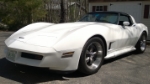
It is about 2.5 weeks before I pick up my first 1980 corvette, 4speed. Unfortunately its very close to winter so I won't have much time to drive it. But its perfect for a winter project.
I know these things have very low hp because of emission control, 190HP. I would like to increase this as much as I can, but I don't want to build a new engine. Are there small replacement parts and tweaks that can be done to increase the HP?
I am learning as I go, but its seems odd to me that a V8 engine only puts out 190HP when a few years prior they were putting outing out significantly more. So what did Chevy do to the engines to perform so terribly that I can reverse?
Thanks for your help.
It is about 2.5 weeks before I pick up my first 1980 corvette, 4speed. Unfortunately its very close to winter so I won't have much time to drive it. But its perfect for a winter project.
I know these things have very low hp because of emission control, 190HP. I would like to increase this as much as I can, but I don't want to build a new engine. Are there small replacement parts and tweaks that can be done to increase the HP?
I am learning as I go, but its seems odd to me that a V8 engine only puts out 190HP when a few years prior they were putting outing out significantly more. So what did Chevy do to the engines to perform so terribly that I can reverse?
Thanks for your help.

Drifting

Joined: Oct 2010
Posts: 1,972
Likes: 6
From: Chester Virginia
don't know the exhaust system and cat convertor on yours but my 76 came with 2-1-2 and pellet cat converter, retarded from factory timing, smaller valves in head than in 60's and not so flow friendly intake manifold.
I pulled entire exhaust system and junked it. Replace with true duals, two no resistance to flow bullet cat converters into flowmaster 40s with 2 1/4" tubing..2 1/2" works well also.
Advanced timing to 13 degrees from 7 degrees before tdc
HEI ignition has been recurved to be all in at 2800 rpm instead of 4,000 plus rpm
I kept factory intake manifold and exhaust manifold but many change them to better intakes and header tube type exhaust manifolds.
Mine gained approx 30 hp at the rear wheel from the process and runs nicely. Not a drage car which would take turning it into a 383 stroker but it does well and is fun to drive. Also a four speed.
Not familiar with your year's exhaust system.
Lance P.
I pulled entire exhaust system and junked it. Replace with true duals, two no resistance to flow bullet cat converters into flowmaster 40s with 2 1/4" tubing..2 1/2" works well also.
Advanced timing to 13 degrees from 7 degrees before tdc
HEI ignition has been recurved to be all in at 2800 rpm instead of 4,000 plus rpm
I kept factory intake manifold and exhaust manifold but many change them to better intakes and header tube type exhaust manifolds.
Mine gained approx 30 hp at the rear wheel from the process and runs nicely. Not a drage car which would take turning it into a 383 stroker but it does well and is fun to drive. Also a four speed.
Not familiar with your year's exhaust system.
Lance P.
Last edited by LancePearson; Oct 28, 2011 at 02:37 PM. Reason: add

Pro


Joined: Feb 2002
Posts: 734
Likes: 51
From: ATLANTIC HIGHLANDS NJ
Your 1980 short block is really no different than a 60's small block.
As with those 60's cars the real power increase came with upgraded heads, intake, cam, and carb.
I would think if you put in a nice street Comp Cam, Edlebrock heads & intake, and even reused you Q-Jet (reworked), kept your compression around 9.5:1 you could make an easy 350HP that runs on pump gas. Maybe headers also.
As an example just take a look at the specs of a 1971 LT-1 engine rated at 330 HP made to run on low octane pump gas.
Good luck.
As with those 60's cars the real power increase came with upgraded heads, intake, cam, and carb.
I would think if you put in a nice street Comp Cam, Edlebrock heads & intake, and even reused you Q-Jet (reworked), kept your compression around 9.5:1 you could make an easy 350HP that runs on pump gas. Maybe headers also.
As an example just take a look at the specs of a 1971 LT-1 engine rated at 330 HP made to run on low octane pump gas.
Good luck.
Drifting
Joined: May 2011
Posts: 1,526
Likes: 8
From: Atlanta Ga
 It's your first Vette, and your first C3. Drive it for a while see how you like it, see what you want to improve and/or want more of then go from there.
 Also remember that HP is fine and dandy...and when most of us(including myself) think of power with think HP...but in all actuality what most of us are looking for is really Torque! Torque is what you are really going to feel, especially off the line.
Race Director

Joined: Apr 1999
Posts: 11,520
Likes: 13
From: CORVETTE 77 385 C.I. TEXAS
The HP rating system changed to much lower. Start w/ tuning & exhaust.
See what many refer to as my Exhaust topic.
http://www.corvettefaq.com/c3/ganeyexhaust.htm
See what many refer to as my Exhaust topic.
http://www.corvettefaq.com/c3/ganeyexhaust.htm
Thread Starter
Le Mans Master
Joined: Feb 2011
Posts: 5,783
Likes: 400
From: Paoli, IN
St. Jude Donor '17, '19
From the seller, it is equipped with following: true dual exhaust with flowmaster mufflers, edelbrock alluminum intake with original carb, and all smog intact.
I have no idea what my HP (or Torque) is at this point, as the seller didn't know.
When someone talks about the smog, are they talking about the cat. converters?
I will drive it plenty before I make changes. But I wanted to get a head start so I have a good idea what to save for or start looking for so I can get the best deals. It could end up being for nothing, but I will still learn something.
I have no idea what my HP (or Torque) is at this point, as the seller didn't know.
When someone talks about the smog, are they talking about the cat. converters?
I will drive it plenty before I make changes. But I wanted to get a head start so I have a good idea what to save for or start looking for so I can get the best deals. It could end up being for nothing, but I will still learn something.
Corvette Stories
The Best of Corvette for Corvette Enthusiasts

Top 10 Most Expensive Corvettes Ever Sold on Bring A Trailer
Brett Foote
10 Things Every Corvette Owner Needs (2026 Edition)
Michael S. Palmer
8 Most "Only Corvette Owners Understand" Quirks and Problems
Pouria Savadkouei
10 Reasons the C6 Z06 is Still A Performance Benchmark After 20 Years
Joe Kucinski
How Much Horsepower Every Corvette Engine "LOST" in 1972
Joe Kucinski
Top 10 DOs and DON'Ts for Protecting Your Convertible Top!
Michael S. Palmer
Top 10 Most Explosive Corvettes Ever Made: Power-to-Weight Ratio Ranked!
Joe Kucinski
150 hp to 1,250 hp: Every Corvette Generation Compared by the Specs That Matter
Joe Kucinski
8 Coolest Corvette Pace Cars (and Replicas) of All Time
Verdad Gallardo
Burning Brakes

Joined: Oct 2011
Posts: 1,093
Likes: 2
From: long beach California
Cat converters are the most common smog topic but a 1980 vette will have exhaust manifolds with egr valve setup an lines going into a smog pump from the manifold. I honestly do not know as much as allot of the veteran vette owners on here. Though I have removed my pump an lines an plan to remove stock ex manifolds to go with shorty headers b/c the pump was worn out and screaming at an any rpm above idle. I plan to leave my cats on b/c the chp near where I work will randomly stop old muscle and sporty cars to check with a mirror for the cats being there. They will fine you if they are not. Your car should have smog/air pump, egr valve system and cat converters to be factory or California street legal car. With you living in Indiana though who cares lol I lived there from 04-07 an back then there were no vehicle inspection required by the DMV in Indianapolis
Last edited by jesse10886; Oct 28, 2011 at 10:36 PM. Reason: Horrible spelling an wrong words do to spell check
Instructor

Joined: Oct 2011
Posts: 131
Likes: 0
From: Asuncion
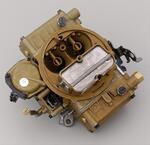
I’m almost in the same situation as you. I bought my first C3 (also my first American car). A year and a half ago. Also its a 1980. But I drove it almost nothing. Because I have to send it for a completed striped and repainted from 0. I also was concern about the low hp that this big engine has. And also I’m looking for ways to improve the performance. But the previous owner already change t to true duals of 2.5, and a few mods, like change of carb for a holley. But I’m not so happy with the performance yet. But I think I will get there after finishing of making it beauty again.
Any way hope you finish soon your project and enjoy it! You will be in love of your car I think like many of us here
Any way hope you finish soon your project and enjoy it! You will be in love of your car I think like many of us here
Le Mans Master

Joined: Mar 2008
Posts: 5,948
Likes: 72
From: Oxford MA-----You just lost the game!!!!
1.) Drop in compression ratio.
2.) Change in horsepower rating method from SAE gross to SAE net.
3.) Emissions.
In 1970 the L48 engine was rated at 300 horsepower using the SAE gross method. In 1971, because of the drop in compression ratio from about 10:1 to about 8:1, and with no other real changes, this dropped to 270. In 1972, came the change in the method of measuring horsepower, SAE net, which measures an engine on the dyno with all accessories, such as water pump, engine driven radiator fan, alternator, etc. So, the 1972 L48 was rated at 200 horsepower, even though it was almost literally the exact same engine that had been rated at 270 horsepower the year before. From there, emissions requirements kept the downhill slide going until 1975 or 1976, when the L48 engine's all time low horsepower rating of 165 was seen. So, your 190 SAE net L48 engine is really only 10 horsepower less than the '72 at 200 SAE net horsepower, which was, for all intents and purposes, identicle to the '71, which was rated at 270 SAE gross horsepower, which in turn, was functionally the same engine as the '70, with the exception of a drop in compression ratio, which was rated at 300 SAE gross horsepower. So, in reality, if your engine were being rated using the same method as the 1970 engine, it would be rated at 260 SAE gross horsepower. A set of headers, 2 1/2" dual exhaust, aftermarket aluminum intake manifold, some carb tuning, and an optimized distributor advance curve, would put you ahead of the game compared to the stock L48 of 1970. Those old musclecar engines weren't as powerful as most people remember them to be. (with certain exeptions, such as L88, LT1, etc.) I think it's mostly that people remember being able to roast the tires without to much trouble, but that had more to do with the skinny little bias-ply tires the cars had back then, than anything else. Here's a website that does a pretty good job of explaining the difference between gross and net horsepower, if your interested:
http://ateupwithmotor.com/automotive...orsepower.html
Scott
Le Mans Master
Joined: Mar 2008
Posts: 5,948
Likes: 72
From: Oxford MA-----You just lost the game!!!!
Cat converters are the most common smog topic but a 1980 vette will have exhaust manifolds with egr valve setup an lines going into a smog pump from the manifold. I honestly do not know as much as allot of the veteran vette owners on here. Though I have removed my pump an lines an plan to remove stock ex manifolds to go with shorty headers b/c the pump was worn out and screaming at an any rpm above idle. I plan to leave my cats on b/c the chp near where I work will randomly stop old muscle and sporty cars to check with a mirror for the cats being there. They will fine you if they are not. Your car should have smog/air pump, egr valve system and cat converters to be factory or California street legal car. With you living in Indiana though who cares lol I lived there from 04-07 an back then there were no vehicle inspection required by the DMV in Indianapolis
Scott
Thread Starter
Le Mans Master
Joined: Feb 2011
Posts: 5,783
Likes: 400
From: Paoli, IN
St. Jude Donor '17, '19
This will be a noob question, but can you change the compression ratio without modifying the engine?
When chevy changed it to 8:1 from 10:1 did they make the cylinders bigger, or change the pistons, or something else? (I don't know a lot yet, but it is my understanding that the compression ratio is difference between the combustion stroke (the piston compressing the air and fuel at the top of the stoke) and the exhaust stroke when the piston is at the bottom of its stroke --> so the only way for me to understand how they could change it is either by putting in different pistons to the same engine that were shorter in length or they bored the cylinders differently and still used different pistons. Please correct me if I am completely wrong)
Thanks.
When chevy changed it to 8:1 from 10:1 did they make the cylinders bigger, or change the pistons, or something else? (I don't know a lot yet, but it is my understanding that the compression ratio is difference between the combustion stroke (the piston compressing the air and fuel at the top of the stoke) and the exhaust stroke when the piston is at the bottom of its stroke --> so the only way for me to understand how they could change it is either by putting in different pistons to the same engine that were shorter in length or they bored the cylinders differently and still used different pistons. Please correct me if I am completely wrong)
Thanks.

Advanced
Joined: Sep 2006
Posts: 97
Likes: 0
I have a 1980 L-48 and have put less than $1500 into the engine without pulling it from the car. It now has a little over 300 honest horsepower by the dynoprograms. I easily do 60 in less than 6 seconds. I upped the compression and gave it better breathing by putting Dart SR 165 72 cc heads. This moved the compression to around 9.3 very doable on premium. I know these arent the best heads for the draggers but they are great if you want your power down low where it counts on the street and they can be had for less than $700. Next I put in a melling 204/214 cam which is identical to the edelbrock performer. I mated the cam to compcam 1.52 roller tipped magnum rockers. It now has a very slight lope but still good with air conditioner, etc. I put a true 2.5 inch dual exhaust on and junked the one pipe choked original. I blocked off the EGR plate on the manifold and installed an edelbrock 1406. I set the timing to 12 degrees with warm idle at 900 in park and 650 in gear. The car is very quick and extaordinarily responsive in the low end with power up to the mid 5000s. I would suggest you replace or check your harmonic balancer given the age of the engine and rubber rot. A std replacement is fine as you won't see 6000 with this set up.

Drifting
Joined: Sep 2006
Posts: 1,986
Likes: 21
From: Columbus MN
From the seller, it is equipped with following: true dual exhaust with flowmaster mufflers, edelbrock alluminum intake with original carb, and all smog intact.
I have no idea what my HP (or Torque) is at this point, as the seller didn't know.
When someone talks about the smog, are they talking about the cat. converters?
I will drive it plenty before I make changes. But I wanted to get a head start so I have a good idea what to save for or start looking for so I can get the best deals. It could end up being for nothing, but I will still learn something.
I have no idea what my HP (or Torque) is at this point, as the seller didn't know.
When someone talks about the smog, are they talking about the cat. converters?
I will drive it plenty before I make changes. But I wanted to get a head start so I have a good idea what to save for or start looking for so I can get the best deals. It could end up being for nothing, but I will still learn something.
If the intake and carb are good upgrades, the next big gain will come from new heads. You can replace the heads without removing the engine from the car too.
A new cam to go with the heads can be installed without removing the engine from the car, but you will have to remove a lot of other parts such as the radiator, hood, and pretty much everything mounted to the front of the engine. BUT, it can be done. I'd go for it.

'80 Corvette...my favorite!

Thread Starter
Le Mans Master
Joined: Feb 2011
Posts: 5,783
Likes: 400
From: Paoli, IN
St. Jude Donor '17, '19
Shaved, meaning make the cylinders bigger? Isn't that what they do when you turn a 350 into a 383 stroker - make the cylinders bigger?

Burning Brakes
Joined: Feb 2009
Posts: 780
Likes: 1
From: Shelby NC
