




VIN / Matching Numbers

Thread Starter
2nd Gear

Joined: Dec 2011
Posts: 2
Likes: 0
 VIN / Matching Numbers
Ok I am about to buy a 77 Vet. I am told it is matching numbers, but when I go look at it I want to confirm. I know I can compare the VIN on the dash to that on the driver side door and on the frame under the driver side door. My first question is for the one on the engine .. where is this located? ... I assume it should be fairly in plain sight, but wanted to see if someone could point me to the location so I don't have to hunt for it. My second question is, if car VIN and Engine VIN match .. is that a matching #'s car? .. or do I have to look for something else .. i.e. the transmission? Any other tid bits as far as what I should look for and where would be appreciated .. thanks in advance Eric
Le Mans Master


Joined: Mar 2008
Posts: 5,948
Likes: 72
From: Oxford MA-----You just lost the game!!!!
The whole "numbers matching" thing means different things to different people. If you want to make sure the engine is the original engine, look for a stamp pad on the front, passenger's side of the block, right in front of the cylinder head.
Scott
Scott

Pro

Joined: Jul 2004
Posts: 668
Likes: 3
From: Platteville WI
The basic numbers matching idea is the VIN & engine stamp block, verified on pass side front pad. For real $ provenance, you're talking about oe belts, hoses, carb, everything. In other words, nothing has ever been replaced, low mileage queen. Some samantical difference would be better, like "systems numbers matching". This can be a hot topic for some. tread lightly.

Team Owner


Joined: Sep 2006
Posts: 31,267
Likes: 4,362
From: Westminster Maryland
Hi 77,
The matching numbers business is a very deep hole.
Generally people are referring to the numbers cast into, and stamped on, the engine being appropriate for the car it's in. Many people go no further than this.
The next question might be.... is this in fact the engine that was in this car when it left St. Louis... and how might that be determined? That's a whole new level of numbers matching.
The next step would be the other parts of the car that had part numbers and date codes that would be appropriate for this car's production date. There are hundreds of parts that have some part number and/or date code on them.
Many other parts can be identified by their configuration alone since may parts were changing during production.
The engine, transmission and frame are the only parts that have the car's VIN derivative identifying them.
You have to remember that numbers matching matters a great deal to some people and not at all to many others.
Regards,
Alan
Here's an example of 2 rather obscure dated parts. The birdcage and an interior door panel. No way to check these unless the car is apart; but nice to find.
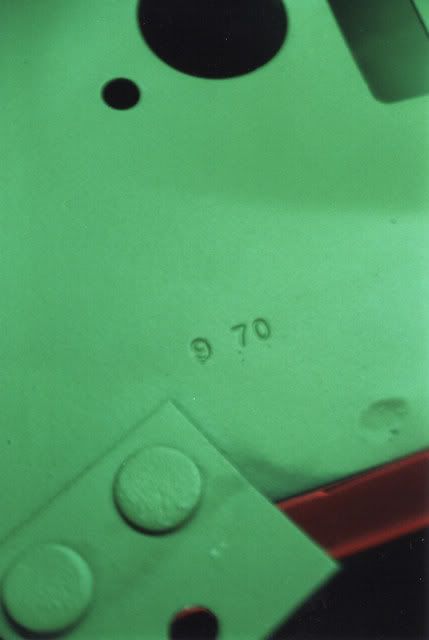
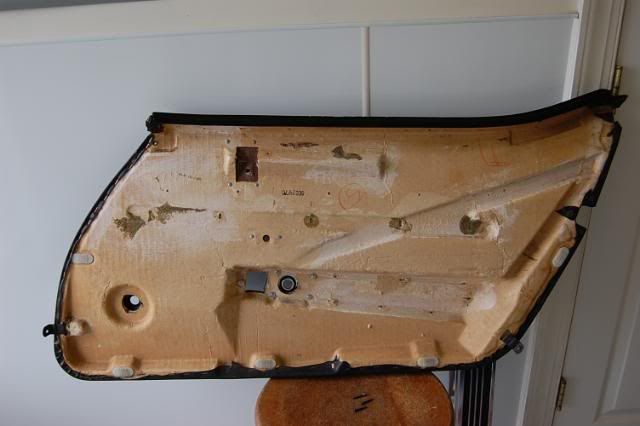
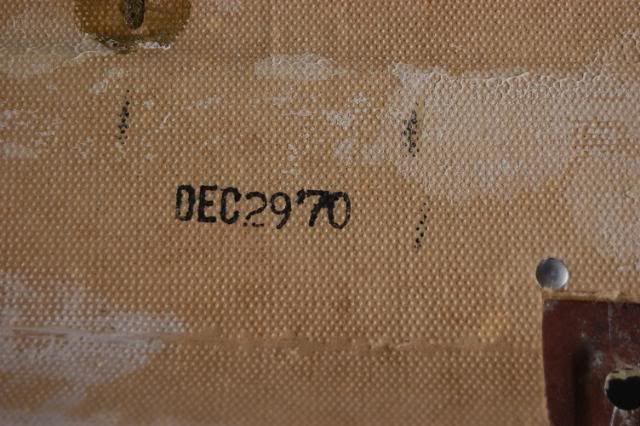
The matching numbers business is a very deep hole.
Generally people are referring to the numbers cast into, and stamped on, the engine being appropriate for the car it's in. Many people go no further than this.
The next question might be.... is this in fact the engine that was in this car when it left St. Louis... and how might that be determined? That's a whole new level of numbers matching.
The next step would be the other parts of the car that had part numbers and date codes that would be appropriate for this car's production date. There are hundreds of parts that have some part number and/or date code on them.
Many other parts can be identified by their configuration alone since may parts were changing during production.
The engine, transmission and frame are the only parts that have the car's VIN derivative identifying them.
You have to remember that numbers matching matters a great deal to some people and not at all to many others.
Regards,
Alan
Here's an example of 2 rather obscure dated parts. The birdcage and an interior door panel. No way to check these unless the car is apart; but nice to find.
Last edited by Alan 71; Dec 24, 2011 at 10:26 AM.

Team Owner


Joined: Jun 2000
Posts: 38,923
Likes: 1,481
From: Southbound
Cruise-In II Veteran
You are not likely to be able to see the frame stamps.
...My first question is for the one on the engine .. where is this located? ...
VIN derivitive is also on the transmission if you want to crawl under and look for it. Most folks are tickled is the VIN derivitive on the engine pad matches the VIN plate.
Take a note pad, pen, and a flashlight when you see the car.
Good luck.


Melting Slicks


Joined: Sep 2004
Posts: 3,225
Likes: 667
From: Northeast
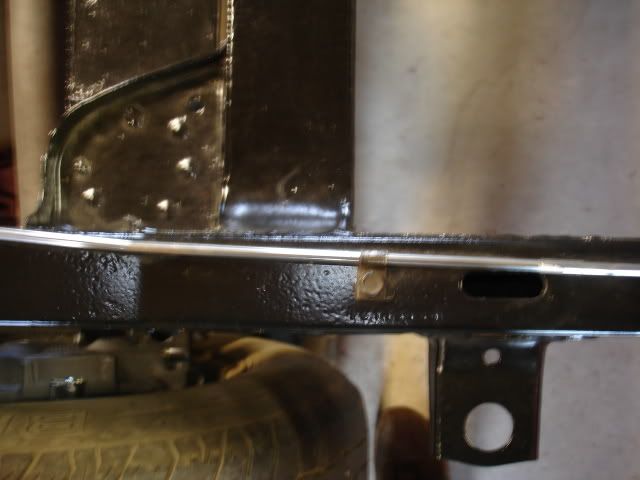
Helped a friend lower the body on his 71 frame this past weekend. The vin is stamped right below that bolt. Driver's side rear. Area would need to be cleaned, tire off and a mirror would help. The whole vin is not there only a portion:

Administrator


Joined: Jul 2000
Posts: 53,982
Likes: 6,209
From: About 1100 miles from where I call home.
Understand that the main semantics issue is the difference between "matching" and "correct." The VIN derivative on the passenger side head machined pad must MATCH the VIN fiound on the VIN plate on the windshield pillar as well as the title and the frame if you could find it (that one is hard).
Other matching issues (not really numbers) are the paint and interior matching the trim tag codes. There is also a VIN derivative on the transmission that matches the body VIN, and a really, really good detective can tell a lot by the way the trans stamp compares to the pad stamp, but thats for another day.
All the other numbers issues are matters of "correctness." An 010 block can be "correct" for a 1969 Vette, but it doesnt "match" anything. The same goes for serial numbers found on alternators, expansion tanks, radiators, etc, etc. All these parts can be replaced. All these parts can have numbers that can be "correct" for a certain car, often supported by proper date coding... but none of those numbers "MATCH" anything. The semantics issues arise when people confuse numbers that can be correct and say they "match."
Ill follow up with some photo examples.
Other matching issues (not really numbers) are the paint and interior matching the trim tag codes. There is also a VIN derivative on the transmission that matches the body VIN, and a really, really good detective can tell a lot by the way the trans stamp compares to the pad stamp, but thats for another day.
All the other numbers issues are matters of "correctness." An 010 block can be "correct" for a 1969 Vette, but it doesnt "match" anything. The same goes for serial numbers found on alternators, expansion tanks, radiators, etc, etc. All these parts can be replaced. All these parts can have numbers that can be "correct" for a certain car, often supported by proper date coding... but none of those numbers "MATCH" anything. The semantics issues arise when people confuse numbers that can be correct and say they "match."
Ill follow up with some photo examples.
Last edited by vettebuyer6369; Dec 24, 2011 at 07:09 PM. Reason: typing worse every day
Administrator
Joined: Jul 2000
Posts: 53,982
Likes: 6,209
From: About 1100 miles from where I call home.
Here's a couple pictures of numbers that "match":


The first is the engine assembly pad number and the VIN derivative. If you compare the VIN derivative to the VIN on the car body and title, they match.
The second is a transmission stamp and VIN. Here as well, the VIN will match the VIN on the car.
Here's a couple other numbered parts:


An engine casting (serial) number, a casting date in an engine, and a carb number and date.
People will commonly say these are "matching." They arent. They are "correct." The 739 serial engine IS from an original number engine in a car, but that serial alone is found in many Corvettes. That number is correct for the model, but "matches" nothing. Same for the date and the carb part number and date. Date will need to conform to a certain format and may fall in line with other dates on the car, within appropriate time frame variances. All in original cars, but those numbers do not match anything, like a pad VIN matching a body VIN. They are simply correct for a model, and could be used in any number of Corvettes.
The first is the engine assembly pad number and the VIN derivative. If you compare the VIN derivative to the VIN on the car body and title, they match.
The second is a transmission stamp and VIN. Here as well, the VIN will match the VIN on the car.
Here's a couple other numbered parts:
An engine casting (serial) number, a casting date in an engine, and a carb number and date.
People will commonly say these are "matching." They arent. They are "correct." The 739 serial engine IS from an original number engine in a car, but that serial alone is found in many Corvettes. That number is correct for the model, but "matches" nothing. Same for the date and the carb part number and date. Date will need to conform to a certain format and may fall in line with other dates on the car, within appropriate time frame variances. All in original cars, but those numbers do not match anything, like a pad VIN matching a body VIN. They are simply correct for a model, and could be used in any number of Corvettes.
Corvette Stories
The Best of Corvette for Corvette Enthusiasts

Top 10 Most Expensive Corvettes Ever Sold on Bring A Trailer
Brett Foote
10 Things Every Corvette Owner Needs (2026 Edition)
Michael S. Palmer
8 Most "Only Corvette Owners Understand" Quirks and Problems
Pouria Savadkouei
10 Reasons the C6 Z06 is Still A Performance Benchmark After 20 Years
Joe Kucinski
How Much Horsepower Every Corvette Engine "LOST" in 1972
Joe Kucinski
Top 10 DOs and DON'Ts for Protecting Your Convertible Top!
Michael S. Palmer
Top 10 Most Explosive Corvettes Ever Made: Power-to-Weight Ratio Ranked!
Joe Kucinski
150 hp to 1,250 hp: Every Corvette Generation Compared by the Specs That Matter
Joe Kucinski
