






1968 corvette 327 l79

Thread Starter
Intermediate

Joined: Feb 2012
Posts: 39
Likes: 0
From: mission british columbia
 1968 corvette 327 l79
hi was wondering if someone could show me a photo of the the crank case vent on the 327 l79 motor i dont know what to look for
the valve covers can be changed and the manifold can be changed
but the sure way to know a 327 is that crank case vent
thanks
Rod
the valve covers can be changed and the manifold can be changed
but the sure way to know a 327 is that crank case vent
thanks
Rod

Melting Slicks

Joined: Jul 2007
Posts: 3,352
Likes: 1
From: Westminster Maryland

Race Director


Joined: Jul 2001
Posts: 15,892
Likes: 42
Here's what you're looking for. The tube at the front mentioned above serves as the oil filler tube and the inlet for the PCV system I believe.
http://www.fossilcars.com/chevrolet-...-intake/175016

http://www.fossilcars.com/chevrolet-...-intake/175016

Melting Slicks


Joined: Jan 2012
Posts: 3,031
Likes: 503
From: myrtle beach sc
Army
The tube in the front is only for oil fill, on the 327's only. Older C-2's had a tube on the side of the oil fill tube for the pcv hose. The original 68 L-79 only chrome valve covers each had one hole in them. The left hand side was for the pcv valve and hose and the right hand side was for a metal tube and hose up to the air cleaner base spark arrester.

Team Owner


Joined: Jan 2006
Posts: 37,637
Likes: 3,113
From: Crossville TN
My recollection was incorrect. That tube is just for oil fill and had a sealed fill cap on it. Thanks for the correction.
[I'm told that "memory" is the second thing to go, as we grow older; but, I can't remember the first... ]
]
[I'm told that "memory" is the second thing to go, as we grow older; but, I can't remember the first...
]
Corvette Stories
The Best of Corvette for Corvette Enthusiasts

10 Revolutionary 'Corvette Firsts' Most People Don't Know
Joe Kucinski
5 Reasons to Upgrade to an LS6-Powered Corvette; 5 Reasons to Stay LT2
Michael S. Palmer
2027 Corvette vs The World: Every C8 vs Its Closest Competitor
Joe Kucinski
10 Most Common Corvette Problems of the Last 20 Years!
Joe Kucinski
5 MOST and 5 LEAST Popular Corvette Model Years in History!
Joe Kucinski
2027 Corvette Buyer's Guide: Everything You Need to Know!
Joe Kucinski
10 Things C8 Corvette Owners Hate (But Won't Tell You)
Joe Kucinski
10 Best Corvettes Coming to Barrett-Jackson Palm Beach 2026!
Brett Foote
Every Corvette Grand Sport Explained! (C2, C4, C6, C7, & C8)
Joe Kucinski
Team Owner

Joined: Jun 2000
Posts: 38,923
Likes: 1,481
From: Southbound
Cruise-In II Veteran
For the 68 327s, the PCV valve is in the left valve cover and connects by hose to the base of the carburetor. AIM shows it. 68 327s have no road draft tube like earlier small blocks had.

Thread Starter
Intermediate
Joined: Feb 2012
Posts: 39
Likes: 0
From: mission british columbia
hey you guys have all been great 7t1 vette youre hillarious!!! but Tom Falconer collectors guide says page 18 "valve covers and intake manifolds could be changed but there is no question about that rear block vent" so my question to you friendly fellas is where is it??
and what is it ?? he calls it a crank case vent at the back of the block just beside the
distributer
thanks Rod
and what is it ?? he calls it a crank case vent at the back of the block just beside the
distributer
thanks Rod
Team Owner
Joined: Jun 2000
Posts: 38,923
Likes: 1,481
From: Southbound
Cruise-In II Veteran
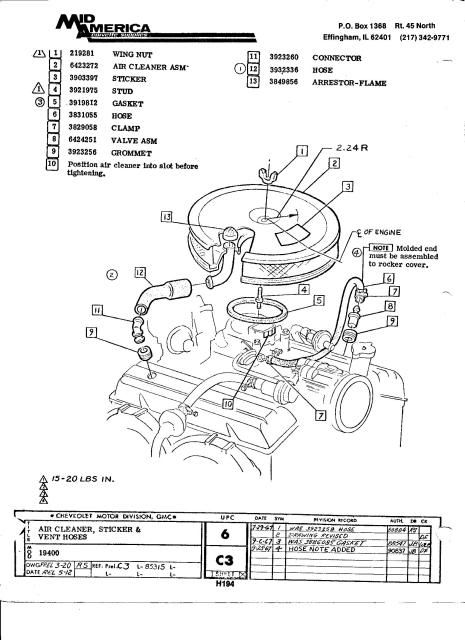
I re-read that section in Mr. Falconer's book and I am wondering whether he might be mistaken.
The plug looks like a small freeze plug. I have seen them, but only on older small blocks. It is on the pad on the block to the left of the distributor and very close to the oil pressure line fitting if it is there.
If memory serves, my original 327/300 assembled in April, 1968 does not have the plug.
Race Director
Joined: Jul 2001
Posts: 15,892
Likes: 42
[IMG]
I re-read that section in Mr. Falconer's book and I am wondering whether he might be mistaken.
The plug looks like a small freeze plug. I have seen them, but only on older small blocks. It is on the pad on the block to the left of the distributor and very close to the oil pressure line fitting if it is there.
If memory serves, my original 327/300 assembled in April, 1968 does not have the plug.
I re-read that section in Mr. Falconer's book and I am wondering whether he might be mistaken.
The plug looks like a small freeze plug. I have seen them, but only on older small blocks. It is on the pad on the block to the left of the distributor and very close to the oil pressure line fitting if it is there.
If memory serves, my original 327/300 assembled in April, 1968 does not have the plug.

In earlier years (pre-PCV) a road draft tube was installed as crude method of venting crankcase vapours. That's what caused the filthy black strip down the center of many 50s and 60s highways.
Thread Starter
Intermediate
Joined: Feb 2012
Posts: 39
Likes: 0
From: mission british columbia
thanks for the info guys as i became a little nervous after reading Mr Falconers guide but with all due respect to him i took it as bible perfect and no one is perfect... so with that in mind i thought maybe i coudlve had a fake 327 even though the block #s match the vin in the window if you guys go to my profile you can see a pic of my motor
kind regards and many thanks
Rod
kind regards and many thanks
Rod

Team Owner


Joined: Aug 2000
Posts: 21,422
Likes: 453
From: Massillon,Ohio USA
2020 C3 of the Year Finalist - Unmodified
Cruise-In VI Veteran
St. Jude Donor '08-'09-'10-'11-'12
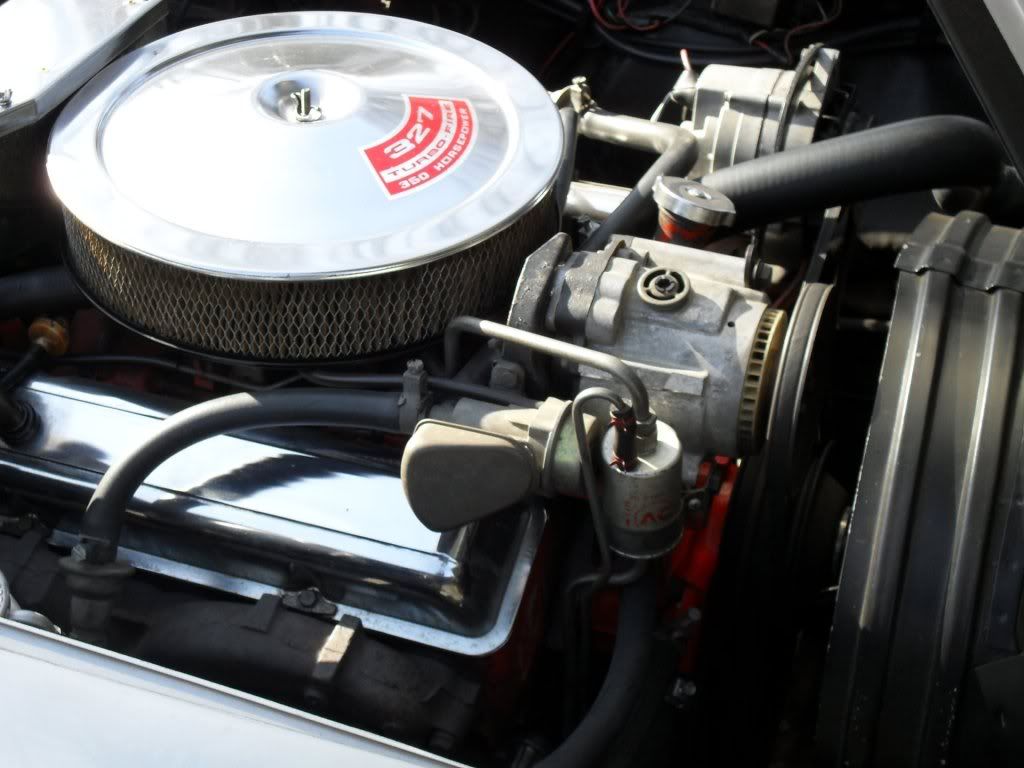
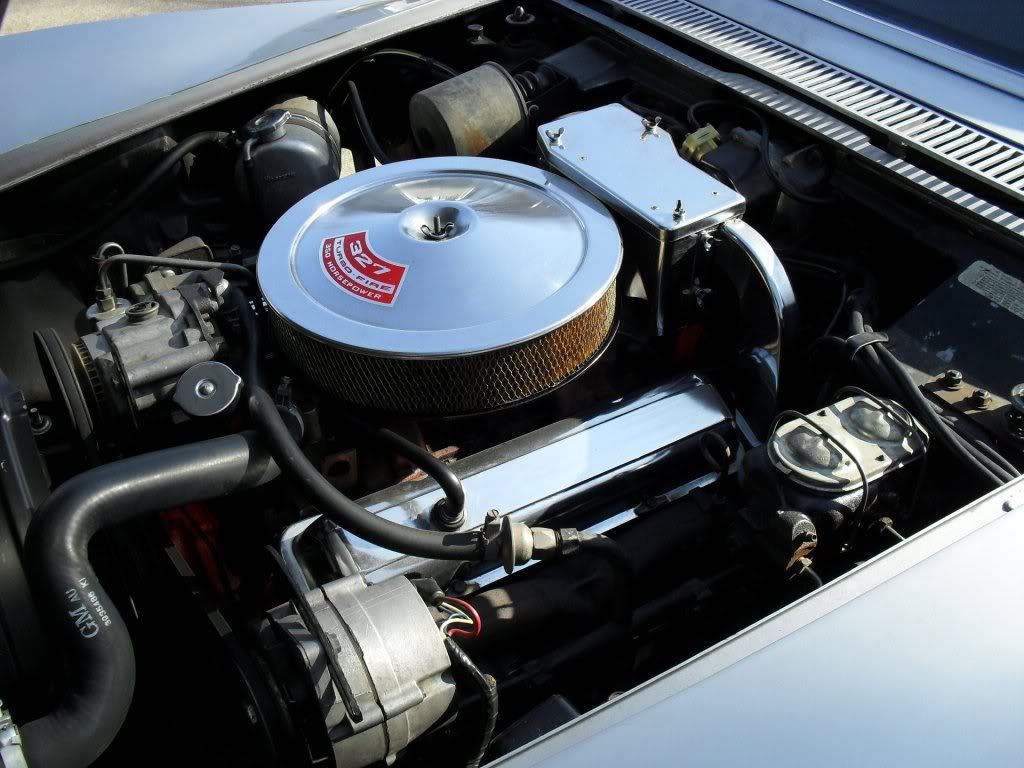
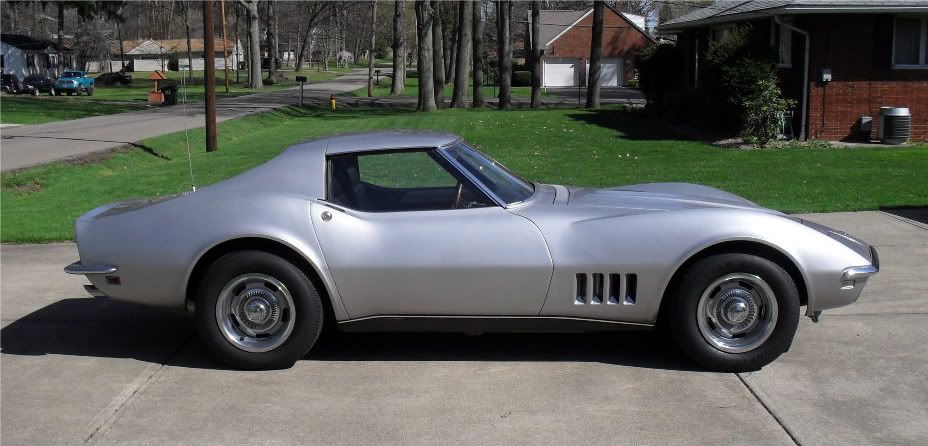
...three pics from the very original 42,000mi Silver '68 L-79 4spd car I used to own.

Last edited by Paul Borowski; Mar 26, 2012 at 08:41 PM.

Race Director
Joined: Jul 2001
Posts: 15,892
Likes: 42
Why not tell us the casting numbers, dates and stamp pad info if that's what you're really asking.
Thread Starter
Intermediate
Joined: Feb 2012
Posts: 39
Likes: 0
From: mission british columbia
sure id be happy to do that its getting some minor mechanical right now though...would the vin # help for now???? i can submit the casting #s wednesday or thursday...i know also it has an HT on the block as well
Team Owner
Joined: Aug 2000
Posts: 21,422
Likes: 453
From: Massillon,Ohio USA
2020 C3 of the Year Finalist - Unmodified
Cruise-In VI Veteran
St. Jude Donor '08-'09-'10-'11-'12
