


A painter I'm not

Thread Starter
Racer

Joined: Nov 2011
Posts: 374
Likes: 21
From: Charleston SC
 A painter I'm not
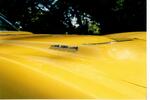
The pic is of the upper center gauge bezel area. Whenever I rattle-can spray a slick piece of metal this happens. Each white spotted area will eventually turn out to be a dimple in the paint if I give it enuf coats. I've tried primer and no primer. Results the same. This was sprayed with Krylon 1613. I know I'm doing something wrong, but if I knew what, I wouldn't be starting this thread. Thanking all in advance, brgds, Bill

Pro

Joined: Feb 2012
Posts: 577
Likes: 6
Bill, prep is everything. Are you sanding the part first to scuff it up? The old paint can actually be a good primer but you first have to scuff it up. You can get some light sand paper and run it over so everything is that scuffed white powdery texture. You can use a fine wire brush to get into the finned area and around the hard to sand areas. Once it's all scuffed up clean the part thoroughly with regular soap and water. Super clean for best results. Then shake your can well and I mean when you think you have shaken it enough keep going with the other hand till your other arm is tired. That will mix the paint the best. Temperature does matter too. A cold or humid garage will affect results. When you spray, start on the outside edge past where the part starts and sweep across the part with an even stroke going past it again on the other side. When you start and stop it shoots globs. Do that part outside before you spray the part. I like to keep the nozzle 8 - 12" from the part for good results. You want a good coat but not so much that it runs. Lay a nice even coat then let it air dry for a few minutes. When it's dry to the touch, drop another coat. Let it dry for several hours and then it's fine to reinstall.
Race Director


Joined: Apr 2011
Posts: 11,183
Likes: 3,335
From: North of Toronto - Ontario
 not much can be done at the end that makes up for poor prep.
One of the worse things I've found is when everything gets armour-all on it. Seems to soak into paint and crevices, lasts forever and is just like silicone when it comes to creating fish-eyes in paint.
Usually before I start anything like this I wash it down with some cleaner (simple-green etc) to get rid of any dirt/grime/crud, and then do any clean up (scuffs, polish, fixing, etc) and then a quick wipe with clean lacquer thinner (if it eats the old paint it usually means it's already been re-painted so I'll usually take all the paint off and start fresh) or at the very least, wipe it down with wax and silicone remover before any primer or paint
Mooser

Melting Slicks

Joined: Jul 2009
Posts: 3,264
Likes: 3
From: Vero Beach FL
QUOTE=Mooser;1580397884] not much can be done at the end that makes up for poor prep.
One of the worse things I've found is when everything gets armour-all on it. Seems to soak into paint and crevices, lasts forever and is just like silicone when it comes to creating fish-eyes in paint.
Usually before I start anything like this I wash it down with some cleaner (simple-green etc) to get rid of any dirt/grime/crud, and then do any clean up (scuffs, polish, fixing, etc) and then a quick wipe with clean lacquer thinner (if it eats the old paint it usually means it's already been re-painted so I'll usually take all the paint off and start fresh) or at the very least, wipe it down with wax and silicone remover before any primer or paint
Mooser[/QUOTE]
You are 100% right
not much can be done at the end that makes up for poor prep.One of the worse things I've found is when everything gets armour-all on it. Seems to soak into paint and crevices, lasts forever and is just like silicone when it comes to creating fish-eyes in paint.
Usually before I start anything like this I wash it down with some cleaner (simple-green etc) to get rid of any dirt/grime/crud, and then do any clean up (scuffs, polish, fixing, etc) and then a quick wipe with clean lacquer thinner (if it eats the old paint it usually means it's already been re-painted so I'll usually take all the paint off and start fresh) or at the very least, wipe it down with wax and silicone remover before any primer or paint
Mooser[/QUOTE]
You are 100% right
Racer


Joined: Sep 2006
Posts: 313
Likes: 8
From: Charleston Illinois
Try washing it with soapy water first. Then dry it off and wipe down with a prep solvent of your choice. I usually don't use paint thinner for that step, because it evaporates too quickly and will leave contaminants on the surface without being wiped off. If you do not clean whatever you are painting first, you are only asking for problems. Because all you are doing is driving contaminants down into the substrate when you sand it. If your prep work is done accordingly and you still get fish eyes just increase your distance to the panel being painted. Once you are sure it is not going to fish eyes you can move in closer to paint it to your desired gloss and texture. If you have any other questions please feel free to pm me and I will be more than happy to help. Good luck.

Team Owner


Joined: Jan 2006
Posts: 37,637
Likes: 3,118
From: Crossville TN
Use a paint stipper to get all paint off the part. Wash thoroughly with detergent to get rid of the stripper and any contaminants. Rinse, rinse, rinse; then dry well.
I suspect the primary problem is one of two things: the spray nozzle on that can is defective and causing the can to "spit" paint, instead of spraying it; and/or the temperature of the metal and/or paint was too cold. Both need to be in the 65-90*F range for decent results.
I suspect the primary problem is one of two things: the spray nozzle on that can is defective and causing the can to "spit" paint, instead of spraying it; and/or the temperature of the metal and/or paint was too cold. Both need to be in the 65-90*F range for decent results.
Melting Slicks
Joined: Jul 2009
Posts: 3,264
Likes: 3
From: Vero Beach FL
Use a paint stipper to get all paint off the part. Wash thoroughly with detergent to get rid of the stripper and any contaminants. Rinse, rinse, rinse; then dry well.
I suspect the primary problem is one of two things: the spray nozzle on that can is defective and causing the can to "spit" paint, instead of spraying it; and/or the temperature of the metal and/or paint was too cold. Both need to be in the 65-90*F range for decent results.
I suspect the primary problem is one of two things: the spray nozzle on that can is defective and causing the can to "spit" paint, instead of spraying it; and/or the temperature of the metal and/or paint was too cold. Both need to be in the 65-90*F range for decent results.
The paint has got to off either with stripper or lacquer thinner.

Team Owner

Joined: Sep 2006
Posts: 31,266
Likes: 4,361
From: Westminster Maryland
Hi Bill,
I agree with everyone's point about the part needing to be absolutely clean.
I would avoid using any sand paper on the bezels because since they're chrome plated you don't want to scratch the chrome surface. Those scratches create their own problems when you begn to paint.
I found that dusting on a VERY light coat or two of #1613 to begin helps the adhesion when you put on your next ( and maybe only) heavier coat.
I believe that on the bezels the less paint you use the better.
Good Luck!
Regards,
Alan
I agree with everyone's point about the part needing to be absolutely clean.
I would avoid using any sand paper on the bezels because since they're chrome plated you don't want to scratch the chrome surface. Those scratches create their own problems when you begn to paint.
I found that dusting on a VERY light coat or two of #1613 to begin helps the adhesion when you put on your next ( and maybe only) heavier coat.
I believe that on the bezels the less paint you use the better.
Good Luck!
Regards,
Alan

Melting Slicks
Joined: Feb 2006
Posts: 3,428
Likes: 5
From: Japan
Just to add to the cornfusion, it is possible that the paint you are using is not compatible with whatever is underneath, whether it is existing paint or primer. If you are using Krylon lacquer make sure you are using lacquer primer. If the primer is an enamel base and the topcoat is lacquer it will try to jump off of the primer like you are seeing. Whatever topcoat you are using it's best to use the same brand/type of primer.
Le Mans Master

Joined: Jan 2007
Posts: 5,485
Likes: 7
From: Peekskill NY
Hi Bill,
I agree with everyone's point about the part needing to be absolutely clean.
I would avoid using any sand paper on the bezels because since they're chrome plated you don't want to scratch the chrome surface. Those scratches create their own problems when you begn to paint.
I found that dusting on a VERY light coat or two of #1613 to begin helps the adhesion when you put on your next ( and maybe only) heavier coat.
I believe that on the bezels the less paint you use the better.
Good Luck!
Regards,
Alan
I agree with everyone's point about the part needing to be absolutely clean.
I would avoid using any sand paper on the bezels because since they're chrome plated you don't want to scratch the chrome surface. Those scratches create their own problems when you begn to paint.
I found that dusting on a VERY light coat or two of #1613 to begin helps the adhesion when you put on your next ( and maybe only) heavier coat.
I believe that on the bezels the less paint you use the better.
Good Luck!
Regards,
Alan
Don't rush adding coat after coat either.

Melting Slicks
Joined: Sep 2011
Posts: 3,372
Likes: 215
From: Peoria Arizona
Some excellent advice here! I ended up using some self etch primer on my ash tray lid. No matter how much I cleaned it, I was ending up with fisheyes.
Picked up a can of this and no more problems

Adam
Picked up a can of this and no more problems
Adam
Thread Starter
Racer
Joined: Nov 2011
Posts: 374
Likes: 21
From: Charleston SC
Thanks to everyone! Finally got the thing looking good. Gotta agree with everyone: the 3 most important steps in painting are - Prep, Prep, Prep. Got some spray paint remover and sprayed the heck out of it. Washed and washed. Used etching primer and then the Krylon. Looks great. Will post pics when (if?) it get it back to gether. Again, thanks to all. Bill
