


Numbers matching importance


Melting Slicks


Joined: Apr 2007
Posts: 3,189
Likes: 111
From: Tolland CT

 However I suspect many uninformed buyers equate 'numbers matching' with 'original', paying the premium. Buyers assuming 'numbers matching' is equivalent to 'original' waters down the meaning, diminishes the value of true originals. If this was widely accepted, it would seem owners with blocks which are not original but with correct casting numbers and date codes would be foolish not to have them restamped. IMO 'numbers matching' is a starting point. I wouldn't hand over +20% or more without more proof the block is indeed the original.
For me, I'd take it a step further expecting to see an engine without aftermarket parts indicating the engine has been messed with.

Safety Car


Joined: Dec 1999
Posts: 3,612
Likes: 843
From: PA
Hi,
I think it's interesting that the transmission 'pads' (flanges) weren't 'ground out' as engine pads were.
I believe the first stamp was typically "X'd" out and then a new stamp was done in a different place on the flange.
Did this have to do with the fact that the case was aluminum (soft) or access to the flange?
In this case…. which set of digits was x'd out originally?
Regards,
Alan
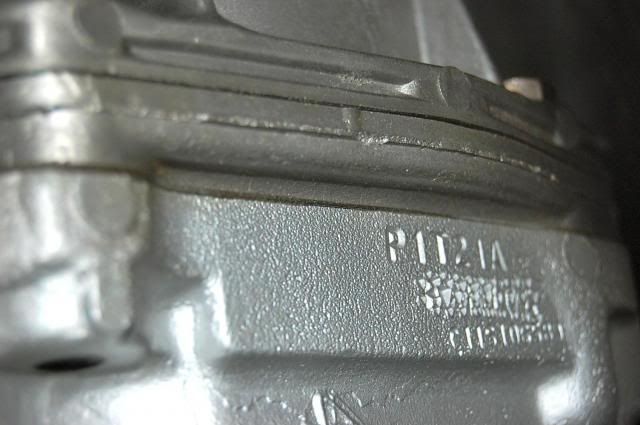
I think it's interesting that the transmission 'pads' (flanges) weren't 'ground out' as engine pads were.
I believe the first stamp was typically "X'd" out and then a new stamp was done in a different place on the flange.
Did this have to do with the fact that the case was aluminum (soft) or access to the flange?
In this case…. which set of digits was x'd out originally?
Regards,
Alan
i have a feeling this was done at the factory. car was built, and trans didn't work. trans was changed and car left. THEN this trans was fixed, restamped and put in another car. Kind of shows GM's attitude towards trans numbers matches mine; they don't carry the importance of the engine stamp...
As far as GM's attitude, they DID make the effort to correct it so it was of some importance, don't you think?
Regards,
Stan Falenski

Race Director

Joined: Jul 2015
Posts: 13,082
Likes: 3,400
From: SW Florida.
[QUOTE=Rowdy Rat;1590579302
This was done at the transmission plant... Long before the transmission made it to St. Louis. There are other examples where this occurred that almost guarantee this was a Muncie correction, not St. Louis.
As far as GM's attitude, they DID make the effort to correct it so it was of some importance, don't you think?
Regards,
Stan Falenski[/QUOTE]they stamp the vin number at the transmission plant? i doubt it. they stamp the trans, frame, and engine with the same partial vin stamp as the car goes together. and what i meant about their attitude towards trans stamp is they didn't care that anybody would be able to see the re-stamp of the vin number. if they pulled a bad engine, repaired it and reissued it in another car, i betcha they would have machined the pad to eradicate the orig stamp, not xxxed it out and put another vin below it.
This was done at the transmission plant... Long before the transmission made it to St. Louis. There are other examples where this occurred that almost guarantee this was a Muncie correction, not St. Louis.
As far as GM's attitude, they DID make the effort to correct it so it was of some importance, don't you think?
Regards,
Stan Falenski[/QUOTE]they stamp the vin number at the transmission plant? i doubt it. they stamp the trans, frame, and engine with the same partial vin stamp as the car goes together. and what i meant about their attitude towards trans stamp is they didn't care that anybody would be able to see the re-stamp of the vin number. if they pulled a bad engine, repaired it and reissued it in another car, i betcha they would have machined the pad to eradicate the orig stamp, not xxxed it out and put another vin below it.
Race Director
Joined: Jul 2015
Posts: 13,082
Likes: 3,400
From: SW Florida.
now, as far as numbers-matching goes, if you take a 10 dollar bill and add another zero, the numbers match a 100 dollar bill. but it is dishonest. if you re-stamp a part and claim numbers-matching, you are committing fraud. you are lying and saying it is the original part.
Safety Car
Joined: Dec 1999
Posts: 3,612
Likes: 843
From: PA
...and what i meant about their attitude towards trans stamp is they didn't care that anybody would be able to see the re-stamp of the vin number. if they pulled a bad engine, repaired it and reissued it in another car, i betcha they would have machined the pad to eradicate the orig stamp, not xxxed it out and put another vin below it.
If a block problem was so severe that an engine was completely disassembled, the internals were retasked (if possible) to a freshly machined block and the defective block sent back to the foundry to be returned to a liquid state... So said the folks at Flint and Tonawanda when they were asked years ago.
The transmission folks apparently used a different approach. Whether they did the "X" out at St. Louis, I can't say for certain, but I am certain they did it at Muncie.
Regards,
Stan





