


About To Start Stripping!!!

Thread Starter
Race Director


Joined: Dec 2005
Posts: 13,515
Likes: 12
From: Fisher, IL
 About To Start Stripping!!!
How many tips do you think I'll get? From you guys that is about how I should go about doing it
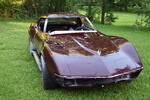
My '69 I believe was gold before they poorly painted over it with blue. Using a razor blade I can easily get rid of the blue.. but there's a smooth brown layer under that(that I thought was the gel coat but just found out there's no such thing.)
I can try to razor blade under that(maybe with the help of my heat gun) but it seems pretty thick and not razor blade-able.
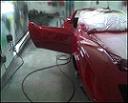
Edge around the hood

Between headlight and hood...


Color difference, and a blurry shot of the poor cracking blue paint

The T-Top

My '69 I believe was gold before they poorly painted over it with blue. Using a razor blade I can easily get rid of the blue.. but there's a smooth brown layer under that(that I thought was the gel coat but just found out there's no such thing.)
I can try to razor blade under that(maybe with the help of my heat gun) but it seems pretty thick and not razor blade-able.
Edge around the hood
Between headlight and hood...
Color difference, and a blurry shot of the poor cracking blue paint
The T-Top
Last edited by PUNISHER VETTE; Apr 7, 2013 at 11:04 AM.
Thread Starter
Race Director
Joined: Dec 2005
Posts: 13,515
Likes: 12
From: Fisher, IL
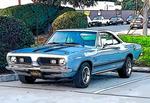
Here it is when I first got it and hadn't done anything to it yet.
You can easily see the terrible cracking paint and poor paint job the PO must have done.
Just want to know if when I razor blade it should I see fiberglass?

You can easily see the terrible cracking paint and poor paint job the PO must have done.
Just want to know if when I razor blade it should I see fiberglass?
Thread Starter
Race Director
Joined: Dec 2005
Posts: 13,515
Likes: 12
From: Fisher, IL
Looks like brown is on top of the gold though... so I'm guessing when they sprayed the blue they put the brown down first?
If I'm eventually going to paint his thing do I want to get it down to bare glass anyway right? so the primer or not it needs to go?
If I'm eventually going to paint his thing do I want to get it down to bare glass anyway right? so the primer or not it needs to go?
Thread Starter
Race Director
Joined: Dec 2005
Posts: 13,515
Likes: 12
From: Fisher, IL
I was all set to do the razor blade method but as it turns out...it sucks.

It can get the top blue layer off...and that's it. and that blue layer is so thin there's almost no point in trying to razor blade it off first.
I think I'll have better luck with chemicals or even the controversial sanding
Corvette Stories
The Best of Corvette for Corvette Enthusiasts

Top 10 Most Expensive Corvettes Ever Sold on Bring A Trailer
Brett Foote
10 Things Every Corvette Owner Needs (2026 Edition)
Michael S. Palmer
8 Most "Only Corvette Owners Understand" Quirks and Problems
Pouria Savadkouei
10 Reasons the C6 Z06 is Still A Performance Benchmark After 20 Years
Joe Kucinski
How Much Horsepower Every Corvette Engine "LOST" in 1972
Joe Kucinski
Top 10 DOs and DON'Ts for Protecting Your Convertible Top!
Michael S. Palmer
Top 10 Most Explosive Corvettes Ever Made: Power-to-Weight Ratio Ranked!
Joe Kucinski
150 hp to 1,250 hp: Every Corvette Generation Compared by the Specs That Matter
Joe Kucinski
8 Coolest Corvette Pace Cars (and Replicas) of All Time
Verdad Gallardo
Melting Slicks


Joined: Feb 2006
Posts: 3,428
Likes: 5
From: Japan
The problem with razor shaving paint off of these cars is that the blade must be flat in order to cut effectively but these cars don't have a lot of flat surfaces on which to cut. This really increases the likelihood of gouging up the non-gelcoated fiberglass underneath.
I had the same thick brown primer under my car's second paint job, which was utterly impervious to stripper, so once I had either scraped or stripped down to that I sanded through it with 80 grit paper.
In the absence of soda blasting (which is the ONLY kind of media blasting that is safe for fiberglass) the fastest way to strip paint from one of these cars is with aircraft or fiberglass-safe stripper, but even that won't get it all. It will get about 80%, but the rest is just long, grueling, frustrating hours and hours of hand sanding, and with a car that has blistering, delaminating paint like your does I really think removing it all is going to be the only safe route.
Just keep at it, don't quit, and you'll get there.
I had the same thick brown primer under my car's second paint job, which was utterly impervious to stripper, so once I had either scraped or stripped down to that I sanded through it with 80 grit paper.
In the absence of soda blasting (which is the ONLY kind of media blasting that is safe for fiberglass) the fastest way to strip paint from one of these cars is with aircraft or fiberglass-safe stripper, but even that won't get it all. It will get about 80%, but the rest is just long, grueling, frustrating hours and hours of hand sanding, and with a car that has blistering, delaminating paint like your does I really think removing it all is going to be the only safe route.
Just keep at it, don't quit, and you'll get there.
Thread Starter
Race Director
Joined: Dec 2005
Posts: 13,515
Likes: 12
From: Fisher, IL
The problem with razor shaving paint off of these cars is that the blade must be flat in order to cut effectively but these cars don't have a lot of flat surfaces on which to cut. This really increases the likelihood of gouging up the non-gelcoated fiberglass underneath.
I had the same thick brown primer under my car's second paint job, which was utterly impervious to stripper, so once I had either scraped or stripped down to that I sanded through it with 80 grit paper.
In the absence of soda blasting (which is the ONLY kind of media blasting that is safe for fiberglass) the fastest way to strip paint from one of these cars is with aircraft or fiberglass-safe stripper, but even that won't get it all. It will get about 80%, but the rest is just long, grueling, frustrating hours and hours of hand sanding, and with a car that has blistering, delaminating paint like your does I really think removing it all is going to be the only safe route.
Just keep at it, don't quit, and you'll get there.
I had the same thick brown primer under my car's second paint job, which was utterly impervious to stripper, so once I had either scraped or stripped down to that I sanded through it with 80 grit paper.
In the absence of soda blasting (which is the ONLY kind of media blasting that is safe for fiberglass) the fastest way to strip paint from one of these cars is with aircraft or fiberglass-safe stripper, but even that won't get it all. It will get about 80%, but the rest is just long, grueling, frustrating hours and hours of hand sanding, and with a car that has blistering, delaminating paint like your does I really think removing it all is going to be the only safe route.
Just keep at it, don't quit, and you'll get there.
80grit sheets or blocks? do you use a device that hold the sheets?
Or by "hand" sanding do you use an orbital?(i've seen a lot of thread bash that method but not sure)
How many sheets of sandpaper will it take so I know how much to order?
This car is for learning purposes so there's NO chance I won't attempt this myself


I'll paint it at least once, then I'll see how good/bad it is if i'll want to do another lol.
Melting Slicks
Joined: Feb 2006
Posts: 3,428
Likes: 5
From: Japan
When it came to hand sanding I pretty much just tore off 1/3 sheet at a time then folded those in thirds and just manually sanded away until the sanding scratches were just beginning to cut through the bottom layer of factory primer. No blocks, just a piece of sandpaper in my hand. I did use a DA on a very few places where the surface was flat (rear deck) but that was even kinda scary.
As far as how much sandpaper...I just kept buying it a couple packages at a time until I was done, I probably went through 10 or 12 packages of 80 grit paper.
The biggest thing working against me was age and not enough free time-for the first year of the project I was working 10 hours a day and Saturdays so there just wasn't that much free time. If I'd been 10 years younger and had Saturdays to work on it I would have finished it a lot sooner...
As far as how much sandpaper...I just kept buying it a couple packages at a time until I was done, I probably went through 10 or 12 packages of 80 grit paper.
The biggest thing working against me was age and not enough free time-for the first year of the project I was working 10 hours a day and Saturdays so there just wasn't that much free time. If I'd been 10 years younger and had Saturdays to work on it I would have finished it a lot sooner...
Last edited by birdsmith; Apr 7, 2013 at 04:25 PM.


Thread Starter
Race Director
Joined: Dec 2005
Posts: 13,515
Likes: 12
From: Fisher, IL
Is there a different kind that is safe or it's just all safe?
I like the idea of Citri-strip over other brands as it seems like it would be less gross and nasty to deal with.

Race Director


Joined: Sep 1999
Posts: 11,361
Likes: 383
From: Plano TX
My choice would be chemical stripper. But if some layers come off real easy with a razor blade you can get that out of the way first.
The brown stuff looks like lacquer primer. You should find more of it under the gold paint. The lacquer primer is usually the hardest part to get off. Scotchbrite and lacquer thinner is what's used. It's a lot of work.
The brown stuff looks like lacquer primer. You should find more of it under the gold paint. The lacquer primer is usually the hardest part to get off. Scotchbrite and lacquer thinner is what's used. It's a lot of work.

Race Director

Joined: Apr 2009
Posts: 19,294
Likes: 2,754
From: Charlotte NC
My .02 cents worth:
I would use a razor blade knife and try to remove what you can. I agree...keeping the angle, pressure and the way the razor blade must follow the panel (so you do not allow the outer ends of the razor blade to gouge into the fiberglass) is a bit tricky. But if you have eyes and can make sure you keep the blade perpendicular to the curves and reverse rolls of the body...you should not have an issue. Just make sure you burnish the blade ( running is backwards on a towel on a flat surface).
Buy using a razor blade....it can greatly reduce the use of stripper due to removing paint and not having to deal with the mess. Because it will get messy if you use chemical stripper.
Kleanstrip offers a stripper for lacquer. I use it and also Aircraft Remover stripper. I have never had a problem because I watch and test to make sure the time that is needed to soften and lift the paint off the fiberglass WITHOUT damaging. I do not apply it and then go to the "movies". AND when I re-apply either stripper...I am NOT "*****-NILLY" about it. I am very careful to not slap the stuff all over an area I just stripped. Also...I use automotive grade lacquer thinner and rough steel wool to aid in removing any areas that need a little help to come off. Then I carefully wipe the panel off and then wipe it again with clean lacquer thinner and paper towels ( Bounty). The steel wool WILL NOT damage the fiberglass. I also use red scotch brite.
If you use chemical stripper you NEED to obtain and USE the correct gloves that are methylenechloride resistant (MeCl). Also make sure you are in a area with GOOD air flow. DO NOT strip out in the sun. Apply the stripper in ONE DIRECTION and do not brush back and forth... because this causes the skinning properties of the stripper to be open and the ability of it is lessened due to breaking this dull skin that will show up after application. I sue plastic "bondo" spreaders to aid in removing the stripper...and in many cases...due to me applying the stripper thick...I can move that stripper to the next area beside it and keep using it until it will not do anything at all.
I have chemically stripped more Corvettes that i can count...so it can be done...like many others also have done. Just remember...GRAVITY...start at the top and work down and do not get too far ahead of yourself. Keep it under control and you will/should be fine.
DUB
I would use a razor blade knife and try to remove what you can. I agree...keeping the angle, pressure and the way the razor blade must follow the panel (so you do not allow the outer ends of the razor blade to gouge into the fiberglass) is a bit tricky. But if you have eyes and can make sure you keep the blade perpendicular to the curves and reverse rolls of the body...you should not have an issue. Just make sure you burnish the blade ( running is backwards on a towel on a flat surface).
Buy using a razor blade....it can greatly reduce the use of stripper due to removing paint and not having to deal with the mess. Because it will get messy if you use chemical stripper.
Kleanstrip offers a stripper for lacquer. I use it and also Aircraft Remover stripper. I have never had a problem because I watch and test to make sure the time that is needed to soften and lift the paint off the fiberglass WITHOUT damaging. I do not apply it and then go to the "movies". AND when I re-apply either stripper...I am NOT "*****-NILLY" about it. I am very careful to not slap the stuff all over an area I just stripped. Also...I use automotive grade lacquer thinner and rough steel wool to aid in removing any areas that need a little help to come off. Then I carefully wipe the panel off and then wipe it again with clean lacquer thinner and paper towels ( Bounty). The steel wool WILL NOT damage the fiberglass. I also use red scotch brite.
If you use chemical stripper you NEED to obtain and USE the correct gloves that are methylenechloride resistant (MeCl). Also make sure you are in a area with GOOD air flow. DO NOT strip out in the sun. Apply the stripper in ONE DIRECTION and do not brush back and forth... because this causes the skinning properties of the stripper to be open and the ability of it is lessened due to breaking this dull skin that will show up after application. I sue plastic "bondo" spreaders to aid in removing the stripper...and in many cases...due to me applying the stripper thick...I can move that stripper to the next area beside it and keep using it until it will not do anything at all.
I have chemically stripped more Corvettes that i can count...so it can be done...like many others also have done. Just remember...GRAVITY...start at the top and work down and do not get too far ahead of yourself. Keep it under control and you will/should be fine.
DUB
Safety Car


Joined: May 2008
Posts: 3,753
Likes: 721
From: Lafayette Louisiana
My choice would be chemical stripper. But if some layers come off real easy with a razor blade you can get that out of the way first.
The brown stuff looks like lacquer primer. You should find more of it under the gold paint. The lacquer primer is usually the hardest part to get off. Scotchbrite and lacquer thinner is what's used. It's a lot of work.
The brown stuff looks like lacquer primer. You should find more of it under the gold paint. The lacquer primer is usually the hardest part to get off. Scotchbrite and lacquer thinner is what's used. It's a lot of work.
Right now, before getting started, I am trying to get educated, much thanks to this forum!
Last edited by 20mercury; Apr 7, 2013 at 07:43 PM.

Team Owner


Joined: Aug 2000
Posts: 21,457
Likes: 463
From: Massillon,Ohio USA
2020 C3 of the Year Finalist - Unmodified
Cruise-In VI Veteran
St. Jude Donor '08-'09-'10-'11-'12
 ....I've stripped four Corvettes and used Evercoat One-Strip. Took appx 5 gals per car. Stuff is thick and gooey so it will stay in place on vertical panels. Did one panel, door or hood at a time. Did each Corvette in under three weeks. On the vertical panels, as stated work top to bottom. I had several sheets of newspaper under each panel as I went, then when I was done with that particular panel, just rolled of the newspaper with all the goo and carefully disposed in a plastic trash bag.
Le Mans Master

Joined: Dec 2003
Posts: 5,381
Likes: 416
From: N J
I have stripped several vettes and always use Capt Lees spray strip. I put it on with a small brush, as the spray can they provide usually breaks. The first layer I use the razor blades to save on the chemicals. When you hit the brown primer, as was already mentioned, its time for the lacquer thinner, scotch bright pads and a bunch of rags. Not the S-B pads you buy at the supermarket. Go to an auto store and get a big box of the maroon colored ones and cut them up. I just stripped my 77 coupe and went through 2 boxes. I didnt want to put any stripper on the rubber bumpers, so I used the pads and the lacquer thinner only. It took a quite a while this way and they do get dull quickly from rubbing. Dont forget to wash the stripped areas well when finished.