







Three... two... one... lift off!
Thread Starter
Burning Brakes


Joined: Feb 1999
Posts: 1,052
Likes: 389
From: Woodinville WA
 Sleepworking?
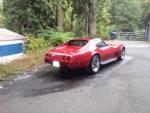
I think I'm sleepworking on the vette at night b'cause I found these pictures on my camera and have no recollection of doing this. So rest assured that your fenders won't fall off unexpectedly.
Corvette Stories
The Best of Corvette for Corvette Enthusiasts

Every 2027 Corvette Engine Explained
Joe Kucinski
Designer Imagines A Corvette That Looks More Like a Corvette Than the Corvette
Verdad Gallardo
10 Ugly Corvettes That We Still Kinda Love
Joe Kucinski
Top 10 Most Expensive Corvettes Ever Sold on Bring A Trailer
Brett Foote
10 Things Every Corvette Owner Needs (2026 Edition)
Michael S. Palmer
8 Most "Only Corvette Owners Understand" Quirks and Problems
Pouria Savadkouei
10 Reasons the C6 Z06 is Still A Performance Benchmark After 20 Years
Joe Kucinski
How Much Horsepower Every Corvette Engine "LOST" in 1972
Joe Kucinski
Top 10 DOs and DON'Ts for Protecting Your Convertible Top!
Michael S. Palmer
Thread Starter
Burning Brakes
Joined: Feb 1999
Posts: 1,052
Likes: 389
From: Woodinville WA
Other random work from February
After and before picture of cleaning the t-top interior + first front bumper fitting. The bumperettes will magically disappear.
Thanks for taking a peek!
Thanks for taking a peek!


Burning Brakes
Joined: Feb 2017
Posts: 1,054
Likes: 212
From: Kissimmee Florida
Your work on this is incredible RBRID ! I found this thread yesterday and I've read every page! I bought a 77 about a month and a half ago and I see that I have a lot of work ahead of me ! I'm curious about a couple things though . Do you have someone helping you with all the know how on this ? And what is the purpose behind adding the weight before painting! Thanks for all the great pictures there're going to help me more than you know !
Thread Starter
Burning Brakes
Joined: Feb 1999
Posts: 1,052
Likes: 389
From: Woodinville WA
Your work on this is incredible RBRID ! I found this thread yesterday and I've read every page! I bought a 77 about a month and a half ago and I see that I have a lot of work ahead of me ! I'm curious about a couple things though . Do you have someone helping you with all the know how on this ? And what is the purpose behind adding the weight before painting! Thanks for all the great pictures there're going to help me more than you know !
I added the weight to simulate the numerous missing parts, like the entire interior, door internal mechanisms, AC, radiator, etc... The chassis and body flex a bit with the weight, so attaching the new body panels, adjusting the bumper covers & doors, and fixing the gaps should be done on a flat surface with all the weight supported by the wheels or brake disks. Otherwise you may have some bad surprises when you do your final assembly. Good luck with your own project.
Burning Brakes
Joined: Feb 2017
Posts: 1,054
Likes: 212
From: Kissimmee Florida
Well I've learned something new already ! One more question! What does the term VPA stand for ? I'm a little slow at something's lol. Also I saw the cup system that you bought for your spray gun . I wanted to tell you that while I own the same system I've never used it because Devillbus makes one that is similar but the cup screws into the adapter ! Because of that I can fill it with paint and put it on , then turn the gun upside down and squeeze the trigger and it takes a moment for it to pull all the air from the cup but when it does it will begin to spray paint ! At that point you can spray paint even upside down because you now have a pressure pot system ! Your system may be able to do that as well mine is just easier to get on and off the gun! Thought this might help with some of the paint work you still have to do.
This will be my first attempt at a Corvette and I can only hope that I can do mine on the same level as you! Thanks again ! I'll do my best to try to follow your lead ! Take care and keep pressing forward!
This will be my first attempt at a Corvette and I can only hope that I can do mine on the same level as you! Thanks again ! I'll do my best to try to follow your lead ! Take care and keep pressing forward!
Last edited by SPCL FX; Mar 24, 2017 at 07:03 PM. Reason: Just in case I did something I wasn't supposed to do
Thread Starter
Burning Brakes
Joined: Feb 1999
Posts: 1,052
Likes: 389
From: Woodinville WA
Well I've learned something new already ! One more question! What does the term VPA stand for ? I'm a little slow at something's lol. Also I saw the cup system that you bought for your spray gun . I wanted to tell you that while I own the same system I've never used it because Devillbus makes one that is similar but the cup screws into the adapter ! Because of that I can fill it with paint and put it on , then turn the gun upside down and squeeze the trigger and it takes a moment for it to pull all the air from the cup but when it does it will begin to spray paint ! At that point you can spray paint even upside down because you now have a pressure pot system ! Your system may be able to do that as well mine is just easier to get on and off the gun! Thought this might help with some of the paint work you still have to do!
This will be my first attempt at a Corvette and I can only hope that I can do mine on the same level as you! Thanks again ! I'll do my best to try to follow your lead ! Take care and keep pressing forward!
This will be my first attempt at a Corvette and I can only hope that I can do mine on the same level as you! Thanks again ! I'll do my best to try to follow your lead ! Take care and keep pressing forward!
VPA stands for Vette Panel Adhesive/Filler from Evercoat. There are many references to it in the Paint/Body section. I like it.
Thanks for your cup system info. I'm planning to stick with what I have now to minimize the cost. Those green bills don't spawn.

Thread Starter
Burning Brakes
Joined: Feb 1999
Posts: 1,052
Likes: 389
From: Woodinville WA
Lamps without a rear
I have been trying to figure out if I need to graft 4 fiberglass rear ends onto my '74 fiberglass bumper. I did a mockup fitting yesterday and I can't tell there is no backing. The lamps hold on strong, so I think I can get away with just leaving the bumper as is.
Burning Brakes
Joined: Feb 2017
Posts: 1,054
Likes: 212
From: Kissimmee Florida
Those are nice pieces of work SpclFx! Congrats. You're definitely not a novice.
VPA stands for Vette Panel Adhesive/Filler from Evercoat. There are many references to it in the Paint/Body section. I like it.
Thanks for your cup system info. I'm planning to stick with what I have now to minimize the cost. Those green bills don't spawn.
VPA stands for Vette Panel Adhesive/Filler from Evercoat. There are many references to it in the Paint/Body section. I like it.
Thanks for your cup system info. I'm planning to stick with what I have now to minimize the cost. Those green bills don't spawn.
Thread Starter
Burning Brakes
Joined: Feb 1999
Posts: 1,052
Likes: 389
From: Woodinville WA
Creating quarter panel flanges
Alright, here we are many weeks later and the quarter panels are finally ready to be installed.
Because they came without flanges that butt against the rear bumper cover, I had to create my own ones. Here are some pictures of that process:
Because they came without flanges that butt against the rear bumper cover, I had to create my own ones. Here are some pictures of that process:
Thread Starter
Burning Brakes
Joined: Feb 1999
Posts: 1,052
Likes: 389
From: Woodinville WA
The resulting flanges
And here are the resulting flanges, they look strong to me. I added VPA on the interior sides to make them flat and add strength. They ended up being about 1/4" to 5/16" thick.
Some VPA will be added on the exterior sides to make them flush with the rear bumper flange, after the quarter panels have been glued in place.
Some VPA will be added on the exterior sides to make them flush with the rear bumper flange, after the quarter panels have been glued in place.