



YOM plates

Thread Starter
Advanced


Joined: Apr 2002
Posts: 96
Likes: 0
From: Pikesville MD
 YOM plates
The YOM rules and regulations in each state vary greatly. My experience is also that they are enforced more or less as many times the DMV personnel are unfamiliar with the rules. I would be happy to hear from others of their experience in different states. I also collect license plates and have been able to help others find the YOM plates they are looking for. In MD you have to physically bring the plates to the main branch and one person keeps a hand written log. The rules say you must have 2 plates for the year of your vehicle which must be over 25 yrs. The number must not be issued to anyone else in the state too. As I am from NY these are the plates on my 71: attached

Melting Slicks


Joined: Aug 2012
Posts: 3,487
Likes: 83
From: Titusville Florida
Not too up on Texas YOM plate rules but I do know that you can buy them from a swapmeet (or where ever), and have them registered to your car. I have also collected plates from various vehicles I've owned and states that I've lived in.

Melting Slicks
Joined: May 2011
Posts: 2,753
Likes: 119
From: Springfield Missouri
you can put them on in Missouri, you have to send in a picture of them and get them registered as YOM classic, limits miles and when you can drive it(to shows etc.). I think I should of be able to run the 75 plates, my car was produced in 75, that way I could of ran the bi-centennial plates.

Racer
Joined: Jun 2012
Posts: 329
Likes: 55
From: Winfield West Virginia
2015 C3 of Year Finalist
Much like other states mentioned here, West Virginia's YOM rules are that you must bring the actual plate to the DMV for their approval. They keep a photo of the plate on file with the property tax and insurance information. The number must not be in use on any other plate. When approved, you receive a registration card and a decal with the expiration date that must be carried in the vehicle. The YOM plates are similar to the Antique & Classic plates in that they are valid for a 10 year period and are renewable. Vehicle usage is limited to shows, etc. and not allowed for daily driving. I have a fairly extensive license plate collection covering WV plates from 1928-1978. Here's the tag that I registered for my '70 C3.
Jim
Jim

Safety Car

Joined: Aug 2000
Posts: 3,711
Likes: 43
From: San Antonio TX
States are probably pretty similar on the rules and regulations on YOM plates. In TX, you have to bring the plate (only one required in TX) to the TXDOT office to be inspected (must be in good condition), then scanned and sent with your application to the state office. Once approved, you take your letter to the tax office to apply for the YOM plate registration. You can go two ways in registration: 1) Normal yearly, with allows you unrestricted use of the vehicle and requires the annual inspection, or; 2) classic/historic, which has the use restrictions, no inspection requirement, and registration lasts five years from a fixed starting point. The five year period started in March 2013, so if you got registration today, it would run to March, 2018.

Advanced
Joined: Aug 2012
Posts: 65
Likes: 2
In CT the rules are similar to what some of you guys posted. Bring in your plate for inspection and they keep a photocopy of it on file. Then you're allowed to display it as long as you keep your registered plate in the car. Sweet thing is that there are no mileage limits and the law specifically states they can be used at anytime even when not going to a car show or repair shop. In my experience however, they are more trouble than they are worth. I had them on my 77 and had to fight the police for an hour even getting a supervisor involved until I was let go. Also had them on my el camino and they ended up taking them and having them destroyed despite having the correct paper work and being in complience with the law.

Team Owner


Joined: Jan 2006
Posts: 37,637
Likes: 3,114
From: Crossville TN
Folks who want to do this should go to the internet and find the applicable law/requirements for their state...AND print them out. Once you get a plate and follow the requirements, just carry the printed copy with you in the car. Anyone that has an issue can read the "official" state requirements that you carry.

Team Owner

Joined: Sep 2006
Posts: 31,160
Likes: 4,241
From: Westminster Maryland
Hi edx,
My understanding and experience is that in Maryland it doesn't HAVE to be an ORIGINAL plate.
I had 2 NEW plates made at a business in Florida that look like the plates that were transferred to my car when it was new.
Those plates were long gone. I was told that I could apply for Vintage plates, (and were sent a set), and in addition another registration card would be sent with the vintage plates that would indicate I could display my YOM plates on the car. The NEW plates needed to the DMV go along with the application for the Vintage plates.
It's funny how I always picture my car with the blue plates since that's how it first looked.
Nice SNOW!!!!
Regards,
Alan
Then:
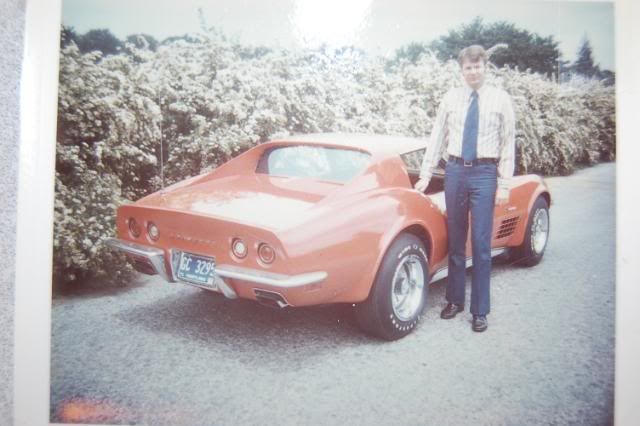
Now:
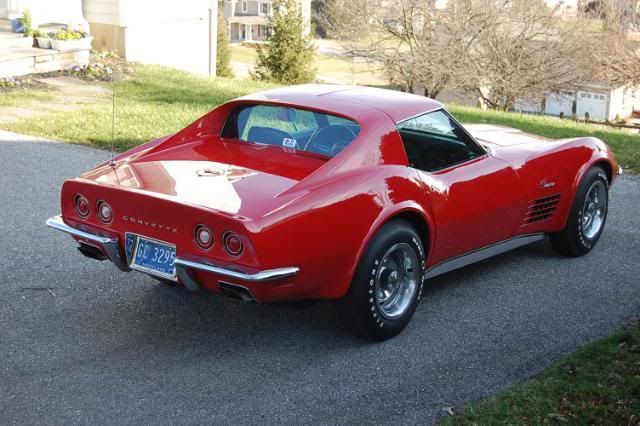
My understanding and experience is that in Maryland it doesn't HAVE to be an ORIGINAL plate.
I had 2 NEW plates made at a business in Florida that look like the plates that were transferred to my car when it was new.
Those plates were long gone. I was told that I could apply for Vintage plates, (and were sent a set), and in addition another registration card would be sent with the vintage plates that would indicate I could display my YOM plates on the car. The NEW plates needed to the DMV go along with the application for the Vintage plates.
It's funny how I always picture my car with the blue plates since that's how it first looked.
Nice SNOW!!!!
Regards,
Alan
Then:

Now:

Corvette Stories
The Best of Corvette for Corvette Enthusiasts

Corvette ZR1X Will Be Pacing the Indy 500, And Could Probably Race, Too!
Verdad Gallardo
Top 10 Corvettes Coming to Mecum Indy 2026!
Brett Foote
Top 10 C9 Corvette MUST-HAVES to Fix These C8 Generation Flaws!
Michael S. Palmer
10 Revolutionary 'Corvette Firsts' Most People Don't Know
Joe Kucinski
5 Reasons to Upgrade to an LS6-Powered Corvette; 5 Reasons to Stay LT2
Michael S. Palmer
2027 Corvette vs The World: Every C8 vs Its Closest Competitor
Joe Kucinski
10 Most Common Corvette Problems of the Last 20 Years!
Joe Kucinski
5 MOST and 5 LEAST Popular Corvette Model Years in History!
Joe Kucinski
2027 Corvette Buyer's Guide: Everything You Need to Know!
Joe Kucinski
Advanced
Joined: Aug 2012
Posts: 65
Likes: 2
Folks who want to do this should go to the internet and find the applicable law/requirements for their state...AND print them out. Once you get a plate and follow the requirements, just carry the printed copy with you in the car. Anyone that has an issue can read the "official" state requirements that you carry.

Drifting

Joined: Aug 2013
Posts: 1,453
Likes: 88
From: Easton Pennsylvania
At the risk of getting flamed out here. I am a little confused about what the plates you guys are discussing are. What I am understanding is that you can go buy a used antique plate from any year and have them registered to you car. If so does the state matter or do they have to have been originally issued from your stated. Can someone clarify this for me please…Thanks

Le Mans Master

Joined: Aug 2001
Posts: 6,333
Likes: 1,311
C3 of Year Finalist (stock) 2019
C2 of Year Finalist (stock) 2019
I've had period correct plates in NY and in FL.
In both states, the plate(s) must be original and not restored (most guys touch 'em up after the DMV "authenticates" them). In NY, a photo of the plate(s) must be sent in to their main office in Albany. In FL, the actual plate has to be mailed to Tallahassee for authentication. Of course they have to have originally been issued for the specific year of the car and must be considered "good" by the DMV.
I've heard comments from folks about cops hassling them about their vintage plates. I have yet to experience any problems in that regard.
In both states, the plate(s) must be original and not restored (most guys touch 'em up after the DMV "authenticates" them). In NY, a photo of the plate(s) must be sent in to their main office in Albany. In FL, the actual plate has to be mailed to Tallahassee for authentication. Of course they have to have originally been issued for the specific year of the car and must be considered "good" by the DMV.
I've heard comments from folks about cops hassling them about their vintage plates. I have yet to experience any problems in that regard.

Advanced


Joined: Sep 2012
Posts: 56
Likes: 30
Nh yom
The YOM rules and regulations in each state vary greatly. My experience is also that they are enforced more or less as many times the DMV personnel are unfamiliar with the rules. I would be happy to hear from others of their experience in different states. I also collect license plates and have been able to help others find the YOM plates they are looking for. In MD you have to physically bring the plates to the main branch and one person keeps a hand written log. The rules say you must have 2 plates for the year of your vehicle which must be over 25 yrs. The number must not be issued to anyone else in the state too. As I am from NY these are the plates on my 71: attached
I do not have my 72 registered with antique plates but I am using 1972 plates that are the same number as my current plates # 13013 and nobody is questioning it so far.
Tom.

Pro

Joined: Oct 2013
Posts: 557
Likes: 3
From: El Sobrante CA
I've heard comments from folks about cops hassling them about their vintage plates.
It's not the plates - it's the reg.
Out here on the Left Coast, YOM plates are just peachy - IF - they're authenticated and carry a current year registration sticker. The tag is affixed to a piece of aluminum which hangs down (or up, depending on preference) from the rear, law enforcement oriented- license plate. That way, the owner doesn't have to mar his/her $250 purchase with those annually required sticky thangs. Here's how it works:
1. You buy the (fill in year here) plates - usually at a car show, swap meet, from catalog or online. Cost is dependent on condition. Suffice it to say, the older, the more costly.
2. Bring plates to brick and mortar DMV 'Store.' Then, prepay a research fee, as the clerk sends plates to Sacramento for research/verification. This takes about 7 weeks.
3. If everything is kosher according to DMV, they send plates back with a ream of paper and directions to bring said pile back to DMV Store. (It's best to make an appointment, or you're looking at about 1:43 hour wait). When your number is called, you drop pile of paper and plates at clerk's cubby where he/she begins tabulating the fees: 'SpecLicFee,' Reg, YOM fee, County, City, Snake taxes. This comes to about $172
4. After writing check and receiving reg tag, sticker is pasted on that piece of aluminum and screwed to rear license plate. You're good to go; no law enforcement personnel will pull you over unless you do something untoward with regard to motor vehicle operation.
5. Pay subsequent year's YOM, re-registration, taxes, fees, assessments, and levies - amounting to about $35 more than it would be with standard issue plates.
The foregoing is based on personal experience. Your Mileage Might Vary.
It's not the plates - it's the reg.
Out here on the Left Coast, YOM plates are just peachy - IF - they're authenticated and carry a current year registration sticker. The tag is affixed to a piece of aluminum which hangs down (or up, depending on preference) from the rear, law enforcement oriented- license plate. That way, the owner doesn't have to mar his/her $250 purchase with those annually required sticky thangs. Here's how it works:
1. You buy the (fill in year here) plates - usually at a car show, swap meet, from catalog or online. Cost is dependent on condition. Suffice it to say, the older, the more costly.
2. Bring plates to brick and mortar DMV 'Store.' Then, prepay a research fee, as the clerk sends plates to Sacramento for research/verification. This takes about 7 weeks.
3. If everything is kosher according to DMV, they send plates back with a ream of paper and directions to bring said pile back to DMV Store. (It's best to make an appointment, or you're looking at about 1:43 hour wait). When your number is called, you drop pile of paper and plates at clerk's cubby where he/she begins tabulating the fees: 'SpecLicFee,' Reg, YOM fee, County, City, Snake taxes. This comes to about $172
4. After writing check and receiving reg tag, sticker is pasted on that piece of aluminum and screwed to rear license plate. You're good to go; no law enforcement personnel will pull you over unless you do something untoward with regard to motor vehicle operation.
5. Pay subsequent year's YOM, re-registration, taxes, fees, assessments, and levies - amounting to about $35 more than it would be with standard issue plates.
The foregoing is based on personal experience. Your Mileage Might Vary.
Last edited by Capkunu; Feb 14, 2014 at 10:37 PM.

Race Director


Joined: Sep 2005
Posts: 18,640
Likes: 121
From: Farragut,TN
here in Tn we pay a fee when we get a antique plate it is permanent to the car a long as you are the owner as long as it in the car you can run year of manufacture plate on the car. I run a '69 arizona plate on my 69.
Le Mans Master

Joined: Oct 2005
Posts: 6,247
Likes: 471
From: Glen Allen, VA
I run YOM plates on my 70 C10. As I undertstand it, in VA you can register your vehicle for everyday use if you prefer, and you'd need to display the current decals in some fashshion. My uncle who had my truck before me, just made a small plate to display the current decals, and he hung that plate under the actual YOM plate. If you registered your vehicle for everyday use, then you would be subject to annual state safety inspection. I have the truck registered as an antique, which limits your usage, however you are not subject to yearly inspection, or DMV renewal fees. Unfortunately, YOM plates didn't exist in VA for my '79 Vette, only '79 decals on the plates.

Drifting
Joined: Mar 2013
Posts: 1,926
Likes: 304
From: Lansing MI
I love the look of having yom plates on these classics but Michigan restricts vehicle use of you have them. Kinda sucks if you want to go on the occasional weekend cruise. I'm sure my 68 will end up with the normal old historical vehicle plates.
Burning Brakes

Joined: Jan 2009
Posts: 766
Likes: 97
From: Lake Norman, NC
I switched to a vintage plate (original 1972) plate and was unaware of any restrictions when it comes to driving the car. I have several friends that also have the vintage plate and have had no trouble with the authorities when driving with them.
I don't drive my car much - maybe 400-500 miles per year, but didn't think I had any restrictions. Am I wrong?

Drifting
Joined: Mar 2013
Posts: 1,926
Likes: 304
From: Lansing MI
Hmmm. I first had a historical plate on my '72 when I bought it. The historical plates clearly have certain qualifications and restrictions.
I switched to a vintage plate (original 1972) plate and was unaware of any restrictions when it comes to driving the car. I have several friends that also have the vintage plate and have had no trouble with the authorities when driving with them.
I don't drive my car much - maybe 400-500 miles per year, but didn't think I had any restrictions. Am I wrong?
I switched to a vintage plate (original 1972) plate and was unaware of any restrictions when it comes to driving the car. I have several friends that also have the vintage plate and have had no trouble with the authorities when driving with them.
I don't drive my car much - maybe 400-500 miles per year, but didn't think I had any restrictions. Am I wrong?
Last edited by chazde3; Feb 16, 2014 at 06:35 AM.

Racer
Joined: Apr 2006
Posts: 262
Likes: 3
From: Philly Suburbs (Pa.)
Using "Dealer" tags on my '72 as they were the only ones with the actual year on the plate (Bi-Centenial '76 tags were original issued that year wth no registration sticker) *had to be titled as an Antique first*
