When you click on links to various merchants on this site and make a purchase, this can result in this site earning a commission. Affiliate programs and affiliations include, but are not limited to, the eBay Partner Network.
From: St Louis MO http://1972corvetterestomod.blogspot.com/
restoring nuts/bolts?
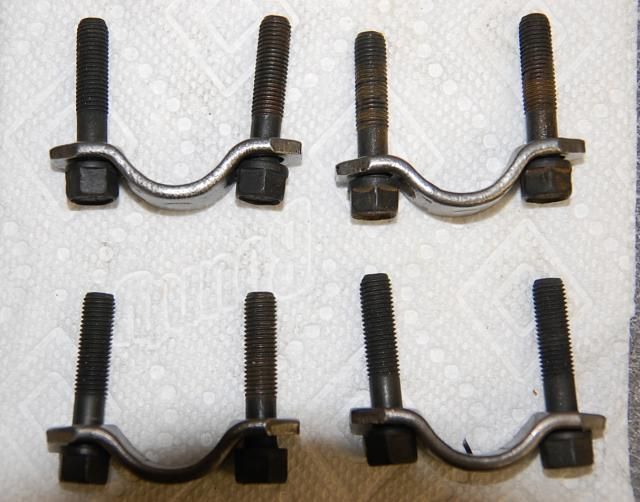
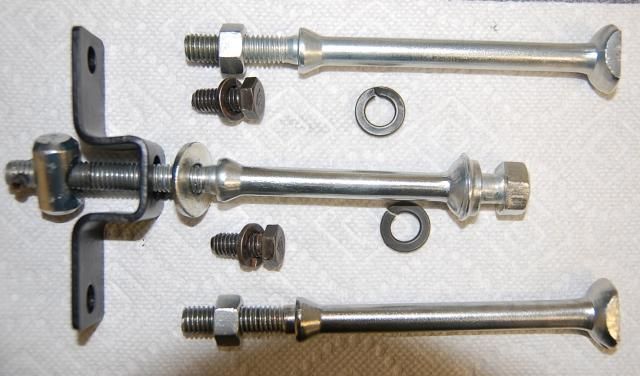
Reusing nuts and bolts of course as I get going on reassembling my '72 chassis. I clean them up with a wire wheel, but should I etch/primer/top coat? When I did this with the new fuel tank install, the threads didn't engage as well and most of the coating seemed to strip off anyway once I got it done.
Hi MS,
You relate the problem with painting bolts.
The best solution is re-plating the fasteners. But this is a lot of work and not for every restorer or every car.
One possibility is to the clean the fasteners as you describe and then spray them with clear. Once installed you can then go back and spray the exposed areas of the fasteners with a bit of clear again hoping to touch up the clear lost to the wrench.
Maybe?
Regards,
Alan
I wasn't going for a NCRS resto. After the wire wheel, I soaked in degreaser, dipped the heads to etch them, and then POR15 on just the heads. The first batch I tried the primer and paint over the POR15, but the paint chipped a bit when I put a socket to them. Subsequent batches, I just put POR15 on the heads and it held up pretty well. I did the washers and nuts too.
For the bolts, I drilled holes in a piece of wood so they would stand up. for the washers and nuts I took another piece of wood and put a bunch of small nails in it and stood it on end to let them dangle while I painted. In retrospect, I just should have sprayed them and called it better than it was. I would try to keep the paint off the threads, and avoid etching the threads. Trying to avoid etching the threads on the nuts was an imperfect process, however.
I wire brush them to remove corrosion, and paint the heads--depending on the type of bolt and how/if it was plated. If it was a bare steel bolt, I use clear lacquer; cadmium plated--flat aluminum; black oxide--cast iron or black oxide paint (if I have some).
Since I'm not going to have my car judged (other than at local car shows) AND I want it to continue to look good without expending enormous amounts of 'elbow grease', I make sure to re-plate or re-coat EVERY piece of bare metal that I work on in my car. Aluminum parts might get coated with VHT high temp paint, then baked (per can instructions) to a hard durable finish. I did this with the alternator case about 6 years ago. It still looks like new, fresh cast aluminum yet today.
Really think about what you expect from your hobby car; then decide how you will proceed whenever you do work on it. If you put a good plan together than matches with what you want from the car, you can end up with something that continues to look really good...without having to do unnecessary cleaning every time you turn around.
I just put them all in a big tumbler with degreaser than take a 5 gal bucket of clean parts and bolts to the local plater, 2 days and 75 bucks later they are like new.
From: St Louis MO http://1972corvetterestomod.blogspot.com/
Thanks all for the good advice. Not really going to be a show car per se, except maybe some small local ones. All the ideas sound good to me... now time to choose I guess.
All good ideas. Except, that I would suggest NOT using any electrolysis methods to clean bolts that are critical 'load-bearing' component retaining items. Electrolysis can etch the surface and even put tiny stress risers at the root of the bolt threads. Under high stresses, this can propogate into cracking and potential bolt failure.
This is not an issue on minor part retention items and cosmetic applications. But when working with bolts from suspension, brakes, etc., it's just not a good idea to subject bolts to pitting or surface damage...even though it is with good intentions.
Wire brushing bolts can actually be beneficial: it removes corrosion that can initiate pitting; it applies surface forces that tend to smooth over potential stress-risers and [lightly] work harden the surface. There is no possible damage incurred to bolts when subjected to wire brushing.
All good ideas. Except, that I would suggest NOT using any electrolysis methods to clean bolts that are critical 'load-bearing' component retaining items. Electrolysis can etch the surface and even put tiny stress risers at the root of the bolt threads. Under high stresses, this can propogate into cracking and potential bolt failure.
This is not an issue on minor part retention items and cosmetic applications. But when working with bolts from suspension, brakes, etc., it's just not a good idea to subject bolts to pitting or surface damage...even though it is with good intentions.
Wire brushing bolts can actually be beneficial: it removes corrosion that can initiate pitting; it applies surface forces that tend to smooth over potential stress-risers and [lightly] work harden the surface. There is no possible damage incurred to bolts when subjected to wire brushing.
I agree with 7t1vette you would not want to do the electrolysis on major suspension stuff, but here is how smaller stuff comes out for those interested.
r
I had a few PM's about the electrolysis system I am using. I thought pictures would help and I don't know how to do that for a PM so here goes. Safety first, vented area and NO SMOKING OR FLAME OF ANY KIND. Get 2 5 gallon buckets fill them to 3/4 full. Add 5 tbl. spoons of washing soda NOT BAKING SODA. 2 pieces of 12/2 copper wire twisted. 1 or 2 pieces of 1/4 steel approx. 2x10". Drill a hole at the lower part of steel plates. Take a 12/2 or 14/2 copper wire and attach it to the steel with a screw. Then twist the copper wire around the steel until it comes up and out of the bucket about 6". I use 2 steel plates which causes a electric field between them. This cleans parts fast and better. You can use 1 piece of steel if you prefer. In the pictures you will see the 2 steel plates, wire wraped around them, washing soda, and the twisted straight line that you hang your bolts on. You also see that I used thin wire to hang the parts. If you use 2 plates you will need to connect them like I did. Battery charger positive to the wire connecting the 2 plates. Negative to the twisted wire holding the bolts to be cleaned. When you start the process you should see right away the activity in the water. Small white circles around each thin wire. If not the remove the plug and check your connections. When plugged in DON"T TOUCH ANYTHING> ALWAYS UNPLUG THE CHARGER 1ST> Now make sure that the part being cleaned DOES NOT TOUCH ONE OF THE STEEL PLATES. Hang the part in the middle to be safe. It sounds like a lot but it really isn't and again its not for everyone but it works. When the parts come out wash them off in the other bucket which just has water in it. Dry them off shoot WD$) or oil on them and wipe. I would not recommend using this process for suspension bolts. I hope this helps and PM me if needed. Here are some pictures to better understand.
One last thing you never really need to add soda maybe just water one in awhile. I have had the original 5 tbl spoons of soda in the bucket since I started.
If you run a tap through the bolt hole first the repainted bolts can, in most cases, be run in by hand and then tightened so more of your finish will stay. A little paint afterwards covers up what you knocked off.
Tractor Supply sells grade 8 bolts by the pound. It comes with a plated finish that doesn't rust. Except for the places where I needed to use an original bolt I put all grade 8 hardware and then covered it with satin black paint.
All of my original bolts, even the new ones, are rusting. Now I'm using Alans trick and pulling them and covering in clear.
Within industry there are enginnering guidelines when reusing metal fasteners such as nut as bolts. It's quite acceptable to reuse them, but the rule of thumb is if the nut can be threaded onto the bolt by hand, then the threads haven't elongated and distorted so they're good to use. When removing fasteners for the first time, you have no idea how much torque was used to tighten them. I've seen some guys forgo the torque wrench and use a snipe extension on a wrench to tighten down. Their rational is "To tight is just right."






 restoring nuts/bolts?