



Engine sputter issue

Thread Starter
Heel & Toe

Joined: Apr 2015
Posts: 22
Likes: 1
From: Norman OK
 Engine sputter issue
Forum need help....
I tried using search but couldn't find anything exactly like my issue.
I have a 73 454 4 speed I just got and am essentially getting all the preventative mx done. (Oil change, air filter, fuel filter, coolant, new battery etc). Anyway, here is my issue...
At times when I shut off the car....I have the solenoid lock so it's in reverse and my feet have the clutch in and brake on, ....the car will sputter for 5-10 seconds after I turn off the ignition. Not every time, but about 60% of the time or so.
Is this normal? I want to say it isn't. Is it harmful? Any ideas to troubleshoot?
Thanks ahead of time!
AFS
I tried using search but couldn't find anything exactly like my issue.
I have a 73 454 4 speed I just got and am essentially getting all the preventative mx done. (Oil change, air filter, fuel filter, coolant, new battery etc). Anyway, here is my issue...
At times when I shut off the car....I have the solenoid lock so it's in reverse and my feet have the clutch in and brake on, ....the car will sputter for 5-10 seconds after I turn off the ignition. Not every time, but about 60% of the time or so.
Is this normal? I want to say it isn't. Is it harmful? Any ideas to troubleshoot?
Thanks ahead of time!
AFS

Racer

Joined: Aug 1999
Posts: 414
Likes: 3
From: Mineral Ridge Ohio
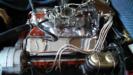
I believe that in '73, all our 'vettes had the idle solenoid on the carb. It was used to set curb idle speed for the engine. It is located at the front driver side of the carb and has a plunger that contacts the throttle lever. Right beside that solenoid should be a screw on the front of the carb that is used to adjust the final closing position of the primary throttle plates. This screw also contacts the throttle linkage. That was done to prevent after-running of the engine. With this screw backed out, the plates could stick in the bores. With the screw too far in, the engine can after-run. The screw is used to just barely hold the throttle plates from sticking. You need to find that fine line between the plates sticking and not sticking in the bores for a final adjustment. If the screw was being used to set curb idle, it will need to be backed out to set the final stop position of the plates. You will then need to readjust the idle speed by using the plunger on the solenoid.
Last edited by blu73; Jun 10, 2015 at 09:41 PM.

Melting Slicks

Joined: Apr 2009
Posts: 2,632
Likes: 112
From: Great Plains Iowa
The reason an engine diesels (continues to run) is red hot carbon deposits will ignite the air/fuel mixture just like a spark plug does. The cure is usually as simple as reducing the PARK idle speed to 750 rpm. An excessively rich air/fuel mixture can also cause it because the unburned fuel adds to the carbon deposits.
Racer

Joined: Oct 2010
Posts: 412
Likes: 25
From: Sultry Steamy Muggy Humid Texas Gulf Coast
"idles at 1200-rpm" Whoa Nellie, turn 'em loose in the big pen, I can't ride 'em in here!
That seems a bit high. My '70 454 relaxes at 750-rpm. But, and it's a medium size butt. Five mins. may not be enough driving time to let mechanical choke do it's thing and idle down the engine. It usually takes my old road warrior a good 20 mins. to warm up, and that's in a temperate Texas clime. Also, your big block might need to be warmer than 140 to start digging in. I was *&^% years old before I figured out to set the carb idle screw AFTER the engine was toasty. It's all good.
Living the dream on the 3rd coast.
That seems a bit high. My '70 454 relaxes at 750-rpm. But, and it's a medium size butt. Five mins. may not be enough driving time to let mechanical choke do it's thing and idle down the engine. It usually takes my old road warrior a good 20 mins. to warm up, and that's in a temperate Texas clime. Also, your big block might need to be warmer than 140 to start digging in. I was *&^% years old before I figured out to set the carb idle screw AFTER the engine was toasty. It's all good.
Living the dream on the 3rd coast.
Last edited by radiotexas; Jun 7, 2015 at 11:56 PM.

Race Director


Joined: Apr 2009
Posts: 19,294
Likes: 2,753
From: Charlotte NC
Corvette Stories
The Best of Corvette for Corvette Enthusiasts

150 hp to 1,250 hp: Every Corvette Generation Compared by the Specs That Matter
Joe Kucinski
8 Coolest Corvette Pace Cars (and Replicas) of All Time
Verdad Gallardo
Top 10 Corvette Engines RANKED by Peak Torque (70+ Years of Muscle!)
Joe Kucinski
Corvette ZR1X Will Be Pacing the Indy 500, And Could Probably Race, Too!
Verdad Gallardo
Top 10 Corvettes Coming to Mecum Indy 2026!
Brett Foote
Top 10 C9 Corvette MUST-HAVES to Fix These C8 Generation Flaws!
Michael S. Palmer
10 Revolutionary 'Corvette Firsts' Most People Don't Know
Joe Kucinski
5 Reasons to Upgrade to an LS6-Powered Corvette; 5 Reasons to Stay LT2
Michael S. Palmer
2027 Corvette vs The World: Every C8 vs Its Closest Competitor
Joe Kucinski


Racer
Joined: Aug 1999
Posts: 414
Likes: 3
From: Mineral Ridge Ohio
With the engine not running, the idle solenoid should not be energized. There should be a gap between the plunger and the throttle linkage. The screw just to the inside of the solenoid on the front of the carb also contacts the linkage. If this screw is turned to loosen it, the throttle plates are allowed to contact the primary bores. You need to see a slight gap between the end of the screw and the linkage. At that point the throttle plates should be in contact the the bores and possibly even slightly stuck. Now turn that screw back in to contact the linkage just enough to keep the throttle plates from sticking in the bores. With the engine running, idle speed is now set with the plunger in the solenoid being turned in or out as needed. It is done with a 1/2" open end wrench.