When you click on links to various merchants on this site and make a purchase, this can result in this site earning a commission. Affiliate programs and affiliations include, but are not limited to, the eBay Partner Network.
I'm doing a complete body off frame restore on my 74 and a friend who has a 64 told me that I should paint any part of the bird cage with zinc chromate he says they came from factory like that. I don't doubt him I just never heard anybody mention it on this forum. Any thoughts on this
I'm doing a complete body off frame restore on my 74 and a friend who has a 64 told me that I should paint any part of the bird cage with zinc chromate he says they came from factory like that. I don't doubt him I just never heard anybody mention it on this forum. Any thoughts on this
Check out my post RVZIO 69 restore. You can see the zinc chromate in action. They don't actually sell the same product that GM used because of EPA restrictions. The color is pretty close though.
Thanks for the replys guys I have never heard of zinc chromate before but as Alan mentioned the aviation suppliers may have some a pilot friend agrees thanks again
My 72 did not have the green zinc chromate on it was more of a black and I am sure it was not repainted.
It's almost a certainty that a 1972 would have had most of the birdcage components painted zinc chromate. It was a fair rust preventative coating and was both inexpensive and easy to apply which is why GM used it. Having said that, parts of the birdcage (painted zinc chromate) were covered with black paint during the blackout operation. Perhaps that is what you are seeing?
My guess is that if you start removing trim pieces that cover the birdcage, you'll see plenty of it.
Airbus, Boeing and all other aircraft manufacturers still use Zinc Chromate on all hidden or inside aluminum surfaces.
Dupli-Color makes it in a rattle can for home use and anyone that sells Dupli-Color will have it.
Last edited by CanadaGrant; Feb 18, 2016 at 03:52 PM.
Dupli-Color has a "Self-Etching Primer" which looks very similar to the 'olive drab' zinc chromate used for rust protection on most military components (especially those that might get shipment and/or use close to salt water).
The model number is DAP 1690. It doesn't state that zinc chromate is in it...it doesn't state ANY "ingredients". But, I use it liberally on all bare metal that ends up getting painted [unless I just clearcoat with lacquer paint].
Been in aviation since 1980, and Zinc Chromate might be correct, but is not that impressive when it comes to corrosion protection on steel or aluminum. Modern urethanes and epoxy paints, when surfaces are properly prepped, and applied, are much better than zinc chromate.
I dont even think you can buy zinc chromate anymore. Its long been gone from our stock room at the airline I work at. Its just too hazardous of a material. We pretty much use a green colored epoxy primer paint in place of the old zinc chromate.
If one wants to 'replicate' (not 'duplicate') the corrosion protective primer on areas of the C3 birdcage, they will have to use a Zinc Chromate primer or one that looks and performs similarly. That's how this thread began, hence, our replies to the OP.
As several people have already posted, the zinc chromate primer used "back in the day" isn't the same as the paint you can buy today... Despite any resemblance to the original material.
I have no clue what parts of the birdcage would have had the zinc chromate painted over on a 72 during the blackout process but like 69FASTFUN posted above mine is more of a black/dark purple color and I'm pretty sure it's stock. See a couple of pics below of the kick panel areas. I have seen others with this exact same color, so I don't think it was owner applied....? These were taken before I cleaned and painted the area.
Possible. GM/Chevy could have purchased any paint that would have met their specification for a rust protection primer. I doubt that 'color' was part of that spec, since it wouldn't be seen by anyone during normal use. If a suitable product was available at a lower cost, a purchasing agent could have signed up for it.
The only way to know for sure would be to find other vehicles in the same VIN sequence with the same color primer. There should have been hundreds of cars made with that paint, if it was approved for production.




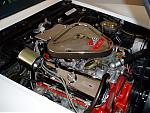


 Zinc chromate