




Matching numbers

Thread Starter
Advanced

Joined: Sep 2015
Posts: 61
Likes: 1
 Matching numbers
It s my understanding that the actual vin number is stamped on the rear of the block( the last 6 digits of say a 68 or a 69 serial number) I see all the time people selling matching number vehicles which are not matching. I understand its a 50 year old vehicle so many parts will not be original. Am I right about the vin??
Thanks in advance Jerry
Thanks in advance Jerry

Team Owner


Joined: Sep 2006
Posts: 31,221
Likes: 4,312
From: Westminster Maryland
Hi Jerry,
The VIN derivative was stamped on the engine at St.Louis.
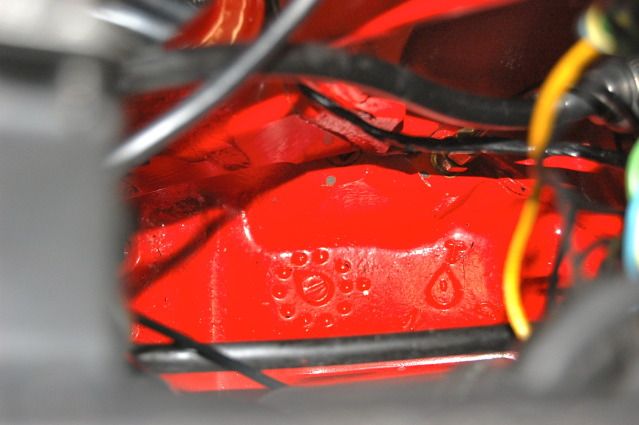
It was typically stamped on a pad on the block's surface located just forward of the front of the right-side head.
The pad also contains a stamp done at the engine plant, (Flint (sb), or Tonawanda (bb) ), that indicates when the engine was assembled and in what h.p. configuration.
The upper rear flange of the block contains a casting number and casting date for the block.
There are many, many cars that still have the engine they left St.Louis with. There are many cars that are described as having the engine they left St.Louis with, but in fact may not.
There's much to learn about "matching numbers".
Regards,
Alan
Note position of the 2 stamps are reversed on the bb and sb pads.
A bb stamp pad. (Head is removed.)
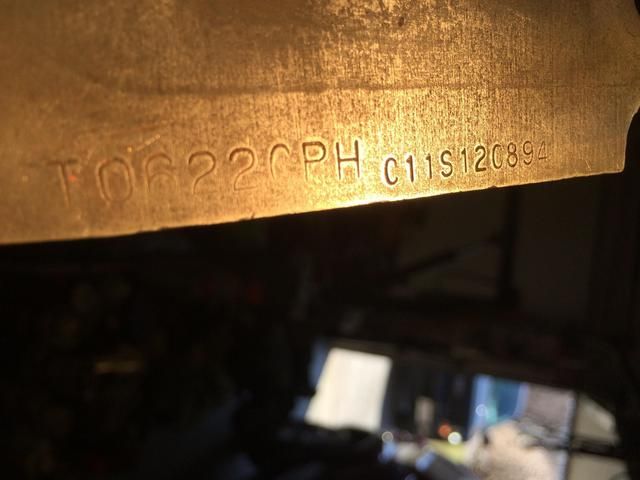
A sb stamp pad. (Head in place.)
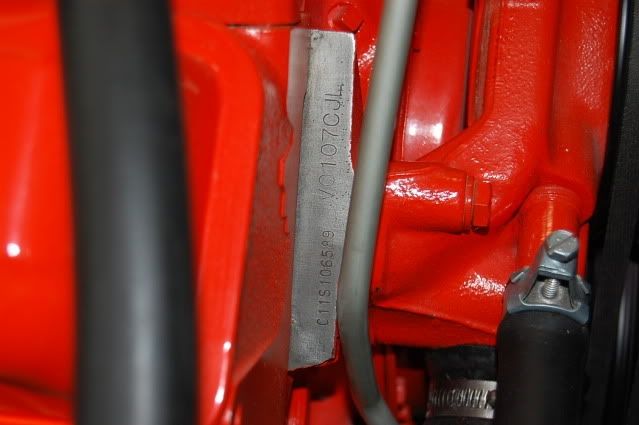
The VIN derivative was stamped on the engine at St.Louis.
It was typically stamped on a pad on the block's surface located just forward of the front of the right-side head.
The pad also contains a stamp done at the engine plant, (Flint (sb), or Tonawanda (bb) ), that indicates when the engine was assembled and in what h.p. configuration.
The upper rear flange of the block contains a casting number and casting date for the block.
There are many, many cars that still have the engine they left St.Louis with. There are many cars that are described as having the engine they left St.Louis with, but in fact may not.
There's much to learn about "matching numbers".
Regards,
Alan
Note position of the 2 stamps are reversed on the bb and sb pads.
A bb stamp pad. (Head is removed.)
A sb stamp pad. (Head in place.)
Last edited by Alan 71; May 30, 2016 at 05:59 PM.

Administrator


Joined: Jul 2000
Posts: 53,980
Likes: 6,207
From: About 1100 miles from where I call home.
In case you arent clear, this photo shows where the engine pad is that Alan posted, only a little farther back so you know where it is. It is in front of the passenger side valve cover. This picture has been posted around the forum a few times.
On a small block, the VIN derivative is on the the left side and the assembly code is on the right. Its the opposite on a big block.
The VIN derivative is also found on the transmission case on a 68/69 if thats what you are researching. Other part numbers may be "correct" or "appropriate" or date correct, but the numbers wont really "match" as there are no VIN derivatives. Paint and trim codes on the trim tag can match, but theres no VIN involved.
On a small block, the VIN derivative is on the the left side and the assembly code is on the right. Its the opposite on a big block.
The VIN derivative is also found on the transmission case on a 68/69 if thats what you are researching. Other part numbers may be "correct" or "appropriate" or date correct, but the numbers wont really "match" as there are no VIN derivatives. Paint and trim codes on the trim tag can match, but theres no VIN involved.

Melting Slicks


Joined: Jul 2009
Posts: 2,091
Likes: 40
Block casting date and part number are on the back of the block in RAISED digits ....these were cast into the metal from the foundry .
The ViIN vehicle number was STAMPED into the FRONT of the block by the corvette factory at time the car was built......on the small pad below the passenger cylinder head . This is a partial VIN on the block , not the whole VIN on the windshield pillar or your Registation .
I usually check the raised block casting number first to be sure the block was cast in the approximate date for the car . The raised letters are hard to,fake . The stamped block pad is sometimes lost to machining work and restamped.
The ViIN vehicle number was STAMPED into the FRONT of the block by the corvette factory at time the car was built......on the small pad below the passenger cylinder head . This is a partial VIN on the block , not the whole VIN on the windshield pillar or your Registation .
I usually check the raised block casting number first to be sure the block was cast in the approximate date for the car . The raised letters are hard to,fake . The stamped block pad is sometimes lost to machining work and restamped.
Last edited by LS4 PILOT; May 30, 2016 at 07:43 PM.
Thread Starter
Advanced
Joined: Sep 2015
Posts: 61
Likes: 1
Hi Jerry,
The VIN derivative was stamped on the engine at St.Louis.
It was typically stamped on a pad on the block's surface located just forward of the front of the right-side head.
The pad also contains a stamp done at the engine plant, (Flint (sb), or Tonawanda (bb) ), that indicates when the engine was assembled and in what h.p. configuration.
The upper rear flange of the block contains a casting number and casting date for the block.
There are many, many cars that still have the engine they left St.Louis with. There are many cars that are described as having the engine they left St.Louis with, but in fact may not.
There's much to learn about "matching numbers".
Regards,
Alan
Note position of the 2 stamps are reversed on the bb and sb pads.
A bb stamp pad. (Head is removed.)
A sb stamp pad. (Head in place.)
The VIN derivative was stamped on the engine at St.Louis.
It was typically stamped on a pad on the block's surface located just forward of the front of the right-side head.
The pad also contains a stamp done at the engine plant, (Flint (sb), or Tonawanda (bb) ), that indicates when the engine was assembled and in what h.p. configuration.
The upper rear flange of the block contains a casting number and casting date for the block.
There are many, many cars that still have the engine they left St.Louis with. There are many cars that are described as having the engine they left St.Louis with, but in fact may not.
There's much to learn about "matching numbers".
Regards,
Alan
Note position of the 2 stamps are reversed on the bb and sb pads.
A bb stamp pad. (Head is removed.)
A sb stamp pad. (Head in place.)
On another post you told me the tach for a SB was 6000 red line I thought 6000 red line( not orange line) was for a BB, Thanks again Jerry

Burning Brakes

Joined: Aug 2013
Posts: 1,231
Likes: 115
From: Yelm Wa
A lot of emphasis on "numbers matching", as far as value, collectability, rarity, etc., yet it has been established that less than honest people have been re-stamping blocks to achieve those benefits.
Like LS4 PILOT stated, always a good idea to check the raised block casting numbers also (to at least determine, if it is even possible to be the "factory correct, original" engine).
The re-stamping of numbers, along with the ever increasing popularity of modifying these cars, will put less importance on the whole numbers matching issue (as with anything, there will always be exceptions).
Like LS4 PILOT stated, always a good idea to check the raised block casting numbers also (to at least determine, if it is even possible to be the "factory correct, original" engine).
The re-stamping of numbers, along with the ever increasing popularity of modifying these cars, will put less importance on the whole numbers matching issue (as with anything, there will always be exceptions).
Corvette Stories
The Best of Corvette for Corvette Enthusiasts

Top 10 Most Explosive Corvettes Ever Made: Power-to-Weight Ratio Ranked!
Joe Kucinski
150 hp to 1,250 hp: Every Corvette Generation Compared by the Specs That Matter
Joe Kucinski
8 Coolest Corvette Pace Cars (and Replicas) of All Time
Verdad Gallardo
Top 10 Corvette Engines RANKED by Peak Torque (70+ Years of Muscle!)
Joe Kucinski
Corvette ZR1X Will Be Pacing the Indy 500, And Could Probably Race, Too!
Verdad Gallardo
Top 10 Corvettes Coming to Mecum Indy 2026!
Brett Foote
Top 10 C9 Corvette MUST-HAVES to Fix These C8 Generation Flaws!
Michael S. Palmer
10 Revolutionary 'Corvette Firsts' Most People Don't Know
Joe Kucinski
5 Reasons to Upgrade to an LS6-Powered Corvette; 5 Reasons to Stay LT2
Michael S. Palmer
Team Owner
Joined: Sep 2006
Posts: 31,221
Likes: 4,312
From: Westminster Maryland
Hi R,
The block's casting number and casting date are on the rear upper surface of the block.
It's to the rear of the distributor and forward of the bell housing.
Look a little to the left and right of center.
Regards,
Alan
Small block casting date: L310….. December 31, 1970. Engine went in a car built mid-January 1971
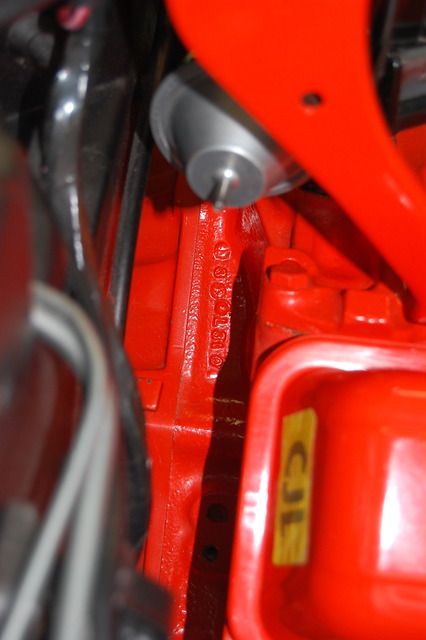
Casting Clock: tells what shift and what hour of the shift the block was cast. (T indicates 'twilight', second shift.)
The block's casting number and casting date are on the rear upper surface of the block.
It's to the rear of the distributor and forward of the bell housing.
Look a little to the left and right of center.
Regards,
Alan
Small block casting date: L310….. December 31, 1970. Engine went in a car built mid-January 1971
Casting Clock: tells what shift and what hour of the shift the block was cast. (T indicates 'twilight', second shift.)
Last edited by Alan 71; Jun 1, 2016 at 09:12 AM.