When you click on links to various merchants on this site and make a purchase, this can result in this site earning a commission. Affiliate programs and affiliations include, but are not limited to, the eBay Partner Network.
St. Jude Donor '06-'07-'08-'09-'10-'11-'12-'13-'14-'15-'16
Ever owned a 76-82 convertible?
I just found a couple more pics of my old 81 and thought I would ask this question again.
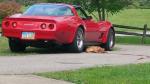
Here are pics I took of the car in Bloomington, IL the day before it went to the Mecum auction in 2001. This was the first and only C3 I ever owned. I learned how to rebuild and hop up the engine and how to install a convertible top. I rebuilt the power steering system too. I might have kept if it had been a stick shift. I wrote to the American Sunroof Corp in Bowling Green to see if they had a record of the car but they said they did not keep any records of the C3s they converted.
Car has a new base/clear pain job in these pics. Miss her
I don't own this 82 but it was always one of the cars I desired:
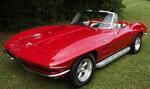
The 76-82 "convertibles" are conversions. There was an aftermarket company who would do them. Here's another:
Collect the various parts, pieces, and hardware and you could make the swap in your garage. Any 68-75 AIM shows the factory installation and provides a parts list.
I just found a couple more pics of my old 81 and thought I would ask this question again.
Here are pics I took of the car in Bloomington, IL the day before it went to the Mecum auction in 2001. This was the first and only C3 I ever owned. I learned how to rebuild and hop up the engine and how to install a convertible top. I rebuilt the power steering system too. I might have kept if it had been a stick shift. I wrote to the American Sunroof Corp in Bowling Green to see if they had a record of the car but they said they did not keep any records of the C3s they converted.
Car has a new base/clear pain job in these pics. Miss her
I don't own this 82 but it was always one of the cars I desired:
I never could understand why they stopped making the convertible at the factory ! It's a sports car !
There were many reasons.
1. Many options (engines, transmissions, body styles, etc) cost more to facilitate.
2. The price of gas was in territory the public was not used to. Muscle cars were losing popularity.
3. Pollution controls were mandatory, driving up cost and driving down performance.
4. The Japanese were beginning to kick the Big 3's butt in certain sectors of the market.
5. The Big 3 had to become more efficient to keep costs in line. The 70's is when the bean counters took over the auto industry from the engineers.
6. But the biggest reason was Ralph Nader and his crusade against the auto manufacturers. Convertibles did not offer protection to the occupants in case of a rollover. It was easier to cut out convertibles than it was to deal with him.
Last edited by 76vette1; Dec 20, 2016 at 07:56 PM.
1. Many options (engines, transmissions, body styles, etc) cost more to facilitate.
2. The price of gas was in territory the public was not used to. Muscle cars were losing popularity.
3. Pollution controls were mandatory, driving up cost and driving down performance.
4. The Japanese were beginning to kick the Big 3's butt in certain sectors of the market.
5. The Big 3 had to become more efficient to keep costs in line. The 70's is when the bean counters took over the auto industry from the engineers.
6. But the biggest reason was Ralph Nader and his crusade against the auto manufacturers. Convertibles did not offer protection to the occupants in case of a rollover. It was easier to cut out convertibles than it was to deal with him.
I think it was a general disinterest that was going on with the consumer and market more than anything else.
The story was that there was an impending federal regulation regarding rollovers at that time, although even then convertibles were supposed to either be exempt or weakly included in the legislation. It never had the impact as anticipated.
I don't think anyone was dealing directly with Nader regarding convertibles. His book from 1965 or so and subsequent crusade had mostly to do with the Corvairs propensity to roll over, which was debunked later. It also had to do with general safety issues: tires, seat belts and the design of cars that he thought was brutal on impact with people, and some other things. Most of GMs problems with Nader had to do with the personal campaign of destruction they waged on him, which cost them in a lawsuit.
By 1975, Corvettes' last year of convertibles, US sales of drop top cars were down drastically. Most of the automakers reported steady decline from the early 70s. People were preferring the security and stability of the fixed roofs in every model, complained about thefts through the easily cut tops, wanted quiet highway travel and were commonly including air conditioning to their cars. It's pretty well established the market had dried up on convertibles in general.
I bought my first Corvette in 1977, and I bought a '65 big block roadster because it was literally the cheapest Corvette available in that day's issue of The Want Advertiser. Convertibles were the absolute bottom of the food chain; nobody wanted them. Some people were actually selling removable hardtops that made the cars look like coupes.
Everything is cyclical. I think there's a swing away from convertibles going on now as well.
I always loved the convertible look, so after, I got my 5 spd conversion kit from SST, I figured a convertible stick is what I want...
if anyone else has done this I wouldn't mind getting any tips and traps to avoid that you may have...
There was a thread within the last year by Lowbuck72 that converted his 72' coupe to a convertible. He had several pictures etc. If you search you should be able to find it. The thread is called "72 convertible conversion no going back now."
Last edited by blue67ragtop; Dec 23, 2016 at 08:59 PM.
Designer Imagines A Corvette That Looks More Like a Corvette Than the Corvette
Slideshow: A Jaguar designer's personal project imagines what a modern front-engined Corvette might look like if Chevrolet revisited the golden age of the Stingray.








 Ever owned a 76-82 convertible?




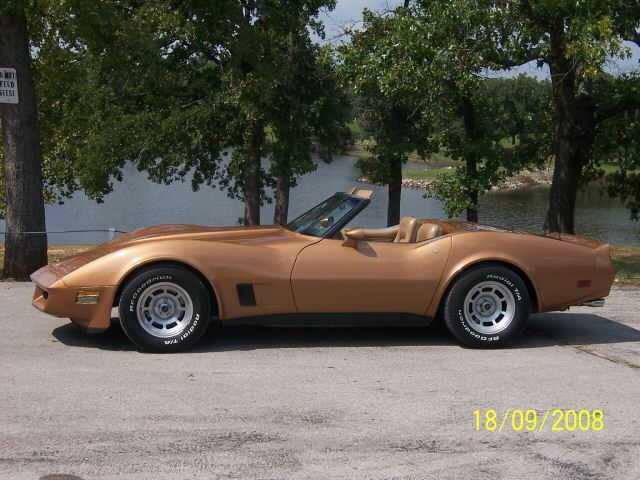















 Convertibles were the absolute bottom of the food chain; nobody wanted them. Some people were actually selling removable hardtops that made the cars look like coupes.