



72 LT1 radio problem

Thread Starter
3rd Gear

Joined: May 2017
Posts: 3
Likes: 0
 72 LT1 radio problem
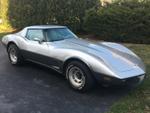
I recently inherited a 72 LT1 convertible which had only been driven maybe 1000 miles over the last 30 years. I immediately noticed the radio and clock had stopped working so after checking the obvious I disassembled the dash area. I decided to take the clock apart to attempt repairs but after finding some internal damage just went with a quartz unit. The radio is AM/FM stereo and I'm thinking the problem is internal. Power and ground ok, backlighting works, but when turned on there is nothing. I'm not sure what the transistorized looking heat sink on the right side of the dash does so I'm not sure how to check it. I'm wondering if anyone has taken one of these radios apart. It seems to me like power is lost internally beyond the main on/off switch, possibly like a bad micro relay or something. Maybe they didn't even use those back then I don't know. Just wondering if anyone has any ideas. Thanks

Team Owner


Joined: Sep 2006
Posts: 31,235
Likes: 4,326
From: Westminster Maryland
Hi s144,
If you're interested in continue using the radio… is it the original?… you might consider sending it to a company like D&M Restoration in Greenville, South Carolina who specialize in gauge and radio repairs.
Regards,
Alan
If you're interested in continue using the radio… is it the original?… you might consider sending it to a company like D&M Restoration in Greenville, South Carolina who specialize in gauge and radio repairs.
Regards,
Alan
Last edited by Alan 71; May 6, 2017 at 03:59 PM.

Team Owner

Joined: Jan 2006
Posts: 37,637
Likes: 3,117
From: Crossville TN
That heat sink with the transistor[s] on it is the final stage of amplification for the radio. There are lots of possibilities for causing the radio to malfunction in that way. I agree that it would be best to send it out for repair (along with the 'convector' unit and its wiring). There are a lot of capacitors that could have dried out over those years. They will all be replaced at rebuild and could fix the problem just doing that. But the repair place will know what to do and you will end up with an original Delco radio that functions properly.
Another choice would be to send the head unit (only) to a service that converts the original radio into one with modern internals, better power and sound quality, and ability to connect with modern audio devices. Cost may be about the same as getting the original unit back to new spec.
Another choice would be to send the head unit (only) to a service that converts the original radio into one with modern internals, better power and sound quality, and ability to connect with modern audio devices. Cost may be about the same as getting the original unit back to new spec.
Thread Starter
3rd Gear
Joined: May 2017
Posts: 3
Likes: 0
Thanks Alan, the radio is the original so I guess I'll send it out for repair . I'd like to keep it original if possible. Thanks again
Thread Starter
3rd Gear
Joined: May 2017
Posts: 3
Likes: 0
That heat sink with the transistor[s] on it is the final stage of amplification for the radio. There are lots of possibilities for causing the radio to malfunction in that way. I agree that it would be best to send it out for repair (along with the 'convector' unit and its wiring). There are a lot of capacitors that could have dried out over those years. They will all be replaced at rebuild and could fix the problem just doing that. But the repair place will know what to do and you will end up with an original Delco radio that functions properly.
Another choice would be to send the head unit (only) to a service that converts the original radio into one with modern internals, better power and sound quality, and ability to connect with modern audio devices. Cost may be about the same as getting the original unit back to new spec.
Another choice would be to send the head unit (only) to a service that converts the original radio into one with modern internals, better power and sound quality, and ability to connect with modern audio devices. Cost may be about the same as getting the original unit back to new spec.
I guess I'll wait and see what the estimate is for my unit, if too much then maybe a conversion will work
Racer

Joined: Jan 2005
Posts: 434
Likes: 47
From: Lake in the Hills IL
I just took mine apart in my 78. It wasn't working, a previous owner saved it but installed a cassette deck at some point.
Depending on the issue... It's not that difficult if you know basic circuitry and how to use a soldering iron. I'm sure you could buy the resistors, capacitors, and whatnot on Amazon to help repair. You'll know a bad one pretty easily when you look at it. Then use the soldering iron to release the bad one and replace. I fixed a flat panel TV this way knowing nothing going into it other than how to use a soldering iron to solder speaker wire.
My issue with my radio after tearing it all apart was evident in the tuner clutch (I think that's what it was called) not engaging and thus being able to change channels. I literally found a screw that fit where a set screw was missing and that did the trick. It was that easy. I lubricated the gears and whatnot while I was there. I could have got away with not tearing the whole thing apart but I wanted to see how it all worked and thinking there was going to be probably more to the problem than that.
Depending on the issue... It's not that difficult if you know basic circuitry and how to use a soldering iron. I'm sure you could buy the resistors, capacitors, and whatnot on Amazon to help repair. You'll know a bad one pretty easily when you look at it. Then use the soldering iron to release the bad one and replace. I fixed a flat panel TV this way knowing nothing going into it other than how to use a soldering iron to solder speaker wire.
My issue with my radio after tearing it all apart was evident in the tuner clutch (I think that's what it was called) not engaging and thus being able to change channels. I literally found a screw that fit where a set screw was missing and that did the trick. It was that easy. I lubricated the gears and whatnot while I was there. I could have got away with not tearing the whole thing apart but I wanted to see how it all worked and thinking there was going to be probably more to the problem than that.

Parts Sherpa

Joined: Feb 2017
Posts: 520
Likes: 98
From: ICE boneyard, Pa
Corvette Stories
The Best of Corvette for Corvette Enthusiasts

10 Reasons the C6 Z06 is Still A Performance Benchmark After 20 Years
Joe Kucinski
How Much Horsepower Every Corvette Engine "LOST" in 1972
Joe Kucinski
Top 10 DOs and DON'Ts for Protecting Your Convertible Top!
Michael S. Palmer
Top 10 Most Explosive Corvettes Ever Made: Power-to-Weight Ratio Ranked!
Joe Kucinski
150 hp to 1,250 hp: Every Corvette Generation Compared by the Specs That Matter
Joe Kucinski
8 Coolest Corvette Pace Cars (and Replicas) of All Time
Verdad Gallardo
Top 10 Corvette Engines RANKED by Peak Torque (70+ Years of Muscle!)
Joe Kucinski
Corvette ZR1X Will Be Pacing the Indy 500, And Could Probably Race, Too!
Verdad Gallardo
Top 10 Corvettes Coming to Mecum Indy 2026!
Brett Foote
Drifting


Joined: Jan 2004
Posts: 1,468
Likes: 223
From: Sherman CT
2023 C3 of the Year Finalist - Unmodified
2019 C3 of Year Finalist (stock)
St. Jude Donor '24-'25-'26
Wow, from another 72 LT-1 owner, post up some pictures when you get a chance. I have the same issue with my radio, so I will be waiting for the responses from the experts!
Regards
Roy
Regards
Roy

Burning Brakes

Joined: Dec 2006
Posts: 979
Likes: 254
From: Bethlehem, PA
You should check your speakers. I had the same problem, but didn't mail off my perfectly good radio. At the time I spoke to a vintage radio repair man who told me to try a good working speaker to test the radio. He added that the amp (ds-501 in the heat sink) takes a lot of blame, but rarely goes bad. Also you can test a speaker using a D cell battery; hold the +- to the speaker leads and you should get a thump or static, if nothing it is shot. If you do need speakers, make sure you use 10ohm with the original radio as the 4 ohm that most Corvette parts guys sell will ruin your radio.
I recently inherited a 72 LT1 convertible which had only been driven maybe 1000 miles over the last 30 years. I immediately noticed the radio and clock had stopped working so after checking the obvious I disassembled the dash area. I decided to take the clock apart to attempt repairs but after finding some internal damage just went with a quartz unit. The radio is AM/FM stereo and I'm thinking the problem is internal. Power and ground ok, backlighting works, but when turned on there is nothing. I'm not sure what the transistorized looking heat sink on the right side of the dash does so I'm not sure how to check it. I'm wondering if anyone has taken one of these radios apart. It seems to me like power is lost internally beyond the main on/off switch, possibly like a bad micro relay or something. Maybe they didn't even use those back then I don't know. Just wondering if anyone has any ideas. Thanks