



Electric oil gauge conversion question

Racer


Joined: Aug 2018
Posts: 380
Likes: 170
From: Erath County Texas

interesting thread ... npt or standard ... right hand/left hand ... :P
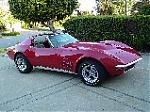
Took the Vette on a descent road run yesterday ... 170 miles +/- ... wifee's birthday ... Texas Road House in Waco.
Able to observe the engine stack ... the water temp consistently indicates 230 ... occasionally running bolding with the 75 mph speed limit ... it'd indicate slightly higher than 230. That made me a little nervous ... but it'd always return to a 12-1 OClock 210-215 ... (which is still too hot for actual temp, of course)
The oil pressure, after reaching NOT, never indicates more than 20 PSI and when at an idle/NOT ... actually indicates ZERO!
Battery gauge ... must be amps, right?
Fuel gauge "full" indication is only 7/8 ... and it falls like an anvil ... buried into the "E" with 2-5 gallons remaining (I made me a 3/8" rebar dipstick and filed a couple of marks - levels near empty, then when full, 18 gallon tank, and calculated the starting level as 2.5 gallons)
sigh.
So ... I'm wondering this ... the car is all original and I'm going to seek keeping it that ... but I really want to know if the thermostat has frozen shut before the engine overheats ... or if the oil pump fails ... before I actually have the engine lock. There are OBD bluetooth programs for the smart phones ... but this car obviously doesn't have the OBD port.
Has anyone installed an OBD which would provide water temp, oil press ... I know that'd require installing electric sending units. I'm familiar with that, but I've never done anything with OBD other than connect a programmer/scanner.
Thanks ... (and I've never had a problem with teflon tape inhibiting a sufficient ground either! :P )
Took the Vette on a descent road run yesterday ... 170 miles +/- ... wifee's birthday ... Texas Road House in Waco.
Able to observe the engine stack ... the water temp consistently indicates 230 ... occasionally running bolding with the 75 mph speed limit ... it'd indicate slightly higher than 230. That made me a little nervous ... but it'd always return to a 12-1 OClock 210-215 ... (which is still too hot for actual temp, of course)
The oil pressure, after reaching NOT, never indicates more than 20 PSI and when at an idle/NOT ... actually indicates ZERO!
Battery gauge ... must be amps, right?
Fuel gauge "full" indication is only 7/8 ... and it falls like an anvil ... buried into the "E" with 2-5 gallons remaining (I made me a 3/8" rebar dipstick and filed a couple of marks - levels near empty, then when full, 18 gallon tank, and calculated the starting level as 2.5 gallons)
sigh.
So ... I'm wondering this ... the car is all original and I'm going to seek keeping it that ... but I really want to know if the thermostat has frozen shut before the engine overheats ... or if the oil pump fails ... before I actually have the engine lock. There are OBD bluetooth programs for the smart phones ... but this car obviously doesn't have the OBD port.
Has anyone installed an OBD which would provide water temp, oil press ... I know that'd require installing electric sending units. I'm familiar with that, but I've never done anything with OBD other than connect a programmer/scanner.
Thanks ... (and I've never had a problem with teflon tape inhibiting a sufficient ground either! :P )
Racer
Joined: Aug 2018
Posts: 380
Likes: 170
From: Erath County Texas
OK ... I found my own answer ... no OBD necessary.
Anyone have any experience with this unit?
http://enginestat.com/enginestat-pro...ser-mp-es-pro/
Anyone have any experience with this unit?
http://enginestat.com/enginestat-pro...ser-mp-es-pro/

Melting Slicks


Joined: Mar 2005
Posts: 2,095
Likes: 299
From: Midlothian VA
The OEM oil gauge relies on a tiny gear to lift/move the pointer.
It takes but the smallest bit of fluff/dirt to impede this gear.
Simply cleaning the gauge mechanism "innards" will return it to functionality.
You can bench test it using shop air prior to reinstallation.

Melting Slicks
Joined: Dec 2017
Posts: 2,984
Likes: 494
From: Michigan
2023 Restomod of the Year finalist
So when you get around to pulling the center cluster:
The OEM oil gauge relies on a tiny gear to lift/move the pointer.
It takes but the smallest bit of fluff/dirt to impede this gear.
Simply cleaning the gauge mechanism "innards" will return it to functionality.
You can bench test it using shop air prior to reinstallation.
The OEM oil gauge relies on a tiny gear to lift/move the pointer.
It takes but the smallest bit of fluff/dirt to impede this gear.
Simply cleaning the gauge mechanism "innards" will return it to functionality.
You can bench test it using shop air prior to reinstallation.
Good case for converting the oil gauge from mechanical to electronic. I wonder if there is a site that tells how to make the conversion and what parts to buy? These restoration shops are charging an arm & leg for this service.
Melting Slicks
Joined: Dec 2017
Posts: 2,984
Likes: 494
From: Michigan
2023 Restomod of the Year finalist
Quick question for those of you who have converted from a mechanical oil gauge to an electric.
Where did you tap into for the power feed? I'm thinking I can just run a wire with a ring terminal to the post that the pink wire for the fuel gauge is attached to.
Suggestions?
Thanks,
Rick
Where did you tap into for the power feed? I'm thinking I can just run a wire with a ring terminal to the post that the pink wire for the fuel gauge is attached to.
Suggestions?
Thanks,
Rick
Has anybody done their own?

Le Mans Master


Joined: Dec 2006
Posts: 8,837
Likes: 1,028
Well, those NPT threads SHOULD cut through the Teflon tape. But, there is enough anecdotal evidence that folks who have used Teflon tape have had a few problems. Whether the threads cut through it or not would be a function of how many rounds of tape were used and how much torque was applied to the sending unit.
As Teflon is a very good insulator, it might be best to remove it and just use some pipe dope to seal the joint.
As Teflon is a very good insulator, it might be best to remove it and just use some pipe dope to seal the joint.
Melting Slicks
Joined: Dec 2017
Posts: 2,984
Likes: 494
From: Michigan
2023 Restomod of the Year finalist
Corvette Stories
The Best of Corvette for Corvette Enthusiasts

Every 2027 Corvette Engine Explained
Joe Kucinski
Designer Imagines A Corvette That Looks More Like a Corvette Than the Corvette
Verdad Gallardo
10 Ugly Corvettes That We Still Kinda Love
Joe Kucinski
Top 10 Most Expensive Corvettes Ever Sold on Bring A Trailer
Brett Foote
10 Things Every Corvette Owner Needs (2026 Edition)
Michael S. Palmer
8 Most "Only Corvette Owners Understand" Quirks and Problems
Pouria Savadkouei
10 Reasons the C6 Z06 is Still A Performance Benchmark After 20 Years
Joe Kucinski
How Much Horsepower Every Corvette Engine "LOST" in 1972
Joe Kucinski
Top 10 DOs and DON'Ts for Protecting Your Convertible Top!
Michael S. Palmer
Melting Slicks
Joined: Dec 2017
Posts: 2,984
Likes: 494
From: Michigan
2023 Restomod of the Year finalist

Team Owner


Joined: Jun 2001
Posts: 23,381
Likes: 1,067
From: Virginia USA

A kit like this can be found at the usual speed shop websites or you can piece the parts together individually if you desire.
I'm looking for the part number of the above kit but I can't find it. I'll post it when I do but you should be able to search for similar threads about oil pressure etc. here and find it as I've posted it before.
Last edited by theandies; Sep 30, 2018 at 02:43 PM.
Burning Brakes


Joined: Jul 2006
Posts: 1,047
Likes: 12
From: SoCal
You'll need a 1974 (or later; the 1974 was the closest match to my 1972) electric gauge, 1974 sender unit, a plug for the hole that your mechanical oil pressure line is currently connected to (most likely right underneath the distributor, you can purchase the plug at most any hardware store), and some wire. You'll be attaching the sender unit on the driver's side of the engine block above the oil filter (you'll have to unscrew a plug that is currently plugging the hole). Screw in the sender unit (regardless of the arguing above about teflon tape, I did wrap the sender unit's threads with a couple of turns of teflon tape). Attach wire (I don't remember what gauge wire I used) to the new sender unit and then run the wire from the sender through the firewall into the cabin. Then remove the center console to get at the gauges (this is the hardest part of the job), remove the old gauge and the old oil line, plug the hole that the oil line is attached to on the engine block (underneath the distributor), and then wire up the new gauge as per Willcox's diagram (elsewhere in this thread). Before you put the center console back in the dash, run a temporary ground wire from the gauge bezel to a grounding point on the dash, then start your car and make sure that the new oil gauge is working properly. Then remove the temporary ground wire and put the dash back together.
I did mine quite a few years ago, so my memory is a bit hazy and I may have gotten something wrong or forgotten a step, but I'm pretty sure what I've outlined above is correct for a small block conversion (the big block should be pretty much the same except maybe for the locations of the sender unit and current oil pressure line).
Best wishes with your project!

Last edited by VCuomo; Oct 1, 2018 at 09:20 PM.