




Cowl Shake?

Thread Starter
Advanced

Joined: Mar 2016
Posts: 86
Likes: 6
From: Scottsdale Arizona
 Cowl Shake?
I have a 1968 C3 convertible. All under dash cowl braces are in place. Yet, I have a very bad shake that begins at 52mph and stops at 58mph. I can actually see my front fenders oscillating up and down a fraction of an inch. It occurs with a high consistency. All other speeds are calm-water smooth.
I have had all tires spun balanced. I had the drive shaft balanced. The front suspension and steering is good (according to my mechanic).
Is this the cowl shake that I read about? Can it be remedied?
Could it be something else that I am not identifying?
HELP!
I have had all tires spun balanced. I had the drive shaft balanced. The front suspension and steering is good (according to my mechanic).
Is this the cowl shake that I read about? Can it be remedied?
Could it be something else that I am not identifying?
HELP!

Team Owner


Joined: Sep 2006
Posts: 31,270
Likes: 4,362
From: Westminster Maryland
Hi PC,
I believe 'cowl shake' was seen on early 68 cars and manifested itself as a shake of the steering column and a creaking noise in the cowl area when traveling over very uneven terrain such as railroad tracks and pot holes.
If you're seeing a vibration of the fenders I'd wonder about the bond of the fenders to the clip, the attachment of the core support to the fender aprons and front crossmember, and the 'bracing rod' from the center/bottom of the core support to the brace that runs across the front of the clip (behind the bumper).
Do 68 cars have it?
Have you checked for that rod?
Regards,
Alan
The rod.
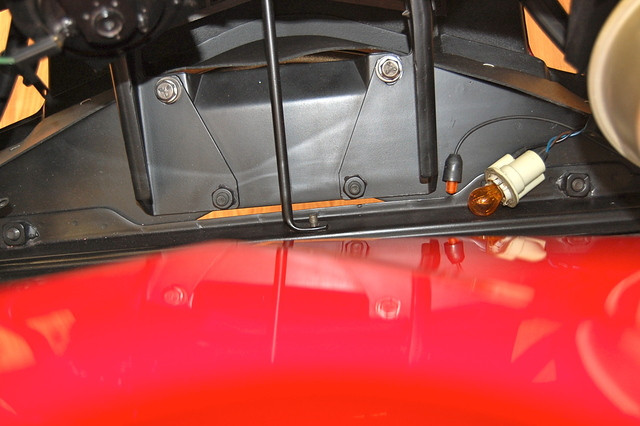
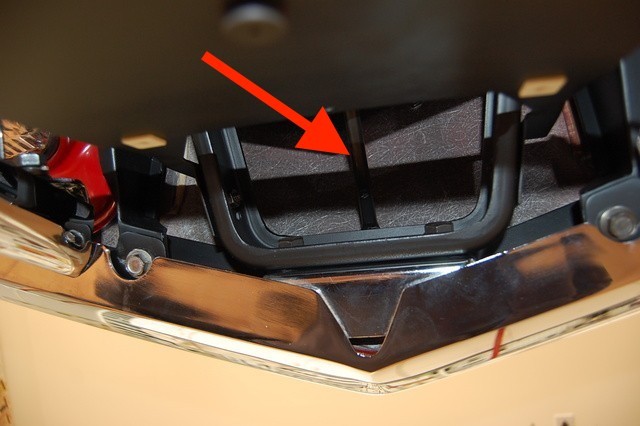
I believe 'cowl shake' was seen on early 68 cars and manifested itself as a shake of the steering column and a creaking noise in the cowl area when traveling over very uneven terrain such as railroad tracks and pot holes.
If you're seeing a vibration of the fenders I'd wonder about the bond of the fenders to the clip, the attachment of the core support to the fender aprons and front crossmember, and the 'bracing rod' from the center/bottom of the core support to the brace that runs across the front of the clip (behind the bumper).
Do 68 cars have it?
Have you checked for that rod?
Regards,
Alan
The rod.
Last edited by Alan 71; Mar 3, 2018 at 04:37 PM.
Team Owner
Joined: Sep 2006
Posts: 31,270
Likes: 4,362
From: Westminster Maryland
Hi PC,
Perhaps you could add the support rod to your 68 to help control the front fender oscillation?
Is there any reason to think the clip isn't bonded to the cowl properly or that the core-support isn't bolted to the aprons and forward crossmember properly?
Regards,
Alan
Just happen to think...IS the bottom of the core support bolted to the crossmember on all 68 cars? I seem to remember a thread about differences in the early crossmember/core-support?
Perhaps you could add the support rod to your 68 to help control the front fender oscillation?
Is there any reason to think the clip isn't bonded to the cowl properly or that the core-support isn't bolted to the aprons and forward crossmember properly?
Regards,
Alan
Just happen to think...IS the bottom of the core support bolted to the crossmember on all 68 cars? I seem to remember a thread about differences in the early crossmember/core-support?
Last edited by Alan 71; Mar 4, 2018 at 07:17 AM.

Race Director

Joined: Jul 2015
Posts: 13,082
Likes: 3,399
From: SW Florida.
Get that light cheap Lowe's perforated angle and fab a quicky brace. See if it works. Then copy it onto a more OEM-looking brace. You might get better results with 2 braces set at angles instead of one straight up which won't dampen side-side movement.
Last edited by derekderek; Mar 4, 2018 at 09:33 AM.
Thread Starter
Advanced
Joined: Mar 2016
Posts: 86
Likes: 6
From: Scottsdale Arizona
I do have the bracing rod on my car. Also, the fenders are "rock solid" as far as being attached to the car.
When I said that I could see the fenders vibrating, I was trying to communicate the severity of the vibration. The entire car shakes but the shake seems to be originating from the front of the car. (However, I cannot swear to the origin of the shake.)
The car is shaking in a very very rapid left-right rocking oscillation, like you would expect from an out of balance front tire. Looking at the tops of the fenders during the vibration, it appears that the up/down movement of the edge of both fenders is 1/8 inch or so. Slight visually, but moderate in the actual feel of the shake. After balancing and rotating the tires, the shake is unchanged. The steering wheel does not vibrate or shake at all.
Thanks for your thoughts on all of this. It is extremely frustrating, like chasing your tail.
Alex
When I said that I could see the fenders vibrating, I was trying to communicate the severity of the vibration. The entire car shakes but the shake seems to be originating from the front of the car. (However, I cannot swear to the origin of the shake.)
The car is shaking in a very very rapid left-right rocking oscillation, like you would expect from an out of balance front tire. Looking at the tops of the fenders during the vibration, it appears that the up/down movement of the edge of both fenders is 1/8 inch or so. Slight visually, but moderate in the actual feel of the shake. After balancing and rotating the tires, the shake is unchanged. The steering wheel does not vibrate or shake at all.
Thanks for your thoughts on all of this. It is extremely frustrating, like chasing your tail.
Alex
Hi PC,
I believe 'cowl shake' was seen on early 68 cars and manifested itself as a shake of the steering column and a creaking noise in the cowl area when traveling over very uneven terrain such as railroad tracks and pot holes.
If you're seeing a vibration of the fenders I'd wonder about the bond of the fenders to the clip, the attachment of the core support to the fender aprons and front crossmember, and the 'bracing rod' from the center/bottom of the core support to the brace that runs across the front of the clip (behind the bumper).
Do 68 cars have it?
Have you checked for that rod?
Regards,
Alan
The rod.
I believe 'cowl shake' was seen on early 68 cars and manifested itself as a shake of the steering column and a creaking noise in the cowl area when traveling over very uneven terrain such as railroad tracks and pot holes.
If you're seeing a vibration of the fenders I'd wonder about the bond of the fenders to the clip, the attachment of the core support to the fender aprons and front crossmember, and the 'bracing rod' from the center/bottom of the core support to the brace that runs across the front of the clip (behind the bumper).
Do 68 cars have it?
Have you checked for that rod?
Regards,
Alan
The rod.
Team Owner
Joined: Sep 2006
Posts: 31,270
Likes: 4,362
From: Westminster Maryland
Hi,
A vibration that begins and stops at certain speeds 'often' indicates a wheel or tire problem, or a driveshaft/half-shaft problem since it's those rotating parts that affected by the car's speed.
What about an out of balance rotor... or a hub/rotor that's not seated properly?
It sounds like you've checked most of those things. So?
Regards,
Alan
Can you duplicate the vibration at lower speeds when in lower gears?
Or is it purely speed driven?
A vibration that begins and stops at certain speeds 'often' indicates a wheel or tire problem, or a driveshaft/half-shaft problem since it's those rotating parts that affected by the car's speed.
What about an out of balance rotor... or a hub/rotor that's not seated properly?
It sounds like you've checked most of those things. So?
Regards,
Alan
Can you duplicate the vibration at lower speeds when in lower gears?
Or is it purely speed driven?
Last edited by Alan 71; Mar 4, 2018 at 11:05 AM.
Thread Starter
Advanced
Joined: Mar 2016
Posts: 86
Likes: 6
From: Scottsdale Arizona
Allen,
Drive shaft was removed and balanced. I don't know what a half-shaft is.
An out of balance rotor did not occur to me. Can a solid metal rotor become so out of balance as to cause the whole car to shake, even if the breaks do not oscillate as would happen wit a warped rotor?
I would imagine that the rotors and hubs are seated properly as the vibration was present before and after tire rotation. Surely any seating issues that were present would have been corrected with the tire rotation at Discount Tire.
The issue is entirely speed driven and only occurs in a very narrow speed range of 52 - 58 mph. Very strange issue ...
As always, thanks for your help!
Alex
Drive shaft was removed and balanced. I don't know what a half-shaft is.
An out of balance rotor did not occur to me. Can a solid metal rotor become so out of balance as to cause the whole car to shake, even if the breaks do not oscillate as would happen wit a warped rotor?
I would imagine that the rotors and hubs are seated properly as the vibration was present before and after tire rotation. Surely any seating issues that were present would have been corrected with the tire rotation at Discount Tire.
The issue is entirely speed driven and only occurs in a very narrow speed range of 52 - 58 mph. Very strange issue ...
As always, thanks for your help!
Alex
Hi,
A vibration that begins and stops at certain speeds 'often' indicates a wheel or tire problem, or a driveshaft/half-shaft problem since it's those rotating parts that affected by the car's speed.
What about an out of balance rotor... or a hub/rotor that's not seated properly?
It sounds like you've checked most of those things. So?
Regards,
Alan
Can you duplicate the vibration at lower speeds when in lower gears?
Or is it purely speed driven?
A vibration that begins and stops at certain speeds 'often' indicates a wheel or tire problem, or a driveshaft/half-shaft problem since it's those rotating parts that affected by the car's speed.
What about an out of balance rotor... or a hub/rotor that's not seated properly?
It sounds like you've checked most of those things. So?
Regards,
Alan
Can you duplicate the vibration at lower speeds when in lower gears?
Or is it purely speed driven?
Corvette Stories
The Best of Corvette for Corvette Enthusiasts

Top 10 Most Expensive Corvettes Ever Sold on Bring A Trailer
Brett Foote
10 Things Every Corvette Owner Needs (2026 Edition)
Michael S. Palmer
8 Most "Only Corvette Owners Understand" Quirks and Problems
Pouria Savadkouei
10 Reasons the C6 Z06 is Still A Performance Benchmark After 20 Years
Joe Kucinski
How Much Horsepower Every Corvette Engine "LOST" in 1972
Joe Kucinski
Top 10 DOs and DON'Ts for Protecting Your Convertible Top!
Michael S. Palmer
Top 10 Most Explosive Corvettes Ever Made: Power-to-Weight Ratio Ranked!
Joe Kucinski
150 hp to 1,250 hp: Every Corvette Generation Compared by the Specs That Matter
Joe Kucinski
8 Coolest Corvette Pace Cars (and Replicas) of All Time
Verdad Gallardo
2026 Loser of the Year


Joined: Sep 2013
Posts: 36,595
Likes: 7,043
From: New Or-leens Loo-z-anna
I didn't read the entire thread...the following may have been discussed already.
On a straight "smooth" highway get the car up to 75 mph provided the speed limit allows. Carefully place the shifter into NEUTRAL while releasing the throttle down to idle. Keep an eye on the speedometer to notice when the vibration starts and stops. This procedure may make it easier to decide which area of the car is causing the vibration...one example: No vibration could mean a damaged motor mount or transmission mount that causes vibration only under a constant even load....rare, but it happens
Let us know what happens.....or what doesn't happen.
On a straight "smooth" highway get the car up to 75 mph provided the speed limit allows. Carefully place the shifter into NEUTRAL while releasing the throttle down to idle. Keep an eye on the speedometer to notice when the vibration starts and stops. This procedure may make it easier to decide which area of the car is causing the vibration...one example: No vibration could mean a damaged motor mount or transmission mount that causes vibration only under a constant even load....rare, but it happens
Let us know what happens.....or what doesn't happen.

Drifting


Joined: Jun 2005
Posts: 1,950
Likes: 498
From: Chino Hills CA
Rather than check for tires that are just out of balance, I think it's more likely that you have one or more bent rims or tires that are out of round (excessive runout). A modern tire balancer has a laser that measures tire and rim runout. In fact these machines can compare wheel runout to tire runout and will direct the operator to remount the tire so that the "high spot" on the tire gets mounted on the "low spot of the rim". Costco has these machines and will perform a computerized balance for $5 a pop. Just a thought.