When you click on links to various merchants on this site and make a purchase, this can result in this site earning a commission. Affiliate programs and affiliations include, but are not limited to, the eBay Partner Network.
I am at my wits end. And hopefully I can find some help on here. I purchased my 73 coupe in July. Since then I have had the Motor and transmission rebuilt, replaced all the steering system and finally replaced the calipers, pads (rotors were fine), Booster and Master cylinder. The brakes where really soft before so I figured I would just replace everything. But \after all of this the brakes are still soft and when I try to brake hard I get a gradual slow. At this point I have no idea what to check next. Anything you guys can help with. Thanks in advance.
Possible stuff may include: Was the fluid also changed? Was the master cyclinder bled before install? Were the calipers bled in the right order? Are they the original rubber lines going to caliper? New lines or even the stainless braided ones help. Hopefully others can think of more possibilities.
I bleed the brakes starting on the passenger rear, then driver rear, passenger front, then driver front. All upper lines where changed as well. I bench bleed the Master cylinder before I installed it. I also wet through about a gallon of brake fluid to make sure all the old stuff got out.
It sounds like it still has air in system but you need to check a few things before trying to bleed. check which hole in the brake pedal you have the booster pushrod in. I think with power brakes it should be in lower hole. Next make sure piston in master cylinder is all the way back and is under no pressure with pedal released. Verify your master is the correct one. It should be 1 1/8 inch in dia. If all is correct try bleeding like this. Go to rr caliper and have helper in car, open the outside bleeder and have them push pedal down and hold down while you tighten bleeder. Once closed have them release pedal. Do this several times at all bleeders making sure master is kept full. Do not pump brakes. People tend to pump faster than the master can refill. Take your time and this method will work.JBL
I bleed the brakes starting on the passenger rear, then driver rear, passenger front, then driver front. All upper lines where changed as well. I bench bleed the Master cylinder before I installed it. I also wet through about a gallon of brake fluid to make sure all the old stuff got out.
Did you bleed both the outer and inner bleeders on the rears? Passenger inside ones, then outside ones, then driver's side inside, then outside. The rod that feeds into the back of the MC also needs to be set to the right length. And is it a power brake MC, evidently they are different than manual brake MCs.
I bleed the brakes starting on the passenger rear, then driver rear, passenger front, then driver front. All upper lines where changed as well. I bench bleed the Master cylinder before I installed it. I also wet through about a gallon of brake fluid to make sure all the old stuff got out.
When you say "upper lines", you mean all of the rubber lines have been replaced, correct? I was unable to get a solid pedal on my '72 until I used a pressure bleeder - made it a simple one man job.
Well it sounds like you still have air in the system. So the first place is the Master Cylinder.
1. check to make sure the rod between the brake booster and the MC is the correct length. There should be no gap so once you start pressing the brake the MC piston is in motion.
2. Then bleed the MC while on the car. This is how I bleed while on the car. https://www.corvetteforum.com/forums...-cylinder.html
The order doesn't really matter to bleed lines (but make sure you do all the bleeders in a single caliper and move to the next . I use the longest line to the shortest line just to reduce the amount of fluid I need. If we start with the shortest line first, we have a tendency to flush too much fluid or not enough in the rear.
Last edited by cagotzmann; Oct 10, 2018 at 02:44 AM.
The order doesn't really matter to bleed lines (but make sure you do all the bleeders in a single caliper and move to the next . I use the longest line to the shortest line just to reduce the amount of fluid I need. If we start with the shortest line first, we have a tendency to flush too much fluid or not enough in the rear.
I agree with you but I saw this in the manual and told myself I’ve been doing this wrong all my life
You may not have enough vacuum to operate your booster properly. Use a vacuum gauge and check how much vacuum the engine is making. Most boosters require 15 to 18 inches of vacuum.
How are you bleeding the brakes? Are you using a tool like a Motive brake bleeder?
If you are using a vacuum bleeder like a Mity-Vac at the bleeder to draw the fluid, it is possible that when you crack the bleeder you are also drawing in some air back into the caliper. Drove me nuts too till I tripped across that info on another hot rod website. Put Vaseline or silicone grease around the base of the bleeder before you crack it to seal it and prevent air from re-entering.
I bought a Motive Bleeder and problem solved. No need to try to seal around the bleeders. Do a search on the forum here. Lots of information on the Motive brake bleeder. They aren't that expensive either.




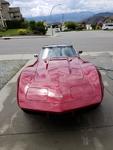




 73 Brakes issues














 That bleeder sure makes it easy!