When you click on links to various merchants on this site and make a purchase, this can result in this site earning a commission. Affiliate programs and affiliations include, but are not limited to, the eBay Partner Network.
I honestly am not sure there is one other than doing a wet film test. There are ferrous and non-ferrous, (aluminum), testers.
When I say a wet film gauge that piece of equipment is calibrated in mils. You push the gauge into the wet film then see where the paint hits the particular reading. A simple calculation knowing the % solids of the coating will give you a good ballpark dry film. Say the coating is 50% solids and you have 4 'wet' mils. When the coating is cured you'd have 2 'dry' mils. The key is to get the wet film reading immediately after the coating is applied or you can get a false reading by waiting, (solvent evaporation). Or you could also spray a steel panel while spraying the car then use a ferrous tester. They are a couple hundred bucks I believe.
Oh, there actually is or was a piece of equipment called a Tooke gauge but that is a destructive test.It does work on fiberglass etc.
Not sure any of this helped.
Last edited by Skeetshooter; Feb 23, 2019 at 02:03 PM.
I looked into them a few years back. If I remember correctly an electronic (non-destructive) paint thickness gauge was a couple of thousand or so. I bought the thickness gauge below several months ago thinking I'd use it to measure the thickness of the fiberglass joints I was making but it gave readings all over the place. On SMC, it worked a bit, probably enough to give a person a pretty good idea of how thick it was, if for example, one took 10 measurements in the same place, disregarded the highest and lowest readings and averaged the eight remaining thickness readings one would be pretty close to the actual thickness. This device was $200 Cdn.
I can't remember where I saw it, but right next to is was a 'flux capacitor' on a BOGO deal. Checking paint thickness on a plastic body car might be difficult.
Designer Imagines A Corvette That Looks More Like a Corvette Than the Corvette
Slideshow: A Jaguar designer's personal project imagines what a modern front-engined Corvette might look like if Chevrolet revisited the golden age of the Stingray.







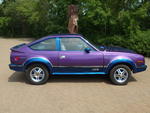





 Checking paint thickness on a plastic body car might be difficult.







