When you click on links to various merchants on this site and make a purchase, this can result in this site earning a commission. Affiliate programs and affiliations include, but are not limited to, the eBay Partner Network.
Hello. I was told recently that the original mufflers on my 69 would of been painted a black color to sort of blend in and not stand out and be so obvious. Is this correct and does anyone have pictures of this done to any replacement mufflers? Just curious as to how it would look on the car. Take care.
It's called "black out" and was applied pretty heavily by a spray gun. It helps to hide the mufflers from attention when the car is viewed from the back and through the wheel wells. I'm no expert on where on the mufflers they were sprayed but am pretty sure it was only the wheel and road sides.
Last edited by barkingrats; Aug 25, 2023 at 12:54 PM.
It's called "black out" and was applied pretty heavily by a spray gun. It helps to hide the mufflers from attention when the car is viewed from the back and through the wheel wells.
That’s it exactly. It was done strictly for cosmetic purposes.
I'm no expert on where on the mufflers they were sprayed but am pretty sure it was only the wheel and road sides.
This was true for the 1963-1967 cars, but the 1968-1972 cars had the mufflers and a short section of the rear exhaust pipe completely painted, top and bottom. This was almost certainly done by the manufacturer (either Walker or Arvin). Afraid I don’t have knowledge as to what was done on the later cars.
That’s it exactly. It was done strictly for cosmetic purposes.
This was true for the 1963-1967 cars, but the 1968-1972 cars had the mufflers and a short section of the rear exhaust pipe completely painted, top and bottom. This was almost certainly done by the manufacturer (either Walker or Arvin). Afraid I don’t have knowledge as to what was done on the later cars.
Regards,
Stan Falenski
Stan is correct. On 68-72 cars the top and bottom of the muffler was painted black form the manufacturer. An additional black out process was applied at the plant on the rear wheel well area and that is why you see a different type of black coating running down the outside of the muffler. Also, on original cars you may see the black out dripped on the rear suspension parts from the black out process at the St. Louis plant. Here is a paint I have used in the past that holds up really well;
I have a 73 and read somewhere that the Chevrolet Plant assembly line workers applied the paint with gloves. The reason for the paint was to hide/blend the round mufflers with the spare tire holder. I believe the 74 had the oval shaped mufflers.
I have a 73 and read somewhere that the Chevrolet Plant assembly line workers applied the paint with gloves. The reason for the paint was to hide/blend the round mufflers with the spare tire holder. I believe the 74 had the oval shaped mufflers.
The glove idea was roundly debunked over on the NCRS forum. Just wouldn't be an efficient way for assembly workers to operate or the bean-counting use of materials. There are line photos of much of the Corvette plant and none show buckets of black out or gloves. Spraying would be much cleaner, quicker, and more material efficient. All of the paint coverage and drip patterning suggests spray application.




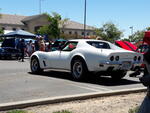





 Painted Mufflers?