When you click on links to various merchants on this site and make a purchase, this can result in this site earning a commission. Affiliate programs and affiliations include, but are not limited to, the eBay Partner Network.
Nice work, I did my 78 base radiator several years back...had it flushed and leaks around the filler tube repaired. Then painted as you did.
I'm curious if you came across the radiator tag...something like MH with a part number? It known to slide around or fall off. Originally the tag was painted black with letters in white. the image below shows a 75 tag but format is similiar in 78.
Nice work, I did my 78 base radiator several years back...had it flushed and leaks around the filler tube repaired. Then painted as you did.
I'm curious if you came across the radiator tag...something like MH with a part number? It known to slide around or fall off. Originally the tag was painted black with letters in white. the image below shows a 75 tag but format is similiar in 78.
Can't find a shop that will repair an original car radiator anywhere close to me. If you can't get it repaired, a Champion aluminum radiator is a good option. Just search for one with the correct size and the fittings in the right locations.
Most C3 radiators were copper finned. That was because copper was CHEAP in that era, compared to aluminum. But, the high-performance GM (and other brand) engines of the time were married with ALUMINUM radiators...because they were so much better at rejecting heat than copper.
I've been turning wrenches for about 50 years now. One thing I have learned. Both copper/brass and Aluminium radiator's have their pros and cons.
Both actually do a pretty good job of removing heat.
Aluminium tends to be sacrificial and will erode away. Keeping coolant fresh and electricity out of the coolant is critical with a Aluminium rad. Copper isn't sacrificial. So, nothing is perfect.
That said, I run a Aluminium rad with a anode.
Considering the effort to remove and install the stock rad with a stock shroud. I really don't think I would fix one.
[/QUOTE]Aluminium tends to be sacrificial and will erode away. Keeping coolant fresh and electricity out of the coolant is critical with a Aluminium rad. Copper isn't sacrificial. So, nothing is perfect. [/QUOTE]
There's a very good scientific reason why. Couple reasons actually:
1) The pH range where brass is "happy" is closer to the point of iron, than Aluminum is. Happy meaning they're not giving up electrons. The nexus where Iron/Aluminum is happy is SOOO narrow, it's almost impossible for most people to keep it in that 8.5-ish pH range (see chart below) for a long while. Antifreeze has inhibitors which help extend the range, which is good, but you can't just let the coolant be for years like you can with brass radiators ...w/o the possibility of the thin aluminum radiator possibly becoming the sacrificial anode. But a guy CAN test the coolant periodically and make adjustments as needed to keep it in the 'good' zone. But if you want a radiator that's going to last a long time with little maintenance, ..and you don't need high-performance cooling then brass should last longer w/o getting eaten away. But still...Aluminum if kept in the 'good' range or good coolant management, then it too should last a long time. Maintenance is real important. Same for aluminum heater cores.
I used to have industrial and institutional customers who tried but would have a real hard time keeping their water pH in than narrow range. So...then the Aluminum heat exchanger in the boiler they bought from someone else (against my friendly advice) would get eaten out in like 2 yrs...and they'd come back to me looking for another 50k boiler...with a copper or SS heat exchanger THIS time. LOL I've shared the below image before. It shows the pH range where each metal likes to be. Really 8.5 ->9.0 is where both metals are in the happy zone.
Here is the tag on my rad. Old school rad guy knew it wasn’t an original right away, I never knew that. But they recommended copper at the shop and for a small price to fix, figured why not
Looks nice. Good job hunting down a competent shop!
Exactly! Last place around here was Mountain View Radiator. Their byline was "good place to take a leak!" Probably CARB that shut them down but maybe somebody just didn't like the slogan, might be sexist.
Exactly! Last place around here was Mountain View Radiator. Their byline was "good place to take a leak!" Probably CARB that shut them down but maybe somebody just didn't like the slogan, might be sexist.
I would guess that most old-school radiator shops are gone because we're in a replace'n'chuck-it-out culture. No one does component disassembly and repair any longer. While it is probably more cost effective for the business to replace vs. repair, especially considering shop space down-time, and it probably has a higher success rate since the vendors are only focused on one type of rebuild, it diminishes the wide-ranging knowledge of how to actually repair something.
Radiators these days are more the toss & replace kind for cars and trucks. But heavy equipment and larger trucks...those replacement radiators are a LOT more expensive. On a skid steer, the engine is behind you, it's loud, and you can't even tell if the fan bearings are bad and chewing into the radiator ...until everything back there is totally boogered up and you finally see steam ...or the engine shuts down (or locks up). And when the equipment/trucks are not operating, they're not generating revenue. So, the faster the repair the better. And you have old tractors and other equipment where radiators need repairing. Plus business to business...can charge more. But there's not as much of a need compared to the 80's.
I've had some radiators repaired back in the old days. Sometimes the leaks didn't always get properly resolved. Esp if it was at the fins or tank. That would be frustrating for the vehicle owner and the shop. And back then, we didn't have access to cheap import radiators. Fortunately the OP's radiator repair was pretty straight forward. And like I said before, they seemed to do a nice job cleaning it out. Win-Win all the way around
Great job! The original radiator was in excellent condition to begin with—it looks as good as new now. It would be a shame not to have it repaired.
I had mine repaired as well, as it had leaks from the lower outlet and around the right tank. Everything was soldered and then pressure-tested. I was lucky to find an older guy who specializes in these repairs. Originally, I wanted to have it recored too since some of the fins are bent (it definitely doesn’t look as nice as yours), but I was advised against it. So, I kept the original core as well.
I also had the radiator support professionally restored. Basically, the lower section had to be cut and newly fabricated. But the result is fantastic—you can't tell it apart from the original!





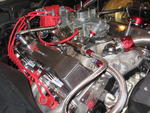





 Finished Radiator refurb