





Crazy stall out issue..

Thread Starter
Racer

Joined: Jul 2004
Posts: 276
Likes: 0
 Crazy stall out issue..
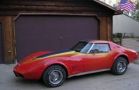
I have a stock 76 L-48 4 speed.
When I drive around town it's ok, until I get on the highway. Once I get to fourth (about 30 secs after I change gears) it will start to stall out. If I hold the gas pedal down, it will start to buck.
I've changed the fuel filter, fuel pump, fuel pump hoses, HEI coil, cap, rotor and last night I rebuilt the carb and it still does it.
It has a new 160o thermostat in it, and will do this on the highway, hot or cold.
After it dies it takes about 3 minutes to be able to restart it.
I bought a timing light the other day, where do I hook it up to check the timing?
Could this be a timing issue?
I dropped and resealed the gas tank last year so I don't think that's it.
When I drive around town it's ok, until I get on the highway. Once I get to fourth (about 30 secs after I change gears) it will start to stall out. If I hold the gas pedal down, it will start to buck.
I've changed the fuel filter, fuel pump, fuel pump hoses, HEI coil, cap, rotor and last night I rebuilt the carb and it still does it.
It has a new 160o thermostat in it, and will do this on the highway, hot or cold.
After it dies it takes about 3 minutes to be able to restart it.
I bought a timing light the other day, where do I hook it up to check the timing?
Could this be a timing issue?
I dropped and resealed the gas tank last year so I don't think that's it.

Safety Car


Joined: Feb 2003
Posts: 4,068
Likes: 27
From: St. Joseph Mo
"I dropped and resealed the gas tank last year so I don't think that's it."
With what? That stuff you slosh around inside? Maybe some of it is floating around in there and restricting the fuel pickup.
What shape is the rubber hose that makes the tank/hard line connection? Kinked?
With what? That stuff you slosh around inside? Maybe some of it is floating around in there and restricting the fuel pickup.
What shape is the rubber hose that makes the tank/hard line connection? Kinked?

Melting Slicks

Joined: Apr 2004
Posts: 2,083
Likes: 2
From: Montreal Qc.
could be a million things.
one of the million: Maybe the gas tank is not getting vented properly (is the canister and return lines all still there and connected?) Undo your gas cap some (so that it isn't airtight) and drive it around.
one of the million: Maybe the gas tank is not getting vented properly (is the canister and return lines all still there and connected?) Undo your gas cap some (so that it isn't airtight) and drive it around.
Thread Starter
Racer
Joined: Jul 2004
Posts: 276
Likes: 0
I cleaned the tank out, removed the rubber bladder and sealed it with the POR gas tank sealer.
The hoses were kinked, but I replaced them with SS braided while I wait for the molded to get here. They don't appear to be kinked now.
I replaced the gas cap 2 days ago with a new vented one, so I dont' think that's contributing.
The hoses were kinked, but I replaced them with SS braided while I wait for the molded to get here. They don't appear to be kinked now.
I replaced the gas cap 2 days ago with a new vented one, so I dont' think that's contributing.

Tech Contributor


Joined: Aug 1999
Posts: 14,384
Likes: 6,409
From: At my Bar drinking and wrenching in Lafayette Colorado
Timing won't cause the issue you're having. Sounds like fuel starvation. "Tee" a fuel gauge into the fuel line right at the carb inlet. Run a long fuel line to a fuel pressure gauge and run the line out of the engine compartment and tape the fuel pressure gauge right to the outside of your windshield to you can see it while you drive. Then, take the car out and drive it until the problem occurs. Watch your fuel pressure. If you drop below 4 psi, you have a problem with fuel delivery.
Corvette Stories
The Best of Corvette for Corvette Enthusiasts

5 Best & 5 Worst Corvette Daily Drivers
Joe Kucinski
The Headlights of Every Corvette Generation Explained
Joe Kucinski
5 Best & 5 Most Overrated Corvette Track Packages of All Time!
Joe Kucinski
Every 2027 Corvette Engine Explained
Joe Kucinski
Designer Imagines A Corvette That Looks More Like a Corvette Than the Corvette
Verdad Gallardo
10 Ugly Corvettes That We Still Kinda Love
Joe Kucinski
Top 10 Most Expensive Corvettes Ever Sold on Bring A Trailer
Brett Foote
10 Things Every Corvette Owner Needs (2026 Edition)
Michael S. Palmer
8 Most "Only Corvette Owners Understand" Quirks and Problems
Pouria Savadkouei

Thread Starter
Racer
Joined: Jul 2004
Posts: 276
Likes: 0
Power valve (power piston?) is fine in carb.
If the fuel pump requires the engine running to have pressure, and the engine stops running, how do you figure out that the loss in pressure is not from the engine running?
Not trying to be a smart @ss, just trying to make sense of it.
If the fuel pump requires the engine running to have pressure, and the engine stops running, how do you figure out that the loss in pressure is not from the engine running?
Not trying to be a smart @ss, just trying to make sense of it.

Melting Slicks

Joined: Aug 2003
Posts: 2,135
Likes: 2
From: Dayton Oh
I'm with every one that it sounds like a fuel problem. On the long shot that you're getting way too much advance, here's how to check your timing:
1) Connect the + lead of the timing light to the + post of the alternator
2) Connect the - lead of the timing light to a good ground such as the alternator bracket
3) Connect the sparg plug clip to your #1 spark plug wire. This will be the wire going to the plug located closed to the radiator on the drivers side. Do not disconnect the plug wire from the plug !
4) Start the engine and let it warm up to normal operating temps.
5) Stop the engine. Disconnect the vacuum line going to the vacuum advance at the distributor. Plug this line.
6) Loose the distributor hold down bolt until the distributor can be turned with little force but not too loose.
7) Restart the engine.
8) Adjust the idle to about 700-800 rpm.
9) Observe the position of the timing mark on the balancer relative to the timing pointer on the timing chain cover.
10) Slightly rotate the distributor until the timing mark aligns at the 10-12* before top dead center. IE, advanced by 10-12*.
11) Stop the engine
12) Tighten down the distributor
13) Reconnect the vacuum line
14) Restart the engine and reset idle to 700-800 rpm.
15) Have a couple brewskies !
1) Connect the + lead of the timing light to the + post of the alternator
2) Connect the - lead of the timing light to a good ground such as the alternator bracket
3) Connect the sparg plug clip to your #1 spark plug wire. This will be the wire going to the plug located closed to the radiator on the drivers side. Do not disconnect the plug wire from the plug !
4) Start the engine and let it warm up to normal operating temps.
5) Stop the engine. Disconnect the vacuum line going to the vacuum advance at the distributor. Plug this line.
6) Loose the distributor hold down bolt until the distributor can be turned with little force but not too loose.
7) Restart the engine.
8) Adjust the idle to about 700-800 rpm.
9) Observe the position of the timing mark on the balancer relative to the timing pointer on the timing chain cover.
10) Slightly rotate the distributor until the timing mark aligns at the 10-12* before top dead center. IE, advanced by 10-12*.
11) Stop the engine
12) Tighten down the distributor
13) Reconnect the vacuum line
14) Restart the engine and reset idle to 700-800 rpm.
15) Have a couple brewskies !
Thread Starter
Racer
Joined: Jul 2004
Posts: 276
Likes: 0
marshrat99, thank you a ton for the step by step!!
May sound simple to some/most, but not having been there before it can be confusing the first time around.
BTW, I changed the ignition module tonight and had the same problem.
I read Lar's paper on finding the TDC. When I swapped plugs, I took all the old out and grabbed a 14mm bolt and thought I'd try seeing if my balancer was off.
I went to turn the engine over with my big rachet and I ended up tightening the center bolt abit.
This kinda scared me off of trying to turn the engine over (I'm a smaller guy).
Does it take alot of force to turn it over? I'm afraid of adjusting the timing and having it worse than before due to the balancer having slipped.
Also, if it came down to it and I got a new balancer, getting a fluid one is worth the money right? To prevent slippage?
Thanks again to everybody chipping in to help. I haven't found it yet, but all the suggestions have got me several steps closer!
May sound simple to some/most, but not having been there before it can be confusing the first time around.
BTW, I changed the ignition module tonight and had the same problem.
I read Lar's paper on finding the TDC. When I swapped plugs, I took all the old out and grabbed a 14mm bolt and thought I'd try seeing if my balancer was off.
I went to turn the engine over with my big rachet and I ended up tightening the center bolt abit.
This kinda scared me off of trying to turn the engine over (I'm a smaller guy).
Does it take alot of force to turn it over? I'm afraid of adjusting the timing and having it worse than before due to the balancer having slipped.
Also, if it came down to it and I got a new balancer, getting a fluid one is worth the money right? To prevent slippage?
Thanks again to everybody chipping in to help. I haven't found it yet, but all the suggestions have got me several steps closer!

Safety Car
Joined: Feb 2003
Posts: 4,068
Likes: 27
From: St. Joseph Mo

Try some low air pressure from a compressor at the fuel pump end of your hard line and listen at your gas cap opening.
Slipped harmonic dampers are relatively rare but I had one slip on a '57 Desoto hemi (Anyone remember them?) in my '53 Ford truck. The main reason I changed it out for a 318" Plymouth.
Last edited by 67L36Driver; Aug 9, 2005 at 09:31 AM.
Thread Starter
Racer
Joined: Jul 2004
Posts: 276
Likes: 0
Well, checked the timing, it was 8o so I think I'm ok there.
I replaced the vacuum brake thing on the carb (as it was wasted) and it seemed to have no effect.
Crazy question, I've heard of old OEM cams wiping lobes before, could it somehow be that the fuel pump lobe was damaged sometime in the past?
Can someone fill me in on this fuel pressure gauge? I have a hardline going to the carb, do I just cut it and use some fuel line and a T fitting? Do you guys just tape the gauge on the back of the hood or something?
I replaced the vacuum brake thing on the carb (as it was wasted) and it seemed to have no effect.
Crazy question, I've heard of old OEM cams wiping lobes before, could it somehow be that the fuel pump lobe was damaged sometime in the past?
Can someone fill me in on this fuel pressure gauge? I have a hardline going to the carb, do I just cut it and use some fuel line and a T fitting? Do you guys just tape the gauge on the back of the hood or something?
Thread Starter
Racer
Joined: Jul 2004
Posts: 276
Likes: 0
Okay, tank was dropped on Saturday.
Turns out the supply line was pinched. It was not underneath the tank strap, so the only suspect I have at this point is the sheet metal surround that goes around the gas tank.
So I was talking to my father about it and I suggested running hard lines. He advised no on that one, as the vibration might cause a leak.
Anyways, I went ahead and bought a new line. Then I went down to Home Depot and bought 2 rubber sanding blocks.
I used one and cut the top off of it, then taped it to the tank, right beside the hoses. I also taped the hoses down to the tank. Now, here's an interesting bit, the supply line (3/8") is towards the front of the car, and the return line (1/4") is towards the rear.
Why does that matter? Well, the pass. side frame rail has the fuel lines on it. The supply line is towards the rear of the car, while the return line is towards the front. Presents a great opportunity to have the lines cross at some point and may put the squeeze on (only my supply line was pinched so I don't think the return had anything to do with my problem).
Another word of advice, hook the return and supply lines up to the tank/sender, put it in, and then hook them up to the hard lines.
When I tightened the tank down and looked down at the filler portion, I could see the surround, it had moved closer to the gas cap (the overflow hides it). Anyways, see that made me really think that the surround had something to do with it and confirmed that the rubber block was preventing the surround from pinching the rubber lines.
Let me know if you have any questions on all this. Sorry, I forgot to take pictures of the whole thing as I was really starting to loose patience with it.
BTW, the spec. for pump flow rate is 1 liter (approx. 2 cups) per 30 seconds of cranking. Keep in mind that you will most likely have to jump your car after testing 3 or 4 times.
Turns out the supply line was pinched. It was not underneath the tank strap, so the only suspect I have at this point is the sheet metal surround that goes around the gas tank.
So I was talking to my father about it and I suggested running hard lines. He advised no on that one, as the vibration might cause a leak.
Anyways, I went ahead and bought a new line. Then I went down to Home Depot and bought 2 rubber sanding blocks.
I used one and cut the top off of it, then taped it to the tank, right beside the hoses. I also taped the hoses down to the tank. Now, here's an interesting bit, the supply line (3/8") is towards the front of the car, and the return line (1/4") is towards the rear.
Why does that matter? Well, the pass. side frame rail has the fuel lines on it. The supply line is towards the rear of the car, while the return line is towards the front. Presents a great opportunity to have the lines cross at some point and may put the squeeze on (only my supply line was pinched so I don't think the return had anything to do with my problem).
Another word of advice, hook the return and supply lines up to the tank/sender, put it in, and then hook them up to the hard lines.
When I tightened the tank down and looked down at the filler portion, I could see the surround, it had moved closer to the gas cap (the overflow hides it). Anyways, see that made me really think that the surround had something to do with it and confirmed that the rubber block was preventing the surround from pinching the rubber lines.
Let me know if you have any questions on all this. Sorry, I forgot to take pictures of the whole thing as I was really starting to loose patience with it.
BTW, the spec. for pump flow rate is 1 liter (approx. 2 cups) per 30 seconds of cranking. Keep in mind that you will most likely have to jump your car after testing 3 or 4 times.
