




Return line

Thread Starter
Instructor

Joined: May 2006
Posts: 118
Likes: 0
From: Sydney NSW
 Return line
After replacing a tragic carburretor with a holly on a 350/80 vet, re mapping the distributor to cure a flat spot, I now find my engine runs very well if not very heavy on fuel but on occasion after a good run just stalls at low revs and can refuse to run. I am being told its all in the return line which is not connected. Can't get a return filter anymore so need to insert a T piece and re connect return line to release air from line. Does this sound right, it's all sounding a bit wobbly to me. Any advice would be appreciated. Black discharge around exhaust also appears to have increased.

Instructor

Joined: Sep 2001
Posts: 104
Likes: 0
From: Longmont Co
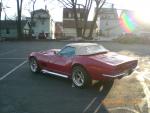
That sounds exactly right . I have the same problem with the new engine we installed in my 80 about 2 weeks. Fuel is boiling off in the carb bowls. We working out what we need to get the return line set up again. Summit has some heat reflect tube to go over the fuel lines this might help some but the big thing will be reconnecting the return line.
Melting Slicks

Joined: Jan 2006
Posts: 3,028
Likes: 2
From: North NJ
Interesting...how does a return line work? I keep getting mixed opinions on here. How do you know if your engine really needs one? I always thought it was to relieve fuel pressure at the fuel pump so it didn't flood the carb.
Sounds like thats whats happening to you, work fine under throttle but once you get to idle the pump is still throwing a wave of fuel to the carb before it can calm down.
I may be wrong, still trying to grasp this return line concept.
Sounds like thats whats happening to you, work fine under throttle but once you get to idle the pump is still throwing a wave of fuel to the carb before it can calm down.
I may be wrong, still trying to grasp this return line concept.

Tech Contributor


Joined: Aug 1999
Posts: 14,379
Likes: 6,390
From: At my Bar drinking and wrenching in Lafayette Colorado
Purpose of the return line is to keep cool fuel circulating through the system, thus avoiding heat soak of the fuel with resultant vapor lock and fuel boil-off in the carb. Has nothing to do with relief of fuel pressure.
In the systems we've installed, we've found that the installation of a return line/recirculation system has a significant effect on hot-weather drivablity of these cars. Additionally, if you have an electric pump, the return line system prevents the electric pump from being "dead-headed" thus improving pump life, lowering pump operating temperature, and decreasing operating amperage draw.
In the systems we've installed, we've found that the installation of a return line/recirculation system has a significant effect on hot-weather drivablity of these cars. Additionally, if you have an electric pump, the return line system prevents the electric pump from being "dead-headed" thus improving pump life, lowering pump operating temperature, and decreasing operating amperage draw.
Instructor

Joined: May 2006
Posts: 223
Likes: 1
From: Kennesaw GA
Just to increase my knowledge on this topic, Does the '80 have a carb and electric fuel pump as stock? I know that the return line on my '69 is for the EEC cannister (wonder where it is now?). Is there some kind of pressure regulator near the carb that directs flow back to the tank?
Or am I just reading all this wrong?
Thanks and sorry to hijack.
Or am I just reading all this wrong?
Thanks and sorry to hijack.
Tech Contributor
Joined: Aug 1999
Posts: 14,379
Likes: 6,390
From: At my Bar drinking and wrenching in Lafayette Colorado
None of the carbureted cars use electric pumps in the stock configuration - they are all mechanical pumps. However, many people will install an electric pump either by itself or as an assist pump to avoid high-rpm fuel starvation. In the stock configuration, there is no pressure regulator - fuel is allowed to bleed through a fixed oriface to the return line.
Melting Slicks
Joined: Jan 2006
Posts: 3,028
Likes: 2
From: North NJ
 so now I need to figure out how to fit a return line huh.
Does both the feed and return line hook to the mechanical fuel pump then back to the tank? or the return line to the carb?
I have a small tube on the top passenger side of the tank that I beleive is for a return line. So its like a complete circle to keep the fuel at a lower temp? How do I keep the beer in my hand at a lower temp...besides drink faster

Thread Starter
Instructor
Joined: May 2006
Posts: 118
Likes: 0
From: Sydney NSW
Fuel Line
Thanks to all you guys for the interest. It looks like the new carby carries less available fuel in the bowl and therefore is more prone to boil and vapour thus starving the carby not to mention the lines as suggested in a couple of replies.
Is the idea then to place the return as close as possible to the carby or doesn't that matter.
Thanks again.
Is the idea then to place the return as close as possible to the carby or doesn't that matter.
Thanks again.
Corvette Stories
The Best of Corvette for Corvette Enthusiasts

Top 10 Most Expensive Corvettes Ever Sold on Bring A Trailer
Brett Foote
10 Things Every Corvette Owner Needs (2026 Edition)
Michael S. Palmer
8 Most "Only Corvette Owners Understand" Quirks and Problems
Pouria Savadkouei
10 Reasons the C6 Z06 is Still A Performance Benchmark After 20 Years
Joe Kucinski
How Much Horsepower Every Corvette Engine "LOST" in 1972
Joe Kucinski
Top 10 DOs and DON'Ts for Protecting Your Convertible Top!
Michael S. Palmer
Top 10 Most Explosive Corvettes Ever Made: Power-to-Weight Ratio Ranked!
Joe Kucinski
150 hp to 1,250 hp: Every Corvette Generation Compared by the Specs That Matter
Joe Kucinski