







6-link
Thread Starter
Melting Slicks


Joined: Aug 2006
Posts: 3,429
Likes: 20
From: Kingston Ontario
 6-link
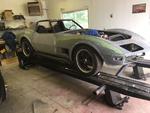
I'm building a 6-link rear while I'm doing my frame off. Anybody got pics of their 6-link mods? It's suppose to handle a lot better. I'll be putting a lot of HP to it so I thought I should modify it a little. Got pics of the progress if anybody is interested.

Race Director


Joined: Dec 1999
Posts: 16,945
Likes: 9
A 6 link does NOTHING for handling that a well set-up properly maintained stock system doesn't. It just eliminates the halfshaft as a suspension geometry member, if you have a tight diff w/ no stub axle play it will not improve anything. The biggest advantage is that if you snap a halfshaft and the halfshaft doesn't take out the 6 link and/or camber rods you won't loose the rear suspension corner
Thread Starter
Melting Slicks
Joined: Aug 2006
Posts: 3,429
Likes: 20
From: Kingston Ontario
no difference?
When you take off at the line, your stock suspension dives, upon diving the geometry of the stock suspension turns the wheels in(large camber change) as most vette owners have seen. With the 6-link mod the wheels have less camber change than the stock setup. Hence more tread contact with the road meaning more traction.The same goes for handling in corners.

Melting Slicks
Joined: Dec 2005
Posts: 2,441
Likes: 0
Originally Posted by BB72
When you take off at the line, your stock suspension dives, upon diving the geometry of the stock suspension turns the wheels in(large camber change) as most vette owners have seen. With the 6-link mod the wheels have less camber change than the stock setup. Hence more tread contact with the road meaning more traction.The same goes for handling in corners.
it be a lot less work.
Last edited by shafrs3; Oct 10, 2006 at 10:21 AM.
Race Director
Joined: Dec 1999
Posts: 16,945
Likes: 9
Originally Posted by BB72
When you take off at the line, your stock suspension dives, upon diving the geometry of the stock suspension turns the wheels in(large camber change) as most vette owners have seen. With the 6-link mod the wheels have less camber change than the stock setup. Hence more tread contact with the road meaning more traction.The same goes for handling in corners.
i would advise you educate yourself some more on suspension geometry. Building a parallel rod setup 6 link with NOT camber change is perhaps not the best thing to do if you want the car to handle better. Trains don't have a camber curve

When you take off the rear suspension squats, you can't build in 100% (or more) anti squat in an IRS because the diff is unsprung, that's one of the biggest IRS downsides. You can get maybe 50% or so realisticly but with the stock strailing arm setup you can't change it, a double forward link w/ a virtual center like the C4 allows you to change the virtual swing arm...if you want to modify the brackets and links (much like a 4 link live axle usually has multiple holes for the rods to adjust this virtual arm and with it anti squat or pro squat) Anti or pro dive is something you see on the front suspension.
Last edited by Twin_Turbo; Oct 10, 2006 at 11:51 AM.
Thread Starter
Melting Slicks
Joined: Aug 2006
Posts: 3,429
Likes: 20
From: Kingston Ontario
mods
I am lowering the lower strut rod with the Vette Brakes bracket. I'm fabricating an upper bracket to go on the top of the diff and the trailing arms. I'm using Bicknell Racing rods and heim joints for the rods. I really don't understand your reasoning for no improvement in handling given that Corvette Fever did an article on this setup and improved their skid pad numbers from I beleive .82g's to .92g's, or are they lying. They mentioned that with better tires they could attain 1g....try that with stock suspension. So I think I'm going to ignore your "stupid" comment and go with the people who have knowledge on the subject.
Corvette Stories
The Best of Corvette for Corvette Enthusiasts

Top 10 Most Expensive Corvettes Ever Sold on Bring A Trailer
Brett Foote
10 Things Every Corvette Owner Needs (2026 Edition)
Michael S. Palmer
8 Most "Only Corvette Owners Understand" Quirks and Problems
Pouria Savadkouei
10 Reasons the C6 Z06 is Still A Performance Benchmark After 20 Years
Joe Kucinski
How Much Horsepower Every Corvette Engine "LOST" in 1972
Joe Kucinski
Top 10 DOs and DON'Ts for Protecting Your Convertible Top!
Michael S. Palmer
Top 10 Most Explosive Corvettes Ever Made: Power-to-Weight Ratio Ranked!
Joe Kucinski
150 hp to 1,250 hp: Every Corvette Generation Compared by the Specs That Matter
Joe Kucinski
8 Coolest Corvette Pace Cars (and Replicas) of All Time
Verdad Gallardo
Race Director
Joined: Dec 1999
Posts: 16,945
Likes: 9
yeah..I make stupid comments..I know **** about this stuff...
A 6 link in itself says nothing about camber changes, it's the geometry that does, so even if you stick a pair upper control rods in your IRS that doesn't mean it's the same as the corvette fever one, what geometry did they have, what initial camber setting, how roll resistant was their car???
If you knew ANYTHING about the stock IRS you'd know that toe control is the problem, not camber control.
Oh and Corvette Fever.. yaeh, a rael engineering mag there..no advertising based comment there eh? i suggest you read a REAL magazine on suspension and other high tech stuff...get yourself a Race Car Engineering subscription.
A 6 link in itself says nothing about camber changes, it's the geometry that does, so even if you stick a pair upper control rods in your IRS that doesn't mean it's the same as the corvette fever one, what geometry did they have, what initial camber setting, how roll resistant was their car???
If you knew ANYTHING about the stock IRS you'd know that toe control is the problem, not camber control.
Oh and Corvette Fever.. yaeh, a rael engineering mag there..no advertising based comment there eh? i suggest you read a REAL magazine on suspension and other high tech stuff...get yourself a Race Car Engineering subscription.
Last edited by Twin_Turbo; Oct 10, 2006 at 11:45 AM.
Race Director
Joined: Dec 1999
Posts: 16,945
Likes: 9
read some books, educate yourself, study the car, measure and then design something that will work, or just settle for a camber curve that comes with aftermarket componenets (read an aftermarket lower camber bracket) and build the upper rods to compliment the geometry of the lowers so you retain the same instantaneous cetner and geometry that is shared by the lower rods and the halfshaft, this will keep the camber curve the same and will make that the stuv axle doesn't move in and out of the diff and excessive amount, the closer you get it the less the stub will move. Lining up the pivots and adjusting the rod angles is critical here.
Last edited by Twin_Turbo; Oct 10, 2006 at 11:24 AM.

Instructor


Joined: May 2001
Posts: 228
Likes: 0
From: Santa Cruz CA
TT is right on this one. In simple terms, you WANT camber gain in roll so the tire stays upright when cornering, this offsets the effect of body roll. Drag racing is a different animal. If cornering is of no concern, then you may want to keep the tire vertical throughout its travel, ie so the tire stays upright under squat - just be prepared for a lot of oversteer in corners.
IMO, the trick setup would be to remove the t-arms and copy a C4 set up with four forward links and a toe control rod.
And yes, the real problem is toe control.
IMO, the trick setup would be to remove the t-arms and copy a C4 set up with four forward links and a toe control rod.
And yes, the real problem is toe control.
Last edited by 68427; Oct 10, 2006 at 11:25 AM.
Thread Starter
Melting Slicks
Joined: Aug 2006
Posts: 3,429
Likes: 20
From: Kingston Ontario
I have
I'm NOT cobbling this thing together. True independent rear suspension has an upper and lower control arm.....NOT ONE....and when you look, the lower strut rod is not parallel with the driveshaft which is an issue. Another is that the driveshaft is part of the suspension, the upper strut rod eliminates the driveshatft out of the suspension. I've seen many diff yokes worn(inside the diff) because of pressure put on the yoke from the suspension. As wear precipitates the handling gets worse , not to mention the excess metal in the rear end. Another reason for this mod.
Race Director
Joined: Dec 1999
Posts: 16,945
Likes: 9
the stock susp. does have an upper control arm, the halfshaft and it does an adequate job. The only major difference is the stub axle play but otherwise it's a cost efficient deisgn since it saves on parts and is always dead on since the halfshaft and lower rod always hae the same instantaneous center..since the halfshaft is itself determining that.
If you want to do it to address the wear issue then that's a great idea, building it is relativly easy then, just do what I said above w/ the rod angles and pivot points.
If you want to do it to address the wear issue then that's a great idea, building it is relativly easy then, just do what I said above w/ the rod angles and pivot points.
Race Director
Joined: Dec 1999
Posts: 16,945
Likes: 9
Toe control is done by the trailing arm and half shaft/ camber rod arrangement. You know what TOE is right?

There is no true toe control in our IRS, the toe is set by the trailing arm front bushing (shims on both sides) and the toe then changes over susp. travel, which uis a bad thing. This change is due to the trailing arm desing. Being "fixed" in the frame the front mount doesn't move, however when the susp. moves the hub moves in and outboard as the halfshaft and control rod angle away from horizontal, this effectively changes their horizontal component. This in return changes the angle that the trailing arm makes with the car centerline. A c4 suspension has 2 forward trailing rods that hinge at the frame mount and at the hub, this way they offer no influence on the toe, the hub hinges freely. They have a toe control rod on the back of the hub (connected to center of diff) to handle that. This is vastly superior to what we have even though the C4 system uses long rods moutned in the center to reduce angular effect, the ebst system has pivots in line with the u joints and rods parallel w/ the halfshaft and just as long so it's a "parallelogram" which fixes the toe, so it remains the same throughout travel. Another advantage of the trailing rods is that, like I said above, they allow you to customize the virtual swing arm and with that affect hub fiore/aftmovement, yaw and more importantly anti squat.
There is no true toe control in our IRS, the toe is set by the trailing arm front bushing (shims on both sides) and the toe then changes over susp. travel, which uis a bad thing. This change is due to the trailing arm desing. Being "fixed" in the frame the front mount doesn't move, however when the susp. moves the hub moves in and outboard as the halfshaft and control rod angle away from horizontal, this effectively changes their horizontal component. This in return changes the angle that the trailing arm makes with the car centerline. A c4 suspension has 2 forward trailing rods that hinge at the frame mount and at the hub, this way they offer no influence on the toe, the hub hinges freely. They have a toe control rod on the back of the hub (connected to center of diff) to handle that. This is vastly superior to what we have even though the C4 system uses long rods moutned in the center to reduce angular effect, the ebst system has pivots in line with the u joints and rods parallel w/ the halfshaft and just as long so it's a "parallelogram" which fixes the toe, so it remains the same throughout travel. Another advantage of the trailing rods is that, like I said above, they allow you to customize the virtual swing arm and with that affect hub fiore/aftmovement, yaw and more importantly anti squat.
Race Director
Joined: Dec 1999
Posts: 16,945
Likes: 9
this pic illustrates the problem, see the dotted line from the spindle centerline? that's the toe right there (well actually axis perpendicular to toe)

now imagine this moving up and down and the halfshaft angling, it'll become "shorter" in this plane, the hub will move inboard and the toe will change
This in/outboard movement is also what keeps the suspension jacked up after setting the susp back on the ground, the tires keep the hib from moving sideways and therefore the halfshaft remains angled and the car "jacked up"
now imagine this moving up and down and the halfshaft angling, it'll become "shorter" in this plane, the hub will move inboard and the toe will change
This in/outboard movement is also what keeps the suspension jacked up after setting the susp back on the ground, the tires keep the hib from moving sideways and therefore the halfshaft remains angled and the car "jacked up"
