

when mobil 1 is not enough...

Thread Starter
Team Owner


Joined: Nov 2004
Posts: 20,715
Likes: 25
From: Sorrento Italy
 when mobil 1 is not enough...
today i've driven a 30 miles highway at high speed with engine revving continuosly around 5.500/6.200 rpms, well the fresh mobil 1 5/50w (just changed, with filter, 100 miles ago) got like fresh water, very 'liquid' and extremely hot (anyhow coolant temp kept within 185/190F)...do i maybe need an oil cooler? should i go up forward with a different oil? where? Mobil 1 seems to be allright until you dont ask the 'extras', but under severe conditions it seems to fall apart like a standard mineral oil...

Race Director


Joined: Sep 1999
Posts: 11,361
Likes: 383
From: Plano TX
It's still a 5W oil when cold which is pretty much water. If you want to run at extended high rpm I would recommend a thicker oil such as 15W-40. It has less viscosity modifiers which is a good thing for extreme use.

Drifting

Joined: May 2004
Posts: 1,442
Likes: 2
From: Flanders NJ
Stay with the Mobil 1. Just because it seams like water does not mean it's not working. You don't need an oil cooler. You have a newer, nice & tight engine you want the oil thin. If you have an older, worn engine you may want to go with maybe a 20/50 weight oil.
Dave
Dave

Le Mans Master


Joined: Oct 2002
Posts: 5,714
Likes: 6
From: Silver City NM
St. Jude Donor '05-'07

Dep
Thread Starter
Team Owner
Joined: Nov 2004
Posts: 20,715
Likes: 25
From: Sorrento Italy
...what about a castor based racing oil like this??
http://www.demon-tweeks.co.uk/produc...e=CAS1948/7184
i dont know if you remember, old racing cars used to live behind them a very characteristic burnt castor oil smell...this might be something to look for, the only con is that this oil must be changed every max 400/500 miles...in a full racing car, at every race.
http://www.demon-tweeks.co.uk/produc...e=CAS1948/7184
i dont know if you remember, old racing cars used to live behind them a very characteristic burnt castor oil smell...this might be something to look for, the only con is that this oil must be changed every max 400/500 miles...in a full racing car, at every race.
Melting Slicks

Joined: Nov 2001
Posts: 2,668
Likes: 43
From: Eastern US XX
today i've driven a 30 miles highway at high speed with engine revving continuosly around 5.500/6.200 rpms, well the fresh mobil 1 5/50w (just changed, with filter, 100 miles ago) got like fresh water, very 'liquid' and extremely hot (anyhow coolant temp kept within 185/190F)...do i maybe need an oil cooler? should i go up forward with a different oil? where? Mobil 1 seems to be allright until you dont ask the 'extras', but under severe conditions it seems to fall apart like a standard mineral oil...
Corvette Stories
The Best of Corvette for Corvette Enthusiasts

Top 10 Most Expensive Corvettes Ever Sold on Bring A Trailer
Brett Foote
10 Things Every Corvette Owner Needs (2026 Edition)
Michael S. Palmer
8 Most "Only Corvette Owners Understand" Quirks and Problems
Pouria Savadkouei
10 Reasons the C6 Z06 is Still A Performance Benchmark After 20 Years
Joe Kucinski
How Much Horsepower Every Corvette Engine "LOST" in 1972
Joe Kucinski
Top 10 DOs and DON'Ts for Protecting Your Convertible Top!
Michael S. Palmer
Top 10 Most Explosive Corvettes Ever Made: Power-to-Weight Ratio Ranked!
Joe Kucinski
150 hp to 1,250 hp: Every Corvette Generation Compared by the Specs That Matter
Joe Kucinski
8 Coolest Corvette Pace Cars (and Replicas) of All Time
Verdad Gallardo
Melting Slicks

Joined: Mar 2005
Posts: 2,891
Likes: 4
From: North Port Fl
STP will definitely make you oil thicker, but that's all it will do. I would not recommend using it on a regular basis. Consumer Reports, about 30 years ago did a test of STP and found it had no additives that helped lubrication it did nothing except raise the viscosity of the oil 20 points, so if you had 30 weight oil in your car and added a can of STP it was now the same as 50 weight, so don't waste you money just buy a heavier weight oil.

Race Director

Joined: Mar 2006
Posts: 14,112
Likes: 28
From: Florida
today i've driven a 30 miles highway at high speed with engine revving continuosly around 5.500/6.200 rpms, well the fresh mobil 1 5/50w (just changed, with filter, 100 miles ago) got like fresh water, very 'liquid' and extremely hot (anyhow coolant temp kept within 185/190F)...do i maybe need an oil cooler? should i go up forward with a different oil? where? Mobil 1 seems to be allright until you dont ask the 'extras', but under severe conditions it seems to fall apart like a standard mineral oil...
-You have to measure the temperature of the oil, not just guess at it. Synthetics tend to look thinner.
-Synthetics break down at a higher temp than mineral mixes.
-When multi oils break down initially, it will be to their base viscosity (a 10w40 will be a 10 at high temps)
-The viscosity required is determined by the engine clearances, with a good rule of thumb being to have 20 to 25psi @ 190°F at idle.
-Good oil flow takes heat away from all bearings in addition to lubrication.
-Mobil1 15w50 is the only one they make that has the additives everyone here likes so much
Mobil 1 15W-50 is also recommended for older valve train designs that may benefit from a higher level of anti-wear normally not required for newer generation vehicles. Mobil 1 15W-50 will also provide better anti-wear protection for higher valve spring tensions in certain racing engines
http://www.mobil1.com/USA-English/Mo...1_15W-50_.aspx
-You can just change the filter and add a quart after every race. The cleaner the oil the better.
-Most Important
Don't listen to a bunch of opinions only.
Take an oil sample and have it analysed at a lab and have them translate it for you. In comjunction with recording oil temps this will tell you what to do, viscosity, type, change interval, necessity of a cooler, oil pan and windage tray.

Melting Slicks
Joined: Feb 2003
Posts: 3,053
Likes: 4
St. Jude Donor '03,'11
spend the 200 bucks. It'll be worth it. Not a whole lot of downside.
Panic, do you have an oil temp gauge? If not that would be a good investment too. How hot did the oil get?
Thread Starter
Team Owner
Joined: Nov 2004
Posts: 20,715
Likes: 25
From: Sorrento Italy
i dont have an oil temp gauge but i think i need one, together with the oil cooler, i have one on the tvr and it's a pretty easy comodity to fix and run...any bolt in brand to buy specifically for C3s?

Racer

Joined: Dec 2006
Posts: 417
Likes: 40
From: Swansea IL
Guage not guess!
Would you guess at how much oil pressure you had? I bet not.
The only way to know what is going on is to install a gauge in your oil pan. That way, you know the exact temp.
What is "Hot as Hell"? Anything over 212 degrees F will burn the living daylights out of you and that is just where you want the oil temp to begin as you need to boil all the moisture out.
If you routinely drive for 30 min at 5500-6500rpm, you have a racing application and need an oil cooler. The oil will get hot and need to be cooled. If you just did that sort of driving on a lark, then skip the cooler.
I ran Mobil 1 15W-50 in my SCCA GT-1 Corvette for many years. The reason I switched from mineral based to synthetic was based on internal engine component measurments after a season of running.
Mineral oil always allowed the internals to wear. You could measure it on the crank, pistons, cam, etc. With the Mobil 1, the wear just stopped. I'll bet that a racing application put a lot more strain on that oil than any street driving you could come up with. Did I have an oil cooler on that car, YES. But the throttle was either wide open or shut.
Install the Mobil 1 15W-50 and be happy you have the best protection that you need in a street driven vehicle.
Bob
The only way to know what is going on is to install a gauge in your oil pan. That way, you know the exact temp.
What is "Hot as Hell"? Anything over 212 degrees F will burn the living daylights out of you and that is just where you want the oil temp to begin as you need to boil all the moisture out.
If you routinely drive for 30 min at 5500-6500rpm, you have a racing application and need an oil cooler. The oil will get hot and need to be cooled. If you just did that sort of driving on a lark, then skip the cooler.
I ran Mobil 1 15W-50 in my SCCA GT-1 Corvette for many years. The reason I switched from mineral based to synthetic was based on internal engine component measurments after a season of running.
Mineral oil always allowed the internals to wear. You could measure it on the crank, pistons, cam, etc. With the Mobil 1, the wear just stopped. I'll bet that a racing application put a lot more strain on that oil than any street driving you could come up with. Did I have an oil cooler on that car, YES. But the throttle was either wide open or shut.
Install the Mobil 1 15W-50 and be happy you have the best protection that you need in a street driven vehicle.
Bob
Le Mans Master
Joined: Oct 2002
Posts: 5,714
Likes: 6
From: Silver City NM
St. Jude Donor '05-'07
Why do I get the feeling we are 
There is one school of thought that suggests that the only difference in synthetic oils vs. petroleum oils is that the synthetics typically have a better additive package. This statement is only partially true. Synthetics almost always do have superior additives than petroleum oils. While this does add to the cost of the oil, it also enables the oil to last 3-5 times longer than conventional oil. The synthetic base stock however, is of paramount importance in the ability of a synthetic oil to flow at cold temperatures and withstand greater amounts of heat over significantly longer periods of time. Petroleum base stock molecules are long carbon chains that are sensitive to stress and heat. Additionally, various paraffins that are contained in all petroleum products regardless of how well refined they are, cause oil to jell like a syrup at extremely cold temperatures. At the other end of the temperature spectrum, high engine temperatures and heavy loads (as typically found in towing or racetrack applications) cause these chains to break down and the base stock actually boils off causing a change of viscosity and the formulation of sludge. This can happen at temperatures as low as 230º F and by 250º F many petroleum oils are suffering significant breakdown. Synthetic oils on the other hand are engineered specifically to provide all the lubricating properties that natural oil possesses, but none of the cold thickening or hot thinning properties of petroleum oil. Synthetics are made up of uniformly shaped molecules with shorter carbon chains which are much more resistant to heat and stress. Synthetics can withstand temperatures of 300ºF all day long and still protect your engine. In fact the American Society of Testing Materials (ASTM) standard wear resistance tests are conducted at 302º F. In this test synthetic lubricants far out perform petroleum lubricants by factor of four to one and greater.
http://www.firstfives.org/faq/oil/oilartcl.html
I'm outta this thread. I already see where it's heading
Dep
There is one school of thought that suggests that the only difference in synthetic oils vs. petroleum oils is that the synthetics typically have a better additive package. This statement is only partially true. Synthetics almost always do have superior additives than petroleum oils. While this does add to the cost of the oil, it also enables the oil to last 3-5 times longer than conventional oil. The synthetic base stock however, is of paramount importance in the ability of a synthetic oil to flow at cold temperatures and withstand greater amounts of heat over significantly longer periods of time. Petroleum base stock molecules are long carbon chains that are sensitive to stress and heat. Additionally, various paraffins that are contained in all petroleum products regardless of how well refined they are, cause oil to jell like a syrup at extremely cold temperatures. At the other end of the temperature spectrum, high engine temperatures and heavy loads (as typically found in towing or racetrack applications) cause these chains to break down and the base stock actually boils off causing a change of viscosity and the formulation of sludge. This can happen at temperatures as low as 230º F and by 250º F many petroleum oils are suffering significant breakdown. Synthetic oils on the other hand are engineered specifically to provide all the lubricating properties that natural oil possesses, but none of the cold thickening or hot thinning properties of petroleum oil. Synthetics are made up of uniformly shaped molecules with shorter carbon chains which are much more resistant to heat and stress. Synthetics can withstand temperatures of 300ºF all day long and still protect your engine. In fact the American Society of Testing Materials (ASTM) standard wear resistance tests are conducted at 302º F. In this test synthetic lubricants far out perform petroleum lubricants by factor of four to one and greater.
http://www.firstfives.org/faq/oil/oilartcl.html
I'm outta this thread. I already see where it's heading
Dep


Melting Slicks
Joined: Sep 2004
Posts: 2,412
Likes: 3
My uncle drives his TT RX7 up at 5K+ rpm for extended periods of time, and rotaries get extremely hot as it is. He uses Redline, and it works great.
I just recommended Redline in another thread, I'm beginning to sound like a rep.
And you have a TVR?! Post pics!
I just recommended Redline in another thread, I'm beginning to sound like a rep.
And you have a TVR?! Post pics!
Last edited by enkeivette; Mar 11, 2007 at 05:13 PM.
Thread Starter
Team Owner
Joined: Nov 2004
Posts: 20,715
Likes: 25
From: Sorrento Italy
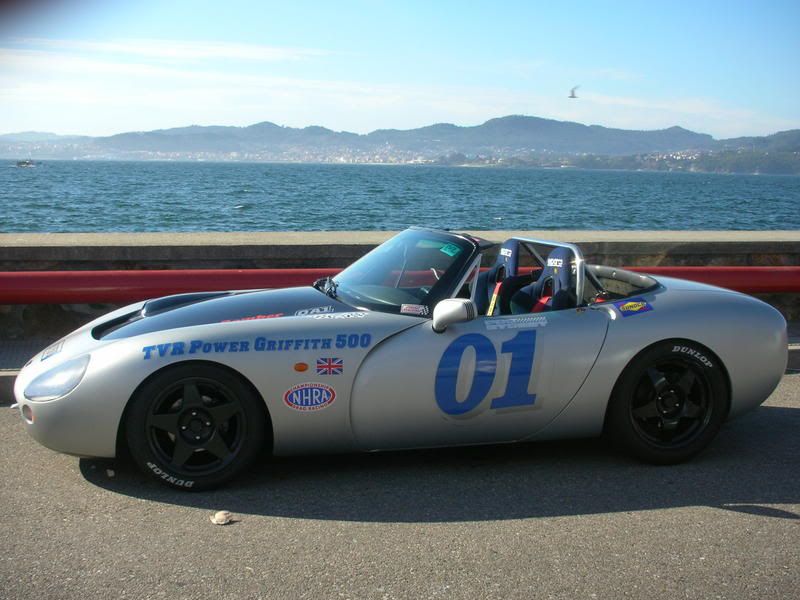
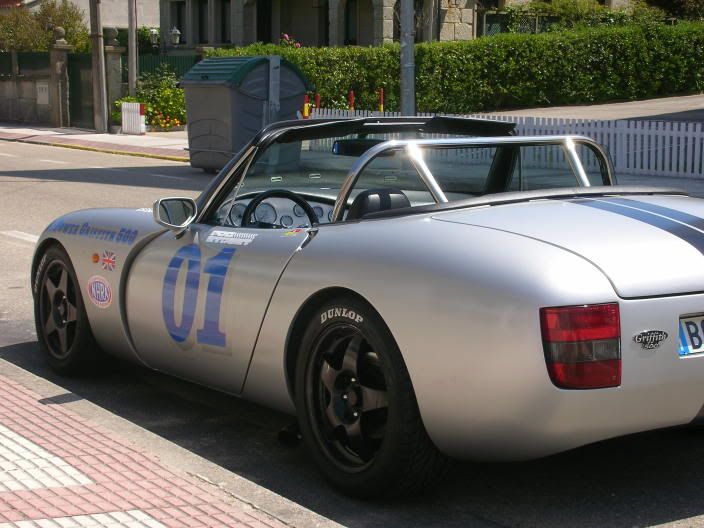
...and a vid...

Last edited by panic; Mar 11, 2007 at 06:26 PM.