



 , second pic is correct, and not only do you need a slightly stronger spring you need a second spring. You want a large diameter spring with a small diameter spring inside it, both hooked to the same places.


Carb return spring on a '70
Thread Starter
Pro

Joined: Apr 2005
Posts: 618
Likes: 0
 Carb return spring on a '70
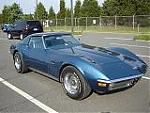
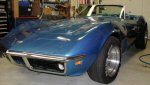
When I bought my vette, it had the carb return spring attached to the front engine hoist tang (not the drink or woman )...
)...
Made for a very heavy and unresponsive accelerator pedal. My friend noticed it on mine and moved it to the rear bracket, so the spring is now aiming towards the firewall... Result: excellent throttle response, and much better foot-feel...However (you knew that was coming)...
The throttle return doesn't go back to idle like it used to and so it idles at 1200-1500, unless I physically move the throttle lever on the carb.
Soooo - do I need a new or correct spring? Or is it supposed to be attached to the front? Need this wrapped up by friday, when I'm off to Ocean City, MD for the big corvette meet.
Thanks - Mark
old way

new way

)...Made for a very heavy and unresponsive accelerator pedal. My friend noticed it on mine and moved it to the rear bracket, so the spring is now aiming towards the firewall... Result: excellent throttle response, and much better foot-feel...However (you knew that was coming)...
The throttle return doesn't go back to idle like it used to and so it idles at 1200-1500, unless I physically move the throttle lever on the carb.
Soooo - do I need a new or correct spring? Or is it supposed to be attached to the front? Need this wrapped up by friday, when I'm off to Ocean City, MD for the big corvette meet.
Thanks - Mark
old way
new way

Team Owner

Joined: Aug 2006
Posts: 24,125
Likes: 15
From: Columbia Missouri

Tech Contributor


Joined: Aug 1999
Posts: 14,377
Likes: 6,376
From: At my Bar drinking and wrenching in Lafayette Colorado
No - you don't need a stronger spring. If the carb does not return to idle when the spring pulls aft, but does return to idle when the spring pulls forward, it means your carb needs a throttle shaft bushing. What is happening is that the spring is "cocking" the throttle slightly by pulling back, and this is slightly jamming the throttle blades in the throttle bores to prevent a consistent return-to-idle. I can put a bushing in for you if you need it (and it sounds like you do).

Melting Slicks


Joined: Mar 2006
Posts: 3,342
Likes: 7
From: Connecticut

Team Owner
Joined: Aug 2006
Posts: 24,125
Likes: 15
From: Columbia Missouri
When I said stronger spring I meant it only because his current spring looks stretched and weak.
Note: Having the spring hooked up like pic two will wear a shaft bushing very quickly. Having it like in pic one will even the load, or even the forces acting upon that bushing.
Edit: Changed to reflect new information contradicting what GM engineer told me.
Note: Having the spring hooked up like pic two will wear a shaft bushing very quickly. Having it like in pic one will even the load, or even the forces acting upon that bushing.
Edit: Changed to reflect new information contradicting what GM engineer told me.
Last edited by Durango_Boy; Oct 8, 2007 at 12:32 PM.
Melting Slicks

Joined: Nov 2001
Posts: 2,668
Likes: 43
From: Eastern US XX
Lars, care to shed some light on this?
Corvette Stories
The Best of Corvette for Corvette Enthusiasts

How Much Horsepower Every Corvette Engine "LOST" in 1972
Joe Kucinski
Top 10 DOs and DON'Ts for Protecting Your Convertible Top!
Michael S. Palmer
Top 10 Most Explosive Corvettes Ever Made: Power-to-Weight Ratio Ranked!
Joe Kucinski
150 hp to 1,250 hp: Every Corvette Generation Compared by the Specs That Matter
Joe Kucinski
8 Coolest Corvette Pace Cars (and Replicas) of All Time
Verdad Gallardo
Top 10 Corvette Engines RANKED by Peak Torque (70+ Years of Muscle!)
Joe Kucinski
Corvette ZR1X Will Be Pacing the Indy 500, And Could Probably Race, Too!
Verdad Gallardo
Top 10 Corvettes Coming to Mecum Indy 2026!
Brett Foote
Top 10 C9 Corvette MUST-HAVES to Fix These C8 Generation Flaws!
Michael S. Palmer
Melting Slicks
Joined: Nov 2001
Posts: 2,668
Likes: 43
From: Eastern US XX
Yes, I agree that picture 1 is NOT a straight line pull as you state.
What I am asking Lars for his opinion on is which configuration would be less conducive to bushing wear
- straight pull toward the rear of the carb - same direction as the cable
or
- straight pull toward the front of the carb - opposite direction of the cable.
I have seen both configurations. In fact, the little tab on the thermostat housing just above the spring in PICTURE 1 IS for a return spring on one of the configurations - perhaps a BB Tri, but I don't remember the exact config right now.
What I am asking Lars for his opinion on is which configuration would be less conducive to bushing wear
- straight pull toward the rear of the carb - same direction as the cable
or
- straight pull toward the front of the carb - opposite direction of the cable.
I have seen both configurations. In fact, the little tab on the thermostat housing just above the spring in PICTURE 1 IS for a return spring on one of the configurations - perhaps a BB Tri, but I don't remember the exact config right now.
Melting Slicks
Joined: Mar 2006
Posts: 3,342
Likes: 7
From: Connecticut
Yes, I agree that picture 1 is NOT a straight line pull as you state.
What I am asking Lars for his opinion on is which configuration would be less conducive to bushing wear
- straight pull toward the rear of the carb - same direction as the cable
or
- straight pull toward the front of the carb - opposite direction of the cable.
What I am asking Lars for his opinion on is which configuration would be less conducive to bushing wear
- straight pull toward the rear of the carb - same direction as the cable
or
- straight pull toward the front of the carb - opposite direction of the cable.
I'll take a guess and say that it doesn't make a difference.
Tech Contributor
Joined: Aug 1999
Posts: 14,377
Likes: 6,376
From: At my Bar drinking and wrenching in Lafayette Colorado
When both the throttle cable and the spring pull in the same direction (back) as the factory setup, the shaft wear is the most severe, and shaft binding starts to occur once the wear starts. The forces on the shaft are minimized by hooking up the spring pulling forward and the cable pulling back, and this will eliminate or minimize the shaft cocking from the wear.
Team Owner
Joined: Aug 2006
Posts: 24,125
Likes: 15
From: Columbia Missouri
So factory setup is the worse of the two ways for that bushing? Wow, if you can't trust a GM engineer who can you trust.

Safety Car

Joined: Oct 1999
Posts: 4,101
Likes: 10
From: NorCal
Most of the original carbs with any significant mileage need to have bushings installed in the primary side of the throttle shaft housing, i.e. the base. Finding someone with the tooling and expertise is the problem, but it looks like we have that person among us, eh Lars?
Easy to check these. With the engine off, grab a hold of the throttle linkage, give it about a quarter throttle, then look for movement as you wiggle it around. You would be amazed how bad the base can get and still work somewhat. I does cause the throttle to hang and affects the mixture (vacuum leak) when it gets real worn.
Hans
Thread Starter
Pro
Joined: Apr 2005
Posts: 618
Likes: 0
Lars - actually, you rebuilt this carb for me last year. I tend to think the spring I have is stretched, since the way it had been hooked up was stretched 3/4" longer at "rest" than the rear configuration. I ordered a new spring from Zip and should get it in a day or two. Will post an update then. Interesting comments here 

Race Director


Joined: Mar 2006
Posts: 14,112
Likes: 28
From: Florida
Thread Starter
Pro
Joined: Apr 2005
Posts: 618
Likes: 0
I've thought about putting on a backup spring, but the factory didn't start doing that until '74, I think. 70-72 share the same size spring, while '73 was a one-only year for some reason, then they went to the double spring setup in '74.