DYNO's

Thread Starter
Racer

Joined: Jul 2005
Posts: 420
Likes: 0
From: Yerington NV
 DYNO's
For a guy that has never had one done, or seen one in person, what does it entail, are "they" all similar or much different depending on where you go?
What kind of information will it provide you, and does it take entire cars' driveline into equation, ie motor, diff, tires, tranny or ?
Maybe a dumb thread, but someday, when I think I am done with mods, I want to see what I have created (on paper) .... on the road it is evident ....
Also, where would I find reputable vendors in ones own home area (Alpharetta, GA) ?
What kind of information will it provide you, and does it take entire cars' driveline into equation, ie motor, diff, tires, tranny or ?
Maybe a dumb thread, but someday, when I think I am done with mods, I want to see what I have created (on paper) .... on the road it is evident ....
Also, where would I find reputable vendors in ones own home area (Alpharetta, GA) ?

Team Owner

Joined: Aug 2006
Posts: 24,125
Likes: 15
From: Columbia Missouri
Well there are a few types. There is an engine dyno, that tests output at the crank, as if it were connected to a transmission, only the Dyno is what it's connected to.
Then there is a chassis dyno. This is the one that the car drives up on, and is strapped down so the drive wheels are turning a large drum. This kind of test does in fact tell you your rear wheel HP and TQ at specific RPMs. It's a fantastic tool for tuning a car because you can make small subtle changes right on the dyno to see if they help on the next run. Things like timing, and mixture.
I have one here locally that I will use when I have my new engine finished and installed. If you have one locally, and use it, be prepared for a low number. Everyone always thinks they have more than they do until they get it done. It's shocking to a lot of people that have V8s, that they barely have 100 HP at the rear wheels.
Then there is a chassis dyno. This is the one that the car drives up on, and is strapped down so the drive wheels are turning a large drum. This kind of test does in fact tell you your rear wheel HP and TQ at specific RPMs. It's a fantastic tool for tuning a car because you can make small subtle changes right on the dyno to see if they help on the next run. Things like timing, and mixture.
I have one here locally that I will use when I have my new engine finished and installed. If you have one locally, and use it, be prepared for a low number. Everyone always thinks they have more than they do until they get it done. It's shocking to a lot of people that have V8s, that they barely have 100 HP at the rear wheels.

Burning Brakes


Joined: Dec 2003
Posts: 1,004
Likes: 7
From: Adelaide South Australia
I heard a quote a while back which rang quite true....
"there are lies... damn lies..... and then there's dyno results!"
Having said that.....
A dyno is a very good tool to assess and tune the power/torque at various revs and varying load conditions.
But there are many ways that the actual numbers indicated can be manipulated by the operator.... either intentionally, or unintentionally.
I see a lot of quoted figures of horsepower in signatures, and some of them raise my eyebrows.
In my opinion, there's only one true indicator of real world performance: a timeslip! Whether it's at the 1/4 mile or the track.
Use dyno numbers to assess the value of mods you do, but don't get caught up in the actual number of horses.
It's far better to look at your ET or trap speed at the end of the quarter mile, or your lap times at the track.
Here's a link to one of the most popular dynos in Australia...
Some pics and info for you to look at.
http://www.dyno.com.au/dyno/controller
"there are lies... damn lies..... and then there's dyno results!"
Having said that.....
A dyno is a very good tool to assess and tune the power/torque at various revs and varying load conditions.
But there are many ways that the actual numbers indicated can be manipulated by the operator.... either intentionally, or unintentionally.
I see a lot of quoted figures of horsepower in signatures, and some of them raise my eyebrows.
In my opinion, there's only one true indicator of real world performance: a timeslip! Whether it's at the 1/4 mile or the track.
Use dyno numbers to assess the value of mods you do, but don't get caught up in the actual number of horses.
It's far better to look at your ET or trap speed at the end of the quarter mile, or your lap times at the track.
Here's a link to one of the most popular dynos in Australia...
Some pics and info for you to look at.
http://www.dyno.com.au/dyno/controller
Thread Starter
Racer
Joined: Jul 2005
Posts: 420
Likes: 0
From: Yerington NV
Thanks Durango, well, the number, whatever it is, is at least a baseline .... as it stands now, I only know what the car came off the assembly line rated as, 28 years ago .....
What does your local dyno shop charge for the engine and/or chassis dyno, and how long does a typical run take?
What does your local dyno shop charge for the engine and/or chassis dyno, and how long does a typical run take?
Instructor
Joined: Sep 2007
Posts: 197
Likes: 0
From: Norton MA
Dynos are great tools for measuring the difference between power modifications. If I were you, I would get one done as-is right now at a local chassis dyno so you have a baseline for your car. Whatever you do from here on out, get it back on the dyno and see what kind of difference it made. Make sure to go to the same dyno, as pretty much all dynos read differently. DynoJet dynos read much higher than say, a Mustang dyno. Dyno Dynamics are pretty low as well. Like someone else said, go in there with low expectations and you shouldn't be too disappointed. Like OzzyTom said, your best idea of how much power you are making is a time slip from the 1/4 track. Trap times usually tell all, and will tell if the dyno is reading high or not.
I haven't looked up other dyno manufacturers' home pages, but here is one for DynoJet (one of the more popular ones). Click on the link, and then next to the Worldwide Search, use the menu where it says "Country (Including USA)" and select your state, Georgia. Hit Search and it will come up wit a list of all the places in Georgia that have a Dynojet, and you can contact them for more info. I have found the usual rate for a handful of runs on the dyno ranges anywhere from $50-100.
I haven't looked up other dyno manufacturers' home pages, but here is one for DynoJet (one of the more popular ones). Click on the link, and then next to the Worldwide Search, use the menu where it says "Country (Including USA)" and select your state, Georgia. Hit Search and it will come up wit a list of all the places in Georgia that have a Dynojet, and you can contact them for more info. I have found the usual rate for a handful of runs on the dyno ranges anywhere from $50-100.

Pro


Joined: Sep 2004
Posts: 611
Likes: 0
From: Minnesota
Dynos are great tools for measuring the difference between power modifications. If I were you, I would get one done as-is right now at a local chassis dyno so you have a baseline for your car. Whatever you do from here on out, get it back on the dyno and see what kind of difference it made. Make sure to go to the same dyno, as pretty much all dynos read differently. DynoJet dynos read much higher than say, a Mustang dyno. Dyno Dynamics are pretty low as well. Like someone else said, go in there with low expectations and you shouldn't be too disappointed. Like OzzyTom said, your best idea of how much power you are making is a time slip from the 1/4 track. Trap times usually tell all, and will tell if the dyno is reading high or not.
I haven't looked up other dyno manufacturers' home pages, but here is one for DynoJet (one of the more popular ones). Click on the link, and then next to the Worldwide Search, use the menu where it says "Country (Including USA)" and select your state, Georgia. Hit Search and it will come up wit a list of all the places in Georgia that have a Dynojet, and you can contact them for more info. I have found the usual rate for a handful of runs on the dyno ranges anywhere from $50-100.
I haven't looked up other dyno manufacturers' home pages, but here is one for DynoJet (one of the more popular ones). Click on the link, and then next to the Worldwide Search, use the menu where it says "Country (Including USA)" and select your state, Georgia. Hit Search and it will come up wit a list of all the places in Georgia that have a Dynojet, and you can contact them for more info. I have found the usual rate for a handful of runs on the dyno ranges anywhere from $50-100.
Race Director


Joined: Sep 2002
Posts: 10,362
Likes: 5
From: San Diego - Deep Within The State of CONFUSION!
For a guy that has never had one done, or seen one in person, what does it entail, are "they" all similar or much different depending on where you go?
What kind of information will it provide you, and does it take entire cars' driveline into equation, ie motor, diff, tires, tranny or ?
Maybe a dumb thread, but someday, when I think I am done with mods, I want to see what I have created (on paper) .... on the road it is evident ....
Also, where would I find reputable vendors in ones own home area (Alpharetta, GA) ?
What kind of information will it provide you, and does it take entire cars' driveline into equation, ie motor, diff, tires, tranny or ?
Maybe a dumb thread, but someday, when I think I am done with mods, I want to see what I have created (on paper) .... on the road it is evident ....
Also, where would I find reputable vendors in ones own home area (Alpharetta, GA) ?
Visit the dyno shop's website (Used to work there) they have a lotta info about dyno's on there because they sell them too.
Corvette Stories
The Best of Corvette for Corvette Enthusiasts

Top 10 Most Expensive Corvettes Ever Sold on Bring A Trailer
Brett Foote
10 Things Every Corvette Owner Needs (2026 Edition)
Michael S. Palmer
8 Most "Only Corvette Owners Understand" Quirks and Problems
Pouria Savadkouei
10 Reasons the C6 Z06 is Still A Performance Benchmark After 20 Years
Joe Kucinski
How Much Horsepower Every Corvette Engine "LOST" in 1972
Joe Kucinski
Top 10 DOs and DON'Ts for Protecting Your Convertible Top!
Michael S. Palmer
Top 10 Most Explosive Corvettes Ever Made: Power-to-Weight Ratio Ranked!
Joe Kucinski
150 hp to 1,250 hp: Every Corvette Generation Compared by the Specs That Matter
Joe Kucinski
8 Coolest Corvette Pace Cars (and Replicas) of All Time
Verdad Gallardo
Burning Brakes
Joined: Feb 2006
Posts: 1,024
Likes: 1
From: AL
i've never been to a chassis dyno, so don't know how it should be done:
if car has manual, then the run is done in 4th gear (1:1), right?
if car is auto, what gear is used? if 3rd (or 1:1), how is downshift prevented?
--thanks
if car has manual, then the run is done in 4th gear (1:1), right?
if car is auto, what gear is used? if 3rd (or 1:1), how is downshift prevented?
--thanks
Instructor
Joined: Sep 2007
Posts: 197
Likes: 0
From: Norton MA
I have not dynoed an auto, but yes with a manual you want to use the gear closest to 1:1, which is usually 4th on a 6-speed and 3rd on a 5-speed. At least most shops I have seen use 3rd and 4th on the respective transmissions.
Race Director
Joined: Sep 2002
Posts: 10,362
Likes: 5
From: San Diego - Deep Within The State of CONFUSION!
If you've got 3:08 rear gears & an auto then they may use a lower gear if the cam revs you up into the 6's or beyond. Example:
My car does have 3:08s and the reworked Turbo 350 trans. We used high gear on my car and the speedometer still went well past 130 MPH on the dyno ... closer to 140
Not that the speedo matters, but what if I had a high revving mouse motor? My stroker maxes out at 5500RPM with the current Crane Cam. If they were stretching the RPM curve out to 6500 like in my old Nova, it may have pegged the speedo, who knows.
So if high RPMs are needed to get all the way through the power curve, then lower gears are possible. When I worked there, though high gear was the norm unless the car had an OD trans or a 5-6 speeed trans.

Race Director


Joined: Apr 2007
Posts: 14,062
Likes: 602
From: Henderson Nv-Rohnert Park/Sonoma C o. ca/born in NY Rockaway Beach.
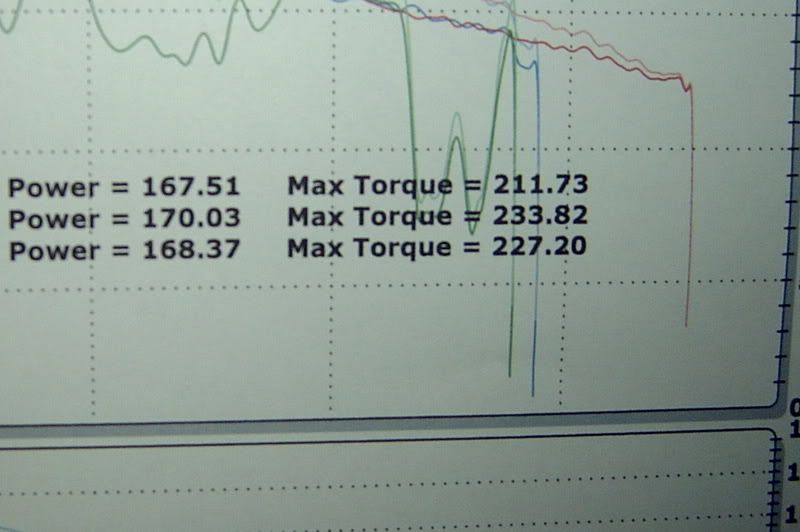
Well here is my Dyno from 2 wees ago.... I have 77 L48 stock..
We have a monthly GTG at a local speed shop and they dodynos for 25.00 each and they even have a BBQ.......Very cool....
When I was there last there was a Cab.. Yes a cab on the dyno...it ran 185hp. and $7.50 on the meter.......LOLOLOLOL
[IMG] [/IMG]
We have a monthly GTG at a local speed shop and they dodynos for 25.00 each and they even have a BBQ.......Very cool....
When I was there last there was a Cab.. Yes a cab on the dyno...it ran 185hp. and $7.50 on the meter.......LOLOLOLOL
[IMG]
[/IMG]