




454 Specs.

Thread Starter
Burning Brakes


Joined: May 2006
Posts: 893
Likes: 7
From: Hazerswoude-Rijndijk Zuid Holland
 454 Specs.
The previous owner is still on my mailing list, he found some papers concerning the engine mod's made over time:
Here is the list:
Headers: Hookers
Lifters: CraneVL37 Hydraulic
Pistons: TRW 0.030"
Heads: Cast Iron Ovals 119C, ported
Cam: Crane 278 (222deg, .050" lift)
Springs: (Edelbrock performer)
Manifold: Performer 2
Carb: Holley 850 Double pump
Any performance gains with this set up?
Here is the list:
Headers: Hookers
Lifters: CraneVL37 Hydraulic
Pistons: TRW 0.030"
Heads: Cast Iron Ovals 119C, ported
Cam: Crane 278 (222deg, .050" lift)
Springs: (Edelbrock performer)
Manifold: Performer 2
Carb: Holley 850 Double pump
Any performance gains with this set up?

Team Owner

Joined: Aug 2006
Posts: 24,125
Likes: 15
From: Columbia Missouri
Big block port size is larger than small block size, and I know very little of big blocks, but I would assume that a smaller chamber size could be used to get a nice high compression ration. It may be spot on which is why is as asking about the compression ratio.
Edit: Changed Port to Chamber...used the wrong word.
Last edited by Durango_Boy; May 28, 2008 at 08:53 AM.
Team Owner
Joined: Aug 2006
Posts: 24,125
Likes: 15
From: Columbia Missouri
Well a compression check is very important but it's different than the compression ratio and doing a compression check won't tell you the ratio. You need to know a few other things, which means having the heads off.

Burning Brakes
Joined: Feb 2000
Posts: 1,246
Likes: 1
Dude it's a BIG BLOCK! Closed chambers to open chambers range from about 97 cc to around 119. They are not huge, just a normal open chamber size. The smaller big block heads in the GM parts list are all pontiac heads, ranging from around 70-90cc.
Team Owner
Joined: Aug 2006
Posts: 24,125
Likes: 15
From: Columbia Missouri
Yeah I understand that I was just speculating. Like comparing 64cc heads to 80cc heads...the 80cc heads would be larger and give you a lower compression ratio.
Last edited by Durango_Boy; May 28, 2008 at 08:02 AM.
Corvette Stories
The Best of Corvette for Corvette Enthusiasts

Top 10 Most Expensive Corvettes Ever Sold on Bring A Trailer
Brett Foote
10 Things Every Corvette Owner Needs (2026 Edition)
Michael S. Palmer
8 Most "Only Corvette Owners Understand" Quirks and Problems
Pouria Savadkouei
10 Reasons the C6 Z06 is Still A Performance Benchmark After 20 Years
Joe Kucinski
How Much Horsepower Every Corvette Engine "LOST" in 1972
Joe Kucinski
Top 10 DOs and DON'Ts for Protecting Your Convertible Top!
Michael S. Palmer
Top 10 Most Explosive Corvettes Ever Made: Power-to-Weight Ratio Ranked!
Joe Kucinski
150 hp to 1,250 hp: Every Corvette Generation Compared by the Specs That Matter
Joe Kucinski
8 Coolest Corvette Pace Cars (and Replicas) of All Time
Verdad Gallardo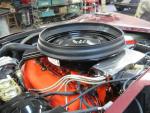
Racer


Joined: Feb 2007
Posts: 273
Likes: 0
From: NAPLES FLORIDA
this is what i know...as i just rebuilt my 74 454 and i did as much as i could without changing the heads or the intake (heads were ported in some trick places by my engine builder) - (intake was not changed so i could use my stock air cleaner and hood...
1. it is my understand that the intake manifold off of this engine is the single worst available....my engine builder likened it to a restrictor plate....so you already have a gain there....
2. though the heads are not terrible....without help from the intake (in my case)...youre stuck...but you have a decent intake...so your heads will probably be fine....my heads measured 67 cc though i believe they are labled stock at 64 cc...(i may be wrong)...regardless....
3. ...that engine...with stock heads and stock pistons had a 8.25:1 compression ratio....which...has not changed...(im assuming you have the existing pistons)
4. i have a comp cam custom ground at .566 intake and exhaust with 224 degress @ .050 lift....all is hydraulic roller....
5. now all was balanced and assembled with the best parts blah blah blah....i also had a nice set of forged pistons that i used which brought my compression ratio up to 10:1.....
all this - and my engine builder say that i should not expect more than 400 horse pressure....which....if you believe the original specs that place the engine @ 270 hp....is a decent gain....
now..i have not had the car/engine on the dyno yet (see pic) as i just took the engine out of the back of my truck last weekend...
so...without knowing what your internals are...i would guestimate your motor is proably pushing around 300 h.p. at the flywheel as it sits....

1. it is my understand that the intake manifold off of this engine is the single worst available....my engine builder likened it to a restrictor plate....so you already have a gain there....
2. though the heads are not terrible....without help from the intake (in my case)...youre stuck...but you have a decent intake...so your heads will probably be fine....my heads measured 67 cc though i believe they are labled stock at 64 cc...(i may be wrong)...regardless....
3. ...that engine...with stock heads and stock pistons had a 8.25:1 compression ratio....which...has not changed...(im assuming you have the existing pistons)
4. i have a comp cam custom ground at .566 intake and exhaust with 224 degress @ .050 lift....all is hydraulic roller....
5. now all was balanced and assembled with the best parts blah blah blah....i also had a nice set of forged pistons that i used which brought my compression ratio up to 10:1.....
all this - and my engine builder say that i should not expect more than 400 horse pressure....which....if you believe the original specs that place the engine @ 270 hp....is a decent gain....
now..i have not had the car/engine on the dyno yet (see pic) as i just took the engine out of the back of my truck last weekend...
so...without knowing what your internals are...i would guestimate your motor is proably pushing around 300 h.p. at the flywheel as it sits....

Racer


Joined: Jul 2007
Posts: 444
Likes: 0
From: Roselle IL
A cam expert could probably help you use the cam specs to determine an approximate CR from the static compression ratio and detailed cam timing specs.

Le Mans Master


Joined: Oct 2000
Posts: 7,831
Likes: 5
From: Austin TX
A pair of ported '74 454 heads are about the best factory heads you can use on the street.
The 270 HP rating was net by then so it's not as bad as it seems compared to the earlier big blocks.
The 270 HP rating was net by then so it's not as bad as it seems compared to the earlier big blocks.
Thread Starter
Burning Brakes
Joined: May 2006
Posts: 893
Likes: 7
From: Hazerswoude-Rijndijk Zuid Holland
Guys thanks.
I understand that more specs are needed to make a good guestimate. I keep my horse power on 270, thats safe any thing more is fine.
One thing pops to my mind, is it possible to have 400 HP at the rear wheels or does that require $$$ and stuff like blowers turbos NOS. Could it be done with a couple off new heads and a cam?
I understand that more specs are needed to make a good guestimate. I keep my horse power on 270, thats safe any thing more is fine.
One thing pops to my mind, is it possible to have 400 HP at the rear wheels or does that require $$$ and stuff like blowers turbos NOS. Could it be done with a couple off new heads and a cam?

Burning Brakes

Joined: Dec 2003
Posts: 1,004
Likes: 7
From: Adelaide South Australia
400 rear wheel horsepower is easy to produce in a big block ...
and it doesn't require BIG $$$.... but what do you consider too much?
modern head design makes a big impact on performance, and if your block (crank) can cope with spinning a bit faster, you should get the power you are after with a cam that offsets the torque peak higher.
Matched with a better inlet manifold which flows well to 6500rpm, and a set of headers, and I'm sure you will exceed your expectations.
The budget begins to blow out if you need to rebuild the entire rotating assembly....
Depending on how hard you drive it, would dictate whether you also should go for a forged steel crank, forged rods etc. With higher rpm, balancing components is a must.
But if you're going to rebuild the bottom end, why stop at 400 rwhp?
The potential is there for much much more with a stroker kit

Thread Starter
Burning Brakes
Joined: May 2006
Posts: 893
Likes: 7
From: Hazerswoude-Rijndijk Zuid Holland
400 rwhp is enough for now and I need some cash to drive it ;-). Still currently just planning my next project on the car for next year.
Could you give me more details, what heads, cam etc. Makes models prizes and stuff or in general tips on what to look for.
Could you give me more details, what heads, cam etc. Makes models prizes and stuff or in general tips on what to look for.
Burning Brakes
Joined: Feb 2000
Posts: 1,246
Likes: 1
actually, it's more cylinder pressure is more power (TQ! because TQ maxes out @ MAX VE , and for hp: -> HP = Tq *rpm/5252 for imperial units). Compression is just a part of it, then there's the ability to actually fill the cylinders. VE is influenced byt he complete intake and exhaust system, so carb, intake, heads, CAM!!! (valvetrain), exhaust...
Race Director


Joined: Sep 1999
Posts: 11,361
Likes: 383
From: Plano TX
400 rwhp from a 454 is easy, but you'll need a taller hood like a L-88 hood. No good intake fits under the factory BB hood.
To get 400 rwhp (approx 500 at the crank) you want a good set of aluminum heads like Brodix Race-Rites, The Edelbrock performers etc. Note that for this application you want oval ports.
Aim for 10:1 compression. You'll need non-stock pistons to get there.
A good cam; a hydraulic roller is perfect for this. About 230 dgr duration, a little more on the exhaust. I'm liking Lunati these days. Good lobe design and their cams are steel core w/ pressed on iron distributor gear so you can run a normal distributor.
A medium rise intake. Performer RPM will work. 1 7/8" or 2" headers. 2 1/2" exhaust. It will peak around 5500 rpm, shift @ 6K. Over 550 ft-lbs torque around 3500-4000 rpm. Very fun engine to drive. With an over drive transmission you'll even get good fuel economy, atleast on the highway.
To get 400 rwhp (approx 500 at the crank) you want a good set of aluminum heads like Brodix Race-Rites, The Edelbrock performers etc. Note that for this application you want oval ports.
Aim for 10:1 compression. You'll need non-stock pistons to get there.
A good cam; a hydraulic roller is perfect for this. About 230 dgr duration, a little more on the exhaust. I'm liking Lunati these days. Good lobe design and their cams are steel core w/ pressed on iron distributor gear so you can run a normal distributor.
A medium rise intake. Performer RPM will work. 1 7/8" or 2" headers. 2 1/2" exhaust. It will peak around 5500 rpm, shift @ 6K. Over 550 ft-lbs torque around 3500-4000 rpm. Very fun engine to drive. With an over drive transmission you'll even get good fuel economy, atleast on the highway.