







greasable u joint failure pics

Thread Starter
Racer


Joined: Mar 2006
Posts: 264
Likes: 1
From: west central INDIANA
 greasable u joint failure pics
My weakling 1980, 190 HP, all stock, B&M shift TH350.
I took off let it rev out in drive, then BOOM. No
warning, they were the greasable type. I walked back
up the road and found what was left of the sheared trunnins.I
knew the solid joints were the best, but never figured this
car would do this. I`ve let it rev out, then chip the tires in second
at least 30 times maybe more, before today. WARNING If you can grease your joints, REPLACE them before this happens to you.


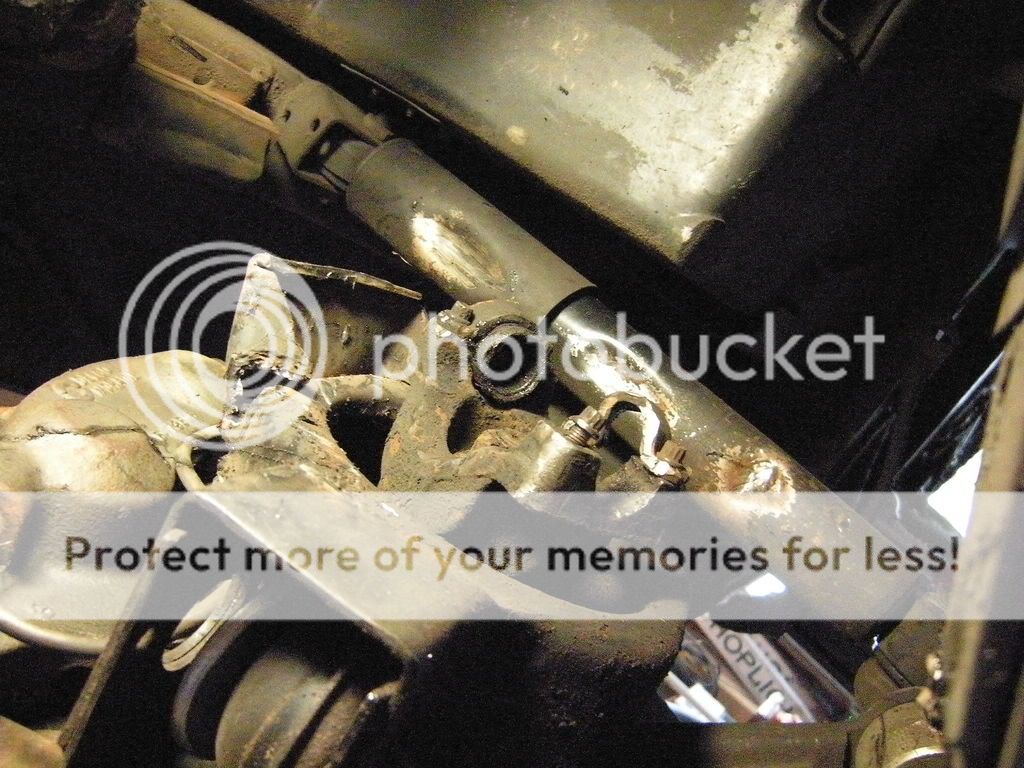


I took off let it rev out in drive, then BOOM. No
warning, they were the greasable type. I walked back
up the road and found what was left of the sheared trunnins.I
knew the solid joints were the best, but never figured this
car would do this. I`ve let it rev out, then chip the tires in second
at least 30 times maybe more, before today. WARNING If you can grease your joints, REPLACE them before this happens to you.

Race Director

Joined: May 2006
Posts: 16,528
Likes: 53
From: Dayton, Ohio
Thread Starter
Racer
Joined: Mar 2006
Posts: 264
Likes: 1
From: west central INDIANA
The joints WERE NOT worn at all, Im sorry your wrong! They were in good condition NO needle marks were on the trunnins.I have never needed to have greased them.The trans did shift extremly firm, I feel this was the reason for failure.
Race Director
Joined: May 2006
Posts: 16,528
Likes: 53
From: Dayton, Ohio
OK...I thought I was seeing needle marks in the second pic.
Corvette Stories
The Best of Corvette for Corvette Enthusiasts

5 Best & 5 Worst Corvette Daily Drivers
Joe Kucinski
The Headlights of Every Corvette Generation Explained
Joe Kucinski
5 Best & 5 Most Overrated Corvette Track Packages of All Time!
Joe Kucinski
Every 2027 Corvette Engine Explained
Joe Kucinski
Designer Imagines A Corvette That Looks More Like a Corvette Than the Corvette
Verdad Gallardo
10 Ugly Corvettes That We Still Kinda Love
Joe Kucinski
Top 10 Most Expensive Corvettes Ever Sold on Bring A Trailer
Brett Foote
10 Things Every Corvette Owner Needs (2026 Edition)
Michael S. Palmer
8 Most "Only Corvette Owners Understand" Quirks and Problems
Pouria Savadkouei
Thread Starter
Racer
Joined: Mar 2006
Posts: 264
Likes: 1
From: west central INDIANA
I have owned it 3 years in March. I have no idea how old they were. The inside joint on this shaft was a solid type. The other side is the same way. Grease zerk on outside, solid inboard.

Team Owner


Joined: Jan 2006
Posts: 37,637
Likes: 3,118
From: Crossville TN
When a greaseable joint fails because of its design, it fractures at the Zerk fitting...right through the body...due to stress fracture at the thread area. I agree that the failure wasn't due to the grease fitting design. It just looks like the joint was overpowered...possibly from some violent wheel hop under high load.




Drifting

Joined: Apr 2006
Posts: 1,911
Likes: 2
From: gold coast queensland
geez mate that would have given me one hell of a fright. that must have made one hell of a noise and comotion through your steering wheel. i dont know if i would blame greasable uni,s so fast but. i have been running them for a long time on a reasonable strong motor, about 450 hp which cops a flogging all the time and no problems so far. i do grease them every 6 months but until i hear the first little pop noise. NO MORE...otherwise the seal blows out. you said............
The joints WERE NOT worn at all, Im sorry your wrong! They were in good condition NO needle marks were on the trunnins.# I have never needed to have greased them# .The trans did shift extremly firm, I feel this was the reason for failure.
you said you have never needed to grease them before , and is that in 3 years? there is your answer between the hash marks i think. and holy %^&*& did it smash your brake calliper as well or is that just a paint crack. what a demolition job it did.im going outside to grease mine right now
The joints WERE NOT worn at all, Im sorry your wrong! They were in good condition NO needle marks were on the trunnins.# I have never needed to have greased them# .The trans did shift extremly firm, I feel this was the reason for failure.
you said you have never needed to grease them before , and is that in 3 years? there is your answer between the hash marks i think. and holy %^&*& did it smash your brake calliper as well or is that just a paint crack. what a demolition job it did.im going outside to grease mine right now
Last edited by gingerbreadman1977; Nov 3, 2008 at 06:02 AM.

Team Owner
Joined: Aug 1999
Posts: 30,995
Likes: 99
From: Ontario
When a greaseable joint fails because of its design, it fractures at the Zerk fitting...right through the body...due to stress fracture at the thread area. I agree that the failure wasn't due to the grease fitting design. It just looks like the joint was overpowered...possibly from some violent wheel hop under high load.

Le Mans Master


Joined: Jan 2006
Posts: 6,506
Likes: 139
From: Butler Pa
I'm thinking you'd be hard pressed to break even worn out u-joints with 190 hp and a slush box.
Drifting
Joined: Oct 2004
Posts: 1,496
Likes: 1
From: Lafayette Louisiana
I agree with your statement. One of the bolts looks as if it is bent from being loose.

Safety Car


Joined: Jun 2004
Posts: 4,652
Likes: 80
From: Lakeland Florida
Well that settles it for me. I was going to leave the old greaseable U Joints in my 75 as I rebuild the rear suspension. From seeing the photos, and the comments, I think replacing them with solid units is the way to go. They are $15 each, but the piece of mind of having new units may be worth it.
How often do you have to grease - greasable U Joints. Is it every year? If you dont grease them in 3 years would that be a contributing cause to failure.
kdf
How often do you have to grease - greasable U Joints. Is it every year? If you dont grease them in 3 years would that be a contributing cause to failure.
kdf

Le Mans Master

Joined: Dec 2007
Posts: 6,422
Likes: 591
From: McHenry Illinois
Can anyone explain why a greasable u-joint that is only greased once at installation time would not last as long as a non greasable joint. Assuming neither had a structural failure ? Why would one outlast the other ?
Drifting
Joined: Apr 2006
Posts: 1,911
Likes: 2
From: gold coast queensland
i agree basher. normally they start clicking horribly when the grease dries out before they go WHAM like that. maybe the loose bolt theory giving it some play like a few have said. either way im sticking to greasable for now but good to see some pictures 1980 blue. i hope you fix it well and have it going better then ever soon.