






 . Thanks for the quick reply guys!

160 degree thermostat

Thread Starter
Racer

Joined: Jun 2005
Posts: 312
Likes: 0
 160 degree thermostat
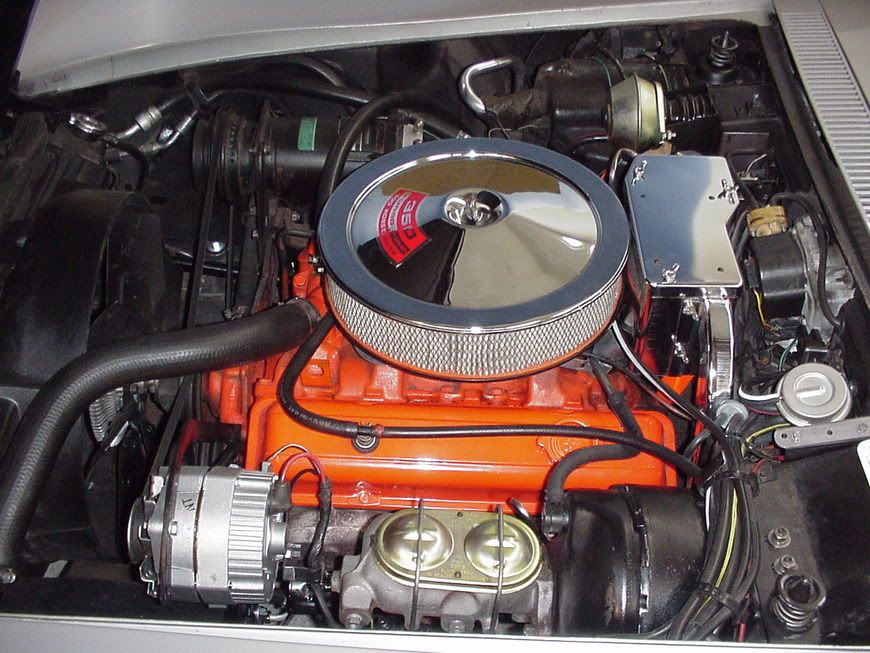
I replaced my thermostat with a 160 degree one in my 1970 350/300hp A/C, automatic car and I found out later a 195 was original, will anything happen other that the thermostat opening at 160 versus 195? It never went above 160 anyway and it had a 180 in it.
Last edited by JIMS1970VETTE; May 3, 2009 at 10:53 AM.

Racer
Joined: Feb 2009
Posts: 343
Likes: 0
From: San Diego CA
If it never went over 160 with the 180 thermostat in it, then the thermostat was bad. Or your gauge is not right.
Your engine needs to be above 160*F and should be in the 180-195 range at all times when hot.
Your engine needs to be above 160*F and should be in the 180-195 range at all times when hot.

Le Mans Master


Joined: Nov 2008
Posts: 5,691
Likes: 12
From: columbus oh

Team Owner


Joined: Jan 2006
Posts: 37,637
Likes: 3,118
From: Crossville TN
That car came with a 180F stat...not a 195F. Cars weren't forced to go to higher 195F temps until later EPA demands. The higher temp stats caused engines to run hotter and to burn some more hydrocarbons at idle and low speeds. I agree that your 180F stat was defective [stuck open] or your temp gauge reads low. Putting a 160F stat in your car won't hurt it; it will stabilize at whatever temp your engine/cooling system requires (which is usually hotter than 160F). It will just take a bit longer to get there. The thermostat doesn't 'set' the temperature of the system...it merely establishes the minimum temp possible; if your system needs to run hotter, it will.
Thread Starter
Racer
Joined: Jun 2005
Posts: 312
Likes: 0
Thanks for the reply and I always thought that the high temp thermostats were for newer cars with the smog equipment. Mine being a "base" motor I didn't think it would hurt. When I buy a new one I will get the 180 degree thermostat. Thanks!
Corvette Stories
The Best of Corvette for Corvette Enthusiasts

Top 10 Most Expensive Corvettes Ever Sold on Bring A Trailer
Brett Foote
10 Things Every Corvette Owner Needs (2026 Edition)
Michael S. Palmer
8 Most "Only Corvette Owners Understand" Quirks and Problems
Pouria Savadkouei
10 Reasons the C6 Z06 is Still A Performance Benchmark After 20 Years
Joe Kucinski
How Much Horsepower Every Corvette Engine "LOST" in 1972
Joe Kucinski
Top 10 DOs and DON'Ts for Protecting Your Convertible Top!
Michael S. Palmer
Top 10 Most Explosive Corvettes Ever Made: Power-to-Weight Ratio Ranked!
Joe Kucinski
150 hp to 1,250 hp: Every Corvette Generation Compared by the Specs That Matter
Joe Kucinski
8 Coolest Corvette Pace Cars (and Replicas) of All Time
Verdad Gallardo
Le Mans Master


Joined: Oct 2000
Posts: 8,897
Likes: 1,357
From: Santa Ana CA
I run a 160 degree stat in my built 327 and when moving, the car runs a consistant ~165 (on the gauge). The engine makes good power and I've never had a problem with condensation.
If I'm sitting at idle for an extended period (e.g., in line at a show with limited ambient air flow), it will climb and can go over 200. Sit long enough, and it may puke (at least it used to). The radiator is good and all seals are in place.
One advantage of a lower operating temperature is that the engine is just that much cooler when you are forced to idle for an extended period, so you have a little longer before you start getting worried. :o
If I'm sitting at idle for an extended period (e.g., in line at a show with limited ambient air flow), it will climb and can go over 200. Sit long enough, and it may puke (at least it used to). The radiator is good and all seals are in place.
One advantage of a lower operating temperature is that the engine is just that much cooler when you are forced to idle for an extended period, so you have a little longer before you start getting worried. :o

Drifting


Joined: Feb 2005
Posts: 1,879
Likes: 38
From: Los Gatos CA
The cooling system should keep the engine running at or near the same temperature regardless of load or car speed. My L36 runs around 185 in traffic, on the freeway, or pretty-much whenever. It is basically stock: 160* stat, flow-kooler pump, thermo clutch, ac fan and re-cored 41 year old Harrison radiator. And I live in sunny CA. If my car heated up in traffic, or on the freeway, I would sort it out. Just my 2 cents...
Drifting
Joined: Jun 2006
Posts: 1,912
Likes: 12
From: Schaumburg (Chicago) Illinois
That car came with a 180F stat...not a 195F. Cars weren't forced to go to higher 195F temps until later EPA demands. The higher temp stats caused engines to run hotter and to burn some more hydrocarbons at idle and low speeds. I agree that your 180F stat was defective [stuck open] or your temp gauge reads low. Putting a 160F stat in your car won't hurt it; it will stabilize at whatever temp your engine/cooling system requires (which is usually hotter than 160F). It will just take a bit longer to get there. The thermostat doesn't 'set' the temperature of the system...it merely establishes the minimum temp possible; if your system needs to run hotter, it will.
Safety Car

Joined: Oct 2007
Posts: 3,729
Likes: 267
From: Austin Texas
Corvette of the Year Winner 2017
2016 C3 of Year Finalist
if your not concerned about using the heater, and you live in a hot climate I would keep the 160, the stat only sets the min. temp for the system to run at,
the other componets control or limit how hot it will actually run.
! run a 160 for my 454 but I am in Texas.
If your heating up in traffic, you need to check out the radiator or pump/fan.
69VETT
the other componets control or limit how hot it will actually run.
! run a 160 for my 454 but I am in Texas.
If your heating up in traffic, you need to check out the radiator or pump/fan.
69VETT

Safety Car


Joined: Apr 2000
Posts: 3,802
Likes: 61
From: Wichita KS
 I also run a 160 in my 454 and I can assure you all that it does get above 160 when there is little or no air moving through the radiator.
After all, those blocks get hot and will continue to get hotter if the coolant temperature goes up.
With a big block, you need all the cooling power you can get because they are like furnaces.
I know you have a small block but they produce plenty heat themselves so the same principles apply.
FYI, the Chevrolet Shop Manual for my car, 72, calls for a 195 degree stat.
cc
Thread Starter
Racer
Joined: Jun 2005
Posts: 312
Likes: 0
Good point on outside temps as it will get above 100 degrees here in Reno, and in traffic at Hot August Nights it can drive up the temp while you are cruising, thanks to everyone and for this forum, it really helps!

Melting Slicks


Joined: Oct 2002
Posts: 2,317
Likes: 111
From: St Louis MO
Durability tests done in industry have shown that colder engine temperatures INCREASE wear. The wear curve DECREASES as the operating temperature goes up and reaches a minimum at 180 degrees and remains flat to 230 or more, although the wear at upper temperature is probably a function of the high temperature capability of the motor oil (synthetics are better here).
BTW, a colder thermostat will NOT increase the cooling capacity of the system since all thermostats (160, 180, and 195) will be full open above 200 degrees - they only change the minimum operating temperature.
BTW, a colder thermostat will NOT increase the cooling capacity of the system since all thermostats (160, 180, and 195) will be full open above 200 degrees - they only change the minimum operating temperature.

Le Mans Master
Joined: Oct 2000
Posts: 8,897
Likes: 1,357
From: Santa Ana CA
Durability tests done in industry have shown that colder engine temperatures INCREASE wear. The wear curve DECREASES as the operating temperature goes up and reaches a minimum at 180 degrees and remains flat to 230 or more, although the wear at upper temperature is probably a function of the high temperature capability of the motor oil (synthetics are better here).
When were these tests performed..., back when these old engines were new?
Back then people ran straight 30 weight. 10-40, 5-30, synthetics, etc. were unheard of. Sure, a low temp could have wear consequences if the oil is too thick. But I run 10-40 synthetic and not 30 weight like I did 30 years ago.

Drifting
Joined: Apr 2003
Posts: 1,323
Likes: 2
From: Castle Hills Texas
I have never seen a more misunderstood concept thrown around over and over as I have regarding this on this forum.

Melting Slicks

Joined: Mar 2005
Posts: 2,838
Likes: 10
From: Austin TX
Your coolant temp directly impacts your oil temp. Since water vaporizes at 212~, your oil needs to run at 212 or higher or liquid water (and other combustion wastes) will foul the oil causing a myriad of problems. A 160 stat won't get the oil temp to 212 unless your cooling system is maxed and runs hotter than the stat's rating.
That's the main reason hot oil is a much better lubricator than cool oil and that's the main reason engines will live longer with a higher operating temp.
Secondly, it's no secret hot oil flows better than cold.
My oil temp gauges on my newer Vettes (I wish all my cars had oil temp gauges) run about 20* hotter than the coolant temp. My 96 LT-4 has a 195* factory stat and the oil temp stays at a pretty contant 215* which is perfect. The engineers at GM know what they're doing.
On an all-iron engine, 180* is probably fine assuming you don't have an 8 qt pan.
More here:
http://www.carnut.com/ramblin/cool3.html
FWIW
That's the main reason hot oil is a much better lubricator than cool oil and that's the main reason engines will live longer with a higher operating temp.
Secondly, it's no secret hot oil flows better than cold.
My oil temp gauges on my newer Vettes (I wish all my cars had oil temp gauges) run about 20* hotter than the coolant temp. My 96 LT-4 has a 195* factory stat and the oil temp stays at a pretty contant 215* which is perfect. The engineers at GM know what they're doing.
On an all-iron engine, 180* is probably fine assuming you don't have an 8 qt pan.
More here:
http://www.carnut.com/ramblin/cool3.html
FWIW
Last edited by 73, Dark Blue 454; May 4, 2009 at 05:02 PM.