




Starting problems......

Thread Starter
Burning Brakes

Joined: Jun 2008
Posts: 827
Likes: 0
From: Salem Ohio
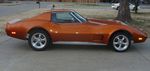
 78 Corvette L-82 Starting problems...... update latest post.
Alright I'm sure many of you have seen some of my staring problems threads........  So I have mentioned that it only starts with...... I thinks it's starting fluid stuff..... Ok what ever you spray it in the carb. Could one of the problems be that there is a kink in the metal line from the pump to the carb? If you start it and let it run for a bit then turn it off it will start all that day without fluid. It also doesnt get fuel to the carb. If you let it run for a while then shut it off then attempt to start it again it usually starts. But it seems to barely turn over. We have replaced the fuel pump with an autozone one. Then we talked to our dealer parts department and they said we probably bought the wrong pump and to get one with some kind of valve. They said either at the dealer or Summit racing. I might be able to get a video of an attempting start. Also if I sound uneducated on cars i am only 12.
So I have mentioned that it only starts with...... I thinks it's starting fluid stuff..... Ok what ever you spray it in the carb. Could one of the problems be that there is a kink in the metal line from the pump to the carb? If you start it and let it run for a bit then turn it off it will start all that day without fluid. It also doesnt get fuel to the carb. If you let it run for a while then shut it off then attempt to start it again it usually starts. But it seems to barely turn over. We have replaced the fuel pump with an autozone one. Then we talked to our dealer parts department and they said we probably bought the wrong pump and to get one with some kind of valve. They said either at the dealer or Summit racing. I might be able to get a video of an attempting start. Also if I sound uneducated on cars i am only 12.
Last edited by shank0668; May 30, 2009 at 06:37 PM.
Burning Brakes

Joined: Mar 2005
Posts: 861
Likes: 0
From: WNY
So let me get this straight. From a cold start, it starts up fine WITH starting fluid in it. WITHOUT starting fluid, it will not start.
When heated up it starts up just like normal?
Im going to ask a dumb question. Are you priming it at all (pumping the throttle to get some fuel into the carb) when you cold start it?
When heated up it starts up just like normal?
Im going to ask a dumb question. Are you priming it at all (pumping the throttle to get some fuel into the carb) when you cold start it?
Thread Starter
Burning Brakes
Joined: Jun 2008
Posts: 827
Likes: 0
From: Salem Ohio
So let me get this straight. From a cold start, it starts up fine WITH starting fluid in it. WITHOUT starting fluid, it will not start.
When heated up it starts up just like normal?
Im going to ask a dumb question. Are you priming it at all (pumping the throttle to get some fuel into the carb) when you cold start it?
When heated up it starts up just like normal?
Im going to ask a dumb question. Are you priming it at all (pumping the throttle to get some fuel into the carb) when you cold start it?
Thread Starter
Burning Brakes
Joined: Jun 2008
Posts: 827
Likes: 0
From: Salem Ohio
Heres a nice video of my foot.......... LOL This is an attempted start.
http://s291.photobucket.com/albums/l...t=MOV02366.flv
http://s291.photobucket.com/albums/l...t=MOV02366.flv

Team Owner


Joined: Jul 2008
Posts: 23,419
Likes: 22
From: In limbo
St. Jude Donor '13-'15, '17 thru '22
Check to make sure your pump on the carb is working to prime the engine. All you need to do is take off the air cleaner and look into the carb while you open the throttle with your hand. If you don't see gas shooting down into the engine, your diaphram on the priming pump is either beat or not properly installed.
I don't recommend starting fluid for a classic car. The stuff is real explosive and I am afraid of punching a hole in a piston with that stuff (like I think I did to my snowblower this winter). If the engine is running reasonably well, you shouldn't need starting fluid.
Turning over slowly when warm is a common problem on big blocks. What engine is in the car? There are things you can do to mitigate this (make sure you are using a heavy duty battery, heat shield on the solenoid, making sure you have all good contacts etc.). If it is a stock 350 and you are having this problem, you need to go through the system.
I don't recommend starting fluid for a classic car. The stuff is real explosive and I am afraid of punching a hole in a piston with that stuff (like I think I did to my snowblower this winter). If the engine is running reasonably well, you shouldn't need starting fluid.
Turning over slowly when warm is a common problem on big blocks. What engine is in the car? There are things you can do to mitigate this (make sure you are using a heavy duty battery, heat shield on the solenoid, making sure you have all good contacts etc.). If it is a stock 350 and you are having this problem, you need to go through the system.
Thread Starter
Burning Brakes
Joined: Jun 2008
Posts: 827
Likes: 0
From: Salem Ohio
Check to make sure your pump on the carb is working to prime the engine. All you need to do is take off the air cleaner and look into the carb while you open the throttle with your hand. If you don't see gas shooting down into the engine, your diaphram on the priming pump is either beat or not properly installed.
I don't recommend starting fluid for a classic car. The stuff is real explosive and I am afraid of punching a hole in a piston with that stuff (like I think I did to my snowblower this winter). If the engine is running reasonably well, you shouldn't need starting fluid.
Turning over slowly when warm is a common problem on big blocks. What engine is in the car? There are things you can do to mitigate this (make sure you are using a heavy duty battery, heat shield on the solenoid, making sure you have all good contacts etc.). If it is a stock 350 and you are having this problem, you need to go through the system.
I don't recommend starting fluid for a classic car. The stuff is real explosive and I am afraid of punching a hole in a piston with that stuff (like I think I did to my snowblower this winter). If the engine is running reasonably well, you shouldn't need starting fluid.
Turning over slowly when warm is a common problem on big blocks. What engine is in the car? There are things you can do to mitigate this (make sure you are using a heavy duty battery, heat shield on the solenoid, making sure you have all good contacts etc.). If it is a stock 350 and you are having this problem, you need to go through the system.
Last edited by shank0668; May 13, 2009 at 03:04 PM.
Team Owner
Joined: Jul 2008
Posts: 23,419
Likes: 22
From: In limbo
St. Jude Donor '13-'15, '17 thru '22
OK, I just read your public profile and you have a '78 with L-82, so it isn't a big block. I watched your video also, and the car sounds like it is turning at the appropriate speed with the starter, I know this is a cold start. One thing on my car, if it sits for more than about a week, the bowls in the carburetor dry out, and the engine won't start until the fuel pump pumps more fuel into the bowls. This takes about 7-8 seconds, which sounds like a lot of cranking, but without priming it by hand (which would be a pain), there is nothing else I can do.
Corvette Stories
The Best of Corvette for Corvette Enthusiasts

Top 10 Most Expensive Corvettes Ever Sold on Bring A Trailer
Brett Foote
10 Things Every Corvette Owner Needs (2026 Edition)
Michael S. Palmer
8 Most "Only Corvette Owners Understand" Quirks and Problems
Pouria Savadkouei
10 Reasons the C6 Z06 is Still A Performance Benchmark After 20 Years
Joe Kucinski
How Much Horsepower Every Corvette Engine "LOST" in 1972
Joe Kucinski
Top 10 DOs and DON'Ts for Protecting Your Convertible Top!
Michael S. Palmer
Top 10 Most Explosive Corvettes Ever Made: Power-to-Weight Ratio Ranked!
Joe Kucinski
150 hp to 1,250 hp: Every Corvette Generation Compared by the Specs That Matter
Joe Kucinski
8 Coolest Corvette Pace Cars (and Replicas) of All Time
Verdad Gallardo
Team Owner
Joined: Jul 2008
Posts: 23,419
Likes: 22
From: In limbo
St. Jude Donor '13-'15, '17 thru '22
And I should also say that IF I was going to prime it by hand, I would prime it with GASOLINE, not starting fluid. So I would have to lift the hood, take off the air cleaner, dump some fuel in, and then start. Once started I would have to put the air cleaner back on and such, too much of a pain. If I burn through a starter motor with all the cranking, I'll replace it and drive on. I don't do that a lot though, in the nice weather I like to drive the car almost every day, so it really only dries out in winter storage, when I am on vacation, or if it sits for some kind of mechanical problem.
Thread Starter
Burning Brakes
Joined: Jun 2008
Posts: 827
Likes: 0
From: Salem Ohio
And I should also say that IF I was going to prime it by hand, I would prime it with GASOLINE, not starting fluid. So I would have to lift the hood, take off the air cleaner, dump some fuel in, and then start. Once started I would have to put the air cleaner back on and such, too much of a pain. If I burn through a starter motor with all the cranking, I'll replace it and drive on. I don't do that a lot though, in the nice weather I like to drive the car almost every day, so it really only dries out in winter storage, when I am on vacation, or if it sits for some kind of mechanical problem.
Burning Brakes
Joined: Mar 2005
Posts: 861
Likes: 0
From: WNY
Check to make sure your pump on the carb is working to prime the engine. All you need to do is take off the air cleaner and look into the carb while you open the throttle with your hand. If you don't see gas shooting down into the engine, your diaphram on the priming pump is either beat or not properly installed.
I don't recommend starting fluid for a classic car. The stuff is real explosive and I am afraid of punching a hole in a piston with that stuff (like I think I did to my snowblower this winter). If the engine is running reasonably well, you shouldn't need starting fluid.
I don't recommend starting fluid for a classic car. The stuff is real explosive and I am afraid of punching a hole in a piston with that stuff (like I think I did to my snowblower this winter). If the engine is running reasonably well, you shouldn't need starting fluid.
It honestly sounds like there is no fuel, or not enough fuel for start-up. Could also be a choke issue I guess, but I would look at this first.

Team Owner
Joined: Jul 2008
Posts: 23,419
Likes: 22
From: In limbo
St. Jude Donor '13-'15, '17 thru '22
If this is your problem, there are really only two reasons for it (I stated above like there is one, but really there are two).
1. There is no gas in the carburetor for the pump to push into the carb.
2. The diaghram in your pump is beat or not installed correctly.
I believe you are saying there is no gas in your fuel line from the carb to the fuel pump. If I understand that correctly, then it is likely that the gas in the carb bowl has siphoned out when that line evacuated. This is usually evidence of a fuel leak.



Team Owner
Joined: Jul 2008
Posts: 23,419
Likes: 22
From: In limbo
St. Jude Donor '13-'15, '17 thru '22
No. Those are the secondaries. The choke plate is that piece of metal that is mounted onto a horizontal shaft to the left of the circled items in the picture. In this picture, the choke is open, which it normally will be when the motor is warm. But when the car cools down, if you work the throttle, the choke plate will close, and you will need to be fairly quick-eyed to see the jet of gas if you don't hold it open with your finger. So, take off your air cleaner and look down where the choke plate is, you should be looking straight down the primary throttle bodies of your carburetor. Use the index finger of your right hand to hold the choke plate open, and work the throttle with your left hand. You should see a jet of gas shoot down into the primaries. If you do not, the engine is not primed and will not start right away until it gets some gas down in it.
Thread Starter
Burning Brakes
Joined: Jun 2008
Posts: 827
Likes: 0
From: Salem Ohio
No. Those are the secondaries. The choke plate is that piece of metal that is mounted onto a horizontal shaft to the left of the circled items in the picture. In this picture, the choke is open, which it normally will be when the motor is warm. But when the car cools down, if you work the throttle, the choke plate will close, and you will need to be fairly quick-eyed to see the jet of gas if you don't hold it open with your finger. So, take off your air cleaner and look down where the choke plate is, you should be looking straight down the primary throttle bodies of your carburetor. Use the index finger of your right hand to hold the choke plate open, and work the throttle with your left hand. You should see a jet of gas shoot down into the primaries. If you do not, the engine is not primed and will not start right away until it gets some gas down in it.
Burning Brakes
Joined: Mar 2005
Posts: 861
Likes: 0
From: WNY
If you add gas instead of starting fluid it should start just fine. Sounds like you have a bit of a fuel leak to me.