







Cooling my solid roller 496
Thread Starter
Melting Slicks


Joined: May 2002
Posts: 2,716
Likes: 121
From: Sulphur LA
St. Jude Donor '05-'06,'11,'13-'14,'16,'18,'19,'24, '25

I'm not aware of any inexpensive way to measure radiator airflow. Even when the sensors are relatively cheap a data acquisition setup is generally needed. For instance I've used a grid of MAF sensors (straight out of a Ford truck) which need power in addition to voltage output measurement. Alternately a grid of pitot tubes can be used, requiring a massively expensive array of pressure sensors and data acq system. There are mass airflow "propellers" which are stupidly expensive also. Another way to get mass airflow through the radiator is to get an accurate heat rejection on the water side (which would require a water flow meter, which I think are also $$ and finicky) plus thermocouples in the airflow and back out the mass airflow from the energy balance (neglecting radiated heat from the (improperly named) radiator.)
There may be some cheap tell-tale way of getting an idea of relative airflow but I think you'd have a very hard time getting anything consistent from that.
As long as I'm writing I should mention about the "too fast water" myth: I've tested radiators in wind tunnels, on calorimeter rigs, on race tracks, and in straight-line testing and water is never too fast through the radiator (within reason that you're not getting massive cavitation in the block.) (Two-pass radiators are worse too, same reason, the water stays in the rad too long.) Faster water flow equalizes the temperature across the radiator which means it is working at maximum efficiency across the whole surface area, rather than the temperature being particularly low on the "cold" side and hence being closer to ambient and less effective. Faster water also reduces hot spots in the block unless there are areas of bad flow/cavitation. It's already been mentioned that your radiator seems to be saturated which means this is either an air-side problem or too much heat coming from the engine (which could be solved by more air but if its an excessive amount of engine-generated heat that may be unrealistic.)
You haven't over-pressured the radiator and expanded the tubes have you? (Cutting off the airflow.) Put a light on one side of the rad and look through the other side to make sure none of the fins look crushed or the tubes ballooned. May be tricky to do in the car. This is a common problem in NASCAR where special high-pressure systems are used with lightweight aluminum radiators.
Good luck finding a solution!
There may be some cheap tell-tale way of getting an idea of relative airflow but I think you'd have a very hard time getting anything consistent from that.
As long as I'm writing I should mention about the "too fast water" myth: I've tested radiators in wind tunnels, on calorimeter rigs, on race tracks, and in straight-line testing and water is never too fast through the radiator (within reason that you're not getting massive cavitation in the block.) (Two-pass radiators are worse too, same reason, the water stays in the rad too long.) Faster water flow equalizes the temperature across the radiator which means it is working at maximum efficiency across the whole surface area, rather than the temperature being particularly low on the "cold" side and hence being closer to ambient and less effective. Faster water also reduces hot spots in the block unless there are areas of bad flow/cavitation. It's already been mentioned that your radiator seems to be saturated which means this is either an air-side problem or too much heat coming from the engine (which could be solved by more air but if its an excessive amount of engine-generated heat that may be unrealistic.)
You haven't over-pressured the radiator and expanded the tubes have you? (Cutting off the airflow.) Put a light on one side of the rad and look through the other side to make sure none of the fins look crushed or the tubes ballooned. May be tricky to do in the car. This is a common problem in NASCAR where special high-pressure systems are used with lightweight aluminum radiators.
Good luck finding a solution!
Thanks for the input LiveandLetDrive,
The radiator looks good as for as the over-pressuring goes, no signs of bent cooling fins or swole tubes.
I'm leaning twards it being the heat generated by the engine.
I'm doing everything I can to increase the cooling capacity of the system.
Neal

Thread Starter
Melting Slicks
Joined: May 2002
Posts: 2,716
Likes: 121
From: Sulphur LA
St. Jude Donor '05-'06,'11,'13-'14,'16,'18,'19,'24, '25

Race Director


Joined: Oct 2000
Posts: 15,009
Likes: 79
From: central FL, near the beach.
scroll down near the bottom of my web page for
airflow test at speed
http://community-2.webtv.net/MATTGRU/doc/

airflow test at speed
http://community-2.webtv.net/MATTGRU/doc/
Thread Starter
Melting Slicks
Joined: May 2002
Posts: 2,716
Likes: 121
From: Sulphur LA
St. Jude Donor '05-'06,'11,'13-'14,'16,'18,'19,'24, '25
scroll down near the bottom of my web page for
airflow test at speed
http://community-2.webtv.net/MATTGRU/doc/
airflow test at speed
http://community-2.webtv.net/MATTGRU/doc/
I've spent a good bit of time reading your A/F tunning paper
Thanks for the input
Neal
Last edited by chevymans 77; Sep 1, 2009 at 09:40 PM.
Race Director
Joined: Oct 2000
Posts: 15,009
Likes: 79
From: central FL, near the beach.
.
I just now thought up a way to measure air flow efficiency at speed with the fan motor on!

so if necessary, i'll add test #2 (if there is any problem with the first)
thanks for your comments!
Corvette Stories
The Best of Corvette for Corvette Enthusiasts

150 hp to 1,250 hp: Every Corvette Generation Compared by the Specs That Matter
Joe Kucinski
8 Coolest Corvette Pace Cars (and Replicas) of All Time
Verdad Gallardo
Top 10 Corvette Engines RANKED by Peak Torque (70+ Years of Muscle!)
Joe Kucinski
Corvette ZR1X Will Be Pacing the Indy 500, And Could Probably Race, Too!
Verdad Gallardo
Top 10 Corvettes Coming to Mecum Indy 2026!
Brett Foote
Top 10 C9 Corvette MUST-HAVES to Fix These C8 Generation Flaws!
Michael S. Palmer
10 Revolutionary 'Corvette Firsts' Most People Don't Know
Joe Kucinski
5 Reasons to Upgrade to an LS6-Powered Corvette; 5 Reasons to Stay LT2
Michael S. Palmer
2027 Corvette vs The World: Every C8 vs Its Closest Competitor
Joe Kucinski
Race Director
Joined: Oct 2000
Posts: 15,009
Likes: 79
From: central FL, near the beach.
Anyone that has ever put a 20" box fan in a house window has seen it spin when it is off, and a breeze hits it. But it has to be a DC motor to measure the output.
Race Director
Joined: Oct 2000
Posts: 15,009
Likes: 79
From: central FL, near the beach.
Matt I've had your site in my favorites for years and I have to say I missed that one. I may have to give that one a try, you have any refferances on what votage I should see? Will it depend on the size fan motor I have or does that make a differance?
I've spent a good bit of time reading your A/F tunning paper
Thanks for the input
Neal
I've spent a good bit of time reading your A/F tunning paper
Thanks for the input
Neal
Look for a change in voltage. The higher the volts, the better the airflow. The voltage is in direct proportion to the speed. Maybe at high speed it goes to (wild guess) 18v! Maybe only 7v. Depends on the actual flow.
I do revise my pages now and then. The low cost cooling page was unchanged for 2 years! At last a new idea to try! and it's easy and free if u have a DVM. I'd try taking off the front pusher fan to find out if it impedes flow at higher speeds. That could be an eye opener

Good luck!
Last edited by Matt Gruber; Sep 2, 2009 at 06:05 AM.
Burning Brakes


Joined: Jul 2001
Posts: 1,038
Likes: 3
From: Clinton IL
outside of an engine defect, I'm convinced the problem is your airflow to the radiator on the highway....Why you ask?
I had a 74 Corvette with a mild 350, four speed, and 4:11 gears.
It ran cold as ice...until.....
I started to notice at highway speed it would start really heating up - just like you describe. When i would slow down, or drive in town - it was cool as ice.
Nothing had changed...except, I had added a custom spoiler to the front of the car. This car had a tag in the center prior to the heating problem. I was actually out on the highway at 5:30 in the morning when it started running hot again. I pulled over and hand ripped the spoiler off the nose. Got back on the road - cold as ice again.
I learned alot about this.
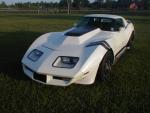
I realize you have fixed buckets...and I see you have a pace car style spoiler...as well as some other mods to the nose of your car.
I think between the stance of your car and nose mods - the air is deflected from getting into the radiator - so you end up with a vacuum there as speed - no matter how many fans...or the size of the radiator.
Yank that pace car spoiler off and install the correct plastic lip - then adjust the stance on the car with the rear spring adjust up or down and monintor your temp - and see if it won't cool down.
The fact it can sit in traffic and not overheat speaks volumes.
I had a 74 Corvette with a mild 350, four speed, and 4:11 gears.
It ran cold as ice...until.....
I started to notice at highway speed it would start really heating up - just like you describe. When i would slow down, or drive in town - it was cool as ice.
Nothing had changed...except, I had added a custom spoiler to the front of the car. This car had a tag in the center prior to the heating problem. I was actually out on the highway at 5:30 in the morning when it started running hot again. I pulled over and hand ripped the spoiler off the nose. Got back on the road - cold as ice again.
I learned alot about this.
I realize you have fixed buckets...and I see you have a pace car style spoiler...as well as some other mods to the nose of your car.
I think between the stance of your car and nose mods - the air is deflected from getting into the radiator - so you end up with a vacuum there as speed - no matter how many fans...or the size of the radiator.
Yank that pace car spoiler off and install the correct plastic lip - then adjust the stance on the car with the rear spring adjust up or down and monintor your temp - and see if it won't cool down.
The fact it can sit in traffic and not overheat speaks volumes.
Thread Starter
Melting Slicks
Joined: May 2002
Posts: 2,716
Likes: 121
From: Sulphur LA
St. Jude Donor '05-'06,'11,'13-'14,'16,'18,'19,'24, '25
Neal,
Look for a change in voltage. The higher the volts, the better the airflow. The voltage is in direct proportion to the speed. Maybe at high speed it goes to (wild guess) 18v! Maybe only 7v. Depends on the actual flow.
I do revise my pages now and then. The low cost cooling page was unchanged for 2 years! At last a new idea to try! and it's easy and free if u have a DVM. I'd try taking off the front pusher fan to find out if it impedes flow at higher speeds. That could be an eye opener
Good luck!
Look for a change in voltage. The higher the volts, the better the airflow. The voltage is in direct proportion to the speed. Maybe at high speed it goes to (wild guess) 18v! Maybe only 7v. Depends on the actual flow.
I do revise my pages now and then. The low cost cooling page was unchanged for 2 years! At last a new idea to try! and it's easy and free if u have a DVM. I'd try taking off the front pusher fan to find out if it impedes flow at higher speeds. That could be an eye opener
Good luck!
I've got a couple DVMs but I also have a couple panel mount volt meters that will be easy to hook up and muont to a small panel that I can watch while driving.
I've got two 11" Spal fans to monitor so this could get interesting.
Thanks for the ideas
Neal
Thread Starter
Melting Slicks
Joined: May 2002
Posts: 2,716
Likes: 121
From: Sulphur LA
St. Jude Donor '05-'06,'11,'13-'14,'16,'18,'19,'24, '25
outside of an engine defect, I'm convinced the problem is your airflow to the radiator on the highway....Why you ask?
I had a 74 Corvette with a mild 350, four speed, and 4:11 gears.
It ran cold as ice...until.....
I started to notice at highway speed it would start really heating up - just like you describe. When i would slow down, or drive in town - it was cool as ice.
Nothing had changed...except, I had added a custom spoiler to the front of the car. This car had a tag in the center prior to the heating problem. I was actually out on the highway at 5:30 in the morning when it started running hot again. I pulled over and hand ripped the spoiler off the nose. Got back on the road - cold as ice again.
I learned alot about this.
I realize you have fixed buckets...and I see you have a pace car style spoiler...as well as some other mods to the nose of your car.
I think between the stance of your car and nose mods - the air is deflected from getting into the radiator - so you end up with a vacuum there as speed - no matter how many fans...or the size of the radiator.
Yank that pace car spoiler off and install the correct plastic lip - then adjust the stance on the car with the rear spring adjust up or down and monintor your temp - and see if it won't cool down.
The fact it can sit in traffic and not overheat speaks volumes.
I had a 74 Corvette with a mild 350, four speed, and 4:11 gears.
It ran cold as ice...until.....
I started to notice at highway speed it would start really heating up - just like you describe. When i would slow down, or drive in town - it was cool as ice.
Nothing had changed...except, I had added a custom spoiler to the front of the car. This car had a tag in the center prior to the heating problem. I was actually out on the highway at 5:30 in the morning when it started running hot again. I pulled over and hand ripped the spoiler off the nose. Got back on the road - cold as ice again.
I learned alot about this.
I realize you have fixed buckets...and I see you have a pace car style spoiler...as well as some other mods to the nose of your car.
I think between the stance of your car and nose mods - the air is deflected from getting into the radiator - so you end up with a vacuum there as speed - no matter how many fans...or the size of the radiator.
Yank that pace car spoiler off and install the correct plastic lip - then adjust the stance on the car with the rear spring adjust up or down and monintor your temp - and see if it won't cool down.
The fact it can sit in traffic and not overheat speaks volumes.
I mentioned the nose of my car being different than others with the 80's model front bumper in one of my ealier posts, thinking it could be causing some of my issues.
The front spoiler was added while I had the car down for the 496 install so I may have been overlooking it as a possible cause, removing it is easy as it is not yet molded in. With Matts idea of motoring the air flow, changes to the front could be monitered and documented as to what works and what don't.
I've got the car ready for a test run with the new oil cooler so once I test it I'll look for a stock front air dam and give that a try.
I'll add all the new suggestions to my list of things to try so we can see what was tried and what helped.
Thanks Neal

Instructor

Joined: Oct 2002
Posts: 223
Likes: 20
From: jim thorpe pa
406 alum heads, hi flow water pump, 4 core brass radiator, was over heating, got a dewitts rad, mark 8 fan, still no good, got a flexlite fan controller, put the controller fender side ac box, ran a #6 ground wire from battery to controller, timing was factory spec (4 degrees maybe), did the "long post timing", i'm good, never over 200, read the post about drilling 1/16 holes in t stat, working for me, forum is good stuff
Thread Starter
Melting Slicks
Joined: May 2002
Posts: 2,716
Likes: 121
From: Sulphur LA
St. Jude Donor '05-'06,'11,'13-'14,'16,'18,'19,'24, '25
406 alum heads, hi flow water pump, 4 core brass radiator, was over heating, got a dewitts rad, mark 8 fan, still no good, got a flexlite fan controller, put the controller fender side ac box, ran a #6 ground wire from battery to controller, timing was factory spec (4 degrees maybe), did the "long post timing", i'm good, never over 200, read the post about drilling 1/16 holes in t stat, working for me, forum is good stuff
glad you got your issues worked out, I hope to get mine worked out soon.
Neal
Thread Starter
Melting Slicks
Joined: May 2002
Posts: 2,716
Likes: 121
From: Sulphur LA
St. Jude Donor '05-'06,'11,'13-'14,'16,'18,'19,'24, '25
I was able to get the small leaks fixed and take a ride in my car to see if I had done any good with the oil cooler install.
The first ride wasn’t good, I had let the battery go dead while the car was sitting there being worked on. This caused the fan controller to lose its settings so on the first drive I had no fans running. The hwy is close to the house so the temps stayed down tile after I was cruising. At 2800 rpm the temps slowly climbed to 215* and hung there tile I had to stop and turn around, they climbed to 230*, once back on the hwy and the rpm up to 2500 the temps came back down to around 220*. This had me scratching my head tile I got home and realized the fans weren’t running.
After setting the low and high temp trips I started the car again and waited for the fans to kick on. Nothing, so I had to start troubleshooting, the low speed light indicator came on but the fan did not. After a closer look I found the issue, it was a weatherpack plug that had gotten hot and was not making a good connection. I removed the connector and connected the wires straight to each other. Then gave it another try, bingo the fans came on and ran as before. I have an override switch wire into the circuit so I can run both fans when needed.
It was late so another drive would have to wait. The next day it was raining so no drive, there is rain forecasted for the next 4 days here so it wasn’t looking good for a test drive.
Today the rain had been light early with no rain this afternoon so I decided to take the car for a drive. With the car sitting running for a good while to warm up and to make sure the fans would run, the temp stayed right at 167* (temp gun) so things were looking ok.
Took my time getting to the hwy to let the engine bay warm up, once on the hwy I got up to about 2800 rpm and held there. The water temp held at about 175* while the oil temp was at about 180* to 190*on the inlet of the oil cooler and around 110* to 120* at the outlet. Now keep in mind that the oil is not diverted to the cooler totally until it gets to 190*so the oil is being split between the cooler and being bypassed to the engine. I have a third gauge in place to get the oil pan temp but I don’t have it connected right now so the temps I see are at the inlet and outlet of the oil cooler. I’m sure the temp of the oil will be higher in the pan than at the cooler.
After being on the hwy for around 10 minutes I pulled into a drive and turned around to head back home. The water temp stayed right at 175* so I decided to kick the rpm up and see what would happen. Brought them up to 3500 (about 70 mph) and held them there, right away the temp dropped down to about 170*(by the gauge), slowed to about 3000 and the temp held to right at 170/175*. This is without a T-stat and with both 11” Spal fans running. Also the outside temp was around 78* compared to 98* back when I was running at 220* to 230*without the oil cooler. The real test will be when the rain stops and the temps come back up to the 90’s.
One other thing I did was to rout the bypass hose from the intake through two small heater cores that I mounted up front right behind the grills in the bumper back to the water pump. This should add some cooling capacity while driving. Prior to this I had tried to remove the bypass hose and plug it off but the temps would swing wildly, I think the stage IV pump was cavitating with out the hose connected.
I really want to try Matt’s idea of monitoring the voltage of the fans while on the hwy to see if this will give some form of air flow indication. I have two small panel mount digital volt meters that would work perfectly for this. I just need to take the time to put it all together.
I’m going to install the T-stat in hopes to stabilize the temps although they didn’t swing much from the hwy to in town driving.
More updates to come after more test drives
Neal
The first ride wasn’t good, I had let the battery go dead while the car was sitting there being worked on. This caused the fan controller to lose its settings so on the first drive I had no fans running. The hwy is close to the house so the temps stayed down tile after I was cruising. At 2800 rpm the temps slowly climbed to 215* and hung there tile I had to stop and turn around, they climbed to 230*, once back on the hwy and the rpm up to 2500 the temps came back down to around 220*. This had me scratching my head tile I got home and realized the fans weren’t running.
After setting the low and high temp trips I started the car again and waited for the fans to kick on. Nothing, so I had to start troubleshooting, the low speed light indicator came on but the fan did not. After a closer look I found the issue, it was a weatherpack plug that had gotten hot and was not making a good connection. I removed the connector and connected the wires straight to each other. Then gave it another try, bingo the fans came on and ran as before. I have an override switch wire into the circuit so I can run both fans when needed.
It was late so another drive would have to wait. The next day it was raining so no drive, there is rain forecasted for the next 4 days here so it wasn’t looking good for a test drive.
Today the rain had been light early with no rain this afternoon so I decided to take the car for a drive. With the car sitting running for a good while to warm up and to make sure the fans would run, the temp stayed right at 167* (temp gun) so things were looking ok.
Took my time getting to the hwy to let the engine bay warm up, once on the hwy I got up to about 2800 rpm and held there. The water temp held at about 175* while the oil temp was at about 180* to 190*on the inlet of the oil cooler and around 110* to 120* at the outlet. Now keep in mind that the oil is not diverted to the cooler totally until it gets to 190*so the oil is being split between the cooler and being bypassed to the engine. I have a third gauge in place to get the oil pan temp but I don’t have it connected right now so the temps I see are at the inlet and outlet of the oil cooler. I’m sure the temp of the oil will be higher in the pan than at the cooler.
After being on the hwy for around 10 minutes I pulled into a drive and turned around to head back home. The water temp stayed right at 175* so I decided to kick the rpm up and see what would happen. Brought them up to 3500 (about 70 mph) and held them there, right away the temp dropped down to about 170*(by the gauge), slowed to about 3000 and the temp held to right at 170/175*. This is without a T-stat and with both 11” Spal fans running. Also the outside temp was around 78* compared to 98* back when I was running at 220* to 230*without the oil cooler. The real test will be when the rain stops and the temps come back up to the 90’s.
One other thing I did was to rout the bypass hose from the intake through two small heater cores that I mounted up front right behind the grills in the bumper back to the water pump. This should add some cooling capacity while driving. Prior to this I had tried to remove the bypass hose and plug it off but the temps would swing wildly, I think the stage IV pump was cavitating with out the hose connected.
I really want to try Matt’s idea of monitoring the voltage of the fans while on the hwy to see if this will give some form of air flow indication. I have two small panel mount digital volt meters that would work perfectly for this. I just need to take the time to put it all together.
I’m going to install the T-stat in hopes to stabilize the temps although they didn’t swing much from the hwy to in town driving.
More updates to come after more test drives
Neal

Pro

Joined: Nov 2007
Posts: 710
Likes: 0
From: Northern Florida
Great...at least you can take her out as needed without overheating now. Im curious to see your temp readings once you re install the thermostat AND when its hot outside. If you havent already done so, drill a couple of 1/8" holes in the thermostat plate .
Thread Starter
Melting Slicks
Joined: May 2002
Posts: 2,716
Likes: 121
From: Sulphur LA
St. Jude Donor '05-'06,'11,'13-'14,'16,'18,'19,'24, '25
I'm curious to, hoping it will all work out and stay below 200* on a hot day.
Neal