





1979 Battery Problem--need some help

Thread Starter
Drifting


Joined: Jun 2006
Posts: 1,327
Likes: 43
From: Vernon CT
 1979 Battery Problem--need some help
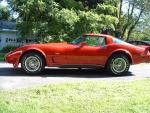
I picked up a 1979 thats been sitting in the seller's driveway. I have several issues that need to be addressed before it can see the road...
First, is the battery (thats in excellent condition). It holds a charge and starts the car, but unless I disconnect it after an hour, the battery is dead. (once the car is started I can disconnect it and the car is fine... For now it is driveway-bound till I can solve this & a few other problems.)
Whats killing this battery and where do I start? :huh:
Thanks in advance...
Steve
First, is the battery (thats in excellent condition). It holds a charge and starts the car, but unless I disconnect it after an hour, the battery is dead. (once the car is started I can disconnect it and the car is fine... For now it is driveway-bound till I can solve this & a few other problems.)
Whats killing this battery and where do I start? :huh:
Thanks in advance...
Steve
Le Mans Master


Joined: May 2003
Posts: 8,877
Likes: 3,556
From: Fernandina Beach FL
2023 Restomod of the Year finalist
2020 C3 of the Year Winner - Modified
Grab a amp meter-I think you'll be able to find a cheap one for $20-make sure it'll handle 10amps. Disconnect the battery (ground/neg) and connect the ammeter between the neg (-) bat terminal and the cable. And see what it reads. Start pulling fuses one at a time -see if that drops it to zero. Then you've narrowed it down to that circuit.
Richard
Richard
Thread Starter
Drifting
Joined: Jun 2006
Posts: 1,327
Likes: 43
From: Vernon CT
Grab a amp meter-I think you'll be able to find a cheap one for $20-make sure it'll handle 10amps. Disconnect the battery (ground/neg) and connect the ammeter between the neg (-) bat terminal and the cable. And see what it reads. Start pulling fuses one at a time -see if that drops it to zero. Then you've narrowed it down to that circuit.
Richard
Richard

Tech Contributor


Joined: Dec 1999
Posts: 32,910
Likes: 2,402
From: Anthony TX
CI 6,7,8,9,11 Vet
St. Jude Donor '08
If you have to disconnect the battery when the car is running because it will go dead,,,,,the alternator is NOT charging the battery. When the engine is OFF and the battery drains,,,,something is STILL DRAINING THE BATTERY
A C3 is actually very simple when it comes to electronics compared to a C5 or C6
Use the DC Volt meter and attach it to the batery POSITIVE and NEGATIVE terminals when the engine is running. You should see 13.5 - 14.5 VDC. If you do, switch the meter to VOLTS AC and read the battery terminals. If you have ANY AC Volts,,,,STOP using the car and get the alternator repaired or replaced!!!!
The only battery parasitic drain is the damn Clock. There are several problems that arise that can cause a serious parasitic drain on a C3. One is the alternator its self. There are diodes inside the alternator that rectify the AC and make it DC. If the break down, they allow the battery to apply power to the alternator stator windings and cause a LARGE current draw. Mine does this and I need to up-grade to a one wire alternator with a better output.
Install an AMP meter between the alternator big red wire and the alternator. There should be ZERO amps draw.
Bill C
A C3 is actually very simple when it comes to electronics compared to a C5 or C6
Use the DC Volt meter and attach it to the batery POSITIVE and NEGATIVE terminals when the engine is running. You should see 13.5 - 14.5 VDC. If you do, switch the meter to VOLTS AC and read the battery terminals. If you have ANY AC Volts,,,,STOP using the car and get the alternator repaired or replaced!!!!
The only battery parasitic drain is the damn Clock. There are several problems that arise that can cause a serious parasitic drain on a C3. One is the alternator its self. There are diodes inside the alternator that rectify the AC and make it DC. If the break down, they allow the battery to apply power to the alternator stator windings and cause a LARGE current draw. Mine does this and I need to up-grade to a one wire alternator with a better output.
Install an AMP meter between the alternator big red wire and the alternator. There should be ZERO amps draw.
Bill C
Last edited by Bill Curlee; Jul 19, 2009 at 12:16 AM.
Thread Starter
Drifting
Joined: Jun 2006
Posts: 1,327
Likes: 43
From: Vernon CT
If you have to disconnect the battery when the car is running because it will go dead,,,,,the alternator is NOT charging the battery. When the engine is OFF and the battery drains,,,,something is STILL DRAINING THE BATTERY
A C3 is actually very simple when it comes to electronics compared to a C5 or C6
Use the DC Volt meter and attach it to the batery POSITIVE and NEGATIVE terminals when the engine is running. You should see 13.5 - 14.5 VDC. If you do, switch the meter to VOLTS AC and read the battery terminals. If you have ANY AC Volts,,,,STOP using the car and get the alternator repaired or replaced!!!!
The only battery parasitic drain is the damn Clock. There are several problems that arise that can cause a serious parasitic drain on a C3. One is the alternator its self. There are diodes inside the alternator that rectify the AC and make it DC. If the break down, they allow the battery to apply power to the alternator stator windings and cause a LARGE current draw. Mine does this and I need to up-grade to a one wire alternator with a better output.
Install an AMP meter between the alternator big red wire and the alternator. There should be ZERO amps draw.
Bill C
A C3 is actually very simple when it comes to electronics compared to a C5 or C6
Use the DC Volt meter and attach it to the batery POSITIVE and NEGATIVE terminals when the engine is running. You should see 13.5 - 14.5 VDC. If you do, switch the meter to VOLTS AC and read the battery terminals. If you have ANY AC Volts,,,,STOP using the car and get the alternator repaired or replaced!!!!
The only battery parasitic drain is the damn Clock. There are several problems that arise that can cause a serious parasitic drain on a C3. One is the alternator its self. There are diodes inside the alternator that rectify the AC and make it DC. If the break down, they allow the battery to apply power to the alternator stator windings and cause a LARGE current draw. Mine does this and I need to up-grade to a one wire alternator with a better output.
Install an AMP meter between the alternator big red wire and the alternator. There should be ZERO amps draw.
Bill C
The battery dies if the car is running or not.
Thread Starter
Drifting
Joined: Jun 2006
Posts: 1,327
Likes: 43
From: Vernon CT
If you have to disconnect the battery when the car is running because it will go dead,,,,,the alternator is NOT charging the battery. When the engine is OFF and the battery drains,,,,something is STILL DRAINING THE BATTERY
A C3 is actually very simple when it comes to electronics compared to a C5 or C6
Use the DC Volt meter and attach it to the batery POSITIVE and NEGATIVE terminals when the engine is running. You should see 13.5 - 14.5 VDC. If you do, switch the meter to VOLTS AC and read the battery terminals. If you have ANY AC Volts,,,,STOP using the car and get the alternator repaired or replaced!!!!
The only battery parasitic drain is the damn Clock. There are several problems that arise that can cause a serious parasitic drain on a C3. One is the alternator its self. There are diodes inside the alternator that rectify the AC and make it DC. If the break down, they allow the battery to apply power to the alternator stator windings and cause a LARGE current draw. Mine does this and I need to up-grade to a one wire alternator with a better output.
Install an AMP meter between the alternator big red wire and the alternator. There should be ZERO amps draw.
Bill C
A C3 is actually very simple when it comes to electronics compared to a C5 or C6
Use the DC Volt meter and attach it to the batery POSITIVE and NEGATIVE terminals when the engine is running. You should see 13.5 - 14.5 VDC. If you do, switch the meter to VOLTS AC and read the battery terminals. If you have ANY AC Volts,,,,STOP using the car and get the alternator repaired or replaced!!!!
The only battery parasitic drain is the damn Clock. There are several problems that arise that can cause a serious parasitic drain on a C3. One is the alternator its self. There are diodes inside the alternator that rectify the AC and make it DC. If the break down, they allow the battery to apply power to the alternator stator windings and cause a LARGE current draw. Mine does this and I need to up-grade to a one wire alternator with a better output.
Install an AMP meter between the alternator big red wire and the alternator. There should be ZERO amps draw.
Bill C
Then I switched to ACV and got random numbers flashing which made no sense but it seemed to settle on 0.001. Im not used to the digital multimeter.
I dont quite understand how to test the ALTERNATOR as there are two red wires. One set of wires is on a white computer type connector , a red and white wire pair. The other separate red wire is protected by a black rubber boot. What do I test? From where to where? thanks.
Corvette Stories
The Best of Corvette for Corvette Enthusiasts

Top 10 Most Expensive Corvettes Ever Sold on Bring A Trailer
Brett Foote
10 Things Every Corvette Owner Needs (2026 Edition)
Michael S. Palmer
8 Most "Only Corvette Owners Understand" Quirks and Problems
Pouria Savadkouei
10 Reasons the C6 Z06 is Still A Performance Benchmark After 20 Years
Joe Kucinski
How Much Horsepower Every Corvette Engine "LOST" in 1972
Joe Kucinski
Top 10 DOs and DON'Ts for Protecting Your Convertible Top!
Michael S. Palmer
Top 10 Most Explosive Corvettes Ever Made: Power-to-Weight Ratio Ranked!
Joe Kucinski
150 hp to 1,250 hp: Every Corvette Generation Compared by the Specs That Matter
Joe Kucinski
8 Coolest Corvette Pace Cars (and Replicas) of All Time
Verdad Gallardo
Former Vendor
Joined: Apr 2009
Posts: 766
Likes: 3
From: Charlotte North Carolina 704-394-5150
If you tested the alternator by having the battery connected and using the multimeter and it was on DCV and it read 14.3 volts. Your alternator is fine. It is charging.
The ACV is for house current and not for your car. It will check your outlets and such.
If you have a DCA (direct current amps) setting on your multimeter, You need to check for amp draw. When connecting to the battery, make sure your window is down, doors shut and ignition is off. You do not want to have ANYTHING on. The clock may be energized but it usually draws about .1 amp ...which is fine.
I have run into two issues that will cause a power drain. If you are checking tha amp draw and it is over .2 amps or 200 milliamps, you may have something on even when teh key is off. I have found that the timer for the interior lights stays energized even if the lights are off. This will eat up your battery....fast. The other is the factory alarm. It is blowing the horn and drawing current but the horn is not making a sound because it is shot.
If you test it and it is over .2 amps lets say .4 amps. It will eat your battery of power.
Remove the courtsey clock fuse and test again. You have to remember that you only have to remove fuses that are hot at all times. Because with the key off, the fuses that are powered up when the ignition is turned on are off because you have the igntion off, so they are irrelevant. The way to find what fuses are hot is to use your miltimeter and take teh black lead and ground it and take teh red lead and touch each fuse. If you get 12v+ , that fuse is having power running through it and is one to consider. Brake lights, interior lights, (or know as courtsey/clock) are two circuits that operate without the key on. Vanity light in sunvisor can be on and drawing power. mercury switch in underhood light can be defective and not going off when the hood is shut.
If you have any problems , you can call me at work tomorrow if you like and I will be glad to walk you through some tests.
Eventhough the ALT is charging it can be bad internally. If you are testing the DCA and disconnect the two-wire connector and the bolt on wire that is protected by the rubber boot VERY CAREFULLY because it is LIVE and if it touches metal it will SPARK BIG TIME. If these are disconnected and the DCA reading is still high, it is not in the alternator.
It is something simple.
"DUB"
(704)394-5150 EST
The ACV is for house current and not for your car. It will check your outlets and such.
If you have a DCA (direct current amps) setting on your multimeter, You need to check for amp draw. When connecting to the battery, make sure your window is down, doors shut and ignition is off. You do not want to have ANYTHING on. The clock may be energized but it usually draws about .1 amp ...which is fine.
I have run into two issues that will cause a power drain. If you are checking tha amp draw and it is over .2 amps or 200 milliamps, you may have something on even when teh key is off. I have found that the timer for the interior lights stays energized even if the lights are off. This will eat up your battery....fast. The other is the factory alarm. It is blowing the horn and drawing current but the horn is not making a sound because it is shot.
If you test it and it is over .2 amps lets say .4 amps. It will eat your battery of power.
Remove the courtsey clock fuse and test again. You have to remember that you only have to remove fuses that are hot at all times. Because with the key off, the fuses that are powered up when the ignition is turned on are off because you have the igntion off, so they are irrelevant. The way to find what fuses are hot is to use your miltimeter and take teh black lead and ground it and take teh red lead and touch each fuse. If you get 12v+ , that fuse is having power running through it and is one to consider. Brake lights, interior lights, (or know as courtsey/clock) are two circuits that operate without the key on. Vanity light in sunvisor can be on and drawing power. mercury switch in underhood light can be defective and not going off when the hood is shut.
If you have any problems , you can call me at work tomorrow if you like and I will be glad to walk you through some tests.
Eventhough the ALT is charging it can be bad internally. If you are testing the DCA and disconnect the two-wire connector and the bolt on wire that is protected by the rubber boot VERY CAREFULLY because it is LIVE and if it touches metal it will SPARK BIG TIME. If these are disconnected and the DCA reading is still high, it is not in the alternator.
It is something simple.
"DUB"
(704)394-5150 EST
Tech Contributor
Joined: Dec 1999
Posts: 32,910
Likes: 2,402
From: Anthony TX
CI 6,7,8,9,11 Vet
St. Jude Donor '08
If you tested the alternator by having the battery connected and using the multimeter and it was on DCV and it read 14.3 volts. Your alternator is fine. It is charging.
The ACV is for house current and not for your car. It will check your outlets and such.
If you have a DCA (direct current amps) setting on your multimeter, You need to check for amp draw. When connecting to the battery, make sure your window is down, doors shut and ignition is off. You do not want to have ANYTHING on. The clock may be energized but it usually draws about .1 amp ...which is fine.
I have run into two issues that will cause a power drain. If you are checking tha amp draw and it is over .2 amps or 200 milliamps, you may have something on even when teh key is off. I have found that the timer for the interior lights stays energized even if the lights are off. This will eat up your battery....fast. The other is the factory alarm. It is blowing the horn and drawing current but the horn is not making a sound because it is shot.
If you test it and it is over .2 amps lets say .4 amps. It will eat your battery of power.
Remove the courtsey clock fuse and test again. You have to remember that you only have to remove fuses that are hot at all times. Because with the key off, the fuses that are powered up when the ignition is turned on are off because you have the igntion off, so they are irrelevant. The way to find what fuses are hot is to use your miltimeter and take teh black lead and ground it and take teh red lead and touch each fuse. If you get 12v+ , that fuse is having power running through it and is one to consider. Brake lights, interior lights, (or know as courtsey/clock) are two circuits that operate without the key on. Vanity light in sunvisor can be on and drawing power. mercury switch in underhood light can be defective and not going off when the hood is shut.
If you have any problems , you can call me at work tomorrow if you like and I will be glad to walk you through some tests.
Eventhough the ALT is charging it can be bad internally. If you are testing the DCA and disconnect the two-wire connector and the bolt on wire that is protected by the rubber boot VERY CAREFULLY because it is LIVE and if it touches metal it will SPARK BIG TIME. If these are disconnected and the DCA reading is still high, it is not in the alternator.
It is something simple.
"DUB"
(704)394-5150 EST
The ACV is for house current and not for your car. It will check your outlets and such.
If you have a DCA (direct current amps) setting on your multimeter, You need to check for amp draw. When connecting to the battery, make sure your window is down, doors shut and ignition is off. You do not want to have ANYTHING on. The clock may be energized but it usually draws about .1 amp ...which is fine.
I have run into two issues that will cause a power drain. If you are checking tha amp draw and it is over .2 amps or 200 milliamps, you may have something on even when teh key is off. I have found that the timer for the interior lights stays energized even if the lights are off. This will eat up your battery....fast. The other is the factory alarm. It is blowing the horn and drawing current but the horn is not making a sound because it is shot.
If you test it and it is over .2 amps lets say .4 amps. It will eat your battery of power.
Remove the courtsey clock fuse and test again. You have to remember that you only have to remove fuses that are hot at all times. Because with the key off, the fuses that are powered up when the ignition is turned on are off because you have the igntion off, so they are irrelevant. The way to find what fuses are hot is to use your miltimeter and take teh black lead and ground it and take teh red lead and touch each fuse. If you get 12v+ , that fuse is having power running through it and is one to consider. Brake lights, interior lights, (or know as courtsey/clock) are two circuits that operate without the key on. Vanity light in sunvisor can be on and drawing power. mercury switch in underhood light can be defective and not going off when the hood is shut.
If you have any problems , you can call me at work tomorrow if you like and I will be glad to walk you through some tests.
Eventhough the ALT is charging it can be bad internally. If you are testing the DCA and disconnect the two-wire connector and the bolt on wire that is protected by the rubber boot VERY CAREFULLY because it is LIVE and if it touches metal it will SPARK BIG TIME. If these are disconnected and the DCA reading is still high, it is not in the alternator.
It is something simple.
"DUB"
(704)394-5150 EST
Quote "The ACV is for house current and not for your car. It will check your outlets and such."
Not totally true but yes, it does do a good job checking house outlets!
 The Alternator produces AC voltages as the rotor spins through the field and the rectifier diode bridge inside the alternator converts the ACV to a DCV output. If the Diodes in the bridge rectifier are bad, it will allow the battery to back flow back current into the alternator (producing a magnetic field and heat when the alternator is not spinning) causing excessive current flow from the battery.
 A bad diode bridge can also allow the alternator to produce AC ripple in the alternator output. That AC voltage (leakage) can and will destroy a battery if it is bad enough! Some meters wont read AC voltage on a DC circuit very well so, if the bridge rectifier is suspected bad, have the alternator tested at a shop that has the proper equipment to fully check out the bridge rectifier, the regulator and proper current output of the alternator.
To see if the Alternator is causing the excessive current flow when the engine is OFF, disconnect the battery negative cable, then disconnect the LARGE RED WIRE CONNECTOR on the BACK of the alternator. (Yes,,the one under the black protective boot.) That terminal is connected directly to the battery and is HOT (battery voltage) all the time that the battery is connected) The terminal on the back of the alternator is labeled BATT.
Once you have it disconnected from the alternator, connect the amp meter leads between the alternator BATT terminal and the wire you just removed from the BATT terminal on the alternator. Make sure that your on at least the 10AMP scale of the meter. Make sure that the meter leads are properlly secured to the wire terminal and the alternator terminal amd do NOT short against anything. It doesn't much matter which way you have the leads connected. ( Positive on the alternator or negative on the alternator) Your just need to know what the current flow is. Changing the meter leads around will only change the reading from POSITIVE or NEGATIVE Any current reading that you see is current flow into the alternator and flow OUT of the battery! BAD!
Reconnect the battery negative lead and read the meter. If you read anything other than ZERO, the diodes are bad. The worse the diodes are, the higher current flow you will see. I saw 5 AMPS on my bad alternator and that will kill a fully charged battery in a hurry. Right now Im on the road and don't have access to the service manuals but, when Im back home I will give you the maximum reverse current flow value that you should see. Its in the milliamp range so, if your seeing much more than 2 milliamperes, you have an issue in the bridge rectifier.
Ive been working on and troubleshooting alternators for 25 years. Check out the info!
 Do the test and see what it tells you.
 You can very well have something that being left on or not turning off. Eliminating the alternator from the problem by testing it, is easy If the alternator proves good, follow DUBs recommendations for isolating circuits and components to find the current hungry source. If its drawing that much current, it will be:
Very bright (light bulb)
Very warm
very loud (HUM)


Instructor


Joined: Jun 2009
Posts: 129
Likes: 2
From: Nashville, TN
it might not be loud, hot or bright.... if you just have a direct short...
that would be a postive wire hooked up to a negative terminal or ground without a switch. this would drain the battery very quickly and very efficiently. You can test it by checking the ohms resistance across your positive and negative terminals. With the car off it should be very very high. (ideally, infinity) If it is close to zero you have a direct short.
goodluck finding it, I'm not helping you there. :-p
that would be a postive wire hooked up to a negative terminal or ground without a switch. this would drain the battery very quickly and very efficiently. You can test it by checking the ohms resistance across your positive and negative terminals. With the car off it should be very very high. (ideally, infinity) If it is close to zero you have a direct short.
goodluck finding it, I'm not helping you there. :-p
Thread Starter
Drifting
Joined: Jun 2006
Posts: 1,327
Likes: 43
From: Vernon CT
it might not be loud, hot or bright.... if you just have a direct short...
that would be a postive wire hooked up to a negative terminal or ground without a switch. this would drain the battery very quickly and very efficiently. You can test it by checking the ohms resistance across your positive and negative terminals. With the car off it should be very very high. (ideally, infinity) If it is close to zero you have a direct short.
goodluck finding it, I'm not helping you there. :-p
that would be a postive wire hooked up to a negative terminal or ground without a switch. this would drain the battery very quickly and very efficiently. You can test it by checking the ohms resistance across your positive and negative terminals. With the car off it should be very very high. (ideally, infinity) If it is close to zero you have a direct short.
goodluck finding it, I'm not helping you there. :-p
The interior has a lot of surface rust on almost everything metal from the seller leaving leaked water inside the vette.
Last edited by 72and86; Jul 22, 2009 at 08:10 PM.
Tech Contributor
Joined: Dec 1999
Posts: 32,910
Likes: 2,402
From: Anthony TX
CI 6,7,8,9,11 Vet
St. Jude Donor '08
it might not be loud, hot or bright.... if you just have a direct short...
that would be a postive wire hooked up to a negative terminal or ground without a switch. this would drain the battery very quickly and very efficiently. You can test it by checking the ohms resistance across your positive and negative terminals. With the car off it should be very very high. (ideally, infinity) If it is close to zero you have a direct short.
goodluck finding it, I'm not helping you there. :-p
that would be a postive wire hooked up to a negative terminal or ground without a switch. this would drain the battery very quickly and very efficiently. You can test it by checking the ohms resistance across your positive and negative terminals. With the car off it should be very very high. (ideally, infinity) If it is close to zero you have a direct short.
goodluck finding it, I'm not helping you there. :-p
 If you have a TRUE SHORT CIRCUIT to GROUND,,,,Its going to be very hot and if the fuse doesn't blow, you will soon hear the sounds of the fire trucks responding to the fire in your garage!
A short circuit means a DIRECT path for full battery current to ground. Your battery has the capability of (depending on the battery type) 550-1000 AMPS @ 12 .5 VDC All the circuits in your car EXCEPT the wire to the starter and wire to the Alternator BATT terminal are protected by a fuse or fusible link inside the wire.
Plug some values into this formula and it will give you an idea of what your up against: E = I X R E= Voltage, I = Current, R = Resistance.
You can transpose that formula if you know any two variables.
If you want to know how many WATTS of power your consuming or have use this one:
P = I X E P= Power (WATTS) I= Current, E = Voltage.
If you don't believe me,,grab a 12" hunk of 10ga wire and lay that baby over the POSITIVE and NEGATIVE battery terminals, (better be wearing Kevlar gloves and have an extinguisher handy!!) and watch the smoke show and soon a glowing RED HOT 12" wire.


BC
Thread Starter
Drifting
Joined: Jun 2006
Posts: 1,327
Likes: 43
From: Vernon CT
Thanks for everyone's help. Many of you have pointed to the alternator. So I bought a NEW one on eBay for $31. It wasn't worth rebuilding for $31.
So I will keep everyone posted once it's installed.
Steve
So I will keep everyone posted once it's installed.
Steve
Instructor
Joined: Jun 2009
Posts: 129
Likes: 2
From: Nashville, TN
bill,
I agree with you shorting the battery terminals directly will overheat a 10 gauge wire. The variable we are not thinking about in the simplified example of (E = I x R) equation above is the R, resistance. 'Direct' shorts in cars usually envolve rusty, corroded grounds and leads across multiple metals within the car; and sometimes also involve entire systems with large R values (for example, audio amps, Navigation systems, etc)
this will increse R value.
E remains constant at 14.4V (or regulated 12V.)
therefore, I (current) has a direct inverse relation to R.
Of course a 10ga copper wire offers almost no reistance, and will overheat the small amount of material in 10ga wire due to the amps going through it. But if you put a resister at one end of that same wire it could drain the battery safley in a matter of a few minutes, instead creating a 10 second fireball.
I am saying the rusted leads in his car are the resistor in this simple example.
72and86,
Are you sure you're multimeter doesn't show 0 for infinite resistance? What does it show when you have the neg and pos lead sensors floating in the air not touching anything? 0 right?
You either have a zero ohm direct short (which would be hot, like bill said) or no short at all. I am guessing you have no short... You'll need to verify the multimeter you have shows 0 for inifinite resistance to be sure you have no short.
-Jesse
I agree with you shorting the battery terminals directly will overheat a 10 gauge wire. The variable we are not thinking about in the simplified example of (E = I x R) equation above is the R, resistance. 'Direct' shorts in cars usually envolve rusty, corroded grounds and leads across multiple metals within the car; and sometimes also involve entire systems with large R values (for example, audio amps, Navigation systems, etc)
this will increse R value.
E remains constant at 14.4V (or regulated 12V.)
therefore, I (current) has a direct inverse relation to R.
Of course a 10ga copper wire offers almost no reistance, and will overheat the small amount of material in 10ga wire due to the amps going through it. But if you put a resister at one end of that same wire it could drain the battery safley in a matter of a few minutes, instead creating a 10 second fireball.
I am saying the rusted leads in his car are the resistor in this simple example.
72and86,
Are you sure you're multimeter doesn't show 0 for infinite resistance? What does it show when you have the neg and pos lead sensors floating in the air not touching anything? 0 right?
You either have a zero ohm direct short (which would be hot, like bill said) or no short at all. I am guessing you have no short... You'll need to verify the multimeter you have shows 0 for inifinite resistance to be sure you have no short.
-Jesse
Tech Contributor
Joined: Dec 1999
Posts: 32,910
Likes: 2,402
From: Anthony TX
CI 6,7,8,9,11 Vet
St. Jude Donor '08
bill,
I agree with you shorting the battery terminals directly will overheat a 10 gauge wire. The variable we are not thinking about in the simplified example of (E = I x R) equation above is the R, resistance. 'Direct' shorts in cars usually envolve rusty, corroded grounds and leads across multiple metals within the car; and sometimes also involve entire systems with large R values (for example, audio amps, Navigation systems, etc)
this will increse R value.
E remains constant at 14.4V (or regulated 12V.)
therefore, I (current) has a direct inverse relation to R.
Of course a 10ga copper wire offers almost no reistance, and will overheat the small amount of material in 10ga wire due to the amps going through it. But if you put a resister at one end of that same wire it could drain the battery safley in a matter of a few minutes, instead creating a 10 second fireball.
I am saying the rusted leads in his car are the resistor in this simple example.
72and86,
Are you sure you're multimeter doesn't show 0 for infinite resistance? What does it show when you have the neg and pos lead sensors floating in the air not touching anything? 0 right?
You either have a zero ohm direct short (which would be hot, like bill said) or no short at all. I am guessing you have no short... You'll need to verify the multimeter you have shows 0 for inifinite resistance to be sure you have no short.
-Jesse
I agree with you shorting the battery terminals directly will overheat a 10 gauge wire. The variable we are not thinking about in the simplified example of (E = I x R) equation above is the R, resistance. 'Direct' shorts in cars usually envolve rusty, corroded grounds and leads across multiple metals within the car; and sometimes also involve entire systems with large R values (for example, audio amps, Navigation systems, etc)
this will increse R value.
E remains constant at 14.4V (or regulated 12V.)
therefore, I (current) has a direct inverse relation to R.
Of course a 10ga copper wire offers almost no reistance, and will overheat the small amount of material in 10ga wire due to the amps going through it. But if you put a resister at one end of that same wire it could drain the battery safley in a matter of a few minutes, instead creating a 10 second fireball.
I am saying the rusted leads in his car are the resistor in this simple example.
72and86,
Are you sure you're multimeter doesn't show 0 for infinite resistance? What does it show when you have the neg and pos lead sensors floating in the air not touching anything? 0 right?
You either have a zero ohm direct short (which would be hot, like bill said) or no short at all. I am guessing you have no short... You'll need to verify the multimeter you have shows 0 for inifinite resistance to be sure you have no short.
-Jesse
I agree,,,there are many factors in-play here Most meters diaplay INF for an infinate reading and 0 for short. OP needs to let us know what is what. Remember the following: Short = ZERO resistance and high current draw= blown fuses, smoke bad stuff!
INFINITE = MAX resistance or AIR, ZERO current flow. OPEN circuit or max resistance (more than 100,000,000,000 /"100 meg ohms")
BC
Thread Starter
Drifting
Joined: Jun 2006
Posts: 1,327
Likes: 43
From: Vernon CT
bill,
I agree with you shorting the battery terminals directly will overheat a 10 gauge wire. The variable we are not thinking about in the simplified example of (E = I x R) equation above is the R, resistance. 'Direct' shorts in cars usually envolve rusty, corroded grounds and leads across multiple metals within the car; and sometimes also involve entire systems with large R values (for example, audio amps, Navigation systems, etc)
this will increse R value.
E remains constant at 14.4V (or regulated 12V.)
therefore, I (current) has a direct inverse relation to R.
Of course a 10ga copper wire offers almost no reistance, and will overheat the small amount of material in 10ga wire due to the amps going through it. But if you put a resister at one end of that same wire it could drain the battery safley in a matter of a few minutes, instead creating a 10 second fireball.
I am saying the rusted leads in his car are the resistor in this simple example.
72and86,
Are you sure you're multimeter doesn't show 0 for infinite resistance? What does it show when you have the neg and pos lead sensors floating in the air not touching anything? 0 right?
You either have a zero ohm direct short (which would be hot, like bill said) or no short at all. I am guessing you have no short... You'll need to verify the multimeter you have shows 0 for inifinite resistance to be sure you have no short.
-Jesse
I agree with you shorting the battery terminals directly will overheat a 10 gauge wire. The variable we are not thinking about in the simplified example of (E = I x R) equation above is the R, resistance. 'Direct' shorts in cars usually envolve rusty, corroded grounds and leads across multiple metals within the car; and sometimes also involve entire systems with large R values (for example, audio amps, Navigation systems, etc)
this will increse R value.
E remains constant at 14.4V (or regulated 12V.)
therefore, I (current) has a direct inverse relation to R.
Of course a 10ga copper wire offers almost no reistance, and will overheat the small amount of material in 10ga wire due to the amps going through it. But if you put a resister at one end of that same wire it could drain the battery safley in a matter of a few minutes, instead creating a 10 second fireball.
I am saying the rusted leads in his car are the resistor in this simple example.
72and86,
Are you sure you're multimeter doesn't show 0 for infinite resistance? What does it show when you have the neg and pos lead sensors floating in the air not touching anything? 0 right?
You either have a zero ohm direct short (which would be hot, like bill said) or no short at all. I am guessing you have no short... You'll need to verify the multimeter you have shows 0 for inifinite resistance to be sure you have no short.
-Jesse
Does that help?
Steve
Melting Slicks

Joined: Oct 2006
Posts: 2,417
Likes: 336
From: Texas
my 79's battery kept going dead last year, several days in a row, found the glove box courtesy light was on, couldnt see it with the door shut. the switch had fallen into the hole and the door wasnt turning it off. just a thought.