






Battery cut off switch

Thread Starter
Instructor


Joined: Jan 2005
Posts: 159
Likes: 0
From: Chardon Ohio
 Battery cut off switch
I am currently having a problem with something draining my battery when sitting overnight. I want to temporarily put a cut off switch on the battery (side terminal switch) until I have time to work on the problem, but the instructions say to put the switch on the negative side of the battery. I do not see how this will prevent the draining of the battery. Should I put the switch on the positive terminal? Any input would be appreciated.

Burning Brakes


Joined: Apr 2007
Posts: 1,028
Likes: 1
From: SOUTH ELGIN IL
Same problem - I tried pulling the ground cable when the car was going to sit and battery still drained. I started pulling the positive cable and all is well. I've never put in a switch. What do you intend to use?

Burning Brakes

Joined: Jan 2006
Posts: 1,223
Likes: 174
From: Fort Wayne IN
The reason why the switch says to put it on the neg side is because if you were to put it on the positive side and something metal were to touch the switch, it would short the battery. On our cars this doesn't really apply since the battery box is isolated and made of fiberglass.
Thread Starter
Instructor
Joined: Jan 2005
Posts: 159
Likes: 0
From: Chardon Ohio
Most catalogs show what is called a Battery Quick Disconnect Switch. We need a side terminal switch (Ecklers 2009 1968-82 catalog, page 210, item #35201) is what I am ordering. Until it arrives, I will just disconnect the the positive terminal.

Team Owner


Joined: Sep 2006
Posts: 31,274
Likes: 4,366
From: Westminster Maryland
Hi DF,
I believe that in order for the battery to 'drain' or supply electricity to the wiring harnesses you need to have a complete circuit. When you disconnect the ground the circuit is broken and nothing in the car has power even though the positive cable is still connected.
Regards,
Alan
I believe that in order for the battery to 'drain' or supply electricity to the wiring harnesses you need to have a complete circuit. When you disconnect the ground the circuit is broken and nothing in the car has power even though the positive cable is still connected.
Regards,
Alan

Melting Slicks


Joined: May 2005
Posts: 2,486
Likes: 71
From: Elkhart Lake, Wisconsin
Hi DF,
I believe that in order for the battery to 'drain' or supply electricity to the wiring harnesses you need to have a complete circuit. When you disconnect the ground the circuit is broken and nothing in the car has power even though the positive cable is still connected.
Regards,
Alan
I believe that in order for the battery to 'drain' or supply electricity to the wiring harnesses you need to have a complete circuit. When you disconnect the ground the circuit is broken and nothing in the car has power even though the positive cable is still connected.
Regards,
Alan

Without either post un-attached you can turn everything on there still would be no battery drain. Unless you complete the circuit (both e neg and positive attached) there would be no battery drain.
Walmart sells those for under $4.00
Corvette Stories
The Best of Corvette for Corvette Enthusiasts

Top 10 Most Expensive Corvettes Ever Sold on Bring A Trailer
Brett Foote
10 Things Every Corvette Owner Needs (2026 Edition)
Michael S. Palmer
8 Most "Only Corvette Owners Understand" Quirks and Problems
Pouria Savadkouei
10 Reasons the C6 Z06 is Still A Performance Benchmark After 20 Years
Joe Kucinski
How Much Horsepower Every Corvette Engine "LOST" in 1972
Joe Kucinski
Top 10 DOs and DON'Ts for Protecting Your Convertible Top!
Michael S. Palmer
Top 10 Most Explosive Corvettes Ever Made: Power-to-Weight Ratio Ranked!
Joe Kucinski
150 hp to 1,250 hp: Every Corvette Generation Compared by the Specs That Matter
Joe Kucinski
8 Coolest Corvette Pace Cars (and Replicas) of All Time
Verdad Gallardo
Racer
Joined: Feb 2008
Posts: 497
Likes: 0
From: Streator Illinois
Hi DF,
I believe that in order for the battery to 'drain' or supply electricity to the wiring harnesses you need to have a complete circuit. When you disconnect the ground the circuit is broken and nothing in the car has power even though the positive cable is still connected.
Regards,
Alan
I believe that in order for the battery to 'drain' or supply electricity to the wiring harnesses you need to have a complete circuit. When you disconnect the ground the circuit is broken and nothing in the car has power even though the positive cable is still connected.
Regards,
Alan
I just had a 7 year Autolite battery made by Exide that did exactly that after only 2 years.
Terry
Last edited by tnovot; Jul 20, 2009 at 10:02 PM. Reason: add comment

Team Owner

Joined: Jan 2006
Posts: 37,637
Likes: 3,118
From: Crossville TN
Wow! Love your LT-1, vert...and the color! (suprise, suprise...)
Anyway, your '71 should not have anything hooked to the positive end of the battery cable except for the main power feed line. [Some of the newer C3's have an alternate line feeding the radio/clock and that can be a source of battery drain.]
To isolate the problem, remove the under-dash interior bulbs (both sides), disconnect one of the battery terminals, and hook an ammeter between the battery terminal and its disconnected wire. Set the ammeter on 10 amp scale or highest scale it has (must be over 5 amps to assure not burning up the meter). See what the meter reads for current drain. If it is more than 100 milliamps, there is something wrong.
Assuming you have excessive current drain, pull one fuse from the fuse block at a time checking to see if the current drain has ceased. Continue pulling fuses until the drain goes away. Once you find the offending circuit, reinstall all fuses except for the 'bad' circuit. Check current draw again...it should still be low. Now you have identified the problem circuit. At this point, you need to replace that fuse, then remove any components in that circuit...one at a time...until you find which component is at fault. Don't forget that the wiring itself can be the fault; you might have a wire that is routed over a metal part and has worn through the insulation causing a short. Good luck on your search.
Anyway, your '71 should not have anything hooked to the positive end of the battery cable except for the main power feed line. [Some of the newer C3's have an alternate line feeding the radio/clock and that can be a source of battery drain.]
To isolate the problem, remove the under-dash interior bulbs (both sides), disconnect one of the battery terminals, and hook an ammeter between the battery terminal and its disconnected wire. Set the ammeter on 10 amp scale or highest scale it has (must be over 5 amps to assure not burning up the meter). See what the meter reads for current drain. If it is more than 100 milliamps, there is something wrong.
Assuming you have excessive current drain, pull one fuse from the fuse block at a time checking to see if the current drain has ceased. Continue pulling fuses until the drain goes away. Once you find the offending circuit, reinstall all fuses except for the 'bad' circuit. Check current draw again...it should still be low. Now you have identified the problem circuit. At this point, you need to replace that fuse, then remove any components in that circuit...one at a time...until you find which component is at fault. Don't forget that the wiring itself can be the fault; you might have a wire that is routed over a metal part and has worn through the insulation causing a short. Good luck on your search.
Thread Starter
Instructor
Joined: Jan 2005
Posts: 159
Likes: 0
From: Chardon Ohio
Thanks to all for the input. I have ordered a cut off switch and will put it in place when rcvd. Also have a new battery. Think I may have an alternator problem, bit if not that then, this will become one of the off season projects. For now need to be able to drive the car for cruises and shows.

Burning Brakes
Joined: Aug 2005
Posts: 1,164
Likes: 1
From: Europe, France
Hi DF,
I believe that in order for the battery to 'drain' or supply electricity to the wiring harnesses you need to have a complete circuit. When you disconnect the ground the circuit is broken and nothing in the car has power even though the positive cable is still connected.
Regards,
Alan
I believe that in order for the battery to 'drain' or supply electricity to the wiring harnesses you need to have a complete circuit. When you disconnect the ground the circuit is broken and nothing in the car has power even though the positive cable is still connected.
Regards,
Alan
An electric circuit has to be a closed loop if you want it to work.
The switch can be anywhere in the loop, it will cut off the circuit.
It is generally better to put it on the negative side if the battery is negative grounded.



Melting Slicks
Joined: Jan 2006
Posts: 3,028
Likes: 2
From: North NJ
I agree with Alan...need a complete circuit to drain.
I have a cheapo cutoff switch where I can remove the switch key on the neg side.
My car never drained but I use it as an anti theft device as well.
I don't care about losing the memory stations in my radio as I rarely use it with the side exhaust. However you could put a small inline fuse to jump the switch to keep the radio station presets, if someone tried to start the car without the cutoff switch on it would blow the small fuse and car wouldn't start. It would probably take a while for the battery to drain via that small fuse. Over winter or long months just disconnect a battery post.
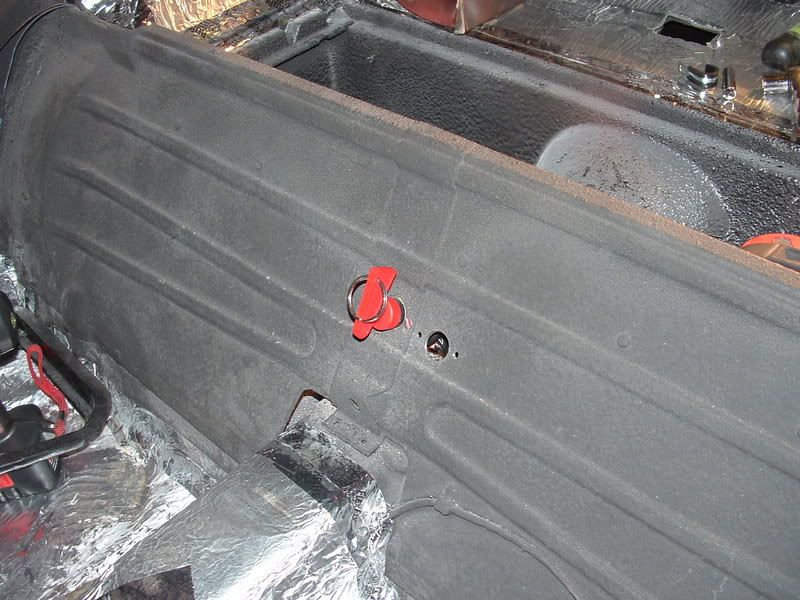
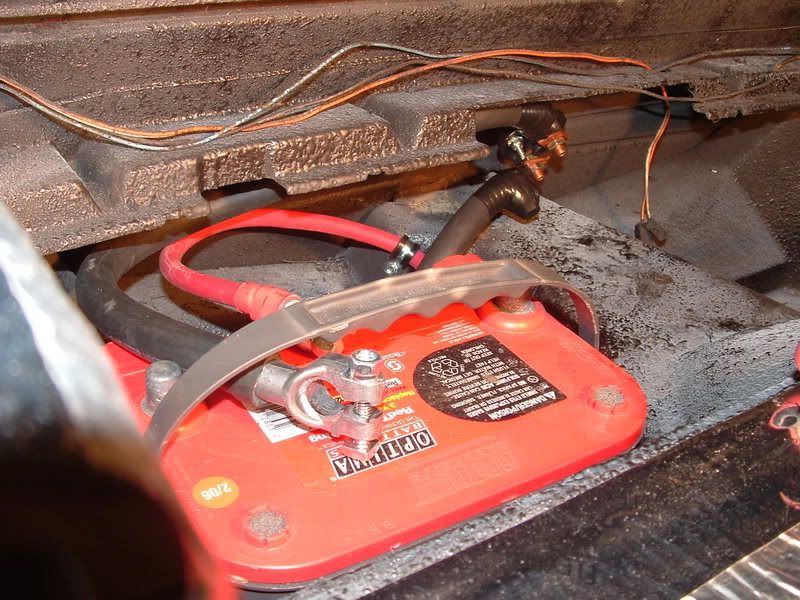

When I take the key out it disappears b/c of the carpet.
I have a cheapo cutoff switch where I can remove the switch key on the neg side.
My car never drained but I use it as an anti theft device as well.
I don't care about losing the memory stations in my radio as I rarely use it with the side exhaust. However you could put a small inline fuse to jump the switch to keep the radio station presets, if someone tried to start the car without the cutoff switch on it would blow the small fuse and car wouldn't start. It would probably take a while for the battery to drain via that small fuse. Over winter or long months just disconnect a battery post.
When I take the key out it disappears b/c of the carpet.
Last edited by 68 NJConv 454; Jul 21, 2009 at 11:35 PM.



Instructor
Joined: May 2006
Posts: 223
Likes: 1
From: Kennesaw GA
Disconnect switch
Unless the 'drain' is at the battery post, it doesn't matter which side you disconnect, the path is broken.
However you can quickly test that in fact you do have a drain by disconnecting the negative battery cable and putting a test light between the negative cable and the negative battery post. If the light comes on, you have some circuit active in the car drawing power (Of course make sure all lights are off, and the key is out of the car).
If the light is on, you can then start pulling fuses until it goes out, and determine which circuit the drain is in.
Shawn
However you can quickly test that in fact you do have a drain by disconnecting the negative battery cable and putting a test light between the negative cable and the negative battery post. If the light comes on, you have some circuit active in the car drawing power (Of course make sure all lights are off, and the key is out of the car).
If the light is on, you can then start pulling fuses until it goes out, and determine which circuit the drain is in.
Shawn

Le Mans Master

Joined: Aug 2003
Posts: 7,720
Likes: 12
From: Chattanooga TN
Unless the 'drain' is at the battery post, it doesn't matter which side you disconnect, the path is broken.
However you can quickly test that in fact you do have a drain by disconnecting the negative battery cable and putting a test light between the negative cable and the negative battery post. If the light comes on, you have some circuit active in the car drawing power (Of course make sure all lights are off, and the key is out of the car).
If the light is on, you can then start pulling fuses until it goes out, and determine which circuit the drain is in.
Shawn
However you can quickly test that in fact you do have a drain by disconnecting the negative battery cable and putting a test light between the negative cable and the negative battery post. If the light comes on, you have some circuit active in the car drawing power (Of course make sure all lights are off, and the key is out of the car).
If the light is on, you can then start pulling fuses until it goes out, and determine which circuit the drain is in.
Shawn
I switch the negative side on mine.

Instructor
Joined: Aug 2008
Posts: 110
Likes: 0
From: Baton Rouge Louisiana
I think, as most have said, that either side works. I have mine on the positive. The reason is that i have an aftermarket radio which is connected to the hot and I dont want to lose my presets. I have the Negative always connected, and the radio hooked up under the disconnect (if you can picture that). Then I use that autozone switch that you referanced to disconnect everything else (because the hot wire is above the radio wire). Also, you have to know that your radio is not the thing pulling your juice.
