


Need help: timing and distributor

Thread Starter
1st Gear

Joined: Oct 2009
Posts: 1
Likes: 0
From: Merrillville Indiana
 Need help: timing and distributor
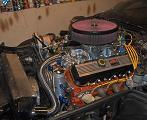
I'm having an issue with my rotor not being in the right location after setting my timing to 8 BTDC. With the #1 piston being at 8 BTDC, set by the timing mark on the harmonic balancer, of its compression stroke I set the distributor/rotor to the #1 cap tower. When I do this it makes sense that the points should be on a lobe to send the spark to the plug. But the points are setting on the flat, almost halfway between the lobes. Can not figure this one out. Any insight would be appreciated. I have a 74 with a 350/270hp with no emissions. It's an early 74.
Last edited by castcrew; Oct 20, 2009 at 08:47 PM. Reason: More info

Melting Slicks


Joined: Mar 2007
Posts: 2,520
Likes: 11
From: Hinckley OH
I haven't looked at a points ignition since around 1975 but I think the points are closed when they are setting on the flat and open when on the high point on the shaft. Now that I think about it, you set the gap with the points riding on the high point so I think your OK.

Burning Brakes

Joined: Aug 2005
Posts: 1,164
Likes: 1
From: Europe, France
The moment the spark occurs can be easily checked with a multimeter / ohmmeter.
Turn ignition off ( remove the key ), unplug the wire coming from the distributor ( going to the coil ) and check continuity between this wire and a good engine ground. ( You can remove the wire at the negative coil terminal ).
Then, rotate slowly the engine clockwise by using a socket wrench on the crankshaft centerbolt.
The spark occurs as soon as the ohmmeter indication changes from continuity to an infinite resistance.
It's easier if your multimeter is equipped with a buzzer for continuity tests.
The rotor should be in front of a cap tower at this time ( when the buzzer stops ) or only a few degrees off.
Turn ignition off ( remove the key ), unplug the wire coming from the distributor ( going to the coil ) and check continuity between this wire and a good engine ground. ( You can remove the wire at the negative coil terminal ).
Then, rotate slowly the engine clockwise by using a socket wrench on the crankshaft centerbolt.
The spark occurs as soon as the ohmmeter indication changes from continuity to an infinite resistance.
It's easier if your multimeter is equipped with a buzzer for continuity tests.
The rotor should be in front of a cap tower at this time ( when the buzzer stops ) or only a few degrees off.
Last edited by 73StreetRace; Oct 21, 2009 at 04:08 AM.

Team Owner


Joined: Jan 2006
Posts: 37,637
Likes: 3,118
From: Crossville TN
Yep. The plug fires the instant the points separate. TDC for any cylinder is when the piston is at the maximum UP position on the compression stroke; that would be about 180 degrees of engine rotation once the intake valve has closed on that cylinder. There are lots of ways to determine when you are at TDC, but the easiest way is to remove the spark plug for that cylinder, rotate the engine till the intake valve closes, then stick a plastic straw into the combustion chamber [through the spark plug hole]. Watch the straw as you rotate the engine further. As the piston goes up, the straw will move further downward. When it reaches the maximum point down, the piston will be near TDC...close enough to get the engine to fire, anyway.
If your distributor got moved from its proper orientation, you just need to note where the rotor is pointing at the moment and decide where it should be pointing; that will tell you how much the rotor needs to move (degrees of rotation and in what direction). Detach the distributor cap and necessary wires, and remove the distributor retainer & bolt. Lift the distributor straight up and note how much the rotor turns as you remove it [the gear at the bottom rides on the cam drive gear; since these are helical gears, it will turn the rotor as you lift it up]. Get a very long shanked straight blade screwdriver and stick it down the distributor shaft hole so that the blade engages the drive slot in the oil pump shaft. Turn that slot the same amount and the same direction that the rotor needs to move for the timing change. Now the oil pump shaft is set to receive the re-indexed distributor shaft. Put the rotor in the new timing position plus the amount of rotor rotation that occurred during removal, then orient the distributor as it should be and drop it in the engine. You may have to lift and turn the whole distributor slightly [either way] to find the drive slot. Once you do, check to see that the rotor is where you wanted it, button everything back up and fire it up. Leave the dist. retaining clamp/bolt a bit loose so that you can rotate the dist. easily to set timing. Also have the timing light already connected to save set-up time. If it fires up, just set timing where you need it. If it doesn't, just lift a bit and rotate the dist. CW a small amount, drop it back in and try it again. If no joy, just move it back and a 'smidge' CCW and crank it again. If you did your homework properly (on determining the correct rotor position for the dist.), it should fire easily.
If your distributor got moved from its proper orientation, you just need to note where the rotor is pointing at the moment and decide where it should be pointing; that will tell you how much the rotor needs to move (degrees of rotation and in what direction). Detach the distributor cap and necessary wires, and remove the distributor retainer & bolt. Lift the distributor straight up and note how much the rotor turns as you remove it [the gear at the bottom rides on the cam drive gear; since these are helical gears, it will turn the rotor as you lift it up]. Get a very long shanked straight blade screwdriver and stick it down the distributor shaft hole so that the blade engages the drive slot in the oil pump shaft. Turn that slot the same amount and the same direction that the rotor needs to move for the timing change. Now the oil pump shaft is set to receive the re-indexed distributor shaft. Put the rotor in the new timing position plus the amount of rotor rotation that occurred during removal, then orient the distributor as it should be and drop it in the engine. You may have to lift and turn the whole distributor slightly [either way] to find the drive slot. Once you do, check to see that the rotor is where you wanted it, button everything back up and fire it up. Leave the dist. retaining clamp/bolt a bit loose so that you can rotate the dist. easily to set timing. Also have the timing light already connected to save set-up time. If it fires up, just set timing where you need it. If it doesn't, just lift a bit and rotate the dist. CW a small amount, drop it back in and try it again. If no joy, just move it back and a 'smidge' CCW and crank it again. If you did your homework properly (on determining the correct rotor position for the dist.), it should fire easily.

Race Director


Joined: Nov 2002
Posts: 12,142
Likes: 54
From: Taylor Michigan
Set the initial lead
If your balancer is properly degree or marked so you can set it anywhere you want as far as initial lead such as 10 or 12 degrees or whatever and be correct.....rotate the engine and stop the balancer with the pointer to set your distributor say at 12 degrees lead...Place a piece of cellophane between the points contacts...slowly rotate the distributor while lightly pulling the cellophane from between the points contacts...When the tension in the points releases the cellophane your accurately at 12 initial lead. tighten the cap and crank iot up, no guess work involved...the same way if you used a buzzer or light to identify the points break....
Burning Brakes
Joined: Aug 2005
Posts: 1,164
Likes: 1
From: Europe, France
If your balancer is properly degree or marked so you can set it anywhere you want as far as initial lead such as 10 or 12 degrees or whatever and be correct.....rotate the engine and stop the balancer with the pointer to set your distributor say at 12 degrees lead...Place a piece of cellophane between the points contacts...slowly rotate the distributor while lightly pulling the cellophane from between the points contacts...When the tension in the points releases the cellophane your accurately at 12 initial lead. tighten the cap and crank iot up, no guess work involved...the same way if you used a buzzer or light to identify the points break....

Yes, a simple 12V light bulb with two wires long enough can do the trick if you don't have a multimeter.
But this time first wire of the light bulb on a +12V terminal, second wire on the distributor wire.
The instant the light disappears is when the spark normally occurs.

Corvette Stories
The Best of Corvette for Corvette Enthusiasts

Top 10 Most Expensive Corvettes Ever Sold on Bring A Trailer
Brett Foote
10 Things Every Corvette Owner Needs (2026 Edition)
Michael S. Palmer
8 Most "Only Corvette Owners Understand" Quirks and Problems
Pouria Savadkouei
10 Reasons the C6 Z06 is Still A Performance Benchmark After 20 Years
Joe Kucinski
How Much Horsepower Every Corvette Engine "LOST" in 1972
Joe Kucinski
Top 10 DOs and DON'Ts for Protecting Your Convertible Top!
Michael S. Palmer
Top 10 Most Explosive Corvettes Ever Made: Power-to-Weight Ratio Ranked!
Joe Kucinski
150 hp to 1,250 hp: Every Corvette Generation Compared by the Specs That Matter
Joe Kucinski