







VBP smart struts

Racer


Joined: Mar 2005
Posts: 294
Likes: 1
From: Racine Wisconsin

The following excellent pictures were posted by another forum member and explain smart struts well. The smart strut lowers the internal link location by 1.5 inches. This results in reduced negative camber: -1.85 deg versus -2.18 deg when the trailing arm moves upward by 2" as a result of a cornering load or bump. 
 Some road course folks express the desire for some negative camber.
Some road course folks express the desire for some negative camber.

Team Owner


Joined: Apr 1999
Posts: 21,953
Likes: 1,445
From: Reno Nevada
2024 C3 of the Year Finalist- Modified
Vette stock strut rods and ends are kind of cheesy!
I have had S.S. from VB&P for 20 years now. There is a small group of people that think that camber gain with vertical wheel travel is a good thing. Well if it is so good, why doesn't every modern race car incorporate it?
I use the poly ends
I have had S.S. from VB&P for 20 years now. There is a small group of people that think that camber gain with vertical wheel travel is a good thing. Well if it is so good, why doesn't every modern race car incorporate it?
I use the poly ends

Le Mans Master


Joined: Apr 2007
Posts: 7,353
Likes: 72
From: Graceland in a Not Correctly Restored Stingray
I agree that the amount of camber gain originally built in to the C3 is a bit too much for modern tires (the C2 was even worse), but to eliminate it altogether is IMHO throwing the baby out with the bath water, as doing so can result in having the outside rear tire lean into positive camber when the chassis rolls during hard cornering, depending on how much is the static camber. This is fundamental math inherent to suspension dynamics.
That said, it appears that the higher power output and/or wider the rear tires, the more sensitive will be a vehicle's setup to excessive camber gain. However, that's not to say avoiding camber gain should be a necessary goal of suspension tuning; rather it should be optimized to best suit the application at hand. IMCO, I'd urge caution against drawing too many conclusions from what seems to work for other vehicles (especially F1, where many compromises are made in the name of aerodynamics), and I'd add that drag racing is really the only place where one should consider camber gain verboten.
So, I stand behind my long held view that John Greenwood's advice to lower the inner camber strut links to 1/2" below the C3's OEM height as being sound for anyone not able to prove out a better setting for their own vehicle thru testing. With VB&P's Smart Strut bracket (available separately, #52000B IIRC), that's just about at the top of the "inclination" slot. But, given that there's no one setup that best works for every driver/car combo, by all means play with different settings if you wish. That's one of the great things about having easily adjustable camber curves. Just be wary that it's just as easy to go astray...

TSW
That said, it appears that the higher power output and/or wider the rear tires, the more sensitive will be a vehicle's setup to excessive camber gain. However, that's not to say avoiding camber gain should be a necessary goal of suspension tuning; rather it should be optimized to best suit the application at hand. IMCO, I'd urge caution against drawing too many conclusions from what seems to work for other vehicles (especially F1, where many compromises are made in the name of aerodynamics), and I'd add that drag racing is really the only place where one should consider camber gain verboten.
So, I stand behind my long held view that John Greenwood's advice to lower the inner camber strut links to 1/2" below the C3's OEM height as being sound for anyone not able to prove out a better setting for their own vehicle thru testing. With VB&P's Smart Strut bracket (available separately, #52000B IIRC), that's just about at the top of the "inclination" slot. But, given that there's no one setup that best works for every driver/car combo, by all means play with different settings if you wish. That's one of the great things about having easily adjustable camber curves. Just be wary that it's just as easy to go astray...
TSW
Last edited by TheSkunkWorks; Dec 27, 2009 at 05:38 PM.
Corvette Stories
The Best of Corvette for Corvette Enthusiasts

Top 10 Most Expensive Corvettes Ever Sold on Bring A Trailer
Brett Foote
10 Things Every Corvette Owner Needs (2026 Edition)
Michael S. Palmer
8 Most "Only Corvette Owners Understand" Quirks and Problems
Pouria Savadkouei
10 Reasons the C6 Z06 is Still A Performance Benchmark After 20 Years
Joe Kucinski
How Much Horsepower Every Corvette Engine "LOST" in 1972
Joe Kucinski
Top 10 DOs and DON'Ts for Protecting Your Convertible Top!
Michael S. Palmer
Top 10 Most Explosive Corvettes Ever Made: Power-to-Weight Ratio Ranked!
Joe Kucinski
150 hp to 1,250 hp: Every Corvette Generation Compared by the Specs That Matter
Joe Kucinski
8 Coolest Corvette Pace Cars (and Replicas) of All Time
Verdad Gallardo
Melting Slicks


Joined: Feb 2001
Posts: 3,330
Likes: 13
From: Europe , Luxembourg
The camber does stay more equal with the smart struts because the lowered center bracket of the strut rods makes the strut rod run more parallel with the drive shaft.
The original design, is it with the rigit strut rods or with adjustable strut rods, does change the camber when the wheel moves up & down.
If you have larger tires that hardly make it past the fender, you may want some camber change in order to make the tire pass the fender when the wheel moves all the way up.
If I install the smart strut system on my 68 with the 275 tires, the fender will be gone at the next bump.
Rgds. Günther

Safety Car


Joined: Nov 2005
Posts: 3,961
Likes: 573
From: Lompoc, CA. Santa Barbara County
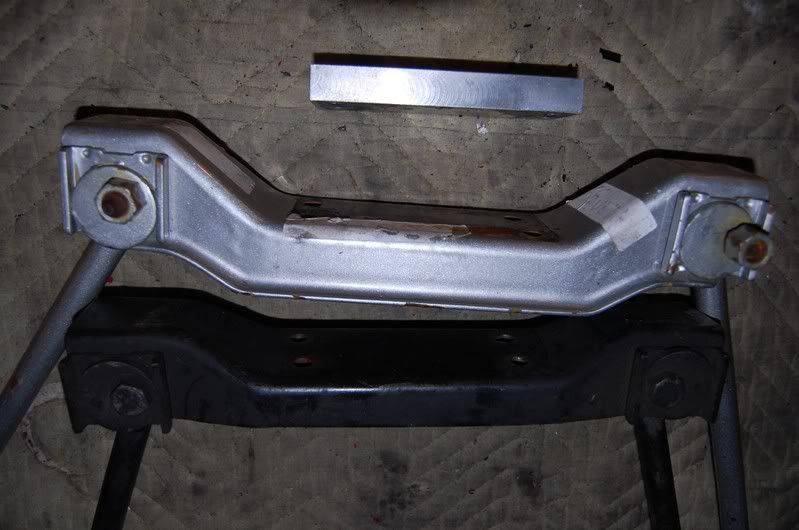
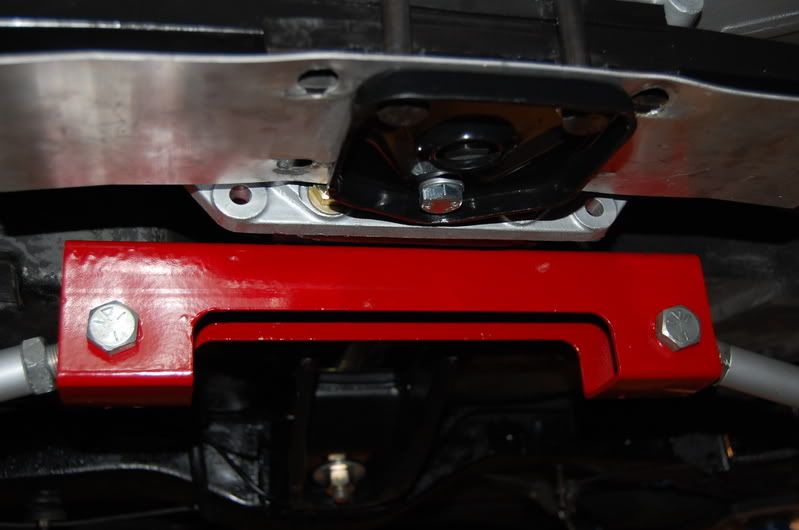
Even Chevy realized that the strut mount should be lower. The top bracket is early Vette, the lower bracket is my stock '79 Vette bracket. The second picture is the bracket I'm using now. Almost zero camber change thru the range of travel.
Bee Jay
Bee Jay
Last edited by Bee Jay; Dec 28, 2009 at 12:24 PM.

Race Director


Joined: Feb 1999
Posts: 19,659
Likes: 34
From: Lenoir City Tennessee
Ci 6, 8 & 10 Veteran
St. Jude Donor '05-'06-'07-'08-'09-'10-'11-'12-'13-'14-'15
I am in the process of installing Van Steel version of smart struts. The setup I have does move the inner mounting point down but it also allows it to be moved up and down using the eccentric. My question is should I put the eccentric at the bottom, lowering the inner mount or should it be put near the midpoint. The struts themselves are adjustable too to get the camber back to where I found it.
Le Mans Master
Joined: Apr 2007
Posts: 7,353
Likes: 72
From: Graceland in a Not Correctly Restored Stingray
Eddie, I spoke to that in my previous post.
...and FWIW, Bee Jay's shot of the two OEM brackets illustrates what I mentioned in my comment about the C2 having been worse than the C3...
...and FWIW, Bee Jay's shot of the two OEM brackets illustrates what I mentioned in my comment about the C2 having been worse than the C3...
Race Director
Joined: Feb 1999
Posts: 19,659
Likes: 34
From: Lenoir City Tennessee
Ci 6, 8 & 10 Veteran
St. Jude Donor '05-'06-'07-'08-'09-'10-'11-'12-'13-'14-'15
I shot the comparison shot of the two brackets when I got my stocker out this afternoon. There is quite a difference in the two. One thing I do like is the Van Steel version is quite a bit heavier construction than stock. It is flat like Bee Jays and does not curve up on the ends. I have the car on jack stands and will see what happens with the curve tomorrow on your suggestion. My original plan was, I just going to set the car at ride height and get the camber back to where I found it.
Team Owner
Joined: Apr 1999
Posts: 21,953
Likes: 1,445
From: Reno Nevada
2024 C3 of the Year Finalist- Modified
Eddie 70, Mine is near the bottom, but not all the way down. I have managed to get nearly even tire ware on the rear on my big slicks. Changes show up very fast on tires that ware out in a hour or two of track time.
Melting Slicks

Joined: Dec 1999
Posts: 2,116
Likes: 156
From: Mid West
Cruise-In III Veteran
I am in the process of installing Van Steel version of smart struts. The setup I have does move the inner mounting point down but it also allows it to be moved up and down using the eccentric. My question is should I put the eccentric at the bottom, lowering the inner mount or should it be put near the midpoint. The struts themselves are adjustable too to get the camber back to where I found it.
Le Mans Master
Joined: Apr 2007
Posts: 7,353
Likes: 72
From: Graceland in a Not Correctly Restored Stingray
You'll probably have to play with the camber setting to get it best for you. Gkull with his wide tires needs a very small camber gain to see even tire wear. On my car with only 235 wide 50 series tires, I am using VBP S.S. set at the very top to get the most camber gain. With this setting on fairly skinny tires, I have gotten very even tire wear and use all the tread of the rear tires during trips to the track (including the little bit of tread on the side wall). Also from what I have read and some discussions with suspension guys, it seams that the larger the rear tires & stiffer the tire sidewalls, the less camber gain you need.

Results can and will vary given the specific application in question.

As I mentioned earlier, the VB&P SS bracket's top most setting is ~1/2" below the OEM C3 height. Don't know about VS's bracket, but I'm sure it is just as easily measured. Here's the business end of the VB&P...
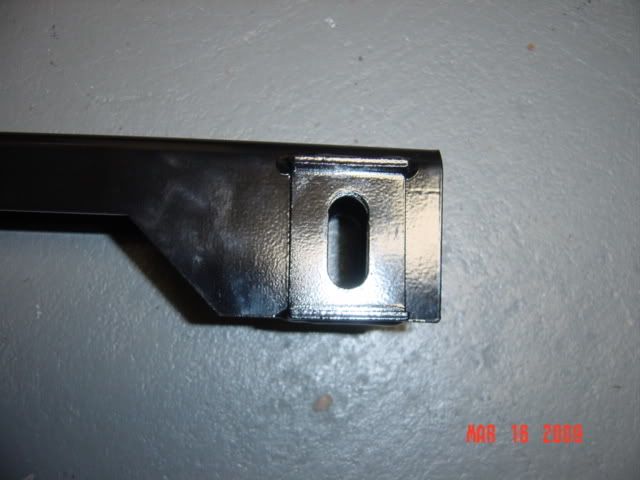
Either piece is sturdier than the OEM ones, but I'd check whether or not you need to bush down around the mounting bolt holes as illustrated...
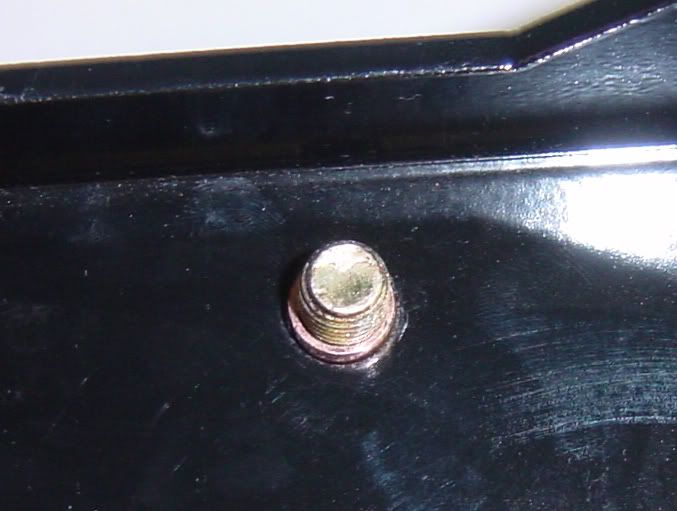

Advanced
Joined: Sep 2003
Posts: 66
Likes: 2
From: Indianapolis IN
smart struts
I recently went from sidepipes to undercar exhaust on my C2, and I had to remove my SS bracket because it made the exhaust pipe way to low. Don't know if that would affect you or not
Race Director
Joined: Feb 1999
Posts: 19,659
Likes: 34
From: Lenoir City Tennessee
Ci 6, 8 & 10 Veteran
St. Jude Donor '05-'06-'07-'08-'09-'10-'11-'12-'13-'14-'15
I have everything back together with the exception of the lower shock mount and the spring bolts. I can move the trailing arm from the bottom all the way to the bump stop by hand. I am using a digital angle finder and measuring off the hub.
On the drivers side
Full droop 89.8
Mid point 89.6
Bump Stop 88.8
On the passengers side
Full Droop 89.4
Mid Point 89.8
Bump Stop 88.8
I have yet to put the wheels on the car and compare to my as found measurements off the wheel at ride height.
Do these numbers sound good for a driver?
On the drivers side
Full droop 89.8
Mid point 89.6
Bump Stop 88.8
On the passengers side
Full Droop 89.4
Mid Point 89.8
Bump Stop 88.8
I have yet to put the wheels on the car and compare to my as found measurements off the wheel at ride height.
Do these numbers sound good for a driver?

Tech Contributor
Joined: Jun 2004
Posts: 20,905
Likes: 962
From: I tend to be leery of any guy who doesn't own a chainsaw or a handgun.
I have everything back together with the exception of the lower shock mount and the spring bolts. I can move the trailing arm from the bottom all the way to the bump stop by hand. I am using a digital angle finder and measuring off the hub.
On the drivers side
Full droop 89.8
Mid point 89.6
Bump Stop 88.8
On the passengers side
Full Droop 89.4
Mid Point 89.8
Bump Stop 88.8
I have yet to put the wheels on the car and compare to my as found measurements off the wheel at ride height.
Do these numbers sound good for a driver?
On the drivers side
Full droop 89.8
Mid point 89.6
Bump Stop 88.8
On the passengers side
Full Droop 89.4
Mid Point 89.8
Bump Stop 88.8
I have yet to put the wheels on the car and compare to my as found measurements off the wheel at ride height.
Do these numbers sound good for a driver?