




The Truth about HEI

Tech Contributor


Joined: Jun 2004
Posts: 20,905
Likes: 962
From: I tend to be leery of any guy who doesn't own a chainsaw or a handgun.

Mike, I think that the timing of the multisparks would not be a issue as far as retarded timing other than the possibility of multiple flame fronts in the combustion chamber. (1)
The multiple flame fronts from multiple sparks does create a NOx issue from what i have seen
As for the longer spark duration thought, i think that would be ok but the program to shorten it to a normal time frame at higher rpms would be a issue. (2)
I think that when the spark duration time is extended it will take more coil saturation time which would be a problem at higher rpms thus like MSD going to one spark per cylinder at higher rpms i think there would be a need to switch to a standard spark duration at higher rpms. (3)
I hope this explains better what i am thinking Henry @ olescarb
The multiple flame fronts from multiple sparks does create a NOx issue from what i have seen
As for the longer spark duration thought, i think that would be ok but the program to shorten it to a normal time frame at higher rpms would be a issue. (2)
I think that when the spark duration time is extended it will take more coil saturation time which would be a problem at higher rpms thus like MSD going to one spark per cylinder at higher rpms i think there would be a need to switch to a standard spark duration at higher rpms. (3)
I hope this explains better what i am thinking Henry @ olescarb
I don't know if I'm just having a mental block trying to look at things from a different perspective, or that I have some modest disagreements with some of the items. Here's my understanding of the items above.
(1) I'm not comfortable with any retarded timing. If the ignition isn't dependable enough to light off the mixture the first time, I don't know that I would be confident in it managing to light it off the second or third time. If it does make it the second (or third) time, the timing is late, torque is lost, and the exhaust valves are going to take a thermal hit each time.
(2) I'm still not following you. The spark duration is dependent on the coil and storage capacitor hardware parameters. It's not something that can be easily software controlled.
(3) Again, the spark duration is fixed (assuming there isn't a variable dwell/energy content versus RPM program in the controller). Generally the only variable is how many times you choose to recharge and fire the system each cylinder event.
Like I said, perhaps I'm just interpreting things a little differently than intended.
Help me out!

Thanks,
Mike

Melting Slicks


Joined: Sep 2004
Posts: 2,412
Likes: 3
Henry,
I don't know if I'm just having a mental block trying to look at things from a different perspective, or that I have some modest disagreements with some of the items. Here's my understanding of the items above.
(1) I'm not comfortable with any retarded timing. If the ignition isn't dependable enough to light off the mixture the first time, I don't know that I would be confident in it managing to light it off the second or third time. If it does make it the second (or third) time, the timing is late, torque is lost, and the exhaust valves are going to take a thermal hit each time.
(2) I'm still not following you. The spark duration is dependent on the coil and storage capacitor hardware parameters. It's not something that can be easily software controlled.
(3) Again, the spark duration is fixed (assuming there isn't a variable dwell/energy content versus RPM program in the controller). Generally the only variable is how many times you choose to recharge and fire the system each cylinder event.
Like I said, perhaps I'm just interpreting things a little differently than intended.
Help me out!
Thanks,
Mike
I don't know if I'm just having a mental block trying to look at things from a different perspective, or that I have some modest disagreements with some of the items. Here's my understanding of the items above.
(1) I'm not comfortable with any retarded timing. If the ignition isn't dependable enough to light off the mixture the first time, I don't know that I would be confident in it managing to light it off the second or third time. If it does make it the second (or third) time, the timing is late, torque is lost, and the exhaust valves are going to take a thermal hit each time.
(2) I'm still not following you. The spark duration is dependent on the coil and storage capacitor hardware parameters. It's not something that can be easily software controlled.
(3) Again, the spark duration is fixed (assuming there isn't a variable dwell/energy content versus RPM program in the controller). Generally the only variable is how many times you choose to recharge and fire the system each cylinder event.
Like I said, perhaps I'm just interpreting things a little differently than intended.
Help me out!
Thanks,
Mike

Team Owner


Joined: Jul 1999
Posts: 65,492
Likes: 230
From: Orange Park Florida
same engine, same cam, just the idle/fule ratio change....


Melting Slicks
Joined: Jul 2009
Posts: 2,091
Likes: 40
Early HEI
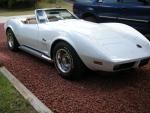
I own a 1974 1/2 Z28 Camaro that was one of the first GM cars HEI was factory installed. The engine is stock and is basically a 350ci L-82 Corvette engine. It stillretains its HEI dist. part number # 1112528 . One of GM's first issues. I still run this engine on occassion to 5000 -5500 range , never skips a beat I can tell. It probally will do a few RPM more I feel confident even at its elderly age..
In the 70's I use to hear the comments about HEI was no good. People would take perfectly good HEI's off brand new cars and toss them ...
Honestly .... I think people simply REJECTED something NEW they didn't understand. I never had a problem , even with this early version. For street stock and light hop-up , never an issue.
I think car mags , advertisers , ect over played the importance of a high dollar system to the average fellow. If your not running competition , I found this GM HEI to be very reliable.
I personally like it better than my 74 vettes points dist sys.
In the 70's I use to hear the comments about HEI was no good. People would take perfectly good HEI's off brand new cars and toss them ...
Honestly .... I think people simply REJECTED something NEW they didn't understand. I never had a problem , even with this early version. For street stock and light hop-up , never an issue.
I think car mags , advertisers , ect over played the importance of a high dollar system to the average fellow. If your not running competition , I found this GM HEI to be very reliable.
I personally like it better than my 74 vettes points dist sys.
Last edited by LS4 PILOT; May 1, 2010 at 12:04 PM.

Racer


Joined: Apr 2006
Posts: 477
Likes: 43
From: Millbrae California
Mike as per #1) "I'm not comfortable with any retarded timing. If the ignition isn't dependable enough to light off the mixture the first time, I don't know that I would be confident in it managing to light it off the second or third time. If it does make it the second (or third) time, the timing is late, torque is lost, and the exhaust valves are going to take a thermal hit each time."
In my opinion since many hot cammed engines do not have a air/fuel mixture that is fully atomized, i think the multi spark is a good bandaid to help fire the a/f mixture. We can see the missfire rate (the HC level in the exhaust read with a exhaust gas analyzer) go down with a multispark system on many of the hot cammed engines our customers have. Ford and GM tried the multispark idea in-order to lower the unburnt hydrocarbons (HC) in the exhaust but it raised the NOx so....
I have no dog in the MSD vs HEI fight but I do recommend the MSD pro billet when price is not a problem, We do not sell any new distributors since we can not match the prices Jegs and Summit offer, therefore we do not make any money if a customer buys any new dist.
I wish that someone would make a advance curve kit that would allow us to easily recurve a HEI like you can a MSD unit but.... The selection of weights, center advance plate and springs that are avalible is almost non existent and it is not all that easy to get a advance curve that will allow a initial timing of 16 to 18 degrees for a hot cammed engine that does not have any advance at idle but is all in at 2800-3200 rpm.
On the longer spark duration i thought you were talking about extending a conventional ignition spark duration not a cd system so we were not talking about the same subject.
To me the best thing about MSD distributors (other than the streetfire units) is how easy it is to recurve the mechanical advance because it comes with a good assortment of advance bushing and springs but the multispark makes it harder to do any diagnosis on. So when a customer is asking i recommend a ready to run distributor for most applications or if they want a HEI style dist either a MSD probillet HEI or a original GM HEI.
Henry @ oles
In my opinion since many hot cammed engines do not have a air/fuel mixture that is fully atomized, i think the multi spark is a good bandaid to help fire the a/f mixture. We can see the missfire rate (the HC level in the exhaust read with a exhaust gas analyzer) go down with a multispark system on many of the hot cammed engines our customers have. Ford and GM tried the multispark idea in-order to lower the unburnt hydrocarbons (HC) in the exhaust but it raised the NOx so....
I have no dog in the MSD vs HEI fight but I do recommend the MSD pro billet when price is not a problem, We do not sell any new distributors since we can not match the prices Jegs and Summit offer, therefore we do not make any money if a customer buys any new dist.
I wish that someone would make a advance curve kit that would allow us to easily recurve a HEI like you can a MSD unit but.... The selection of weights, center advance plate and springs that are avalible is almost non existent and it is not all that easy to get a advance curve that will allow a initial timing of 16 to 18 degrees for a hot cammed engine that does not have any advance at idle but is all in at 2800-3200 rpm.
On the longer spark duration i thought you were talking about extending a conventional ignition spark duration not a cd system so we were not talking about the same subject.
To me the best thing about MSD distributors (other than the streetfire units) is how easy it is to recurve the mechanical advance because it comes with a good assortment of advance bushing and springs but the multispark makes it harder to do any diagnosis on. So when a customer is asking i recommend a ready to run distributor for most applications or if they want a HEI style dist either a MSD probillet HEI or a original GM HEI.
Henry @ oles
Tech Contributor
Joined: Jun 2004
Posts: 20,905
Likes: 962
From: I tend to be leery of any guy who doesn't own a chainsaw or a handgun.
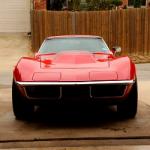
IMO, only if you running a rich idle mix, due to bad carb setup....when I had that Qj on the '70 Lemans/GTO 455, that MSD unit did help the idle, and way lo rpm running, but after putting that DPFI system on it, even with that old 425 Caddy analogue computer, the need for the MSD was eliminated, so off the MSD system .....
same engine, same cam, just the idle/fule ratio change....
same engine, same cam, just the idle/fule ratio change....
Race Director


Joined: Sep 1999
Posts: 11,361
Likes: 383
From: Plano TX
Corvette Stories
The Best of Corvette for Corvette Enthusiasts

Top 10 Most Expensive Corvettes Ever Sold on Bring A Trailer
Brett Foote
10 Things Every Corvette Owner Needs (2026 Edition)
Michael S. Palmer
8 Most "Only Corvette Owners Understand" Quirks and Problems
Pouria Savadkouei
10 Reasons the C6 Z06 is Still A Performance Benchmark After 20 Years
Joe Kucinski
How Much Horsepower Every Corvette Engine "LOST" in 1972
Joe Kucinski
Top 10 DOs and DON'Ts for Protecting Your Convertible Top!
Michael S. Palmer
Top 10 Most Explosive Corvettes Ever Made: Power-to-Weight Ratio Ranked!
Joe Kucinski
150 hp to 1,250 hp: Every Corvette Generation Compared by the Specs That Matter
Joe Kucinski
8 Coolest Corvette Pace Cars (and Replicas) of All Time
Verdad Gallardo
Racer

Joined: Mar 2006
Posts: 264
Likes: 1
From: west central INDIANA
I worked as an auto mechinic in the late 70s thru the late 80s. I have replaced alot of rotors in these units. They say as the secondary wires break down, the coil bites thru the rotor to seek ground in the dist. shaft. Once this hole was pierced, the rotor is junk. And on an occasion the module would fry also. GM later replaced that rotor (Black), with a better one of a different color(white I think). I have replaced some (Pontiacs mostly) pick-up coils from the wires being flexed so much, from vacume advance units, the wires simply break or are only held by a few strands. This is one of the best OEM distributors ever designed.
1112528, c3, conversion, corvette, distributor, hei, high, north, pacific, performance, poor, reluctance, rpm, variable, west
