



 Stupid question, but your spline is all the way in to the center pin?





Is my diff housing shot? (pics)

Thread Starter
Advanced


Joined: Aug 2008
Posts: 74
Likes: 0
 Is my diff housing shot? (pics)
I am in the middle of a diff restoration, because my side yokes was bad. The circlips was far gone, and the side yokes could been moved in and out.
When installing the bearings and seal for the side yokes, it seems like the housing has been grinded. The seal just go half way inside the housing, and on the other side it's going 2/3 inside.
Is this going to be a problem, or will the new side yoke hold the seal in place?
I try to push in the old side yoke, as you can see on the picture. Does this seem right? Or should they be further inside?
Thanks.


When installing the bearings and seal for the side yokes, it seems like the housing has been grinded. The seal just go half way inside the housing, and on the other side it's going 2/3 inside.
Is this going to be a problem, or will the new side yoke hold the seal in place?
I try to push in the old side yoke, as you can see on the picture. Does this seem right? Or should they be further inside?
Thanks.
Last edited by kiretunk; May 3, 2010 at 03:52 PM.

Racer

Joined: Oct 2006
Posts: 412
Likes: 1
From: St. John's Newfoundland
It doesn't look quite right to me. I was just looking at some old pics of when I did mine a few years ago and it almost looks like there is a little lip that extends from the housing thatconceals the seal. Now the only pics I have arte after it was painted so the little lip may be the painted seal. The dust cover on your side yoke should almost cover your seal. If some disagrees with me please chime in.

C
C

Pro


Joined: Jan 2010
Posts: 533
Likes: 18
From: Boca Raton Florida
It doesn't look quite right to me. I was just looking at some old pics of when I did mine a few years ago and it almost looks like there is a little lip that extends from the housing thatconceals the seal. Now the only pics I have arte after it was painted so the little lip may be the painted seal. The dust cover on your side yoke should almost cover your seal. If some disagrees with me please chime in.
C
C

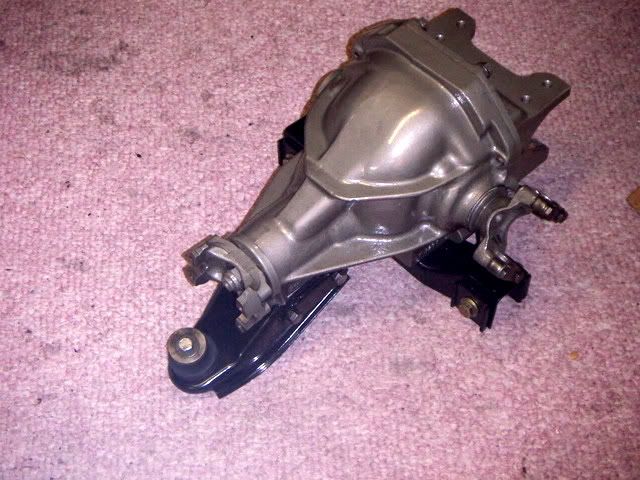
I had mine apart to replace the fluid and while I had it out, replaced the axle yoke bearings and seals. Put some paint on as well.
I don't see anything that should get in the way of the seal. As I recall, the bearing was a light press fit in the slightly smaller diameter part of the hole. The seal seated against the shoulder close to the needle bearing.
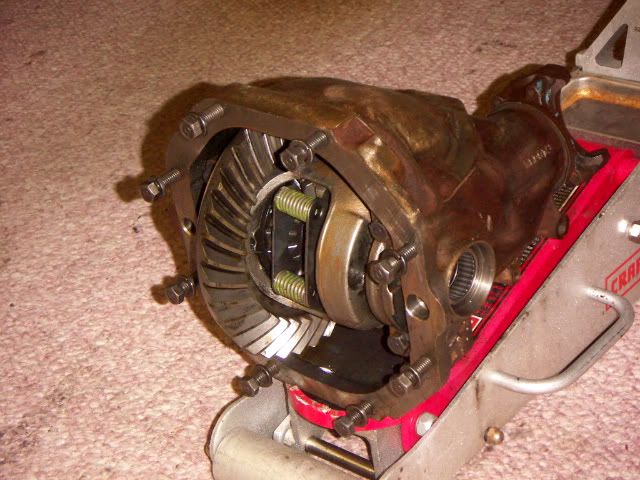
Once I put it back together and re-installed the clips, the flange on the axle stub covered the seal and was quite close.
Thread Starter
Advanced
Joined: Aug 2008
Posts: 74
Likes: 0

Thread Starter
Advanced
Joined: Aug 2008
Posts: 74
Likes: 0
Thank you for the picture.
The "edge" between the yoke and house.... Is this the seal you think, or is that edge a part of the housing? If this is the seal, then it look pretty much like mine (but mine gap is bigger)
Corvette Stories
The Best of Corvette for Corvette Enthusiasts

Top 10 Most Expensive Corvettes Ever Sold on Bring A Trailer
Brett Foote
10 Things Every Corvette Owner Needs (2026 Edition)
Michael S. Palmer
8 Most "Only Corvette Owners Understand" Quirks and Problems
Pouria Savadkouei
10 Reasons the C6 Z06 is Still A Performance Benchmark After 20 Years
Joe Kucinski
How Much Horsepower Every Corvette Engine "LOST" in 1972
Joe Kucinski
Top 10 DOs and DON'Ts for Protecting Your Convertible Top!
Michael S. Palmer
Top 10 Most Explosive Corvettes Ever Made: Power-to-Weight Ratio Ranked!
Joe Kucinski
150 hp to 1,250 hp: Every Corvette Generation Compared by the Specs That Matter
Joe Kucinski
8 Coolest Corvette Pace Cars (and Replicas) of All Time
Verdad Gallardo
Melting Slicks

Joined: Jun 2009
Posts: 2,343
Likes: 4
From: Anderson SC
Given the amount that housing is ground down - I'd channel your "Inner Bubba" and put a good bead of 2-part epoxy around those seals to make sure they stay put. Iether to use it forever - or until you find another pumpkin.
Nothing "load bearing" on that housing is harmed at all - but it's still a "technical total".
That said, so long as the seals stay put it's a technical total that'll last indefinately. So if you plan to use it (for whatever reason) you've gotta make sure those seals stay in there. Having just changed my seals, it looks to me like you have about 2/3 of the seal inside the housing and about 1/3 exposed. Not too bad, but I'd want some epoxy insurance to keep them there. Clean it well first.
-W
Nothing "load bearing" on that housing is harmed at all - but it's still a "technical total".
That said, so long as the seals stay put it's a technical total that'll last indefinately. So if you plan to use it (for whatever reason) you've gotta make sure those seals stay in there. Having just changed my seals, it looks to me like you have about 2/3 of the seal inside the housing and about 1/3 exposed. Not too bad, but I'd want some epoxy insurance to keep them there. Clean it well first.
-W
Last edited by Clams Canino; May 4, 2010 at 11:33 PM.

Race Director


Joined: Sep 1999
Posts: 11,361
Likes: 383
From: Plano TX
The housing really should be junked. Maybe you can make it seal but it's not right. Like stated above, once the stub axles had worn down the flange started grinding away on the housing. If it's a car you want to keep for a while it's worth finding a better housing.

Drifting

Joined: Aug 2005
Posts: 1,430
Likes: 8
From: Hamilton NJ
It's hard to tell from the photos in the original post but when I had an excessively worn yoke that caused damage to the case on my 79 it impacted the sealing flange for the rear cover as well...the OP's looks OK so the wear damage would have been isolated just to the yoke seal surface which seems unlikely. Again, no expert but if that case is damaged it was almost surgical.
To the OP, personally I would question the bearings and the seals you have purchased. Is the bearing fully seated? Did you need to clean up the area around where the seal inserts?
Best of luck, Steve
Melting Slicks
Joined: Jun 2009
Posts: 2,343
Likes: 4
From: Anderson SC
I just did mine myself.
If you're not careful, the bearing can be inserted too far in. Unlike the seal there is no lip in there to catch them on the inside. The seals DO seat against a lip in there, and stop.
I'm also unsure I agree the housing needs to be junked. It's easy to spend the wallet of another in the quest for "proper perfection". But so long as the bearings are installed correctly and the seals are secured in place - then the housing is not "broken".
-W
If you're not careful, the bearing can be inserted too far in. Unlike the seal there is no lip in there to catch them on the inside. The seals DO seat against a lip in there, and stop.
I'm also unsure I agree the housing needs to be junked. It's easy to spend the wallet of another in the quest for "proper perfection". But so long as the bearings are installed correctly and the seals are secured in place - then the housing is not "broken".
-W
Burning Brakes

Joined: Jan 2007
Posts: 1,057
Likes: 4
From: Concord Calif
I really drought that housing is bad judging from the pictures. If it was ground down as some say then the dust cover on the axle stub would be destroyed also as that’s what would've been touching the housing. By the pictures you have it does look as if you do not have the axles all the way in. Check and be sure you have them all the way in, note usually those seals ride on that lip you show in one picture and not on the bearing surface, does your seals slide on tight on that bearing seal or just slide right over with no drag? If the seal was designed to be on the bearing surface it would be destroyed putting it on over the spline and such. Check it all out a bit closer. Good luck.
Thread Starter
Advanced
Joined: Aug 2008
Posts: 74
Likes: 0
Thanks for all the replies.
I took some more pictures today, that maybe shows what have happen.
There clearly is some grinding around the seals, but I still had to hammer them in, so I hope it wouldn't be any problems leaving it this way.
When I installed the new bearing, I drove them in so they flush with the inner edge of the housing (see middle pic). I don't know if that was correct, or if they should flush with the outer edge right behind the seals. I didn't think it would matter anyway, so I decide to go for the inner edge...
New yokes are on the way from Zip, it will be funny to measure the endplay of the yokes when I am finish.


I took some more pictures today, that maybe shows what have happen.
There clearly is some grinding around the seals, but I still had to hammer them in, so I hope it wouldn't be any problems leaving it this way.
When I installed the new bearing, I drove them in so they flush with the inner edge of the housing (see middle pic). I don't know if that was correct, or if they should flush with the outer edge right behind the seals. I didn't think it would matter anyway, so I decide to go for the inner edge...
New yokes are on the way from Zip, it will be funny to measure the endplay of the yokes when I am finish.
Last edited by kiretunk; May 5, 2010 at 02:50 PM.
Melting Slicks
Joined: Jun 2009
Posts: 2,343
Likes: 4
From: Anderson SC
Even if it means buying 2 more seals - get those 2 out and make sure you drive the bearings in just so far that they are NOT acting as a "stop" for the seals.
Your case looks a lot better in the new pix and I suspect your seals are hitting the bearings. What I'd like to see, is a pic with a seal removed - to see where the seal-stop in the case is, relative to the outside.
-W
Your case looks a lot better in the new pix and I suspect your seals are hitting the bearings. What I'd like to see, is a pic with a seal removed - to see where the seal-stop in the case is, relative to the outside.
-W
Thread Starter
Advanced
Joined: Aug 2008
Posts: 74
Likes: 0
Even if it means buying 2 more seals - get those 2 out and make sure you drive the bearings in just so far that they are NOT acting as a "stop" for the seals.
Your case looks a lot better in the new pix and I suspect your seals are hitting the bearings. What I'd like to see, is a pic with a seal removed - to see where the seal-stop in the case is, relative to the outside.
-W
Your case looks a lot better in the new pix and I suspect your seals are hitting the bearings. What I'd like to see, is a pic with a seal removed - to see where the seal-stop in the case is, relative to the outside.
-W
I went outside the garage, and removed one of the seals. As you can see, the bearing is so far inside it's house, that the seal is not hitting the bearing. But it means that the bearing is flush with the inner edge of the housing.

Melting Slicks
Joined: Jun 2009
Posts: 2,343
Likes: 4
From: Anderson SC
Yes... Now I see.
That's the pic we really needed all along.
There is indeed some wear on the housing, a good amount of wear.
I can see where the seal seating area is "diminished".
I stand behind what I first said - if you want to use that housing, then use 2-part epoxy to make sure the seals are sealed in there for life.
-W
That's the pic we really needed all along.
There is indeed some wear on the housing, a good amount of wear.
I can see where the seal seating area is "diminished".
I stand behind what I first said - if you want to use that housing, then use 2-part epoxy to make sure the seals are sealed in there for life.
-W
Last edited by Clams Canino; May 5, 2010 at 04:07 PM.
Thread Starter
Advanced
Joined: Aug 2008
Posts: 74
Likes: 0
Yes... Now I see. that's the pic we really needed all along.
There is indeed some wear on the housing, a good amount of wear.
I can see where the seal seating area is "diminished".
I stand behind what I first said - if you want to use that housing, then use 2-part epoxy to make sure the seals are sealed in there for life.
-W
There is indeed some wear on the housing, a good amount of wear.
I can see where the seal seating area is "diminished".
I stand behind what I first said - if you want to use that housing, then use 2-part epoxy to make sure the seals are sealed in there for life.
-W
I am in the middle of a body-off resto, I don't feel I need one more thing to buy (that I was not aware of before I started)...
My experience in the building so far: There is seldom (never) things are better than I think they are....

Thread Starter
Advanced
Joined: Aug 2008
Posts: 74
Likes: 0
I didn't order that one or the circlip. Thought it was "what you see is what you got"....
(see link)
http://www.zip-corvette.com/ProductD...GR-SR&CTitle=&
Last edited by kiretunk; May 5, 2010 at 04:32 PM.