




78 Pace Vette Brake Problem
Thread Starter
Advanced

Joined: Mar 2011
Posts: 53
Likes: 0
From: Austin TX
 78 Pace Vette Brake Problem
Hello Yall,
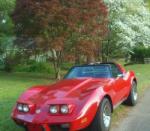
I have a 1978 Pace Car, 25th Anniversary, Limited Edition Corvette with a frustrating brake problem: The pedal goes all the way to the floor and the brake light comes on. Here is what I've done so far:
1-Bled the brakes (has Power brakes all around)
2-Change the Master Brake Cylinder (twice in the last 3 weeks)
3-Changed the Power Brake Booster last week
4-Changed the front pads...though they did not need to be changed
No brake fluid is leaking on the ground. I used a vacuum pump to bleed the brakes this past Sunday and I did notice the passenger side front caliber was not pushing as much fluid as the driver side. I also noticed it did have a lot of air bubbles...no fluid is leaking on the ground
I appreciate your help in advance.
Ollie North
I have a 1978 Pace Car, 25th Anniversary, Limited Edition Corvette with a frustrating brake problem: The pedal goes all the way to the floor and the brake light comes on. Here is what I've done so far:
1-Bled the brakes (has Power brakes all around)
2-Change the Master Brake Cylinder (twice in the last 3 weeks)
3-Changed the Power Brake Booster last week
4-Changed the front pads...though they did not need to be changed
No brake fluid is leaking on the ground. I used a vacuum pump to bleed the brakes this past Sunday and I did notice the passenger side front caliber was not pushing as much fluid as the driver side. I also noticed it did have a lot of air bubbles...no fluid is leaking on the ground
I appreciate your help in advance.
Ollie North
Last edited by 25Anni; Mar 25, 2011 at 07:31 PM.

Safety Car


Joined: Jun 2004
Posts: 4,652
Likes: 80
From: Lakeland Florida
Your explanation sounds like their is still air in the left front caliper. You wrote that it did have air bubbles in it..again. That means you have done this before and found the same caliper had a lot of air.
Have you driven the car since you replaced the master cylinder and brake booster, or is it still on jacks. The reason I ask is that a rotor out of round tolerance will create air in the calipers. I dont have the technical jargon of what happens, but information from the forum will tell you that this will cause air bubbles to enter the caliper, and create the problem you are describing.
kdf
Have you driven the car since you replaced the master cylinder and brake booster, or is it still on jacks. The reason I ask is that a rotor out of round tolerance will create air in the calipers. I dont have the technical jargon of what happens, but information from the forum will tell you that this will cause air bubbles to enter the caliper, and create the problem you are describing.
kdf
Thread Starter
Advanced
Joined: Mar 2011
Posts: 53
Likes: 0
From: Austin TX
I tried driving it after I finished, but as it started rolling out of the garage I quickly realized it was not going to stop, so I parked it. I bought this Vette back in 1998 and it always had a soft pedal, however it has gotten much worse over the last couple of months...now I can't drive it at all. By "again" I meant...keeping in mind. So do I need to replace the Caliber, or should I rebuild it?
Thanks so much for your reply.
Ollie
Thanks so much for your reply.
Ollie
Safety Car
Joined: Jun 2004
Posts: 4,652
Likes: 80
From: Lakeland Florida
Here is a photo of my caliper from my 72 that suffered from a long term brake neglect. It would be easier to replace the entire caliper from a parts store. But I would suggest going the full replacement route with one of our vendors. I know VBP is having a March Madness sale with 20% off now. That is a great deal. If you have time and patience like me, and want to learn more about your brakes, it is possible to rebuild them yourself. There are other more knowledgeable experts on the forum that can also give you good brake advice to your question.
here is my front brake caliper that I am rebuilding this month.
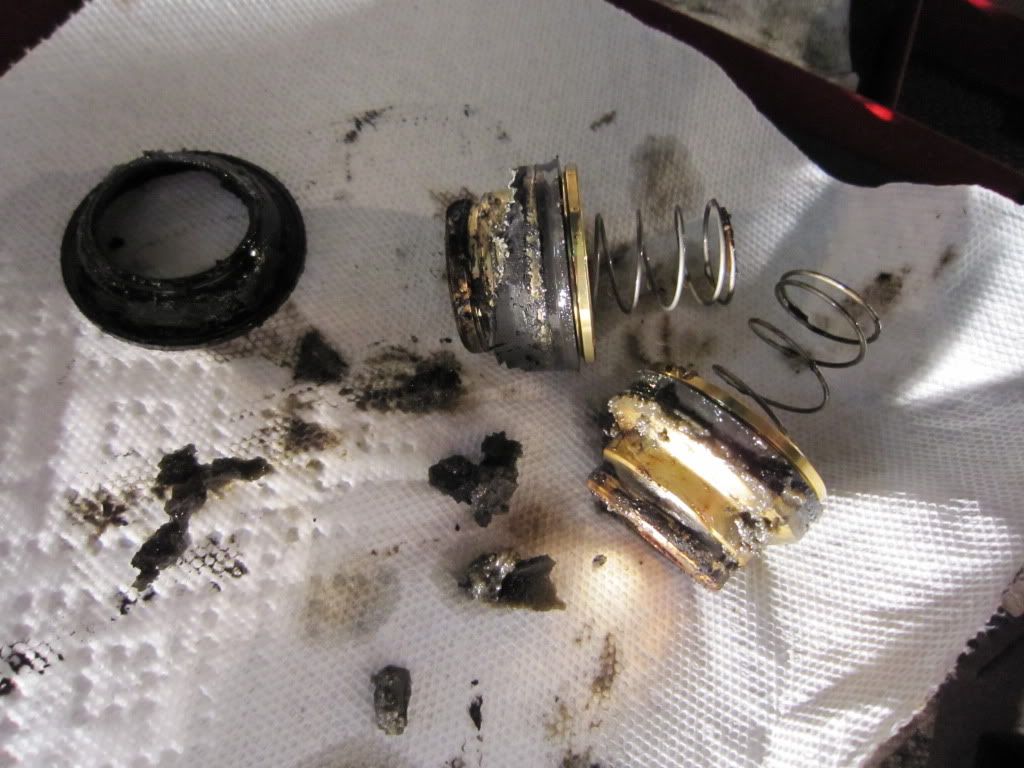
here is my front brake caliper that I am rebuilding this month.
Le Mans Master


Joined: Sep 2002
Posts: 5,236
Likes: 898
From: Myrtle Beach SC
Hello Yall,
I have a 1978 Pace Car, 25th Anniversary, Limited Edition Corvette with a frustrating brake problem: The pedal goes all the way to the floor and the brake light comes on. Here is what I've done so far:
1-Bled the brakes (has Power brakes all around)
2-Change the Master Brake Cylinder (twice in the last 3 weeks)
3-Changed the Power Brake Booster last week
4-Changed the front pads...though they did not need to be changed
I have a 1978 Pace Car, 25th Anniversary, Limited Edition Corvette with a frustrating brake problem: The pedal goes all the way to the floor and the brake light comes on. Here is what I've done so far:
1-Bled the brakes (has Power brakes all around)
2-Change the Master Brake Cylinder (twice in the last 3 weeks)
3-Changed the Power Brake Booster last week
4-Changed the front pads...though they did not need to be changed
Did you bench bleed the master cylinder? Are the calipers original to the car?
As I understand it, with that amount of changeouts, and if bleeding is too aggressive, it agiates brake fluid and requires several cycles of bleeding. But I think you're on the right track...go back through and ensure everything is mechanically sound. It sounds like you've come to the conclusion as well to rebuild/replace calipers. You're smart to avoid the street until your confident those brakes will hold.
I gravity bleed my brakes but than I've converted to silicone that doesn't like aggressive bleeding. Have had good results.
PS, And what did you do with the original master cylinder?
I got my 78 back in 93 and within a couple years changed out only the calipers. At the time, silicone fluid replace DOT 3 fluid. Never did get it solid, and as I travled, the pedal got and stayed mushy. A few years later I had to deal with a M/C rebuild and than had to replace seals in the calipers...replaced with the O ring style seals. To this day, I've had a rock hard pedal...always amazes me that the silicone holds up that well.
Last edited by hunt4cleanair; Mar 24, 2011 at 04:56 AM.
Melting Slicks


Joined: Jul 2005
Posts: 2,740
Likes: 3
From: Aurora Ontario
Just curious but do you know if the distribution valve is working? It may be jammed, common problem. If it is you will never bleed the brakes right.
Looks like this http://www.ecklers.com/corvette-brak...1978-1982.html
If you pumped the pedal dry or with low fluid it will have jammed.
Jim
Looks like this http://www.ecklers.com/corvette-brak...1978-1982.html
If you pumped the pedal dry or with low fluid it will have jammed.
Jim
Last edited by jdp6000; Mar 24, 2011 at 08:44 AM.
Instructor
Joined: Dec 2010
Posts: 106
Likes: 0
Just curious but do you know if the distribution valve is working? It may be jammed, common problem. If it is you will never bleed the brakes right.
Looks like this http://www.ecklers.com/corvette-brak...1978-1982.html
If you pumped the pedal dry or with low fluid it will have jammed.
Jim
Looks like this http://www.ecklers.com/corvette-brak...1978-1982.html
If you pumped the pedal dry or with low fluid it will have jammed.
Jim
Corvette Stories
The Best of Corvette for Corvette Enthusiasts

Top 10 Most Expensive Corvettes Ever Sold on Bring A Trailer
Brett Foote
10 Things Every Corvette Owner Needs (2026 Edition)
Michael S. Palmer
8 Most "Only Corvette Owners Understand" Quirks and Problems
Pouria Savadkouei
10 Reasons the C6 Z06 is Still A Performance Benchmark After 20 Years
Joe Kucinski
How Much Horsepower Every Corvette Engine "LOST" in 1972
Joe Kucinski
Top 10 DOs and DON'Ts for Protecting Your Convertible Top!
Michael S. Palmer
Top 10 Most Explosive Corvettes Ever Made: Power-to-Weight Ratio Ranked!
Joe Kucinski
150 hp to 1,250 hp: Every Corvette Generation Compared by the Specs That Matter
Joe Kucinski
8 Coolest Corvette Pace Cars (and Replicas) of All Time
Verdad Gallardo
Le Mans Master
Joined: Jun 2007
Posts: 7,666
Likes: 1
From: Where it's always hot as Hell-South Louisiana.
St. Jude Donor '07-'08-'09-'10-'11-'12-'13
Do yourself a favor. Take a pen and paper, read this and take notes. Takes <30 minutes. Then proceed. 
http://forums.corvetteforum.com/c3-t...fo-please.html
http://forums.corvetteforum.com/c3-t...fo-please.html
Melting Slicks
Joined: Jul 2005
Posts: 2,740
Likes: 3
From: Aurora Ontario
I have never had one apart. The principal is basic. Fluid in and fluid out. Depending pn the type of valve it senses if you are braking hard and keeps the rear wheels from locking up.It could have a sensor in it to activate a brake light. do you have a brake light? Sense front brake failure and activates the brake light. The following is not from a corvette article but gives you a good idea on how it works.
The proportioning valve divides up the braking effort applied to front and rear wheels under heavy braking, according to how load is distributed across a vehicle.
The effectiveness of braking force is determined by tire-to-road friction. And this increases as load increases.
Applying the brakes causes the front of this vehicle to dip. This causes greater tire-to-road friction on the front tires, and less on the rear. This kind of change of load is called load transfer.
So, if equal braking force is applied to the front and rear wheels, the smaller rear load can make the rear wheels lock, and perhaps skid.
The braking force applied to the wheels needs to be adjusted to allow for changes in load.
Proportioning valve operation
The proportioning valve adjusts braking force to allow for load transfer. It can be pressure-sensitive, or load-sensitive.
The pressure-sensitive valve can be in the master cylinder, or in a separate unit in the rear brake circuit.
The load-sensitive type can be in the body or the axle, where it can respond to load changes, and change the braking effort as needed.
Master cylinder applications usually combine the proportioning valve with a pressure differential switch.
In normal braking, the poppet piston is held in a relaxed position by a large pressure spring. The poppet valve is held against its retainer by a light return spring, and fluid passes freely through the valve to the rear brakes.
In heavy braking, master cylinder pressure can reach a valve’s crack-point. The pressure applied to the 2 different areas of the poppet piston creates unequal forces. That moves the poppet piston against the large pressure spring. This action holds the conical section of the valve against the seat, which limits the pressure increase to the rear brakes.
As greater pedal force increases pressure in the master cylinder, fluid pressure rises on the smaller end of the piston. This combines with the force of the pressure spring to overcome the lower pressure now on the larger end. This forces the piston back, clear of the poppet valve.
The increased pressure now acts on the larger end of the poppet piston and again forces the piston forward to contact the valve.
When the pedal is released, the pressure of the rear brake fluid unseats the poppet valve, letting fluid return to the master cylinder. The pressure spring now returns the poppet piston to its relaxed position.
Should the front brake system fail, the warning lamp spool moves forward, taking the poppet valve with it. Pressure in the rear brakes rises and the piston moves forward but it can’t seal on the valve.
Should the rear brake system fail, the warning lamp spool will move backwards to activate the warning light. The proportioning valve doesn’t operate in this situation.
On a diagonally-divided system, the pressure-sensitive proportioning valve is usually located away from the master cylinder. There is one for each circuit. They each operate in a similar way to the pressure-sensitive proportioning valve located in the master cylinder, but without the pressure-differential warning light circuit.
The load-sensing proportioning valve is usually located in the rear brake circuit, on the chassis. A diagonally-split system may have 2 load-sensing proportioning valves, one for each brake. The unit is mounted on the chassis, around the rear suspension.
Thread Starter
Advanced
Joined: Mar 2011
Posts: 53
Likes: 0
From: Austin TX
Melting Slicks
Joined: Jul 2005
Posts: 2,740
Likes: 3
From: Aurora Ontario
Thread Starter
Advanced
Joined: Mar 2011
Posts: 53
Likes: 0
From: Austin TX

3rd Gear
Joined: Feb 2013
Posts: 3
Likes: 0
1978 Brakes
Ollie, I think I have your cars twin,
I bought mine 2 years ago, been sitting still other than being in the shop for the past year.
I have replaced the master cyclinder twice, left back calier.had it at 3 different shops,
When I bought it, I opened the reservoir, looked like mud, had it cleaned out, said the calipers, pads, steel lines, everything looked good, Once I get tax maney back, going to try a new booster,
it has been bleed more times than I can count, No fun seeing the brake light come on when your doing 50 and hit a red light,
Discouraged
I bought mine 2 years ago, been sitting still other than being in the shop for the past year.
I have replaced the master cyclinder twice, left back calier.had it at 3 different shops,
When I bought it, I opened the reservoir, looked like mud, had it cleaned out, said the calipers, pads, steel lines, everything looked good, Once I get tax maney back, going to try a new booster,
it has been bleed more times than I can count, No fun seeing the brake light come on when your doing 50 and hit a red light,
Discouraged
Race Director


Joined: Jan 2000
Posts: 12,399
Likes: 247
From: San Jose CA
Ollie, I think I have your cars twin,
I bought mine 2 years ago, been sitting still other than being in the shop for the past year.
I have replaced the master cyclinder twice, left back calier.had it at 3 different shops,
When I bought it, I opened the reservoir, looked like mud, had it cleaned out, said the calipers, pads, steel lines, everything looked good, Once I get tax maney back, going to try a new booster,
it has been bleed more times than I can count, No fun seeing the brake light come on when your doing 50 and hit a red light,
Discouraged
I bought mine 2 years ago, been sitting still other than being in the shop for the past year.
I have replaced the master cyclinder twice, left back calier.had it at 3 different shops,
When I bought it, I opened the reservoir, looked like mud, had it cleaned out, said the calipers, pads, steel lines, everything looked good, Once I get tax maney back, going to try a new booster,
it has been bleed more times than I can count, No fun seeing the brake light come on when your doing 50 and hit a red light,
Discouraged
Spongy pedals are hydraulic problems; lines, seals, master.
