




1975 timing

Thread Starter
Racer

Joined: Mar 2012
Posts: 396
Likes: 13
From: New Bern NC
 1975 timing
I have been reading about timing and I keep reading about not timing her to specs as its was tuned for lower power. With that said, what should my base timing be?
Last edited by ATIS; Apr 15, 2012 at 07:43 PM.

Tech Contributor


Joined: Aug 1999
Posts: 14,379
Likes: 6,390
From: At my Bar drinking and wrenching in Lafayette Colorado
Base timing is irrelevant for performance (within a range), and you should be timing for total timing. As a starting point for a performance application, total timing should be 36 degrees, and this total timing should come "all-in" between 2500-3000 rpm. For complete instructions on setting up a performance timing curve, you can e-mail me for current versions of my papers on how to set timing.
Lars
V8FastCars@msn.com
Lars
V8FastCars@msn.com
Tech Contributor
Joined: Aug 1999
Posts: 14,379
Likes: 6,390
From: At my Bar drinking and wrenching in Lafayette Colorado
Don't know what a "PM" is, but if you've sent me an e-mail as requested, you should have my papers by now - just sent out the latest batches this morning.
Lars
Lars
Le Mans Master


Joined: Mar 2008
Posts: 5,948
Likes: 72
From: Oxford MA-----You just lost the game!!!!
Keep the shiny side up!

Scott
Corvette Stories
The Best of Corvette for Corvette Enthusiasts

Top 10 Most Expensive Corvettes Ever Sold on Bring A Trailer
Brett Foote
10 Things Every Corvette Owner Needs (2026 Edition)
Michael S. Palmer
8 Most "Only Corvette Owners Understand" Quirks and Problems
Pouria Savadkouei
10 Reasons the C6 Z06 is Still A Performance Benchmark After 20 Years
Joe Kucinski
How Much Horsepower Every Corvette Engine "LOST" in 1972
Joe Kucinski
Top 10 DOs and DON'Ts for Protecting Your Convertible Top!
Michael S. Palmer
Top 10 Most Explosive Corvettes Ever Made: Power-to-Weight Ratio Ranked!
Joe Kucinski
150 hp to 1,250 hp: Every Corvette Generation Compared by the Specs That Matter
Joe Kucinski
8 Coolest Corvette Pace Cars (and Replicas) of All Time
Verdad Gallardo
Le Mans Master
Joined: Mar 2008
Posts: 5,948
Likes: 72
From: Oxford MA-----You just lost the game!!!!
Keep the shiny side up!
Scott
Thread Starter
Racer
Joined: Mar 2012
Posts: 396
Likes: 13
From: New Bern NC
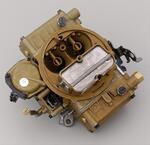
I messed with the idle speed....it was high but my tach is not working (have the wilcox board coming in the mail) so I have no idea how high it was but I think I have her too low now. I am going to bump her up a little and set the timing. I had to replace the gaskets in the carb and I think I have the thermo choke not set back in the correct place.
Tech Contributor
Joined: Aug 1999
Posts: 14,379
Likes: 6,390
From: At my Bar drinking and wrenching in Lafayette Colorado
I just sent out all the tech request papers and info for this morning, so you should have everything requested. Let me know if you have questions or if you need assistance.
Lars
Lars
Thread Starter
Racer
Joined: Mar 2012
Posts: 396
Likes: 13
From: New Bern NC
I need to replace my timing light (and get one that does Dewell and RPM along with timing) so I didnt mess with the timing but I did tune the carb...what a difference! Smooth idle, starts up on the first try from a cold start. I am getting 19lbs of vacuum at idle but I think I might have a leak so I am going to have to replumb the vac lines.
Took out with the T-Tops off for the first time this afternoon. She gets up and runs much better now and the brakes will lock up if needed! (Had to test them)
Lars, thank you sooo much for the tech papers. They helped a ton!!
Took out with the T-Tops off for the first time this afternoon. She gets up and runs much better now and the brakes will lock up if needed! (Had to test them)
Lars, thank you sooo much for the tech papers. They helped a ton!!

Tech Contributor


Joined: Jun 2004
Posts: 20,905
Likes: 962
From: I tend to be leery of any guy who doesn't own a chainsaw or a handgun.
Lars doesn't even know what a PM is, man, just send an e-mail to his e-mail address! And I think you are going to find that the answer to your question is..........don't worry about the initial timing. It doesn't matter what it is. Get your hands on Lars' paper, read it about 9 times, and follow it's instructions. Easy peasy lemon squeezy.
Keep the shiny side up!
Scott
Keep the shiny side up!
Scott
Le Mans Master
Joined: Mar 2008
Posts: 5,948
Likes: 72
From: Oxford MA-----You just lost the game!!!!
I need to replace my timing light (and get one that does Dewell and RPM along with timing) so I didnt mess with the timing but I did tune the carb...what a difference! Smooth idle, starts up on the first try from a cold start. I am getting 19lbs of vacuum at idle but I think I might have a leak so I am going to have to replumb the vac lines.
Took out with the T-Tops off for the first time this afternoon. She gets up and runs much better now and the brakes will lock up if needed! (Had to test them)
Lars, thank you sooo much for the tech papers. They helped a ton!!
Took out with the T-Tops off for the first time this afternoon. She gets up and runs much better now and the brakes will lock up if needed! (Had to test them)
Lars, thank you sooo much for the tech papers. They helped a ton!!
http://www.secondchancegarage.com/public/186.cfm
An old rule of thumb is to get your timing set the way you want it, and then make your final tweaks to the carb. Ignition first, then carb. If you have been reading Lars' stuff, you have probably already heard that one, but it bears repeating.
Keep the shiny side up!
Scott
Le Mans Master
Joined: Mar 2008
Posts: 5,948
Likes: 72
From: Oxford MA-----You just lost the game!!!!
Sorry, but that's nonsense. Your engine spends 98% of its time at light loads and low RPM. Your initial timing affects your idle quality and your low speed/low RPM fuel economy. Getting your WOT timing correct is certainly important (2% of the time), but to ignore the non-WOT timing is foolish.
Keep the shiny side up!
Scott
Thread Starter
Racer
Joined: Mar 2012
Posts: 396
Likes: 13
From: New Bern NC
I plan to re-work the carb after I redo the timing. My issue at teh moment was I was so rich that if I pumped the peddle once and then went around to the carb I could smell gas without opening the butterfly valve...and I was bogging down with fast hard throttle movements.
Le Mans Master
Joined: Mar 2008
Posts: 5,948
Likes: 72
From: Oxford MA-----You just lost the game!!!!
Keep the shiny side up!
Scott
Thread Starter
Racer
Joined: Mar 2012
Posts: 396
Likes: 13
From: New Bern NC
It does open, but she would bog down bad, turned the needles in 1/4 turn each while watching the vacuum gage increase in vacuum and once it settled at 19 from 15 I could rev her a real quick and close together with no bog.
Tech Contributor
Joined: Jun 2004
Posts: 20,905
Likes: 962
From: I tend to be leery of any guy who doesn't own a chainsaw or a handgun.
Well, OK, that is technically true, and maybe I shouldn't have been so glib about it, but here is why I say it doesn't matter: If you have the advance curve set up correctly, and the centrifugal and vacuum advance are working properly, (pulling around 20 and 16 degrees respectively) then setting the fully advanced mechanical timing optimized for performance will put your initial timing right where it should be to optimize idle quality and fuel mileage. So, it isn't that it doesn't matter, it's that you don't need to worry about it. (If everything is working properly.)
Keep the shiny side up!
Scott
Keep the shiny side up!
Scott