




Engine Compartment Heat Reduction
Pro


Joined: Jan 2010
Posts: 533
Likes: 18
From: Boca Raton Florida

Hi All,
Does anyone have any suggestions or experience on how to reduce the heat in a stock engine compartment? I notice the extra heat compared to cars of equal time.
I have installed aluminum radiator, and new water pump. This helped but there must be a way to cool down the engine compartment more. Any suggestions?
Thanks.
Does anyone have any suggestions or experience on how to reduce the heat in a stock engine compartment? I notice the extra heat compared to cars of equal time.
I have installed aluminum radiator, and new water pump. This helped but there must be a way to cool down the engine compartment more. Any suggestions?
Thanks.
Most cars from the late 60s through early 80s have steel surrounding the engine. The steel is a fairly good conductor of heat so to some extent the heat radiating off the engine is absorbed by the sheet metal. The fiberglass surrounding the engine in your C3 Corvette is a very poor conductor of heat so the engine compartment may seem to be hotter. In reality, an internal combustion engine is designed to produce a lot of heat and the radiators and coolers are merely there to keep most of the heat inside the combustion chamber.
If you want to check how hot your engine compartment is compared to other cars just get an infrared thermometer and measure the Corvette and one of the 'cooler' engine compartments you believe are out there. Harbor Freight sells an infrared thermometer for $20 that measures up to 482-degrees F or for $40 they have one that reads up to 968-degrees F.
Here's a link:
http://www.harborfreight.com/catalog...ed+thermometer
Pro
Joined: Jan 2010
Posts: 533
Likes: 18
From: Boca Raton Florida
Engine never goes to 200 degrees. Allways stays at 180 degrees no matter what the temp outside is, even days over 100. No headers all stock. I just think that kind of heat can't be good. The interior is cool but engine compartment is hot. This can't be the normal for a car. Was all ways tought that heat is bad for a car, the cooler the better.
Smokey Yunick, the legendary race car builder believed that heat was good for a car. He built an engine to power a Pontiac Fiero that went 0-60 in under 6 seconds and got 51 miles to the gallon -- with no computers. Smokey designed the intake system to heat the incoming fuel/air mixture to 400+ degrees F.
http://www.legendarycollectorcars.co...clusive-video/
If heat were bad for a car, you would expect auto racing to take place in the winter. Here's what the Formula One guys think is an acceptable heat level (they warm it up for 45 seconds and then it gets interesting):
http://www.youtube.com/watch?v=gSHToyGIxWE
Burning Brakes


Joined: Feb 2012
Posts: 925
Likes: 7
Engine never goes to 200 degrees. Allways stays at 180 degrees no matter what the temp outside is, even days over 100. No headers all stock. I just think that kind of heat can't be good. The interior is cool but engine compartment is hot. This can't be the normal for a car. Was all ways tought that heat is bad for a car, the cooler the better.
If the engine is running cool and the interior is cool, where do you think the heat is going? What's it matter if the engine compartment gets hot? What are the related problems? If the interior is not hot, who cares what is going on in the engine compartment as long as the engine is running relatively cool and not boiling over?
Regarding your " Was all ways tought that heat is bad for a car, the cooler the better" statement, this is true only to some minor extent and specific situations. Sure you don't want to overheat, but you don't want to be running at 170 degrees either. You need your engine to run hot enough so the oil is between 180 and 210 degrees. It needs to get this hot to burn-off combustion byproducts that are acidic or detrimental for other reasons. The combustion process produces power from the heat of combustion of the fuel/air mixture. If you try to cool the engine too much, you are taking away energy from the combustion process and power from the engine. Thermodynamically, the engine would make more power and get better mileage if the oils and materials could run at higher temperatures and the engine overall operating temperature was at a higher level. That's what Smokey was trying to do.
Don't get confused with trying to make the intake charge cooler or running a low temperature thermostat to make more power for drag racing. This is a different case than everyday use, where you don't change the oil for 1000/3000 miles.
As others have pointed out, the heat from the engine compartment goes out under the car and around the sides. And old cars generally are less cluttered under the hood than new ones. Coated sidemount headers will result in a cooler interior and engine compartment, because more of the heat remains in the exhaust.
In my mind, you're looking for a solution to something that is not really a problem.

Drifting


Joined: Jun 2010
Posts: 1,781
Likes: 15
From: Oxford Ohio
[QUOTE=rbowman;1581331600]Have you considered adding a fan in the area of the vents.

I'm going to try this also. With the classic Air set up, there is room for a small computer style fan or two near the vent or plumbed out under the car.
I'm going to try this also. With the classic Air set up, there is room for a small computer style fan or two near the vent or plumbed out under the car.

Le Mans Master


Joined: Oct 2010
Posts: 6,936
Likes: 848
From: melbourne florida
2023 C3 of the Year Finalist - Modified
Rodney,
Smokey Yunick, the legendary race car builder believed that heat was good for a car. He built an engine to power a Pontiac Fiero that went 0-60 in under 6 seconds and got 51 miles to the gallon -- with no computers. Smokey designed the intake system to heat the incoming fuel/air mixture to 400+ degrees F.
http://www.legendarycollectorcars.co...clusive-video/
If heat were bad for a car, you would expect auto racing to take place in the winter. Here's what the Formula One guys think is an acceptable heat level (they warm it up for 45 seconds and then it gets interesting):
http://www.youtube.com/watch?v=gSHToyGIxWE
Smokey Yunick, the legendary race car builder believed that heat was good for a car. He built an engine to power a Pontiac Fiero that went 0-60 in under 6 seconds and got 51 miles to the gallon -- with no computers. Smokey designed the intake system to heat the incoming fuel/air mixture to 400+ degrees F.
http://www.legendarycollectorcars.co...clusive-video/
If heat were bad for a car, you would expect auto racing to take place in the winter. Here's what the Formula One guys think is an acceptable heat level (they warm it up for 45 seconds and then it gets interesting):
http://www.youtube.com/watch?v=gSHToyGIxWE

Race Director


Joined: Apr 2000
Posts: 17,676
Likes: 201
From: Who says "Nothing is impossible" ? I've been doing nothing for years.
I've insulated the tranny tunnel on the outside and insulated the entire inside and 3-4 minutes of 50mph driving my fans stop and it is about 180deg. What more could I ask for out of a 600HP small block.
Anyway whatever happened to global warming, we are all supposed to melt anyway so have a good time, the doomsday clock is ticking
Anyway whatever happened to global warming, we are all supposed to melt anyway so have a good time, the doomsday clock is ticking

Drifting


Joined: Oct 2005
Posts: 1,527
Likes: 148
From: East London/SW Essex UK
Mine also runs at an inicated 175/180 degrees all day - but indicated temperature is purely the heat of the coolant as it runs past the sensor insn't it?, its now totally indicative of 'real' engine heat. In heavy traffic my car even though indicated temperature still stays ay 175/180 degrees (Dewitt rad) you really know that there is serious heat built-up when you finally get some speed up - the heat then coming out from under the dash/transmission tunnel is enough to make your eyes water. BUT heat is good for an engine - heat produces power - reduces emmissions - prevents moisture fouling up the lubricants - engine heat is your friend (in winter anyhow  !)
!)
!)
Corvette Stories
The Best of Corvette for Corvette Enthusiasts

Top 10 Most Expensive Corvettes Ever Sold on Bring A Trailer
Brett Foote
10 Things Every Corvette Owner Needs (2026 Edition)
Michael S. Palmer
8 Most "Only Corvette Owners Understand" Quirks and Problems
Pouria Savadkouei
10 Reasons the C6 Z06 is Still A Performance Benchmark After 20 Years
Joe Kucinski
How Much Horsepower Every Corvette Engine "LOST" in 1972
Joe Kucinski
Top 10 DOs and DON'Ts for Protecting Your Convertible Top!
Michael S. Palmer
Top 10 Most Explosive Corvettes Ever Made: Power-to-Weight Ratio Ranked!
Joe Kucinski
150 hp to 1,250 hp: Every Corvette Generation Compared by the Specs That Matter
Joe Kucinski
8 Coolest Corvette Pace Cars (and Replicas) of All Time
Verdad Gallardo
Burning Brakes
Joined: Feb 2012
Posts: 925
Likes: 7
Hot Vapor Engine aside, Smokey Yunick wrote on the subject of coolant temperature that it is possible to overcool the engine. "Some guys go to great lengths to keep the engine temperature down to 180 degrees. And, though the engine doesn't overheat, they don't realize that they're putting energy (heat) into the cooling system that could be used to produce power at the crankshaft. running an engine at 180 degrees will drop the overall horsepower by 2-3%."
Maybe I'm being stupid about this, but to worry about the underhood temperature and actually do something about it based on the false premise "the cooler the engine the better" just seems to be a waste of time and effort. Particularly where the engine isn't overheating.
Burning Brakes
Joined: Feb 2011
Posts: 849
Likes: 0
From: Woodland California
I don't think anyone said he was trying to have an engine operating temp of 400F, but he did heat the fuel and air as the intake was wrapped in an exhaust gas envelope.
Hot Vapor Engine aside, Smokey Yunick wrote on the subject of coolant temperature that it is possible to overcool the engine. "Some guys go to great lengths to keep the engine temperature down to 180 degrees. And, though the engine doesn't overheat, they don't realize that they're putting energy (heat) into the cooling system that could be used to produce power at the crankshaft. running an engine at 180 degrees will drop the overall horsepower by 2-3%."
Maybe I'm being stupid about this, but to worry about the underhood temperature and actually do something about it based on the false premise "the cooler the engine the better" just seems to be a waste of time and effort. Particularly where the engine isn't overheating.
Hot Vapor Engine aside, Smokey Yunick wrote on the subject of coolant temperature that it is possible to overcool the engine. "Some guys go to great lengths to keep the engine temperature down to 180 degrees. And, though the engine doesn't overheat, they don't realize that they're putting energy (heat) into the cooling system that could be used to produce power at the crankshaft. running an engine at 180 degrees will drop the overall horsepower by 2-3%."
Maybe I'm being stupid about this, but to worry about the underhood temperature and actually do something about it based on the false premise "the cooler the engine the better" just seems to be a waste of time and effort. Particularly where the engine isn't overheating.
A properly designed engine compartment on a Vette should not Let heat build up in it.
Be a low pressure area so the front end will be stable at 120mph plus.
Hood vents can't be the only way to get this done.
3% power loss is nothing to a Street driven Vette.
400hp minus 3% is 12hp at full throttle. You probably lose more than that by rolling the window down or turning on the lights.
If the side vents were designed right there would be no issue with any of the stuff I listed.
Perhaps blocking off the front grill and allowing air to come up from the bottom under the radiator and in front of the spoiler would help.
Ralph
Burning Brakes
Joined: Feb 2012
Posts: 925
Likes: 7
I think you are looking at it a little different than I.
A properly designed engine compartment on a Vette should not Let heat build up in it.
Be a low pressure area so the front end will be stable at 120mph plus.
Hood vents can't be the only way to get this done.
3% power loss is nothing to a Street driven Vette.
400hp minus 3% is 12hp at full throttle. You probably lose more than that by rolling the window down or turning on the lights.
If the side vents were designed right there would be no issue with any of the stuff I listed.
Perhaps blocking off the front grill and allowing air to come up from the bottom under the radiator and in front of the spoiler would help.
Ralph
A properly designed engine compartment on a Vette should not Let heat build up in it.
Be a low pressure area so the front end will be stable at 120mph plus.
Hood vents can't be the only way to get this done.
3% power loss is nothing to a Street driven Vette.
400hp minus 3% is 12hp at full throttle. You probably lose more than that by rolling the window down or turning on the lights.
If the side vents were designed right there would be no issue with any of the stuff I listed.
Perhaps blocking off the front grill and allowing air to come up from the bottom under the radiator and in front of the spoiler would help.
Ralph
You're talking 40 year old technology here, when Zora Duntov did some of his best cooling system research with a sawzall on the underside of the nose.
I guess I don't see the harm that's being done. The OP is complaining that the engine compartment is too hot, not the engine or passenger cabin. I didn't think he was complaining about aero.
My point is the oil temperature is not hot enough to boil out the moisture and contaminents with the engine temp at 180. The OP would lower the engine's temp if he could. I've been trying to show that that isn't a good idea. Along the way, it came out that the lower engine temp hurts horsepower too. Yes, it's a small percentage, but is wasn't the main point, even if it is a negative result and also represents a drop in mileage too.
I have a 600 HP engine, I'm not trying to get 40 mpg, but I'm not particularly trying to do something that shortens the oil life and loses free horsepower too. When you've tried all the big bang for the buck HP changes you can make (headers, heads, cams, etc), the last few tricks end up costing you a lot to get those 12 HP. You rightly point out that the change is only peanuts, but what is the upside? I haven't seen an upside to running the engine or engine compartment cooler. Per the OP's original post, he was happy with the engine temp on its own and cabin temp, he was interested in maybe dropping the engine temp as a means to lower the engine compartment temp. To what purpose?
If this is now switching over to a cooler engine compartment means good downforce on the nose, that's a new and different subject. Run a deep air dam that push the air around the sides of the car and run some rake on the car if that's what you're after. These are different issues than what's good for the engine. Which is what I was commenting on, not too well apparantly.
Burning Brakes
Joined: Feb 2011
Posts: 849
Likes: 0
From: Woodland California
Ralph,
You're talking 40 year old technology here, when Zora Duntov did some of his best cooling system research with a sawzall on the underside of the nose.
I guess I don't see the harm that's being done. The OP is complaining that the engine compartment is too hot, not the engine or passenger cabin. I didn't think he was complaining about aero.
My point is the oil temperature is not hot enough to boil out the moisture and contaminents with the engine temp at 180. The OP would lower the engine's temp if he could. I've been trying to show that that isn't a good idea. Along the way, it came out that the lower engine temp hurts horsepower too. Yes, it's a small percentage, but is wasn't the main point, even if it is a negative result and also represents a drop in mileage too.
I have a 600 HP engine, I'm not trying to get 40 mpg, but I'm not particularly trying to do something that shortens the oil life and loses free horsepower too. When you've tried all the big bang for the buck HP changes you can make (headers, heads, cams, etc), the last few tricks end up costing you a lot to get those 12 HP. You rightly point out that the change is only peanuts, but what is the upside? I haven't seen an upside to running the engine or engine compartment cooler. Per the OP's original post, he was happy with the engine temp on its own and cabin temp, he was interested in maybe dropping the engine temp as a means to lower the engine compartment temp. To what purpose?
If this is now switching over to a cooler engine compartment means good downforce on the nose, that's a new and different subject. Run a deep air dam that push the air around the sides of the car and run some rake on the car if that's what you're after. These are different issues than what's good for the engine. Which is what I was commenting on, not too well apparently.
You're talking 40 year old technology here, when Zora Duntov did some of his best cooling system research with a sawzall on the underside of the nose.
I guess I don't see the harm that's being done. The OP is complaining that the engine compartment is too hot, not the engine or passenger cabin. I didn't think he was complaining about aero.
My point is the oil temperature is not hot enough to boil out the moisture and contaminents with the engine temp at 180. The OP would lower the engine's temp if he could. I've been trying to show that that isn't a good idea. Along the way, it came out that the lower engine temp hurts horsepower too. Yes, it's a small percentage, but is wasn't the main point, even if it is a negative result and also represents a drop in mileage too.
I have a 600 HP engine, I'm not trying to get 40 mpg, but I'm not particularly trying to do something that shortens the oil life and loses free horsepower too. When you've tried all the big bang for the buck HP changes you can make (headers, heads, cams, etc), the last few tricks end up costing you a lot to get those 12 HP. You rightly point out that the change is only peanuts, but what is the upside? I haven't seen an upside to running the engine or engine compartment cooler. Per the OP's original post, he was happy with the engine temp on its own and cabin temp, he was interested in maybe dropping the engine temp as a means to lower the engine compartment temp. To what purpose?
If this is now switching over to a cooler engine compartment means good downforce on the nose, that's a new and different subject. Run a deep air dam that push the air around the sides of the car and run some rake on the car if that's what you're after. These are different issues than what's good for the engine. Which is what I was commenting on, not too well apparently.
Ralph
Drifting
Joined: May 2005
Posts: 1,968
Likes: 44
From: East TN
Wouldn't installing a set of these in the hood act as heat extractors?
http://www.ecklerscorvette.com/corve...1968-1982.html
http://www.ecklerscorvette.com/corve...1968-1982.html
Burning Brakes
Joined: Feb 2011
Posts: 849
Likes: 0
From: Woodland California
Wouldn't installing a set of these in the hood act as heat extractors?
http://www.ecklerscorvette.com/corve...1968-1982.html
http://www.ecklerscorvette.com/corve...1968-1982.html
Ralph
Pro
Joined: Jan 2010
Posts: 533
Likes: 18
From: Boca Raton Florida
Ralph,
If you install those vents on top of the fenders and make them functional, they are more than ugly. They are venting the fenderwell, not the engine compartment so they would vent whatever the tires are slinging (water, gravel, tar ...).
The side vents on my '72 are like open doors to my engine compartment. I didn't like the eggcrate design so I cut out the vertical slats in the side vents (and replaced the 3 front grilles with a bar grille from Ecklers). That's the frame rail you see through the side vent and there's nothing but the engine beyond it.
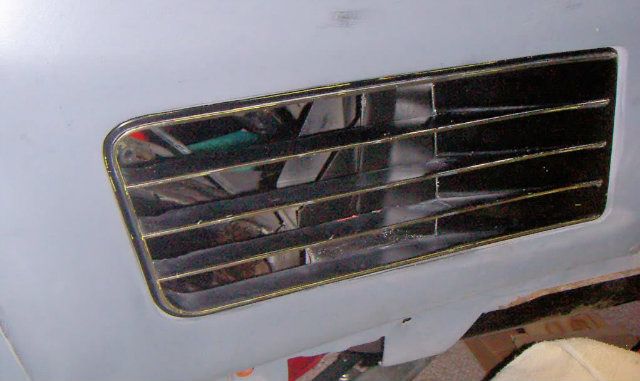
If the side vents are not effective on your car and you want better air flow, there are several hoods that provide extra venting, like this one...

...Or one of those turbo hoods.
If you install those vents on top of the fenders and make them functional, they are more than ugly. They are venting the fenderwell, not the engine compartment so they would vent whatever the tires are slinging (water, gravel, tar ...).
The side vents on my '72 are like open doors to my engine compartment. I didn't like the eggcrate design so I cut out the vertical slats in the side vents (and replaced the 3 front grilles with a bar grille from Ecklers). That's the frame rail you see through the side vent and there's nothing but the engine beyond it.
If the side vents are not effective on your car and you want better air flow, there are several hoods that provide extra venting, like this one...
...Or one of those turbo hoods.

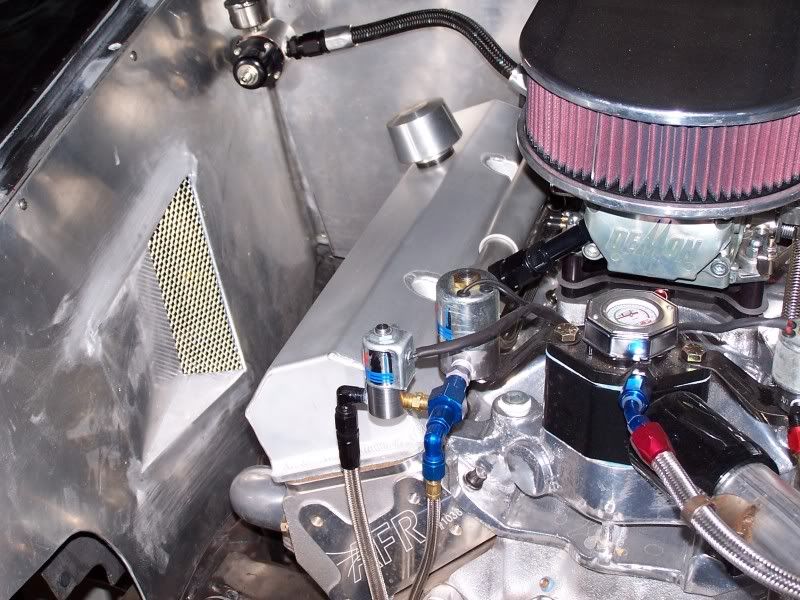
Melting Slicks

Joined: Jul 2005
Posts: 2,060
Likes: 46
From: winter haven florida
St. Jude Donor '12
this was done to keep temps cooler for paint longevity. it will idle and stay at 180 all day long. it's on a manual switch so I can cool the compartment after shut down also. it also helps keep the fuel cooler in the carb to help with potential hot start issues.
Burning Brakes
Joined: Feb 2011
Posts: 849
Likes: 0
From: Woodland California
Honestly nice custom work.
Which AFR heads are you using and how many cubes?
I've been thinking about an L-88 hood with vents like the hood in your post. $900.00 to get the hood here and $300.00 to have it painted to match.... ouch.
Also been thinking about running vent hoses from the front to just inside the side vents to start siphoning air out of the engine compartment.
Same principle as a small gold dredge uses, but with air.
The 75 is at the body shop. Someone egged it a while back and I'm just now getting it taken care of. But I keep thinking about how to do this real simple so for at least awhile I seem to be stuck on this project.
Ralph
Maybe I should put a remote thermometer in the engine bay to what the temp. really is.
That would give me a base line.
Last edited by Ralphbf; Jul 19, 2012 at 12:35 AM.
Melting Slicks
Joined: Jul 2005
Posts: 2,060
Likes: 46
From: winter haven florida
St. Jude Donor '12
they are comp ported 195s I stuck with the 195 instead of the 210 keep port velocity up and give me a little more low end grunt and throttle response. it was shooting for lots of midrange tq with this engine and not high end all out power. its a 395 ci stroker. .030 bore and 3.875 stroke. I went with an eagle forged rotating assy and je pistons. it pulls hard off the line and keeps pulling all the way to redline. its quite fun on the street with a 3.73 gear and a 200 4r trans. 2200 stall. I have a high rise l88 hood I am going to set up a cold air box in just for fun.